

Business
British Gas took 15 months to refund me £1,500. It’s absurd

Dan WhitworthMoney Box reporter, London
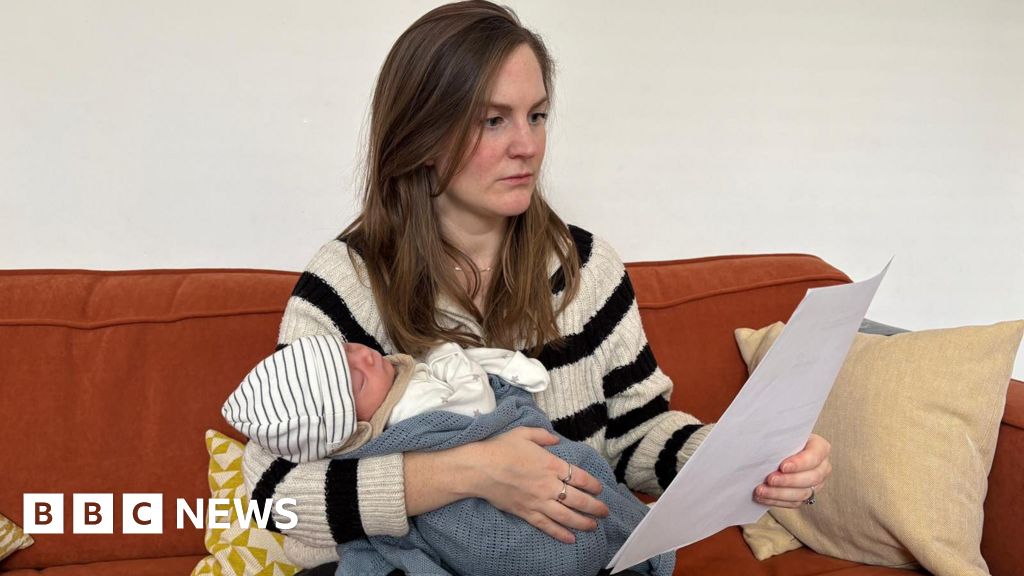
 Beth Kojder
A woman says it is “absurd” it took British Gas 15 months to produce a final bill and refund more than £1,500 of credit, despite the energy ombudsman telling the firm to do so nearly one year ago.
Beth Kojder moved out of her one-bed flat in south-east London in October 2024 but complained to the ombudsman a few months later when the company did not send her a final bill or refund her credit.
In February 2025 the ombudsman decided in Beth’s favour and told British Gas to carry out her request. But it has no legal powers to force it.
Beth only received the offer of her money this week, just days before her case was due to be heard in a small claims court.
British Gas said it was “implementing the ombudsman’s remedy” for Beth, adding it was “very sorry” for how long it had taken.
Beth told the BBC the process had been “relentless and it’s tiring and it’s completely draining”.
When she moved out of her flat, she asked British Gas for a final bill using the meter readings she provided. She also asked it to refund her £1,700 less a few hundred pounds she expected to owe for her final bill.
“It’s a significant amount of money. Maybe not to British Gas but it is to me,” said Beth, who had her first baby in December. “That’s almost £2,000 I could have done with. Then there’s all the admin.”
Not legally enforceable
When she didn’t receive her final bill or refund she complained to British Gas.
But Beth said she “got nowhere” so took her complaint to the energy ombudsman.
It is an independent, impartial dispute resolution scheme that energy customers can complain to eight weeks after first complaining to their supplier.
Energy suppliers are legally obliged as part of their licence conditions to be a member of an independent customer dispute scheme.
But the energy ombudsman is not a statutory body and it cannot legally force suppliers to act.
In 2024, there were 93,000 complaints accepted by the energy ombudsman with around 70% of those cases ruled in favour of consumers, with suppliers required to take action within 28 days.
In the vast majority of cases, suppliers met that deadline, but in many thousands of cases the deadline was either missed or no action was taken at all.
It has prompted the Department for Energy to look at ways to strengthen the energy ombudsman saying the number of decisions not being implemented quickly enough was too high.

 Beth Kojder
In Beth’s case the ombudsman issued four resolutions in February 2025.
British Gas actioned three minor ones including a written apology and a goodwill credit of £100 for shortfalls in service.
But the decision also required British Gas to “complete the final billing of the account… based on the [meter] readings already provided by Beth.” But 11 months on and that still hadn’t happened.
Beth said the only option she had left was to go down a legal route via a small claims court.
“I just felt completely desperate and like it was the only option to try to get some traction,” she said.
 Beth Kojder
BBC Radio 4’s Money Box first contacted British Gas about this case in early December and, up until late Thursday night, Beth was resigned to having to go to the small claims court to get what she strongly feels she’s owed.
Then, British Gas came back with an offer of everything Beth was asking for, which she has happily accepted.
Beth said she was pleased to get the matter resolved but said she was frustrated that it had taken so many months to do so and felt British Gas had “completely failed” to engage with the ombudsman process.
“I still think the fact it’s taken this long to reach [a resolution] is absurd. And the level of intervention that’s been required on my part as a consumer is unbelievable.”
British Gas said: “We’re implementing the Ombudsman’s remedy and, together with Ms Kojder, are finalising a resolution to her claim. We appreciate this has been difficult for her and we’re very sorry for the length of time it has taken to put things right.”
Ofgem’s deputy director of retail compliance, Jackie Gehrmann, told the BBC that in the last year suppliers have paid out £27m in fines and voluntary payment agreements in consumer related issues.
“The message to suppliers is really, really clear. When the ombudsman makes a ruling they should implement that ruling as quickly as possible,” she said.
The DESNZ told the BBC: “We are strengthening the Energy Ombudsman so consumers can be confident that when it has ruled in their favour, action will be taken.”

Intellia Therapeutics, building exterior and company sign, Cambridge, Massachusetts, USA.
Spencer Grant | Universal Images Group | Getty Images
Intellia Therapeutics said its Crispr-based treatment for a rare swelling condition met its goals in a late-stage trial, marking a milestone for the field of gene editing and putting the company on track to seek approval from the U.S. Food and Drug Administration.
The company’s treatment uses Nobel Prize-winning technology Crispr to edit DNA and turn off the gene that controls production of a peptide that’s overactive in people with hereditary angioedema, causing them to experience potentially life-threatening swelling attacks. Intellia’s treatment is administered once through an hourslong infusion, making the edits directly in the liver.
Intellia said the one-time treatment reduced attacks by 87% compared with a placebo, meeting the study’s main goal. Six months after treatment, 62% of patients were free from attacks and weren’t using other therapies, Intellia said.
The company described the safety and tolerability of the treatment as “favorable,” reporting the most common side effects were infusion-related reactions, headaches and fatigue. Analysts were closely watching safety in the trial since a patient in a separate trial of a different treatment from Intellia died. That patient developed a liver injury and ultimately died from septic shock following an ulcer, according to the company.
“When you think about where we started with Crispr, just 12 years ago with some of the fundamental insights, I think there was a lot of talk about what might be possible, and we’ve had reports along the way in terms of milestones, but this is the first Phase 3 data in any indication with in vivo Crispr where you’re actually changing a gene that causes disease,” said Intellia CEO John Leonard.
The only FDA-approved Crispr-based medicine comes from Vertex Pharmaceuticals. Called Casgevy, the gene editing is done outside the body, or ex vivo. The process requires collecting a person’s blood cells, making the edits outside the body, then reinfusing them back into a patient. Intellia’s treatment, meanwhile, makes the edits inside the body, or in vivo.
Intellia said it has started a rolling application with the FDA and plans to complete the filing in the second half of this year. The company expects to launch the treatment in the U.S. in the first half of next year, if it’s approved.
If approved, Intellia’s treatment, lonvoguran ziclumeran, will compete with about a dozen other chronic drugs for HAE. Despite the allure of a one-time treatment, genetic medicines haven’t always been a commercial successes. BioMarin withdrew its gene therapy for Hemophilia A because of weak sales, for example.
Leonard said there are important differences between the two, like the fact that BioMarin’s therapy faced questions about how long the effects would last. In contrast, he said Intellia hasn’t seen a single case in almost six years where the effects diminished over time.
Despite the results, he’s reluctant to call Intellia’s treatment a functional cure.
“I think this is a tipping point for the disease and tipping point for Crispr-based in vivo therapy where you can make a change [and] it’s permanent,” Leonard said. “And, as far as we can tell, we don’t have a single patient in this program or other program where there’s been any waning of the effect of what we did to the gene or the effect of what we’ve seen with the clinical aspects of the disease itself. So it’s pretty exciting.”
Clarification: This story has been updated to clarify that a patient in a separate trial of a different treatment from Intellia developed acute liver injury and ultimately died from septic shock following an ulcer.

While many airlines say they are raising prices due to high fuel costs, József Váradi says European airlines are trying to boost demand
Source link
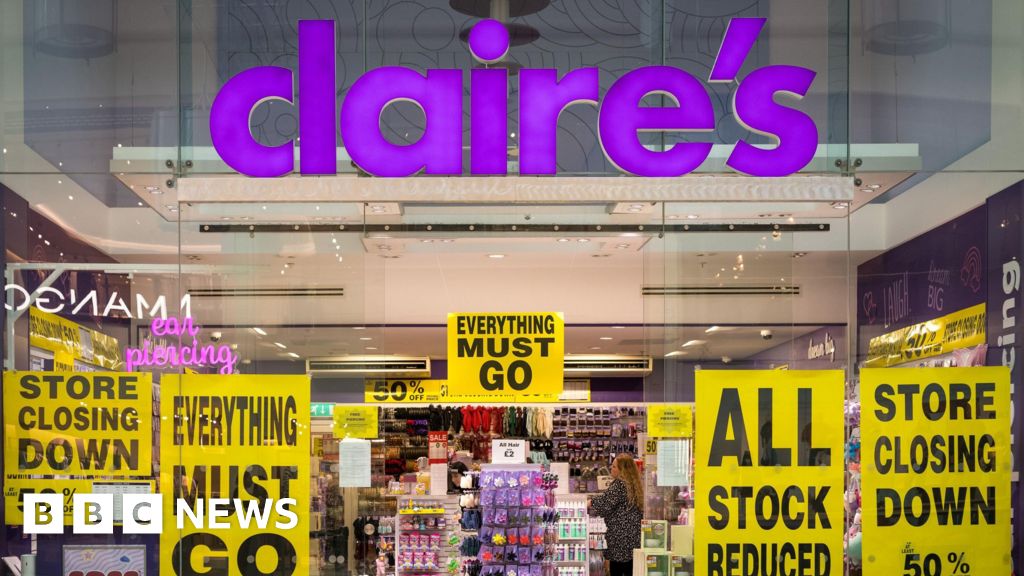
All of the chain’s standalone stores have stopped trading in the UK and Ireland.
Source link


Norway joins Type 26 Frigate Programme to boost NATO naval power

Trump calls for Jimmy Kimmel to be fired over jokes made before White House Correspondents’ Dinner shooting
Intellia Therapeutics says its Crispr-based treatment succeeds in pivotal trial

-

 Sports1 week ago
NCAA men’s gymnastics championship: All-time winners list
-

 Sports1 week ago
WWE WrestleMania 42 Night 2: Live match results and analysis
-

 Politics7 days ago
UK’s Starmer seeks to deflect blame over Mandelson appointment
-

 Fashion1 week ago
UK’s Sosandar returns to profitability amid robust FY26 performance
-

 Entertainment1 week ago
Lee Anderson, Zarah Sultana kicked out of UK Parliament for calling PM ‘liar’
-
 Business1 week ago
No fuel shortage: Govt assures 100% domestic LPG, PNG, CNG supply amid Hormuz energy crunch – The Times of India
-
 Business1 week ago
How Trump’s psychedelics executive order could unlock stalled cannabis reform
-

 Sports1 week ago
Quetta Gladiators opt to bowl after winning toss against Peshawar Zalmi in PSL 11 clash