

Entertainment
Britons react to Prince Harry’s royal return amid security ‘win’

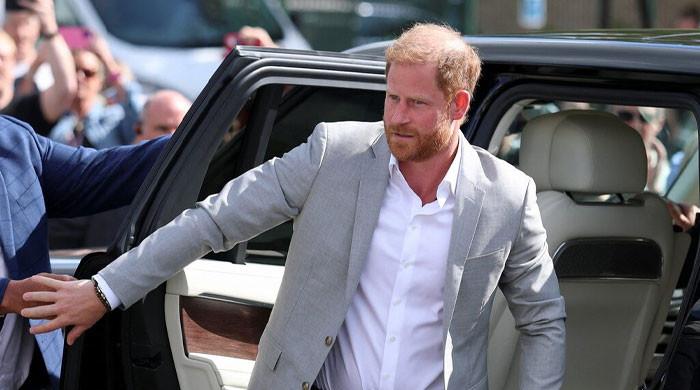
Prince Harry, despite the uncertainty surrounding his ties with the members of the royal family after amid years-long feud, has once again stirred speculation about his possible return to the royal fold.
Since Harry and Meghan left for the US in 2020, there has been a major shift in the public opinion in the UK, with the polls rating dropping. It got worse after they badmouthed the royals in public. Although, the tides may be shifting now.
The Duke of Sussex may not be a senior member of the royal family but he continues to support the charities he did as a royal. He has made several visits in the past and the latest trip had been the most popular of all. The British press and the public were all praise for Harry.
Royal experts have often expressed their dislike for the Sussexes but the true feelings of Britons were laid bare during a random street interview.
Young people asked about Harry and Meghan’s return appeared to have positive reaction.
“Yeah, why not?” one person said. “They’re fun. Young people love them.”
“I think people are way too much in this business. I think we’ll let the man be a father, let them live. Love to have them back though.” When the reporter asked “back with privacy?”, they said yes.
One Harry fan shared that she doesn’t want the Sussexes to come back as they would have a lot of pressure her in the UK.
It discovered earlier this month that King Charles’s son had finally won back his police protection. While the official verdict is yet to be announced, sources from the Sussex camp have insisted that Harry’s police protection has been reinstated and it’s now “just a formality” at this point.
The King’s younger son has been fighting for his security ever since it was stripped off after stepping down as a working member of the royal family. The taxpayer funded protection is provided to senior members automatically but for Harry, it was made on a case-by-case basis by the UK Home Office.
Harry had argued publicly that he scored the highest, just below his grandmother Queen Elizabeth, for security risk but just after one night he was removed from it. Last year, he had almost given up the fight after the “devastating” verdict in May 2025.
However, following the stalker incident in September during his UK visit (and possibly the repairing ties and meeting with his father), a surprising turn is noted with the anticipated decision. It appears that the royal and VIP executive committee (Ravec) had no choice but to approve the request after the fresh assessment.
It is hoped that the announcement will be made in coming weeks.
Entertainment
Stephanie Buttermore, fitness influencer dies suddenly aged 36: What actually happened

Stephanie Buttermore’s sudden death at age 36 on March 6 left the fitness community reeling as her death leaves questions.
Stephanie’s fiancée Jeff Nippard’s team announced the tragic news on their Instagram handle, however, the statement did not disclose the cause of her death but appealed to the online community to respect their privacy.
Stephanie Buttermore had a charismatic personality and had won hearts online.
The statement on Instagram reads: “An important update from the Jeff Nippard team: It is with profound sorrow that we share the sudden passing of Jeff’s fiancée and partner of ten years, Stephanie.
Jeff Nippard remembered his fiancée with touching words, stating, “As many of you know, Stephanie meant the world to Jeff. She will be remembered for her warmth and compassion, her love for her family, and her PhD research on ovarian cancer.”
Requesting with the online community for privacy, the statement added, “We kindly ask for privacy as we navigate this tragic loss. Thank you for your understanding and support during this difficult time.”
Who was Stephanie Buttermore?
Stephanie Buttermore was a dynamic personality; besides being a known influencer in the fitness community, she was also an accomplished cancer researcher.
She did her PhD in Pathology and Cell Biology at the University of South Florida.
Her area of research was focused on ovarian cancer detection and early screening, where she succeeded in discovering a protein called RHAMM.
This protein could potentially be used as an early screening marker for the disease through urine test.
What made her a buzzing influencer was that she blended her passion for fitness with her scientific knowledge, thus starting to use her platform to inform millions of followers on the science behind exercise and diet.
What actually happened
However, as per her fiancée’s post, he didn’t disclose the medical condition that led to the sudden death of Stephanie Buttermore; instead, he appealed to the online community for privacy in moment of grief.
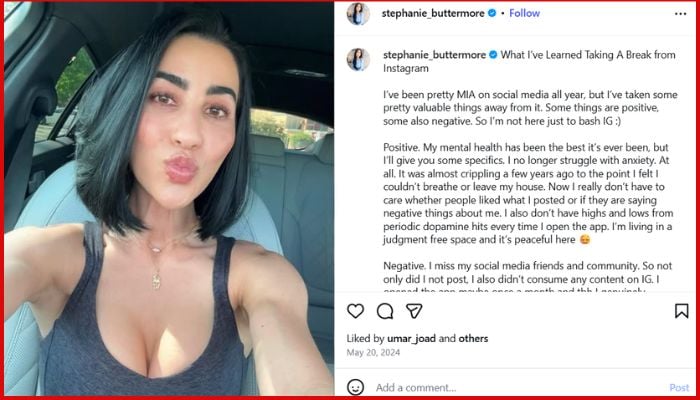
But, in her last Instagram post, Stephanie did mention her struggle with mental health and at that time she gave the reason why she had stepped away from social media.
In an Instagram post in May 2024, Stephanie while explaining her long break from social media, revealed that she had been struggling with severe anxiety that made her feel like she “couldn’t breathe or leave my house.”
The decision was instrumental in regaining mental health, describing how mental health became “the best it’s ever been” after stepping away from the pressures of constant social media posting.
Stephanie’s last known public moment came on Valentine’s Day this year, with her fiancé, who captioned the post, “Relationshipmaxxing with tea time to lower cortisol levels.”
She commented on the buzzing post, “Love you forever,” unaware of the fact that it would become her farewell message to her fiancée and online community.
Buttermore had garnered a significant social media following, boasting over 525,000 followers on Instagram and over 1.17 million YouTuber followers.
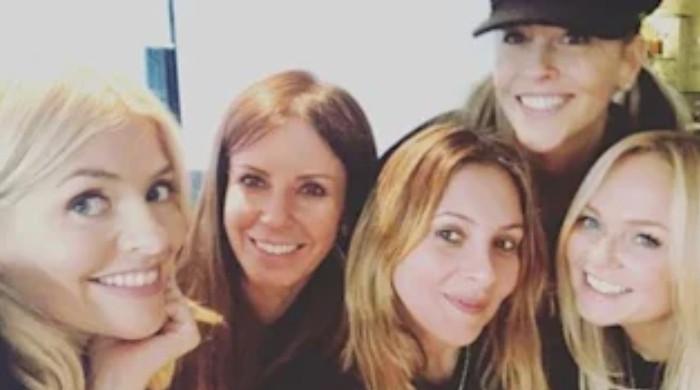
Holly Willoughby joined her friend Nicole Appleton for a lunch date with pals at 1 Hotel MayFair in London on Friday.
For the outing, This Morning host, 45, donned a chic navy trench coat and accessroirsed with a matching leather shoulder bag.
She completed her look with denim jeans and a white blouse as she paused for a stunning pose on her way to the luxurious hotel.
Meanwhile All Saints star Nicole, 51, showed off her slim frame in a pair of stylish jeans and a black shoulder-padded blazer with a white T-shirt underneath.
It comes shortly after reported emerged that Holly is preparing to make her TV comeback with her own Youtube channel, following speculation about a solo project.
It has now been reported that the 44-year-old is following other stars who have their own channels, including Ant and Dec, chef Gordon Ramsay and rapper KSI.
Ms Willoughby has largely been off our screens since she left This Morning in October 2023, after she was told a former security guard had planned to kidnap, rape and murder her.
Since leaving This Morning, she briefly hosted ITV’s You Bet! and Netflix’s reality show Celebrity Bear Hunt.

Kanye “Ye” West had a turbulent day on the witness stand on Friday, repeatedly appearing to struggle to stay awake as he testified in the trial over the disastrous renovation of his former Malibu mansion.
According to Rolling Stone, who was present in the Los Angeles courtroom, the rapper “repeatedly yawned, closed his eyes for long stretches and at times seemed to catch his head falling forward” during his appearance in the second week of the trial.
The moment reached a peak when the lawyer representing the plaintiff reportedly turned away from the stand and mouthed “Is he asleep?”
The presiding judge also appeared to be in shock, asking them to ask the attorney to “make things a little snappier” with their questioning.
When asked about the work carried out on the property, Ye’s repeated answer was a simple “I don’t recall.”
The trial centres on a lawsuit brought by contractor Tony Saxon, who is suing Ye for unpaid wages, unsafe working conditions, and wrongful termination.
Saxon claims he was forced to live on the property, a striking four-bedroom, 4,000-square-foot estate in Malibu designed by celebrated Japanese architect Tadao Ando, as Ye attempted to transform it according to a series of unusual demands.
Those plans included making the property entirely self-sufficient and “off the grid,” and at one point replacing a staircase with a slide.
Saxon alleges he suffered an injury during the failed construction, was subsequently fired after raising safety concerns, and says Ye is liable for his medical bills.
The results of the renovation speak for themselves.
The Ando-designed property, which Ye purchased for $57 million in 2021, was stripped down to a bare “concrete shell”, left with no windows, doors, electricity, or plumbing.
He sold it at a staggering loss in 2024, offloading the estate for $21 million. The Saxon case is one of several legal matters Ye is set to face in court in the coming months.


Flipkart Layoffs 2026: Why Has E-Commerce Firm Sacked Around 500 Employees?

Nepal’s rapper-mayor Balendra Shah poised to become prime minister

Stephanie Buttermore, fitness influencer dies suddenly aged 36: What actually happened

-
 Business1 week ago
Attock Cement’s acquisition approved | The Express Tribune
-

 Fashion1 week ago
Policy easing drives Argentina’s garment import surge in 2025
-

 Politics1 week ago
What are Iran’s ballistic missile capabilities?
-
 Business1 week ago
India Us Trade Deal: Fresh look at India-US trade deal? May be ‘rebalanced’ if circumstances change, says Piyush Goyal – The Times of India
-

 Sports1 week ago
LPGA legend shares her feelings about US women’s Olympic wins: ‘Gets me really emotional’
-

 Entertainment1 week ago
Bobby J. Brown, “The Wire” and “Law & Order: SUV” actor, dies of smoke inhalation after reported fire
-
 Fashion1 week ago
South Korea’s Misto Holdings completes planned leadership transition
-

 Entertainment1 week ago
Pakistan’s semi-final qualification scenario after England defeat New Zealand