

Business
Brits issued winter energy supply warning with ‘tight days’ ahead

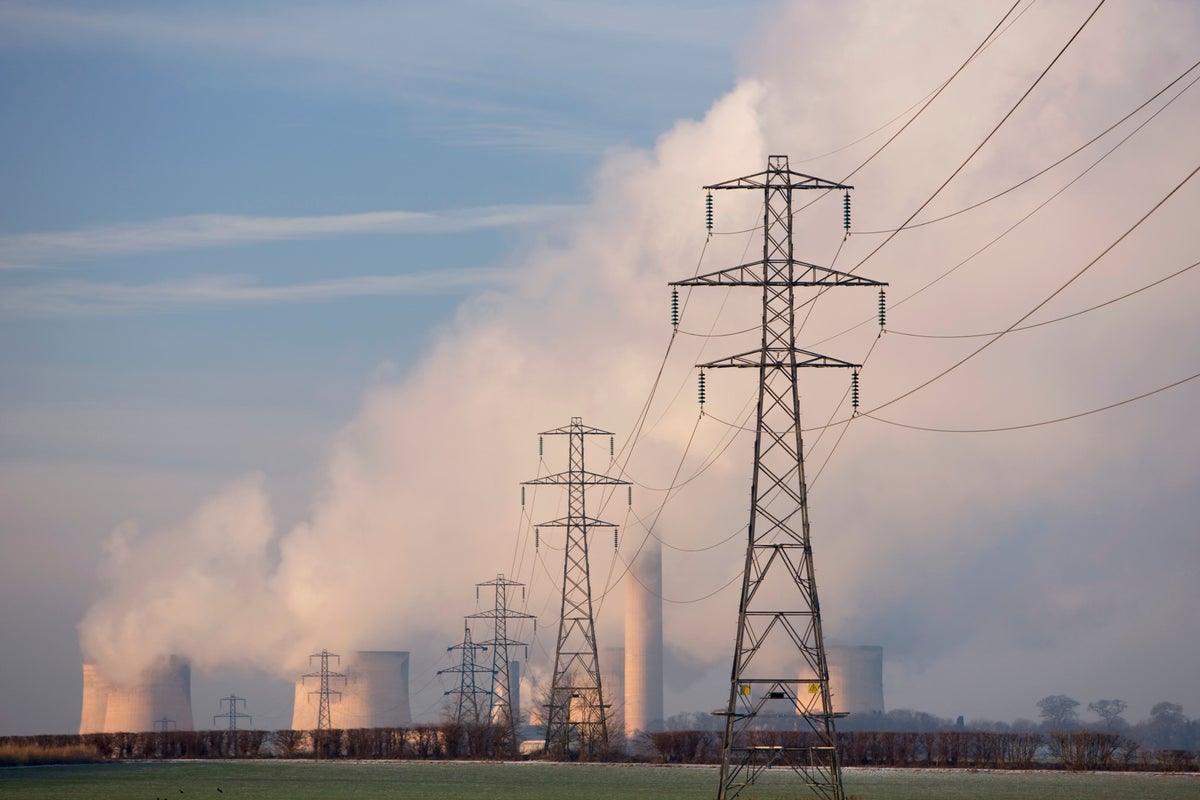
Great Britain’s energy system operator has warned of potential “tight days” this winter.
The National Energy System Operator (Neso) indicated that imported electricity from Europe could be used “when required” to power homes and businesses.
This outlook follows the publication of the latest winter energy reports by Neso and National Gas, after a rise in the price cap led to a surge in costs.
Neso stated on Thursday that electricity margins, reflecting the cushion of spare power supply, have risen to their strongest level since 2020.
However, it added that there could still be some “tighter periods”, which might need support from the energy industry.
“We expect a sufficient operational surplus throughout winter, although there may still be tight days that require us to use our standard operating tools, including system notices,” the report said.
System notices are how the grid operator informs the wider energy industry that electricity supply has not matched demand, allowing for production to increase if needed.
Early data from electricity firms and forecasters has suggested that “tight days” are most likely to take place in early December or mid-January.
Neso added that imports will be available when needed to help cover demand, supported by “adequate electricity supply across Europe”.
Deborah Petterson, director of resilience and emergency management at Neso, said: “A resilient and reliable energy supply is fundamental to our way of life.
“At Neso, we are looking at the upcoming winter and can report that this year’s winter outlook sets out the strongest electricity margins in six years.
“It is critical that we continue our work with the wider energy industry to prepare for the coming months to build on this foundation and maintain our world-leading track record of reliability.”
Meanwhile, the latest analysis from National Gas indicated that Great Britain has enough gas supply capability to meet peak demand.
It indicated supply can meet demand, “even accounting for unforeseen network outage scenarios”.
The gas network operator said gas demand is expected to be 3 per cent lower than last winter, easing pressure on supply.
It said high-demand days are still expected, but it stressed that it is “confident” the market will operate as needed.
Glenn Bryn-Jacobsen, director of energy systems and resilience at National Gas, said: “As we head into winter, we remain confident in the resilience of our gas system and our ability to meet Britain’s energy needs during periods of peak demand.

“The energy landscape is evolving, with a growing reliance on imports and the continued decline of UK continental shelf supplies.
“Meeting these challenges requires a coordinated, forward-looking approach, and we’re working closely with government, industry, and regulators to develop the right solutions that safeguard security of supply for the future.”
But the report from National Gas shows a fall in Britain’s gas storage capabilities, thanks to the Rough storage site off the coast of Yorkshire no longer storing gas, which means there is an increased reliance on importing liquified natural gas (LNG) to plug the gap in times of high demand.
The facility in the North Sea is the largest of its kind in the UK, but owner Centrica has stopped filling it with natural gas amid concerns over its financial viability.
The Rough site comprises about half of Britain’s storage capacity, and acts as a buffer when the weather is especially cold and demand for gas spikes.
Centrica has long warned it will be decommissioned without government support to allow investment in the site.

A United Airlines plane approaches the runway at Denver International Airport on March 23, 2026.
Al Drago | Getty Images
United Airlines slashed its 2026 earnings outlook Tuesday as it grapples with a surge in jet fuel prices due to the Iran war, but CEO Scott Kirby said demand remains strong.
United said it could earn between $7 and $11 a share on an adjusted basis this year, down from its previous forecast of between $12 and $14 a share that it released in January, more than a month before the U.S. and Israel attacked Iran.
Wall Street had already been adjusting its expectations for the year because of higher fuel. Analysts polled by LSEG had forecast that United’s adjusted, full-year earnings would be $9.58 a share.
The carrier, like others, is trimming some of its planned flying this year to reduce costs. Lower capacity can drive up airfare, with fewer seats on the market.
For the second quarter, United forecast adjusted earnings of between $1 and $2 a share. Analysts had expected $2.08 a share for the quarter. United estimated its fuel price would average $4.30 a gallon in the second quarter.
The carrier said it expects its revenue to cover between 40% to 50% of the fuel price increase in the second quarter, as much as 80% in the third and between 85% and 100% by the end of the year.
United reiterated that it is tweaking its schedules to adjust to higher fuel, with capacity in the second half of the year expected to be flat to up about 2% on the year. It grew 3.4% in the first quarter.
Here is what United Airlines reported for the quarter that ended March 31 compared with what Wall Street was expecting, based on estimates compiled by LSEG:
- Earnings per share: $1.19 adjusted vs. $1.07 expected
- Revenue: $14.61 billion vs. $14.37 billion expected
Revenue, profit climb
Revenue overall rose more than 10%, to $14.61 billion, up from the $13.21 billion from a year before.
For the first quarter, United’s net income rose 80% to $699 million, or $2.14 cents a share, compared with net income of $387 million, or $1.16 cents a share, a year earlier. Adjusted for one-time items, United posted earnings per share of $1.19 a share.
Unit revenue was up in every reported segment, including for domestic U.S. flights, where it rose 7.9% to $7.9 billion from a year earlier, signaling strong pricing power in the quarter.
Jet fuel in the U.S. was going for $3.51 a gallon on Monday, down from the high on April 2 of $4.78, but far above the $2.39 on Feb. 27, the day before the first attacks on Iran, according to prices assessed by Platts.
Airline executives have said demand has remained robust even while they have increased fares and checked bag fees as they pass along higher fuel prices to customers.
“Bookings are strong,” Kirby told CNBC’s “Squawk Box” on Wednesday.
United and the rest of the industry have become more reliant on travelers who are willing to shell out more for flights and bigger seats, and who are less affected by price increases.
Alaska Airlines pulled its 2026 forecast on Monday because of higher fuel prices. It has raised fares about $25, CEO Ben Minicucci told analysts Tuesday.
Merger ambitions?
Kirby is likely to face questions on the company’s 10:30 a.m. ET earnings call on Wednesday about his ambitions for a merger with another airline.
Kirby floated a potential merger with American Airlines to a Trump administration official earlier this year, according to a person familiar with the matter, but President Donald Trump said he was against the idea.
“I don’t like having them merge,” he told CNBC’s “Squawk Box” on Tuesday morning. He said he would like someone to buy struggling discount carrier Spirit but he also suggested that the federal government could “help that one out.”
American also rejected the idea of a merger with United last week.
When asked about floating the merger, Kirby declined to confirm the meeting to CNBC’s “Squawk Box” on Wednesday but said: “We want to create a truly global airline.”
Kirby reiterated his view that the U.S. is at a deficit in international air travel as customers fly on international competitors, some of which are state owned.
NI Affairs Committee told even if conflict ends immediately it will take time for supply chains to return to normal.
Source link
The president also said the US will continue to blockade Iran’s ports until peace talks progress.
Source link

United Airlines slashes 2026 forecast as fuel costs surge, but demand remains strong
Energy prices ‘could stay high into winter’

The Best Chromebooks Are Doing Their Best to Course Correct

-

 Fashion6 days ago
France’s LVMH Q1 revenue falls 6%, shows resilience amid Iran war
-

 Entertainment7 days ago
Is Claude down? Here’s why users are seeing errors
-

 Fashion1 week ago
Asia claims largest share of markets on Kearney FDI Confidence Index
-

 Tech1 week ago
The Deepfake Nudes Crisis in Schools Is Much Worse Than You Thought
-

 Sports7 days ago
PSL 11: Peshawar Zalmi win toss, opt to field first against Quetta Gladiators
-

 Tech1 week ago
Bremont Is Sending a Watch to the Moon’s Surface
-

 Tech1 week ago
Human-machine teaming dives underwater
-
 Business1 week ago
BP sees ‘exceptional’ oil trading result as Iran war sends crude costs soaring