

Fashion
BTMA to showcase advanced fibre tech at ITMA Asia + CITME

The manufacture of medical sutures, for example, is a very specialised process and because these items are implanted directly into the human body, every stage of production is tightly controlled to ensure safety, sterility and reliable performance.
At ITMA Asia + CITME in Singapore, a 20-strong UK BTMA delegation will showcase innovations in medical sutures, UHMWPE, aerospace fibre placement, automation, and composites.
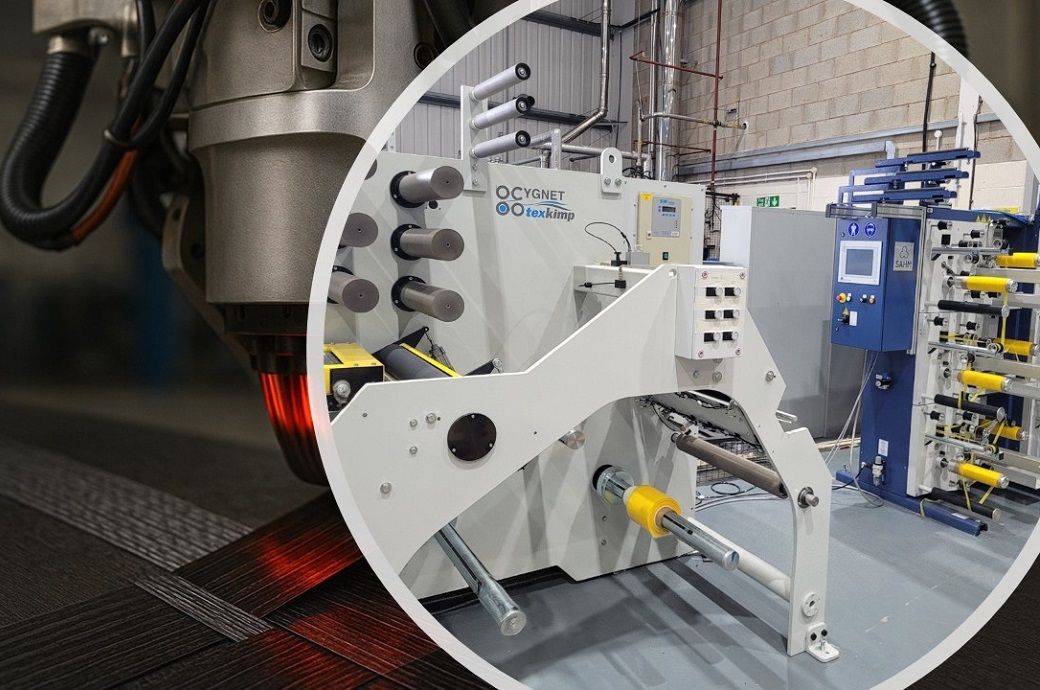
Highlights include FET’s supercritical CO₂ fibre tech and Cygnet Texkimp’s AFP solutions.
Collaboration with universities and new R&D-driven systems reflect the UK’s growing role in advanced fibres and technical textiles.
Absorbable sutures are usually made from polymers that degrade safely within the body, such as polyglycolic acid, polylactic acid or polydioxanone, while non-absorbable sutures use durable materials like nylon, polypropylene, polyester, silk or even stainless steel. All of these must be of medical grade and fully biocompatible.
The UK’s Fibre Extrusion Technology (FET) is a world leader in both the fibre selection and production technologies behind this industry and in Singapore will highlight a groundbreaking new parallel technology for the medical sector based on supercritical CO2. Further developments in the field of automation and control in advanced fibre production will be highlighted by BTMA members including Autofoam, James Heal, Roaches, Strayfield, Verivide and Wira Instrumentation.
AFP and ATL
From the micro to the macro, sophisticated aerospace technologies such as automated fibre placement (AFP) and automated tape laying (ATL) meanwhile involve the precise placement of carbon fibre tapes or tows on a mould surface, which are then cured to form lightweight yet strong components.
AFP allows for complex geometries by steering individual tows, making it ideal for fuselage sections, wing skins and other curved structures. ATL, on the other hand, is more efficient for larger, flatter surfaces such as wing covers or stabilisers, where wider tapes can be laid down at high speed with minimal gaps or overlaps. Together, these technologies significantly reduce material waste, improve repeatability and deliver structural performance beyond what traditional hand lay-up methods can achieve.
The UK’s Cygnet Texkimp has developed a new technology to greatly assist this industry which will be unveiled in Singapore.
Collaboration
“High value industries such as aerospace, defence, renewable energy, automotive and the medical sector are areas of high growth and opportunity and an important factor underpinning the success of our companies here is the strong collaboration between industry and the many universities and institutes in the UK,” says BTMA CEO Jason Kent. “Machine builders can also be important in driving material developments as well as technologies.”
UHMWPE
A good example of this is the flexible new process for manufacturing ultra high molecular weight polyethylene (UHMWPE) that will be introduced in Singapore by FET.
UHMWPE is prized in many industries due to its extraordinary properties, being for example, ten times stronger than steel by weight. It is increasingly used in medical implants, but the current systems for manufacturing it are on a huge scale, with very complex processing routes.
This restricts the opportunity for new product development – a disadvantage that is fully addressed with FET’s series lab and small scale gel spinning system, which is already industrialised.
“We have supplied many extrusion systems to the biomedical market and in exploring what else we could do for the same customers it became clear that there was a need for smaller quantities of UHMWPE fibres in bespoke sizes.” explains FET Managing Director Richard Slack. “We believe our introduction of a patented batch system for solvent extraction exploiting supercritical CO2 is a game changer.”
Early stage development
Cygnet Texkimp has meanwhile just introduced a next-generation, production-scale prepreg tape slitting machine at its UK Innovation Centre in Northwich.
This enables organisations to trial the slitting of continuous thermoset, thermoplastic and ceramic prepreg tapes for AFP and AFL processes in real-world conditions using their own materials or those produced on Cygnet Texkimp’s in-house R&D prepreg machines on the machine. The technology can slit tapes at speeds of up to 60 metres per minute, subject to the input material.
“We’re pleased to be able to offer partners the opportunity to engage with us at an early stage in process development, to test out their concepts, explore machine parameters, assess output quality and validate performance with support from our expert team,” says Graeme Jones, wide web product director at Cygnet Texkimp.
Splicing portfolio
Also providing back up services to the aerospace industry is Airbond, with splicing technologies which ensure resource efficiency in the processing of extremely expensive carbon and aramid fibres. Pneumatic yarn splicing is a process established in the textile industry for joining yarns and works by intermingling individual filaments closely together, to make joint which are stronger and flatter than knots.
“We are continuing to find new partners in the wind turbine, hydrogen and aerospace industries and are doing a lot of developmental work with research institutes and universities,” says technical director Carwyn Webb. “This is leading to us expanding our portfolio and we are currently working on systems for carbon tape splicing, for example, as well as an automated system for full weaving beams.”
Further developments for the technical textiles and composites sectors will be showcased by BTMA members including Garnett Controls, Roaches International, Slack & Parr and Tatham.
Spirit of openness
“Many BTMA members are currently developing new technologies, either in-house or increasingly through joint projects, and we have much to reveal in Singapore,” says Jason Kent in conclusion. “There’s a new spirit of openness and adventurous interaction in the UK right now – especially in the fields of advanced fibres and technical textiles – which is very encouraging for the future.”
BTMA companies taking part in ITMA Asia + CITME 2025 are Airbond (stand A202, Hall 2), Autofoam (B309, Hall 7), AVA CAD/Cam (C210, Hall 6), Cygnet Texkimp (B493, Hall 8), Fibre Extrusion Technology (B306, Hall 4), James Heal (B306, Hall 3), MCL (A203, Hall 5), Roaches (A112 Hall 2), Saurer Fibrevision (C301c, Hall 3), SDC Enterprises (B107, Hall 8), Sellers (B207, Hall 7), Shelton Vision (B308, Hall 7), Slack & Parr (D305, Hall 4), Society of Dyers and Colourists (B203, Hall 3), Strayfield (B509, Hall 7), Tatham (D205, Hall 2), The Textile Institute (B105, Hall 8), Verivide (B201, Hall 3), Vickers Oils (B102, Hall 5) and Wira Instrumentation (A108, Hall 3).
Note: The headline, insights, and image of this press release may have been refined by the Fibre2Fashion staff; the rest of the content remains unchanged.
Fibre2Fashion News Desk (HU)













Wholesale revenue dropped 12.8 per cent on a currency-adjusted basis to €4.9 billion, while direct-to-consumer (DTC) sales increased 3.4 per cent, lifting the DTC share to 32.4 per cent from 28.9 per cent.
Regionally, sales fell 6.9 per cent in Europe, Middle East and Africa (EMEA), 7.4 per cent in Asia-Pacific and 10 per cent in the Americas, with North America driving much of the decline.
Puma has reported sales of €7.3 billion (~$8.61 billion) in FY25, with currency-adjusted revenue down 8.1 per cent amid strategic reset actions.
Wholesale declined while DTC share increased.
Margins contracted and EBIT turned negative, leading to a net loss.
Q4 saw sharper declines across regions and categories.
Puma expects further sales softness and negative EBIT in FY26.
By product segment, footwear sales decreased 7.1 per cent, apparel declined 9.7 per cent and accessories fell 8.5 per cent, although selective growth was observed in running, training and premium sport style lines, Puma said in a press release.
Profitability weakened significantly during the year. Gross margin contracted 260 basis points to 45.0 per cent, impacted by promotional activity, inventory reserves, unfavourable mix and currency effects. Adjusted EBIT turned negative at €165.6 million, while reported EBIT declined to -€357.2 million after €191.6 million in one-off costs related mainly to the cost efficiency programme and goodwill impairments.
Loss from continuing operations widened to -€643.6 million, translating to earnings per share of -€4.37 versus €1.88 in the prior year.
From a balance sheet perspective, inventories rose 2.3 per cent to €2.06 billion as inventory takebacks from wholesale partners supported distribution clean-up. Working capital increased 20.2 per cent, while trade receivables and payables declined sharply in line with reduced sales and purchasing activity. Puma ended the year with additional financing capacity, including €1,202.2 million in unutilised credit lines.
Fourth quarter (Q4) performance reflected the peak impact of the strategic reset. Currency-adjusted sales declined 20.7 per cent to €1,564.9 million, with reported revenue down 27.2 per cent due to currency headwinds. The decline was driven by deliberate reductions in wholesale exposure, inventory clearance actions and lower promotional intensity.
Wholesale sales fell 27.7 per cent in Q4, while DTC revenue decreased 8.0 per cent, although DTC share increased to 41.1 per cent from 35.5 per cent. Regionally, sales dropped 12.6 per cent in Asia-Pacific, 22.2 per cent in the Americas and 24.3 per cent in EMEA.
Across product divisions, footwear sales declined 25.4 per cent, apparel fell 13.7 per cent and accessories dropped 18.2 per cent, with selective resilience in training and performance running categories.
Profitability deteriorated sharply. Gross margin declined to 40.2 per cent from 47.7 per cent due to promotions, inventory provisions and currency effects. Adjusted EBIT fell to -€228.8 million, while reported EBIT reached -€307.7 million following one-off costs linked to restructuring and impairment charges. The quarter ended with a loss from continuing operations of -€335 million.
Arthur Hoeld, CEO of Puma, said: “2025 was a reset year for us. We want to establish Puma as a top 3 sports brand globally, return to above-industry growth and generate healthy profits in the medium term. It is crucial to make the Puma brand less commercial and ensure we once again excite our consumers with attractive products, compelling storytelling and distribution in the right channels. I am satisfied with the progress we have made so far. We cleaned up most of our distribution by reducing promotions in our own channels and cutting our exposure to those wholesale channels that damage our brand’s desirability. To better position our product icons and our performance offering and tell more engaging product stories, we created the right structures inside our company. We also addressed operational inefficiencies and further optimised our cost base.”
Looking ahead, Puma expects currency-adjusted sales in fiscal 2026 to decline in the low- to mid-single-digit percentage range, with EBIT projected between -€50 million and -€150 million. Capital expenditure of around €200 million is planned as the company continues investments in brand repositioning and digital capabilities, added the release.
Fibre2Fashion News Desk (SG)
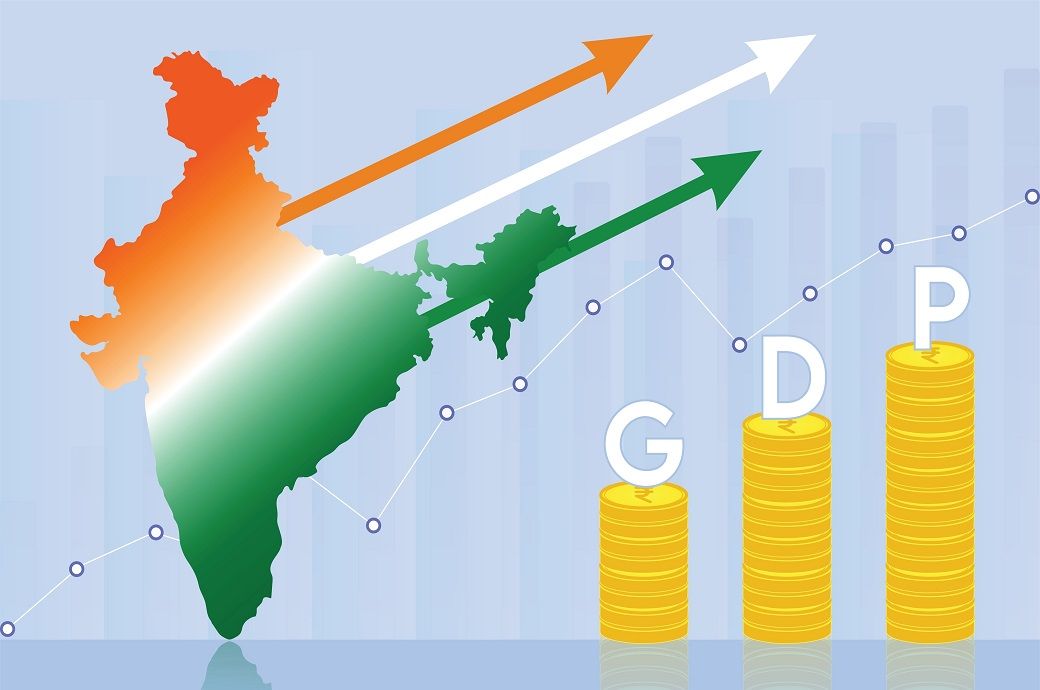
Nominal GDP, or GDP at current prices, is estimated to grow at 8.6 per cent to reach ₹345.47 trillion in FY26 against ₹318.07 trillion in 2024-25.
India’s real GDP is estimated to grow at 7.6 per cent to ₹322.58 trillion (~$3.54 billion) in FY26 compared to the first revised GDP estimate of ₹299.89 trillion for FY25 (7.1 per cent growth).
It released the new series of annual and quarterly national accounts estimates with FY23 base.
Real GVA is projected to grow at 7.7 per cent to reach ₹294.40 trillion in FY26 against ₹273.36 trillion in FY25.
Real gross value added (GVA) is projected to grow at 7.7 per cent to reach ₹294.40 trillion in FY26 against ₹273.36 trillion in FY25 (a 7.3-per cent growth rate).
Nominal GVA is estimated to grow at 8.7 per cent to hit ₹313.61 trillion during FY26, against ₹288.54 lakh crore in 2024-25.
Robust economic performance in FY26 is primarily on account of robust real growth observed in the second quarter (8.4 per cent) and third quarter (7.8 per cent).
The manufacturing sector has been the major driver of resilient performance of the economy the consecutive three fiscals after rebasing, a release from the ministry said.
Both private final consumption expenditure and grossed fixed capital formation exhibited more than 7-per cent growth rate in FY26.
Fibre2Fashion News Desk (DS)


Shia LaBeouf battles addiction amid public and legal pressure

VAR review: Did Chelsea deserve a penalty in loss to Arsenal?

Man United up to third as Sesko’s hot streak of crucial goals continues

Eye-popping rise in one year: Betting on just gold and silver for long-term wealth creation? Think again! – The Times of India

Pakistan carries out precision strikes on seven militant hideouts in Afghanistan

Kansas’ Darryn Peterson misses most of 2nd half with cramping

-
Business1 week ago
Eye-popping rise in one year: Betting on just gold and silver for long-term wealth creation? Think again! – The Times of India
-
 Politics1 week ago
Pakistan carries out precision strikes on seven militant hideouts in Afghanistan
-
 Sports1 week ago
Kansas’ Darryn Peterson misses most of 2nd half with cramping
-
 Business1 week ago
Equinox chairman says ‘health is the new luxury’ as wellness spending soars
-

 Tech1 week ago
The Supreme Court’s Tariff Ruling Won’t Bring Car Prices Back to Earth
-

 Tech1 week ago
These Cheap Noise-Cancelling Sony Headphones Are Even Cheaper Right Now
-

 Sports1 week ago
How James Milner broke Premier League’s appearances record
-

 Entertainment1 week ago
Viral monkey Punch makes IKEA toy global sensation: Here’s what it costs