

Politics
CAIR files federal lawsuit against Texas governor over ‘terrorist’ designation

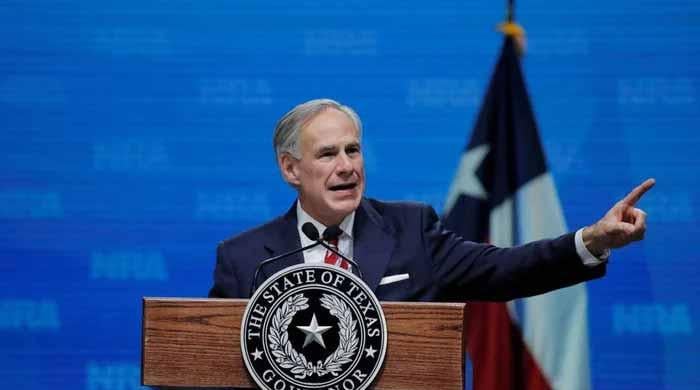
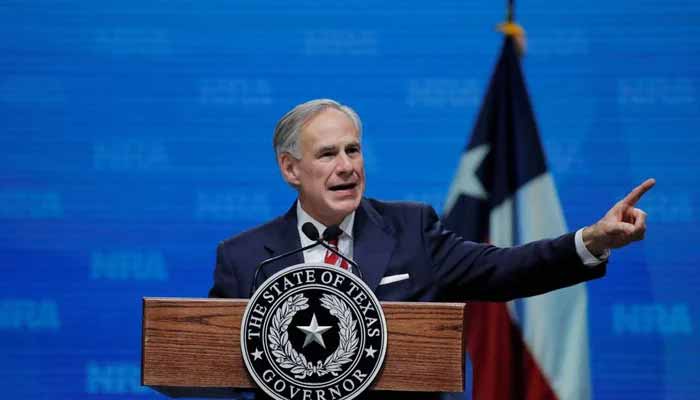
AUSTIN, TEXAS: The Council on American-Islamic Relations (CAIR), one of the country’s most prominent Muslim civil rights organisations, filed a federal lawsuit on Thursday against Texas Governor Greg Abbott and Attorney General Ken Paxton, seeking to block the enforcement of a gubernatorial proclamation that designated the group as a “foreign terrorist organisation” and barred it from purchasing land in the state.
The lawsuit was filed jointly by CAIR’s Dallas–Fort Worth and Austin chapters, marking a significant escalation in the standoff between the state government and the Muslim civil rights community.
CAIR contends that the governor acted without notice, evidence or any opportunity for the organisation to be heard, branding a longstanding American nonprofit as a terrorist entity in violation of both federal and state law.
The petition argues that the authority to designate foreign terrorist organisations lies exclusively with the United States Secretary of State, and that the governor’s unilateral move constitutes a violation of the US Constitution as well as a clear overreach of state powers.
The lawsuit further states that Abbott’s proclamation infringes upon CAIR’s rights under the Fourteenth Amendment by damaging the organisation’s reputation and property interests, and violates the First Amendment by targeting its political speech, particularly its longstanding criticism of Israeli government policies.
Reacting to the lawsuit, Governor Abbott posted a statement on X, declaring that the legal challenge would “expose all of their financial activities and dealings” and claiming that the attorney general “will have a great day” once the organisation’s records are scrutinised.
A day after issuing the proclamation, the governor also dispatched a separate letter directing criminal inquiries into what he described as “Sharia courts” operating in Collin and Dallas counties.
These, he alleged, were Muslim mediation groups presenting themselves as courts and issuing decisions to impose Islamic law — a claim CAIR and other community organisations strongly reject. Governor Abbott instructed district attorneys, county sheriffs, Attorney General Paxton and Texas Department of Public Safety Director Freeman Martin to investigate such activities.
Meanwhile, the Islamic Tribunal — one of the groups referenced in public debate — issued a clarification on its website explaining that it is neither a law firm nor a judicial authority, and that its members are not attorneys.
It stated that it provides voluntary mediation and arbitration services based on Islamic principles, with all proceedings conducted under federal, state and local law, and that no decision is legally binding unless formally recognised by a state court.
It noted that Muslim, Christian and Jewish communities across the United States make frequent use of voluntary mediation systems, which exist alongside and not in place of official courts.
The governor’s recent directives followed his announcement describing CAIR and the Muslim Brotherhood as foreign terrorist organisations, an allegation CAIR-Texas called an “Islamophobic conspiracy theory”, insisting that Americans retain the constitutional right to seek voluntary religious mediation while only state courts hold legal authority to enforce judgments.
Attorney Charlie Swift of the Muslim Legal Fund of America criticised the governor’s actions as an attack on constitutional principles and said the proclamation must fail in court. CAIR’s General Counsel Lena Masri remarked that the organisation has successfully defeated Governor Abbott three times previously in First Amendment litigation, and expressed confidence in prevailing again.
CAIR-Texas stated that the governor is targeting American Muslims under the influence of “Israel First politics”, adding that the community will continue to defend its constitutional rights without intimidation.
The lawsuit describes Abbott’s claims as false, defamatory and unsupported by Texas law, emphasising that CAIR is an independent American nonprofit unaffiliated with any foreign group.
The organisation is seeking an injunction to halt the implementation of the governor’s order, as well as damages for the harm caused by the designation.
The confrontation has now developed into a significant constitutional and political dispute in Texas, one that observers say may have broader implications for Muslim civil rights across the United States.
- US diplomats asked to review H-1B visa applicants’ LinkedIn profiles.
- H-1B visa applicants ineligible if found engaged in ‘censorship’.
- New vetting requirements apply to both new and repeat applicants.
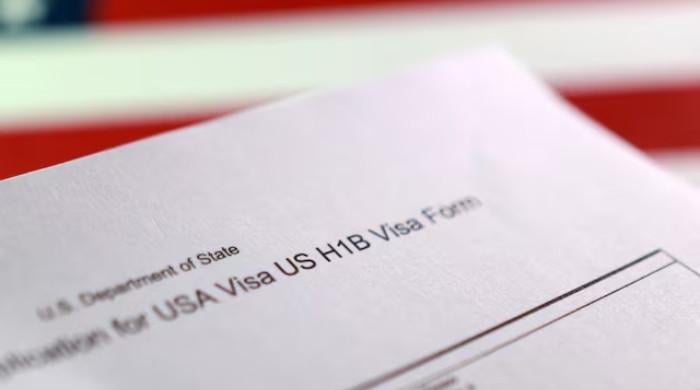
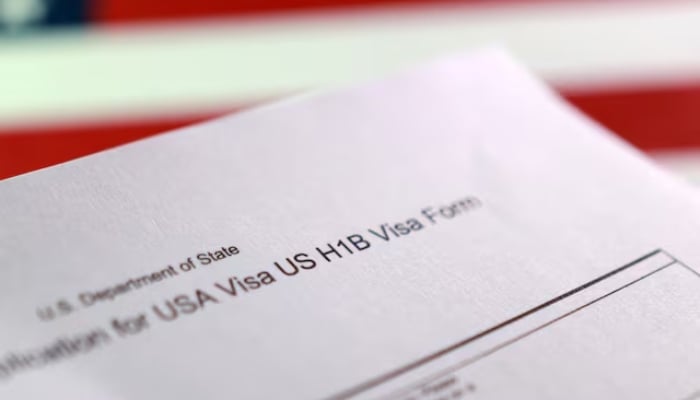
WASHINGTON: The Trump administration has ordered increased vetting of applicants for H-1B visas for highly skilled workers, with anyone involved in “censorship” of free speech considered for rejection, according to a State Department cable seen by Reuters.
H-1B visas are crucial for US tech companies, which recruit heavily from countries including India and China. Many of those companies’ leaders threw their support behind Trump in the last presidential election.
The cable, sent to all US missions on December 2, orders US consular officers to review resumes or LinkedIn profiles of H-1B applicants – and family members who would be travelling with them – to see if they have worked in areas that include activities such as misinformation, disinformation, content moderation, fact-checking, compliance and online safety, among others.
“If you uncover evidence an applicant was responsible for, or complicit in, censorship or attempted censorship of protected expression in the United States, you should pursue a finding that the applicant is ineligible,” under a specific article of the Immigration and Nationality Act, the cable said.
The enhanced vetting for H-1B visas, which allow US employers to hire foreign workers in speciality fields, has not been previously reported.
The cable said all visa applicants were subject to this policy, but sought a heightened review for the H-1B applicants, given they frequently worked in the technology sector, including in social media or financial services companies involved in the suppression of protected expression.
“You must thoroughly explore their employment histories to ensure no participation in such activities,” the cable said.
The new vetting requirements apply to both new and repeat applicants.
The Trump administration has made free speech, particularly what it sees as the stifling of conservative voices online, a focus of its foreign policy.
Officials have repeatedly weighed in on European politics to denounce what they say is the suppression of right-wing politicians, including in Romania, Germany and France, accusing European authorities of censoring views like criticism of immigration in the name of countering disinformation.
In May, Rubio threatened visa bans for people who censor speech by Americans, including on social media, and suggested the policy could target foreign officials regulating US tech companies.
The Trump administration has already significantly tightened its vetting of applicants for student visas, ordering US consular officers to screen for any social media posts that may be hostile towards the United States.
As part of his wide-ranging crackdown on immigration, Trump in September imposed new fees on H-1B visas.
Trump and his Republican allies have repeatedly accused the administration of Democratic former President Joe Biden of encouraging suppression of free speech on online platforms, claims that have centred on efforts to stem false claims about vaccines and elections.
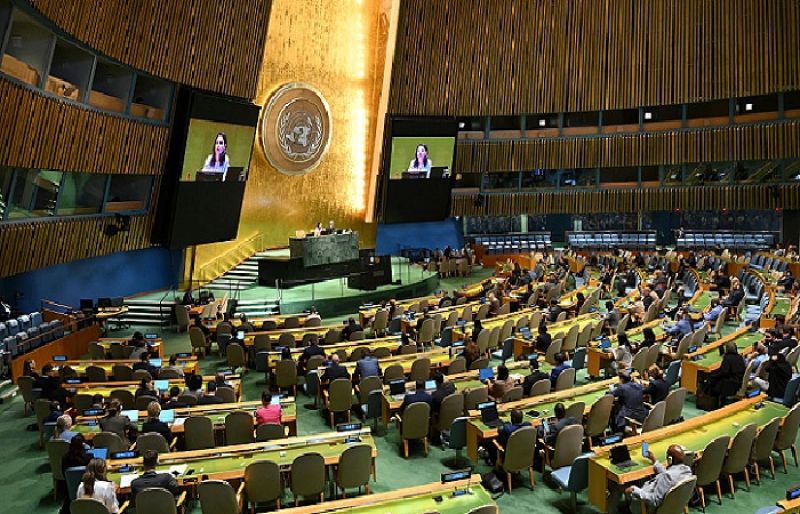

The UN General Assembly (UNGA) on Tuesday adopted a resolution calling for the withdrawal of Israeli forces from the occupied Palestinian territory, with Pakistan, which voted in favour of the text, reiterating that Palestinians must be allowed to exercise their inalienable right to self-determination.
The resolution, titled ‘Peaceful settlement of the question of Palestine’, was adopted with 151 countries voting in favour, 11 voting against and 11 abstaining, according to the summary posted by the UN.
According to the summary, the UNGA, through the resolution, “stressed the need for urgent, collective efforts to launch credible negotiations on all final status issues in the Middle East peace process and called for the timely convening of an international conference in Moscow — as envisioned by Security Council resolution 1850 (2008) — to advance a just, lasting and comprehensive peace settlement”.
“The Assembly also called on both parties to act responsibly, urgently reverse negative trends and create the conditions necessary for a credible political horizon and the advancement of peace efforts,” it said.
It also called on Israel to “comply strictly with its international law obligations, including by ending its unlawful presence in the occupied Palestinian territory, ceasing all new settlement activities and evacuating all settlers from the occupied Palestinian territory”.
Addressing Israel’s presence in the West Bank, the UNGA “rejected any attempt at demographic or territorial change in Gaza and stressed the importance of unifying the strip with the West Bank under the Palestinian Authority without delay”.
“Additionally, the Assembly called for Israel’s withdrawal from the Palestinian territory occupied since 1967, the realisation of the Palestinian people’s inalienable rights — primarily the right to self-determination — and a just resolution of the problem of Palestinian refugees,” it said.
Speaking during the UNGA debate, Pakistan’s Permanent Representative to the UN Asim Iftikhar Ahmed said, “Today’s resolution is more than a statement of principle. It is a reminder that the world must now turn promises into action.”
Calling for the realisation of an independent Palestinian state, Ambassador Iftikhar said, “Pakistan’s solidarity with the Palestinian people is steadfast, and we stand with them in their legitimate struggle for dignity, justice and self-determination.”
He further said that voting in favour of the resolution reflected Pakistan’s “long-standing and principled position on this matter”.
The UN envoy further said that the momentum generated at Sharm El-Sheikh, where the ceasefire agreement between Israel and Hamas was signed, must be sustained, particularly by advancing Palestinian-led governance, reconstruction and institution building, emphasising the role of the Palestinian Authority as “central”.
“Peace cannot be shaped without the direct involvement and ownership of the Palestinian people,” he stressed.
He further said that the Gaza ceasefire must be “implemented fully, with no unilateral actions or military activity”, calling for the withdrawal of Israeli forces from Gaza.
He added that full humanitarian access should also be guaranteed to the Palestinian enclave.
“With winter approaching and large parts of Gaza destroyed, the population needs sustained life-saving assistance.
“Any obstruction of aid violates international humanitarian law and must not be allowed under any pretext,” he said, adding that reconstruction of the ravaged Gaza Strip should begin without delay.
He said that there must be no annexation, no forced displacement, and no division of occupied lands, adding that Gaza’s territorial integrity and its contiguity with the West Bank were fundamental to a viable, sovereign and independent Palestinian state.
He further said that all settlement activity should stop.
“Efforts to change the demographic or legal character of the occupied territories, including around Al-Haram Al-Sharif, are illegal and must end,” he said.
He added that in order to “break the cycle of violence”, it was necessary to end the Israeli occupation of all Arab territories, including in Palestine, Syria and Lebanon.
“The imperative of a political horizon — a credible, time-bound political process anchored in relevant UN resolutions, leading to a sovereign, independent and contiguous State of Palestine based on pre-1967 borders with Al-Quds Al-Sharif as its capital,” he said.
- Decision marks rare policy reversal for Modi govt.
- Congress, tech companies question move’s legality.
- Indian govt says backtracking due to app’s popularity.
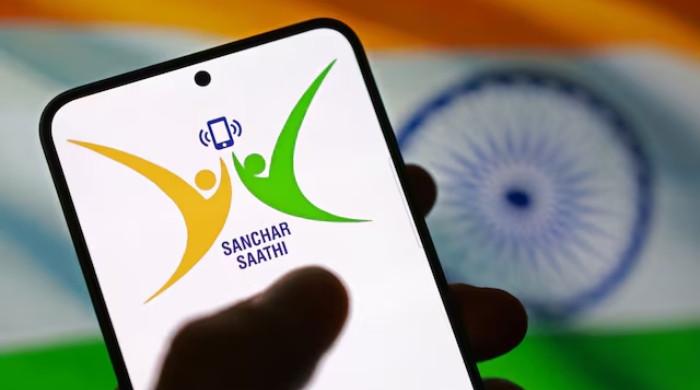
India’s government on Wednesday scrapped an order to smartphone makers to preload a state-run cybersecurity app on all new devices after an outcry from politicians, privacy advocates, and global tech companies over surveillance fears.
Prime Minister Narendra Modi’s government had privately told companies, including Apple, Samsung and Xiaomi, on November 28 to preload new phones with an app that cannot be deleted called Sanchar Saathi within 90 days, Reuters was first to report on Monday.
“Government has decided not to make the pre-installation mandatory for mobile manufacturers,” India’s communications ministry said in a press statement on Wednesday.
The move comes after protests from opposition parties over the issue, while newspaper editorials joined privacy advocates in denouncing the move.
The government also found itself at odds with phone manufacturers, as Apple and Samsung had plans not to comply with the directive, sources said.
Just a day earlier, government ministers had defended the plan, saying the app only helps track and block stolen phones and prevents them from being misused.
“The app is secure and purely meant to help citizens from bad actors in the cyber world,” the government said in its statement on Wednesday, saying it was backtracking because the app was gaining popularity.
Data from market intelligence firm Sensor Tower showed a 13% jump in daily downloads to 78,000 on Monday.
Political protests, privacy concerns
The u-turn will nonetheless come as an embarrassment for Modi’s government, and follows a reversal last year on a laptop import licensing policy after lobbying by US officials, which would have required companies to obtain licences for shipments.
Earlier on Wednesday, senior Congress leader Randeep Singh Surjewala said in a notice to Parliament that the government needed to clarify the legal authority for “mandating a non-removable app” and called for a debate on privacy and security risks.
“The grave, serious and real apprehension is also that such a compulsorily installed app can have a backdoor, thereby absolutely compromising the data and privacy of the user,” he added.
Free speech rights group Internet Freedom Foundation (IFF) welcomed Wednesday’s move but said it was waiting for a legal order explaining the decision.
Modi’s plan had little precedent, according to industry sources. Russia may be the only other known example. Moscow in August ordered that a state-backed messenger application called MAX, a rival to WhatsApp that critics say could be used to track users, must be pre-installed on all mobile phones and tablets.
Modi has faced criticism over issues of privacy before. In 2020, his government came under fire for a Covid-19 contact-tracing app compulsory for use by office workers. That measure was later diluted to a request when privacy advocates protested.


Bangladesh to launch direct flights to Karachi: high commissioner

Indian rupee dips below 90 per US dollar mark for 1st time
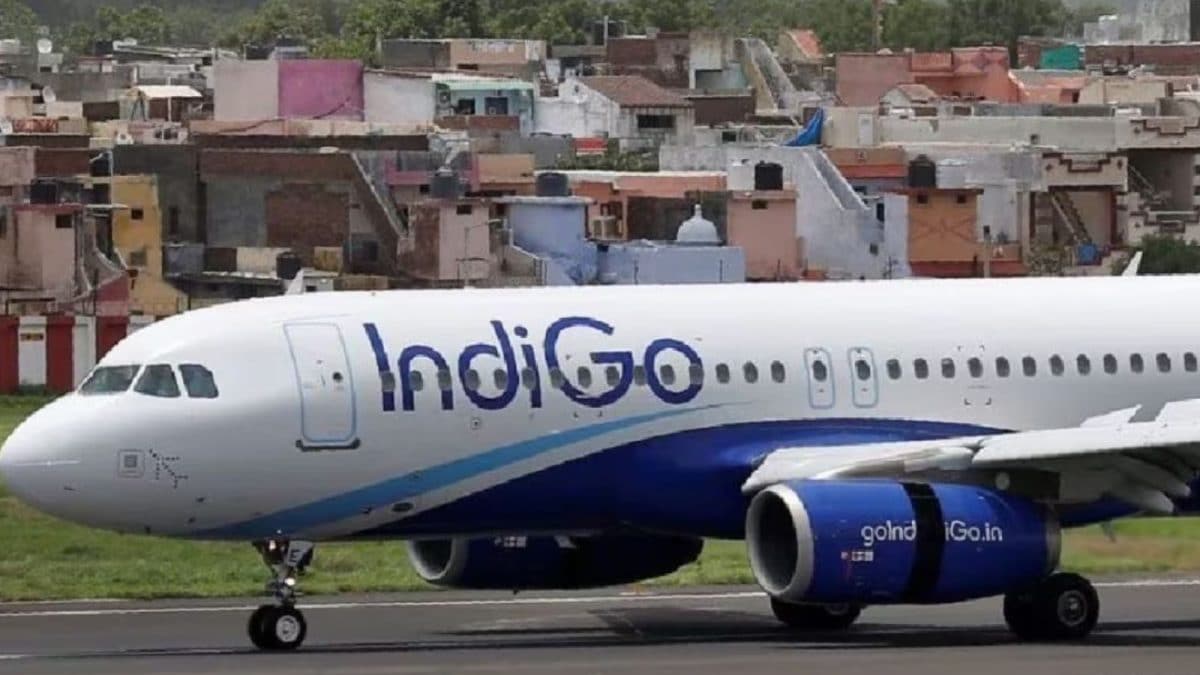
IndiGo Share Price Slips 2% In Focus As Massive Flight Disruptions Hit Operations Nationwide

-

 Sports3 days ago
India Triumphs Over South Africa in First ODI Thanks to Kohli’s Heroics – SUCH TV
-

 Tech4 days ago
Get Your Steps In From Your Home Office With This Walking Pad—On Sale This Week
-

 Fashion3 days ago
Results are in: US Black Friday store visits down, e-visits up, apparel shines
-

 Politics3 days ago
Elon Musk reveals partner’s half-Indian roots, son’s middle name ‘Sekhar’
-

 Entertainment3 days ago
Sadie Sink talks about the future of Max in ‘Stranger Things’
-

 Tech3 days ago
Prague’s City Center Sparkles, Buzzes, and Burns at the Signal Festival
-
Uncategorized1 week ago
[CinePlex360] Please moderate: “Americans would
-

 Tech1 week ago
Wake Up—the Best Black Friday Mattress Sales Are Here