

Tech
Can LLMs understand scientists? | Computer Weekly


The use of large language models (LLMs) as an alternative to search engines and recommendation algorithms is increasing, but early research suggests there is still a high degree of inconsistency and bias in the results these models produce. This has real-world consequences, as LLMs play a greater role in our decision-making choices.
Making sense of algorithmic recommendations is tough. In the past, we had entire industries dedicated to understanding (and gaming) the results of search engines – but the level of complexity of what goes into our online recommendations has risen several times over in just a matter of years. The massive diversity of use cases for LLMs has made audits of individual applications vital in tackling bias and inaccuracies.
Scientists, governments and civil society are scrambling to make sense of what these models are spitting out. A group of researchers at the Complexity Science Hub in Vienna has been looking at one area in particular where these models are being used: identifying scholarly experts. Specifically, these researchers were interested in which scientists are being recommended by these models – and which were not.
Lisette Espín-Noboa, a computer scientist working on the project, had been looking into this before major LLMs had hit the market: “In 2021, I was organising a workshop, and I wanted to come up with a list of keynote speakers.” First, she went to Google Scholar, an open-access database of scientists and their publications. “[Google Scholar] rank them by citations – but for several reasons, citations are biased.”
This meant trawling through pages and pages of male scientists. Some fields of science are simply more popular than others, with researchers having more influence purely due to the size of their discipline. Another issue is that older scientists – and older pieces of research – will naturally have more citations simply for being around longer, rather than the novelty of their findings.
“It’s often biased towards men,” Espín-Noboa points out. Even with more women entering the profession, most scientific disciplines have been male-dominated for decades.
Daniele Barolo, another researcher at the Complexity Science Hub, describes this as an example of the Matthew Effect. “If you sort the authors only by citation counts, it’s more likely they will be read and therefore cited, and this will create a reinforcement loop,” he explains. In other words, the rich get richer.
Espín-Noboa continues: “Then I thought, why don’t I use LLMs?” These tools could also fill in the gaps by including scientists that aren’t on Google Scholar.
But first, they would have to understand whether these were an improvement. “We started doing these audits because we wanted to know how much they knew about people, [and] if they were biased towards men or not,” Espín-Noboa says. The researchers also wanted to see how accurate the tools were and whether they displayed any biases based on ethnicity.
Auditing
They came up with an experiment which would test the recommendations given by LLMs along various lines, narrowing their requests to scientists published in the journal of the American Physical Society. They asked these LLMs for various recommendations, such as the most important in certain fields or to identify experts from certain periods of time.
While they couldn’t test for the absolute influence of a scientist – no such “ground truth” for this exists – the experiment did surface some interesting findings. Their paper, which is currently available as a preprint, suggests Asian scientists are significantly underrepresented in the recommendations provided by LLMs, and that existing biases against female authors are often replicated.
Despite detailed instructions, in some cases these models would hallucinate the names of scientists, particularly when asked for large lists of recommendations, and would not always be able to differentiate between varying fields of expertise.
“LLMs cannot be seen as directly as databases, because they are linguistic models,” Barolo says.
One test was to prompt the LLM with the name of a scientist and to ask it for someone of a similar academic profile – a “statistical twin”. But when they did this, “not only scientists that actually work in a similar field were recommended, but also people with a similar looking name” adds Barolo.
As with all experiments, there are certain limitations: for a start, this study was only conducted on open-weight models. These have a degree of transparency, although not as much as fully open-source models. Users are able to set certain parameters and to modify the structure of the algorithms used to fine-tune their outputs. By contrast, most of the largest foundation models are closed-weight ones, with minimal transparency and opportunities for customisation.
But even open-weight models come up against issues. “You don’t know completely how the training process was conducted and which training data was used,” Barolo points out.
The research was conducted on versions of Meta’s Llama models, Google’s Gemma (a more lightweight model than their flagship Gemini) and a model from Mistral. Each of these has already been superseded by newer models – a perennial problem for carrying out research on LLMs, as the academic pipeline cannot move as quickly as industry.
Aside from the time needed to execute research itself, papers can be held up for months or years in review. On top of this, a lack of transparency and the ever-changing nature of these models can create difficulties in reproducing results, which is a crucial step in the scientific process.
An improvement?
Espín-Noboa has previously worked on auditing more low-tech ranking algorithms. In 2022, she published a paper analysing the impacts of PageRank – the algorithm which arguably gave Google its big breakthrough in the late 1990s. It has since been used by LinkedIn, Twitter and Google Scholar.
PageRank was designed to make a calculation based on the number of links an item has in a network. In the case of webpages, this might be how many websites link to a certain site; or for scholars, it might make a similar calculation based on co-authorships.
Espín-Noboa’s research shows the algorithm has its own problems – it may serve to disadvantage minority groups. Despite this, PageRank is still fundamentally designed with recommendations in mind.
In contrast, “LLMs are not ranking algorithms – they do not understand what a ranking is right now”, says Espín-Noboa. Instead, LLMs are probabilistic – making a best guess at a correct answer by weighing up word probabilities. Espín-Noboa still sees promise in them, but says they are not up to scratch as things stand.
There is also a practical component to this research, as these researchers hope to ultimately create a way for people to better seek recommendations.
“Our final goal is to have a tool that a user can interact with easily using natural language,” says Barolo. This will be tailored to the needs of the user, allowing them to pick which issues are important to them.
“We believe that agency should be on the user, not on the LLM,” says Espín-Noboa. She uses the example of Google’s Gemini image generator overcorrecting for biases – representing American founding fathers (and Nazi soldiers) as people of colour after one update, and leading to it being temporarily suspended by the company.
Instead of having tech companies and programmers make sweeping decisions on the model’s output, users should be able to pick the issues most important to them.
The bigger picture
Research such as that going on at the Complexity Science Hub is happening across Europe and the world, as scientists race to understand how these new technologies are affecting our lives.
Academia has a “really important role to play”, says Lara Groves, a senior researcher at the Ada Lovelace Institute. Having studied how audits are taking place in various contexts, Groves says groups of academics – such as the annual FAccT conference on fairness, transparency and accountability – are “setting the terms of engagement” for audits.
Even without full access to training data and the algorithms these tools are built on, academia has “built up the evidence base for how, why and when you might do these audits”. But she warns these efforts can be hampered by the level of access that researchers are provided with, as they are often only able to look at their outputs.
Despite this, she would like to see more assessments taking place “at the foundation model layer”. Groves continues: “These systems are highly stochastic and highly dynamic, so it’s impossible to tell the range of outputs upstream.” In other words, the massive variability of what LLMs are producing means we ought to be checking under the hood before we start looking at their use cases.
Other industries – such as aviation or cyber security – already have rigorous processes for auditing. “It’s not like we’re working from first principles or from nothing. It’s identifying which of those mechanisms and approaches are analogous to AI,” Groves adds.
Amid an arms race for AI supremacy, any testing done by the major players is closely guarded. There have been occasional moments of openness: in August, OpenAI and Anthropic carried out audits on each other’s models and released their findings to the public.
Much of the work of interrogating LLMs will still fall to those outside of the tent. Methodical, independent research might allow us to glimpse into what’s driving these tools, and maybe even reshape them for the better.
Tech
Two Titanic Structures Hidden Deep Within the Earth Have Altered the Magnetic Field for Millions of Years

A team of geologists has found for the first time evidence that two ancient, continent-sized, ultrahot structures hidden beneath the Earth have shaped the planet’s magnetic field for the past 265 million years.
These two masses, known as large low-shear-velocity provinces (LLSVPs), are part of the catalog of the planet’s most enormous and enigmatic objects. Current estimates calculate that each one is comparable in size to the African continent, although they remain buried at a depth of 2,900 kilometers.
Low-lying surface vertical velocity (LLVV) regions form irregular areas of the Earth’s mantle, not defined blocks of rock or metal as one might imagine. Within them, the mantle material is hotter, denser, and chemically different from the surrounding material. They are also notable because a “ring” of cooler material surrounds them, where seismic waves travel faster.
Geologists had suspected these anomalies existed since the late 1970s and were able to confirm them two decades later. After another 10 years of research, they now point to them directly as structures capable of modifying Earth’s magnetic field.
LLSVPs Alter the Behavior of the Nucleus
According to a study published this week in Nature Geoscience and led by researchers at the University of Liverpool, temperature differences between LLSVPs and the surrounding mantle material alter the way liquid iron flows in the core. This movement of iron is responsible for generating Earth’s magnetic field.
Taken together, the cold and ultrahot zones of the mantle accelerate or slow the flow of liquid iron depending on the region, creating an asymmetry. This inequality contributes to the magnetic field taking on the irregular shape we observe today.
The team analyzed the available mantle evidence and ran simulations on supercomputers. They compared how the magnetic field should look if the mantle were uniform versus how it behaves when it includes these heterogeneous regions with structures. They then contrasted both scenarios with real magnetic field data. Only the model that incorporated the LLSVPs reproduced the same irregularities, tilts, and patterns that are currently observed.
The geodynamo simulations also revealed that some parts of the magnetic field have remained relatively stable for hundreds of millions of years, while others have changed remarkably.
“These findings also have important implications for questions surrounding ancient continental configurations—such as the formation and breakup of Pangaea—and may help resolve long-standing uncertainties in ancient climate, paleobiology, and the formation of natural resources,” said Andy Biggin, first author of the study and professor of Geomagnetism at the University of Liverpool, in a press release.
“These areas have assumed that Earth’s magnetic field, when averaged over long periods, behaved as a perfect bar magnet aligned with the planet’s rotational axis. Our findings are that this may not quite be true,” he added.
This story originally appeared in WIRED en Español and has been translated from Spanish.
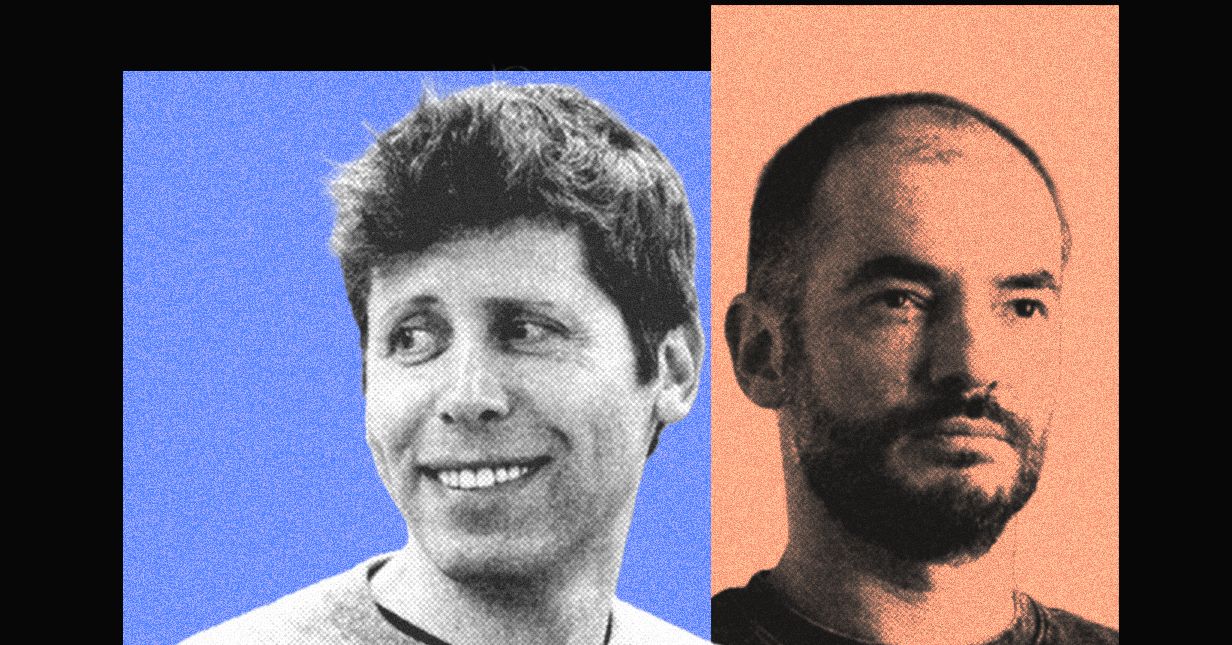
Since the middle of last year, there have been at least three major AI “acqui-hires” in Silicon Valley. Meta invested more than $14 billion in Scale AI and brought on its CEO, Alexandr Wang; Google spent a cool $2.4 billion to license Windsurf’s technology and fold its cofounders and research teams into DeepMind; and Nvidia wagered $20 billion on Groq’s inference technology and hired its CEO and other staffers.
The frontier AI labs, meanwhile, have been playing a high stakes and seemingly never-ending game of talent musical chairs. The latest reshuffle began three weeks ago, when OpenAI announced it was rehiring several researchers who had departed less than two years earlier to join Mira Murati’s startup, Thinking Machines. At the same time, Anthropic, which was itself founded by former OpenAI staffers, has been poaching talent from the ChatGPT maker. OpenAI, in turn, just hired a former Anthropic safety researcher to be its “head of preparedness.”
The hiring churn happening in Silicon Valley represents the “great unbundling” of the tech startup, as Dave Munichiello, an investor at GV, put it. In earlier eras, tech founders and their first employees often stayed onboard until either the lights went out or there was a major liquidity event. But in today’s market, where generative AI startups are growing rapidly, equipped with plenty of capital, and prized especially for the strength of their research talent, “you invest in a startup knowing it could be broken up,” Munichiello told me.
Early founders and researchers at the buzziest AI startups are bouncing around to different companies for a range of reasons. A big incentive for many, of course, is money. Last year Meta was reportedly offering top AI researchers compensation packages in the tens or hundreds of millions of dollars, offering them not just access to cutting-edge computing resources but also … generational wealth.
But it’s not all about getting rich. Broader cultural shifts that rocked the tech industry in recent years have made some workers worried about committing to one company or institution for too long, says Sayash Kapoor, a computer science researcher at Princeton University and a senior fellow at Mozilla. Employers used to safely assume that workers would stay at least until the four-year mark when their stock options were typically scheduled to vest. In the high-minded era of the 2000s and 2010s, plenty of early cofounders and employees also sincerely believed in the stated missions of their companies and wanted to be there to help achieve them.
Now, Kapoor says, “people understand the limitations of the institutions they’re working in, and founders are more pragmatic.” The founders of Windsurf, for example, may have calculated their impact could be larger at a place like Google that has lots of resources, Kapoor says. He adds that a similar shift is happening within academia. Over the past five years, Kapoor says, he’s seen more PhD researchers leave their computer-science doctoral programs to take jobs in industry. There are higher opportunity costs associated with staying in one place at a time when AI innovation is rapidly accelerating, he says.
Investors, wary of becoming collateral damage in the AI talent wars, are taking steps to protect themselves. Max Gazor, the founder of Striker Venture Partners, says his team is vetting founding teams “for chemistry and cohesion more than ever.” Gazor says it’s also increasingly common for deals to include “protective provisions that require board consent for material IP licensing or similar scenarios.”
Gazor notes that some of the biggest acqui-hire deals that have happened recently involved startups founded long before the current generative AI boom. Scale AI, for example, was founded in 2016, a time when the kind of deal Wang negotiated with Meta would have been unfathomable to many. Now, however, these potential outcomes might be considered in early term sheets and “constructively managed,” Gazor explains.

The face-recognition app Mobile Fortify, now used by United States immigration agents in towns and cities across the US, is not designed to reliably identify people in the streets and was deployed without the scrutiny that has historically governed the rollout of technologies that impact people’s privacy, according to records reviewed by WIRED.
The Department of Homeland Security launched Mobile Fortify in the spring of 2025 to “determine or verify” the identities of individuals stopped or detained by DHS officers during federal operations, records show. DHS explicitly linked the rollout to an executive order, signed by President Donald Trump on his first day in office, which called for a “total and efficient” crackdown on undocumented immigrants through the use of expedited removals, expanded detention, and funding pressure on states, among other tactics.
Despite DHS repeatedly framing Mobile Fortify as a tool for identifying people through facial recognition, however, the app does not actually “verify” the identities of people stopped by federal immigration agents—a well-known limitation of the technology and a function of how Mobile Fortify is designed and used.
“Every manufacturer of this technology, every police department with a policy makes very clear that face recognition technology is not capable of providing a positive identification, that it makes mistakes, and that it’s only for generating leads,” says Nathan Wessler, deputy director of the American Civil Liberties Union’s Speech, Privacy, and Technology Project.
Records reviewed by WIRED also show that DHS’s hasty approval of Fortify last May was enabled by dismantling centralized privacy reviews and quietly removing department-wide limits on facial recognition—changes overseen by a former Heritage Foundation lawyer and Project 2025 contributor, who now serves in a senior DHS privacy role.
DHS—which has declined to detail the methods and tools that agents are using, despite repeated calls from oversight officials and nonprofit privacy watchdogs—has used Mobile Fortify to scan the faces not only of “targeted individuals,” but also people later confirmed to be US citizens and others who were observing or protesting enforcement activity.
Reporting has documented federal agents telling citizens they were being recorded with facial recognition and that their faces would be added to a database without consent. Other accounts describe agents treating accent, perceived ethnicity, or skin color as a basis to escalate encounters—then using face scanning as the next step once a stop is underway. Together, the cases illustrate a broader shift in DHS enforcement toward low-level street encounters followed by biometric capture like face scans, with limited transparency around the tool’s operation and use.
Fortify’s technology mobilizes facial capture hundreds of miles from the US border, allowing DHS to generate nonconsensual face prints of people who, “it is conceivable,” DHS’s Privacy Office says, are “US citizens or lawful permanent residents.” As with the circumstances surrounding its deployment to agents with Customs and Border Protection and Immigration and Customs Enforcement, Fortify’s functionality is visible mainly today through court filings and sworn agent testimony.
In a federal lawsuit this month, attorneys for the State of Illinois and the City of Chicago said the app had been used “in the field over 100,000 times” since launch.
In Oregon testimony last year, an agent said two photos of a woman in custody taken with his face-recognition app produced different identities. The woman was handcuffed and looking downward, the agent said, prompting him to physically reposition her to obtain the first image. The movement, he testified, caused her to yelp in pain. The app returned a name and photo of a woman named Maria; a match that the agent rated “a maybe.”
Agents called out the name, “Maria, Maria,” to gauge her reaction. When she failed to respond, they took another photo. The agent testified the second result was “possible,” but added, “I don’t know.” Asked what supported probable cause, the agent cited the woman speaking Spanish, her presence with others who appeared to be noncitizens, and a “possible match” via facial recognition. The agent testified that the app did not indicate how confident the system was in a match. “It’s just an image, your honor. You have to look at the eyes and the nose and the mouth and the lips.”


Global GDP growth to be resilient at 3.3% in 2026; India above US: IMF

RBI MPC Meeting 2026 Live Updates: Gov Sanjay Malhotra To Announce Decision On Repo Rate Today

Each Premier League team reranked: Man United good now, Arsenal even better

-
 Business1 week ago
PSX witnesses 6,000-point on Middle East tensions | The Express Tribune
-

 Tech1 week ago
The Surface Laptop Is $400 Off
-

 Tech1 week ago
Here’s the Company That Sold DHS ICE’s Notorious Face Recognition App
-
 Business1 week ago
Budget 2026: Defence, critical minerals and infra may get major boost
-

 Tech4 days ago
How to Watch the 2026 Winter Olympics
-

 Tech6 days ago
Right-Wing Gun Enthusiasts and Extremists Are Working Overtime to Justify Alex Pretti’s Killing
-

 Fashion7 days ago
Italy’s Brunello Cucinelli debuts Callimacus AI e-commerce experience
-
 Business6 days ago
Video: Who Is Trump’s New Fed Chair Pick?