

Politics
Canada lists India’s Bishnoi gang ‘terrorist entity’

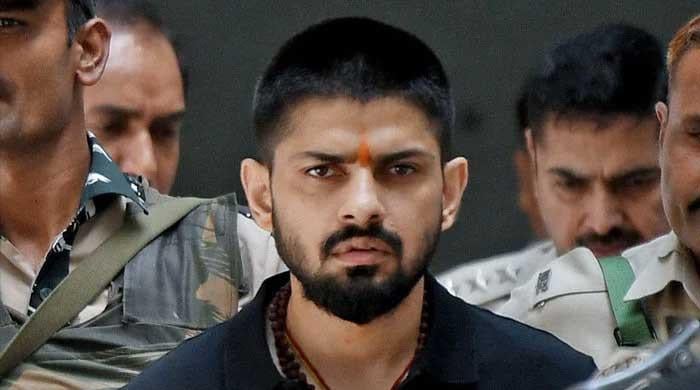
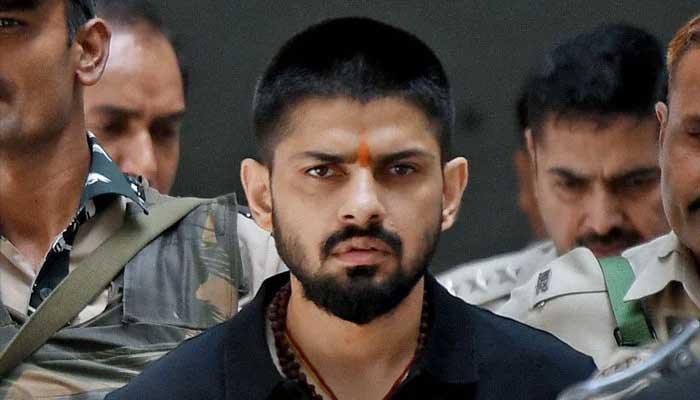
- PM Modi’s govt directed Bishnoi group to target Sikh activist: police.
- Terror designation empowers Canada to confront Indian gang.
- Ottawa terms group transnational criminal operating out of India.
MONTREAL: Canada has declared India’s Bishnoi gang a “terrorist entity,” targeting a group linked to a murder that triggered a breakdown in relations between Ottawa and New Delhi last year.
Canada has accused the notorious syndicate — known for assassinations and extortion in India — of possible involvement in the murder of prominent Sikh activist and Canadian citizen Hardeep Singh Nijjar near Vancouver.
Nijjar, who had advocated for a separate Sikh state carved out of India, was shot dead in a parking lot in 2023.
Following the incident, the Royal Canadian Mounted Police have alleged that members of Prime Minister Narendra Modi’s government worked with the “Bishnoi Group” to target Sikh activists in Canada.
India furiously rejected those charges, sparking a diplomatic fallout that saw both countries expel top diplomats.
Canada’s Public Safety Minister Gary Anandasangaree said terrorism designation gave Ottawa “more powerful and effective tools to confront” the Bishnoi group.
A statement from his office called the Bishnoi gang “a transnational criminal organisation operating primarily out of India, with a presence in Canada, that generates terror through extortion and intimidation”.
The move comes as Prime Minister Mark Carney, who took office in March, seeks to repair ties with India that collapsed under his predecessor, Justin Trudeau.
Carney has courted India as part of an effort to deepen Canada’s trade ties in Asia, which the prime minister says is essential to offset the impact of the trade war with the United States.
Carney met one-on-one with Modi at the Canada-hosted G7 meeting in June, stressing “the significant commercial links between Canada and India.”
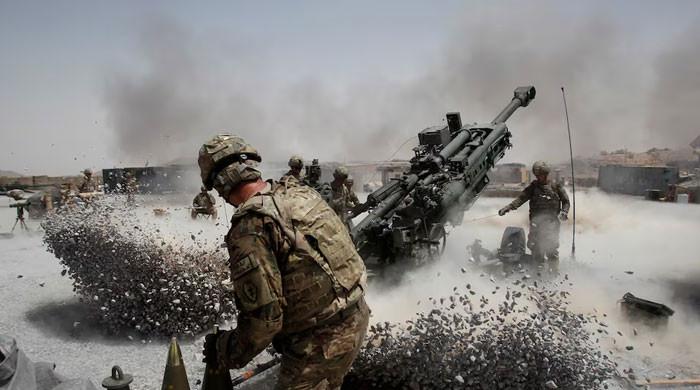
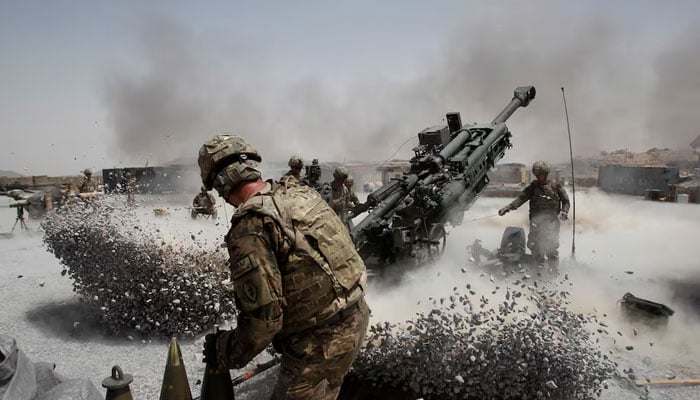
Despite promising to end United States’ involvement in costly and destructive foreign wars, President Donald Trump, together with Israel, has launched a massive military assault on Iran, targeting its leadership as well as its nuclear and missile infrastructure.
Since the September 11, 2001, attacks on New York and Washington DC, the United States has engaged in three full-scale wars and conducted bombing operations in at least 10 countries. These operations have ranged from large-scale invasions to targeted air strikes and drone campaigns, often carried out over multiple years.
In the immediate aftermath of 9/11, then-President George W Bush declared a “war on terror”, launching a global military campaign that reshaped US foreign policy.
The wars in Afghanistan and Iraq were followed by military operations in Pakistan, Syria, Yemen and other regions, as successive administrations expanded or sustained counterterrorism efforts.
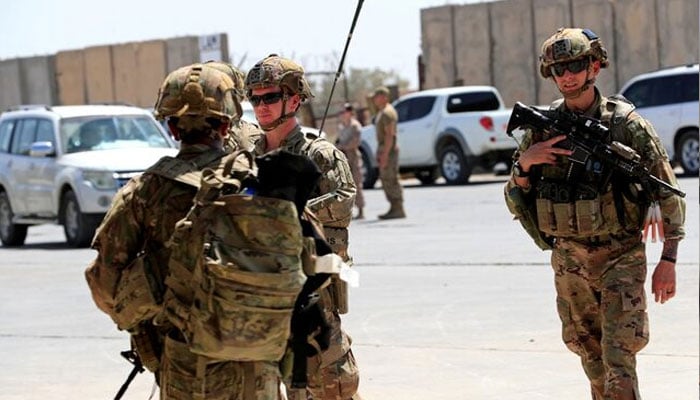
Two decades of war and its costs
Research by Brown University’s Watson Institute for International and Public Affairs estimates that US-led wars since 2001 have directly caused approximately 940,000 deaths across Afghanistan, Pakistan, Iraq, Syria, Yemen and other conflict zones, according to Al Jazeera report.
The figure excludes indirect deaths resulting from displacement, destruction of infrastructure, limited access to healthcare and food shortages, the report said.
According to the report, the United States has spent an estimated $5.8 trillion on post-9/11 wars. This includes $2.1 trillion allocated by the Department of Defence, $1.1 trillion by the Department of Homeland Security, $884 billion added to the Pentagon’s base budget, $465 billion for veterans’ medical care and roughly $1 trillion in interest payments on war-related borrowing.
In addition, the US is projected to spend at least another $2.2 trillion on veterans’ care over the next three decades, bringing the total estimated cost of its post-2001 wars to approximately $8 trillion.
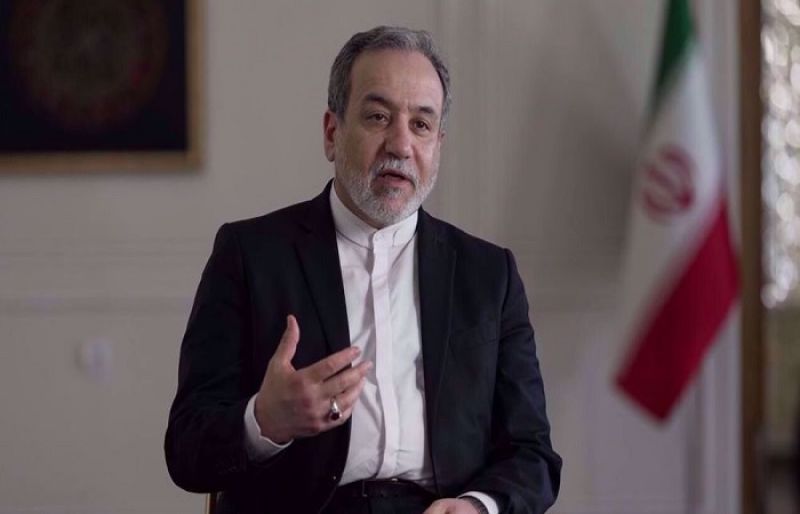

Iran’s Foreign Minister Abbas Araghchi says US President Donald Trump betrayed both the indirect negotiations with Tehran and the American people by launching unprovoked aggression against Iran.
In a post published on social media platform X on Wednesday, Araghchi said, “When complex nuclear negotiations are treated like a real estate transaction, and when big lies cloud realities, unrealistic expectations can never be met. The outcome? Bombing the negotiation table out of spite.”
“Mr. Trump betrayed diplomacy and Americans who elected him,” added the top diplomat.
Iran and the US were in the midst of indirect negotiations regarding Iran’s nuclear program, with Iranian negotiators and the Omani mediators expressing strong hope that an agreement could be reached.
On Friday, one day before the Israeli-US aggression against Iran and immediately after the third round of negotiations in Geneva, Switzerland, Omani diplomats went so far as to say that a new comprehensive agreement was closer than ever.
However, on Saturday, Israeli and US armed forces launched a series of attacks against strategic targets across Iran, killing several senior officials.
Trump’s especial envoy to West Asia Steve Witkoff, head of the US negotiating team, had earlier tried to pave the way for the US aggression on Iran by falsely claiming that it was the Iranian side that had undermined the process.
However, a diplomat familiar with the process of the negotiations told MS NOW that Witkoff’s claims are completely false and Iranians were open to a fair but comprehensive agreement with the US.
“I can categorically state that this is inaccurate,” said the diplomat, referring to Witkoff’s account.
According to the Persian Gulf diplomat, who spoke on condition of anonymity, the Iranian delegation had told Witkoff during indirect negotiations on Iran’s nuclear program that Tehran enriched the uranium after Trump pulled the US out of a 2015 nuclear agreement brokered by former President Barack Obama’s administration.
Scores of Iranian cities have been targeted in the US-Israeli aggression. Leader of the Islamic Revolution Ayatollah Seyyed Ali Khamenei was assassinated in the Saturday attack.
Since then, Iranian armed forces have swiftly and decisively retaliated against these strikes by launching barrages of missile and drones against Israeli-occupied territories as well as on US bases in region.
Iranian officials have stated that targeting US military bases in the region constitutes “legitimate self-defense.”
Referring to Article 51 of the Charter of the United Nations, they said that Iran has the legal right to defend itself against “acts of aggression” by the US or the Israeli regime.
- Airline shares stabilise after significant losses.
- Skies over swathes of Middle East still empty.
- Worst crisis for global travel industry since Covid-19.
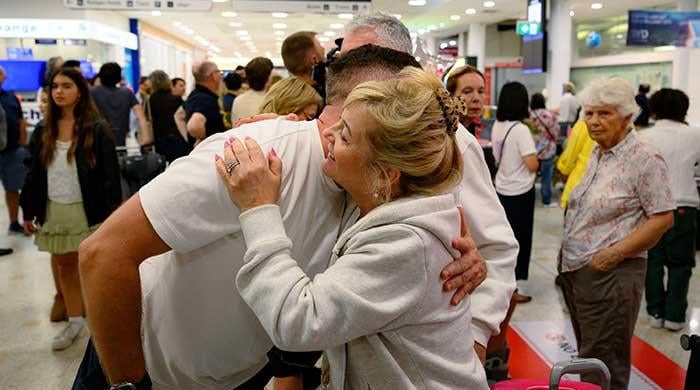
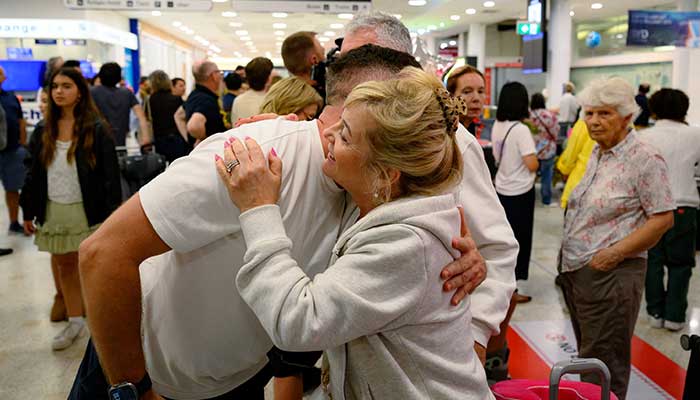
Dozens of repatriation flights were due to depart from the Middle East on Wednesday as governments hurried to bring tens of thousands of stranded citizens home in the midst of an intensifying US and Israeli conflict with Iran.
Skies over most of the Middle East remained empty of commercial planes on Wednesday, with major Gulf hubs, including the world’s busiest international airport in Dubai, largely shut for a fifth day, in the biggest travel disruption since the Covid-19 pandemic.
The first repatriation flights were due to leave for Britain and France on Wednesday, and the United Arab Emirates opened special corridors to allow some citizens to return home. Normally, thousands of commercial flights would take off from the region daily.
Marooned tourists and some expatriates have also tried to find their own way out.
“We’re doing this cautiously,” said French Finance Minister Roland Lescure. The French government said several repatriation flights for its citizens, around 400,000 of whom are in the region, were planned for Wednesday.
A British chartered flight will leave Oman on Wednesday evening, prioritising vulnerable UK nationals, the British Foreign Office said.
Emirates, the world’s largest international carrier, said all routes to and from Dubai remain suspended until March 7 and it was operating a “limited” flight schedule from Dubai International and from Maktoum International.
The New Zealand government said it expected a total of 121 repatriation flights to depart from Dubai International Airport on Wednesday.
Qantas, meanwhile, was running extra flights to bring British people stuck in Australia back home, but would have to route them via a refuelling stop in Singapore as an alternative to the normal Middle East hubs.
With airspace severely constrained, many airlines are carrying extra fuel or making additional refuelling stops to guard against sudden rerouting or longer flight paths through safer corridors.
Airline shares were less volatile on Wednesday after double-digit percentage drops in the past few days, which wiped tens of billions of dollars from airlines’ market value.
Lufthansa was up 3% at 1306 GMT, while Qantas closed down 2.7% lower, having lost more than 10% of their value so far this week. BA-owner ICAG was up 2%, having fallen more than 13% in the past three days.
Airline executives have said that crew and pilots are now scattered across the world, complicating the process of resuming flights when airspace reopens. Soaring prices of oil will also add to carriers’ costs.
Analysts said flights will become more expensive if longer routes become the only options for international carriers.
The Gulf is also a major hub for air cargo, putting further pressure on international trade routes following the disruption of Red Sea shipping routes.
Asian airline stocks
Shares of US carriers United Airlines, American Airlines and Delta Air Lines were all up about 1% in pre-market trading, while Southwest Airlines shares were marginally lower.
Most Asian airline shares pared losses from earlier this week, though Korean Air Lines shares fell 7.9% after dropping 10.3% on Tuesday.
South Korea’s stock market was closed on Monday when most airline and travel stocks bore the brunt of the impact from the conflict.
Oil prices have risen sharply this week, with Brent crude oil up around 14% since the US-Israeli strikes on Iran, potentially pushing up fuel costs for airlines.
Hedging is expected to help mitigate some of the cost increases.
“Recent guidance indicates that the airlines have hedged around 50% of their jet fuel needs. In general, they should be able to pass through the balance of the price rise to passengers,” Lorraine Tan, director of equity research for Asia at Morningstar, said.


Jake Cannavale shares his bit on Bobby Cannavale, Rose Byrne’s viral pet

Judge sets May retrial date in Miami football murder case

Target is making big changes to win back customers. Here’s what shoppers can expect to see

India Us Trade Deal: Fresh look at India-US trade deal? May be ‘rebalanced’ if circumstances change, says Piyush Goyal – The Times of India

Households set for lower energy bills amid price cap shake-up

What are Iran’s ballistic missile capabilities?

-
Business6 days ago
India Us Trade Deal: Fresh look at India-US trade deal? May be ‘rebalanced’ if circumstances change, says Piyush Goyal – The Times of India
-
Business1 week ago
Households set for lower energy bills amid price cap shake-up
-
 Politics6 days ago
What are Iran’s ballistic missile capabilities?
-

 Politics7 days ago
US arrests ex-Air Force pilot for ‘training’ Chinese military
-
 Business6 days ago
Attock Cement’s acquisition approved | The Express Tribune
-

 Fashion6 days ago
Policy easing drives Argentina’s garment import surge in 2025
-

 Sports1 week ago
Top 50 USMNT players of 2026, ranked by club form: USMNT Player Performance Index returns
-

 Sports7 days ago
Sri Lanka’s Shanaka says constant criticism has affected players’ mental health