

Fashion
Canada’s Gildan Activewear to acquire HanesBrands in $4.4 bn deal

Under the deal, HanesBrands shareholders will receive 0.102 Gildan shares and $0.80 in cash per share, representing a 24 per cent premium to HanesBrands’ August 11 closing price. Upon completion, they will own about 19.9 per cent of Gildan on a non-diluted basis.
Gildan Activewear will acquire HanesBrands in a $4.4 billion deal, doubling Gildan’s revenues and expanding into iconic innerwear brands.
HanesBrands shareholders will get cash and shares, holding 19.9 per cent post-close.
The merger targets $200 million in cost synergies within three years, with over 20 per cent EPS accretion.
Headquarters will remain in Montreal.
The combination will double Gildan’s revenues, expand its reach into iconic innerwear brands, and strengthen its low-cost vertically integrated manufacturing network. The companies expect at least $200 million in annual run-rate cost synergies within three years—$50 million in 2026, $100 million in 2027, and $50 million in 2028. The deal is forecast to be immediately accretive to adjusted diluted EPS and deliver more than 20 per cent EPS accretion once synergies are realised, the two companies said in a joint media release.
Gildan will maintain headquarters in Montreal and a strong presence in Winston-Salem. The transaction, approved unanimously by both boards, is subject to shareholder and regulatory approvals, with closing expected in late 2025 or early 2026. Financing includes $2.3 billion in committed facilities, with Gildan targeting a net debt-to-adjusted EBITDA ratio of ≤2.0x within 18 months post-close.
The merged entity aims for net sales growth of 3–5 per cent annually, capex of 3–4 per cent of sales, and adjusted EPS growth in the low 20 per cent range through 2028. Strategic alternatives will be reviewed for HanesBrands Australia, potentially including a sale, the release added.
“Today is a historic moment in Gildan’s journey as we look to join forces with HanesBrands. We are extremely pleased to welcome the HanesBrands’ team to the Gildan family,” commented Glenn J Chamandy, president and chief executive officer of Gildan. “With this transaction, our revenues will double, and we achieve a scale that distinctly sets us apart. The combination with HanesBrands strengthens our positioning with an opportunity to expand the heritage “Hanes” brand presence in activewear across channels, while enhancing Gildan’s retail reach for its portfolio of brands. Further, our state of the art low-cost vertically integrated platform will be utilised to enhance efficiencies and drive additional innovation. We are excited for the next stage of growth and remain focused on supporting our customers and continuing to drive long term shareholder value.”
“This transaction represents a powerful alignment of HanesBrands’ and Gildan’s shared commitment to quality, innovation, and excellence. We have great respect for Gildan’s manufacturing strength and long track record of success. We look forward to expanding upon HanesBrands’ portfolio of leading innerwear brands and go-to-market expertise and opening new doors for growth and impact as part of Gildan,” said Steve Bratspies, CEO of HanesBrands.
“This transaction represents a pivotal moment in Gildan’s story,” said Michael Kneeland, chair of the board of directors of Gildan. “Hanes is a distinguished brand with a proud legacy, and by joining forces with HanesBrands, we are forging an exceptional organisation built on the strengths of both companies. Leveraging best practices and the exceptional teams from each side, we are poised to deliver outstanding value to our customers and shareholders. With the finest talent in the industry, we have an extraordinary opportunity ahead to shape the future together.”
Bill Simon, chairman of HanesBrands’ board of directors, commented, “We are very pleased to have reached this agreement with Gildan which delivers significant and certain value for our shareholders, both through immediate cash and substantial upside potential of the combined company. As part of Gildan, HanesBrands will benefit from an even stronger financial and operational foundation that will provide new growth opportunities – helping to power further innovation, a broader product offering and greater reach across channels and geographies. We are confident that this transaction and the next chapter with Gildan is the right next step for HanesBrands and will honour and build on its long history for the benefit of all our stakeholders.”
Fibre2Fashion News Desk (KD)












Wholesale revenue dropped 12.8 per cent on a currency-adjusted basis to €4.9 billion, while direct-to-consumer (DTC) sales increased 3.4 per cent, lifting the DTC share to 32.4 per cent from 28.9 per cent.
Regionally, sales fell 6.9 per cent in Europe, Middle East and Africa (EMEA), 7.4 per cent in Asia-Pacific and 10 per cent in the Americas, with North America driving much of the decline.
Puma has reported sales of €7.3 billion (~$8.61 billion) in FY25, with currency-adjusted revenue down 8.1 per cent amid strategic reset actions.
Wholesale declined while DTC share increased.
Margins contracted and EBIT turned negative, leading to a net loss.
Q4 saw sharper declines across regions and categories.
Puma expects further sales softness and negative EBIT in FY26.
By product segment, footwear sales decreased 7.1 per cent, apparel declined 9.7 per cent and accessories fell 8.5 per cent, although selective growth was observed in running, training and premium sport style lines, Puma said in a press release.
Profitability weakened significantly during the year. Gross margin contracted 260 basis points to 45.0 per cent, impacted by promotional activity, inventory reserves, unfavourable mix and currency effects. Adjusted EBIT turned negative at €165.6 million, while reported EBIT declined to -€357.2 million after €191.6 million in one-off costs related mainly to the cost efficiency programme and goodwill impairments.
Loss from continuing operations widened to -€643.6 million, translating to earnings per share of -€4.37 versus €1.88 in the prior year.
From a balance sheet perspective, inventories rose 2.3 per cent to €2.06 billion as inventory takebacks from wholesale partners supported distribution clean-up. Working capital increased 20.2 per cent, while trade receivables and payables declined sharply in line with reduced sales and purchasing activity. Puma ended the year with additional financing capacity, including €1,202.2 million in unutilised credit lines.
Fourth quarter (Q4) performance reflected the peak impact of the strategic reset. Currency-adjusted sales declined 20.7 per cent to €1,564.9 million, with reported revenue down 27.2 per cent due to currency headwinds. The decline was driven by deliberate reductions in wholesale exposure, inventory clearance actions and lower promotional intensity.
Wholesale sales fell 27.7 per cent in Q4, while DTC revenue decreased 8.0 per cent, although DTC share increased to 41.1 per cent from 35.5 per cent. Regionally, sales dropped 12.6 per cent in Asia-Pacific, 22.2 per cent in the Americas and 24.3 per cent in EMEA.
Across product divisions, footwear sales declined 25.4 per cent, apparel fell 13.7 per cent and accessories dropped 18.2 per cent, with selective resilience in training and performance running categories.
Profitability deteriorated sharply. Gross margin declined to 40.2 per cent from 47.7 per cent due to promotions, inventory provisions and currency effects. Adjusted EBIT fell to -€228.8 million, while reported EBIT reached -€307.7 million following one-off costs linked to restructuring and impairment charges. The quarter ended with a loss from continuing operations of -€335 million.
Arthur Hoeld, CEO of Puma, said: “2025 was a reset year for us. We want to establish Puma as a top 3 sports brand globally, return to above-industry growth and generate healthy profits in the medium term. It is crucial to make the Puma brand less commercial and ensure we once again excite our consumers with attractive products, compelling storytelling and distribution in the right channels. I am satisfied with the progress we have made so far. We cleaned up most of our distribution by reducing promotions in our own channels and cutting our exposure to those wholesale channels that damage our brand’s desirability. To better position our product icons and our performance offering and tell more engaging product stories, we created the right structures inside our company. We also addressed operational inefficiencies and further optimised our cost base.”
Looking ahead, Puma expects currency-adjusted sales in fiscal 2026 to decline in the low- to mid-single-digit percentage range, with EBIT projected between -€50 million and -€150 million. Capital expenditure of around €200 million is planned as the company continues investments in brand repositioning and digital capabilities, added the release.
Fibre2Fashion News Desk (SG)
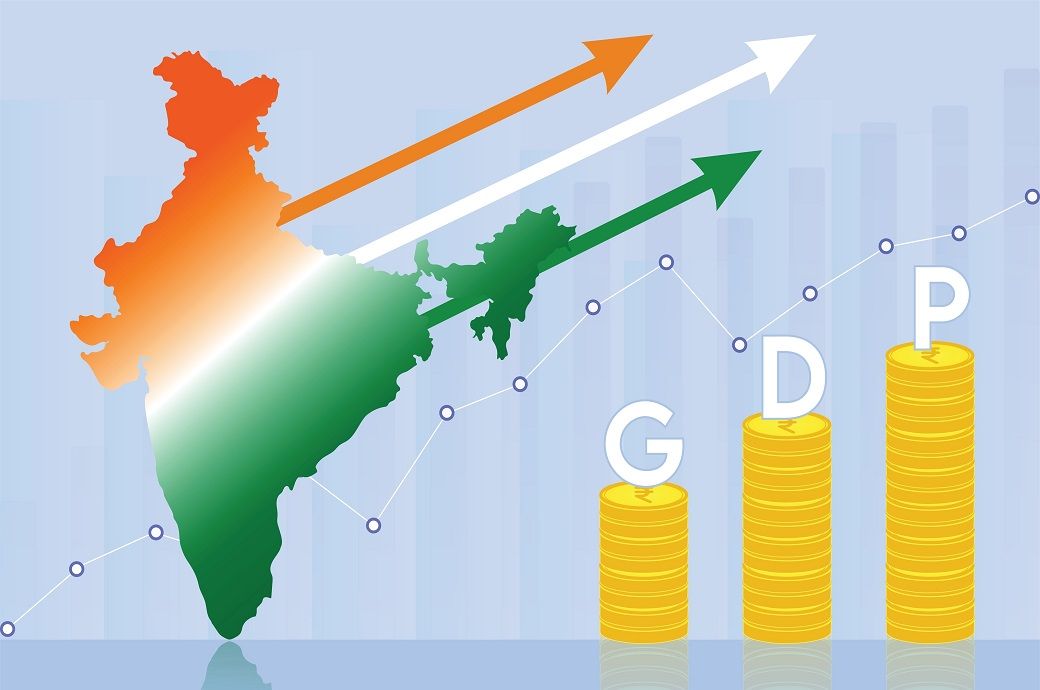
Nominal GDP, or GDP at current prices, is estimated to grow at 8.6 per cent to reach ₹345.47 trillion in FY26 against ₹318.07 trillion in 2024-25.
India’s real GDP is estimated to grow at 7.6 per cent to ₹322.58 trillion (~$3.54 billion) in FY26 compared to the first revised GDP estimate of ₹299.89 trillion for FY25 (7.1 per cent growth).
It released the new series of annual and quarterly national accounts estimates with FY23 base.
Real GVA is projected to grow at 7.7 per cent to reach ₹294.40 trillion in FY26 against ₹273.36 trillion in FY25.
Real gross value added (GVA) is projected to grow at 7.7 per cent to reach ₹294.40 trillion in FY26 against ₹273.36 trillion in FY25 (a 7.3-per cent growth rate).
Nominal GVA is estimated to grow at 8.7 per cent to hit ₹313.61 trillion during FY26, against ₹288.54 lakh crore in 2024-25.
Robust economic performance in FY26 is primarily on account of robust real growth observed in the second quarter (8.4 per cent) and third quarter (7.8 per cent).
The manufacturing sector has been the major driver of resilient performance of the economy the consecutive three fiscals after rebasing, a release from the ministry said.
Both private final consumption expenditure and grossed fixed capital formation exhibited more than 7-per cent growth rate in FY26.
Fibre2Fashion News Desk (DS)


Man United up to third as Sesko’s hot streak of crucial goals continues

When We Were Young Festival announces 2026 hiatus: ‘See you in 2027’

The 5 Big ‘Known Unknowns’ of Donald Trump’s New War With Iran

Eye-popping rise in one year: Betting on just gold and silver for long-term wealth creation? Think again! – The Times of India

Pakistan carries out precision strikes on seven militant hideouts in Afghanistan

Kansas’ Darryn Peterson misses most of 2nd half with cramping

-
 Politics1 week ago
Pakistan carries out precision strikes on seven militant hideouts in Afghanistan
-
Business1 week ago
Eye-popping rise in one year: Betting on just gold and silver for long-term wealth creation? Think again! – The Times of India
-
 Sports1 week ago
Kansas’ Darryn Peterson misses most of 2nd half with cramping
-

 Tech1 week ago
These Cheap Noise-Cancelling Sony Headphones Are Even Cheaper Right Now
-

 Entertainment1 week ago
Saturday Sessions: Say She She performs "Under the Sun"
-
 Business1 week ago
Equinox chairman says ‘health is the new luxury’ as wellness spending soars
-

 Sports1 week ago
How James Milner broke Premier League’s appearances record
-

 Tech1 week ago
The Supreme Court’s Tariff Ruling Won’t Bring Car Prices Back to Earth