

Business
Canadian PM Carney faces backlash over Montreal Jewish father assault

NEWYou can now listen to Fox News articles!
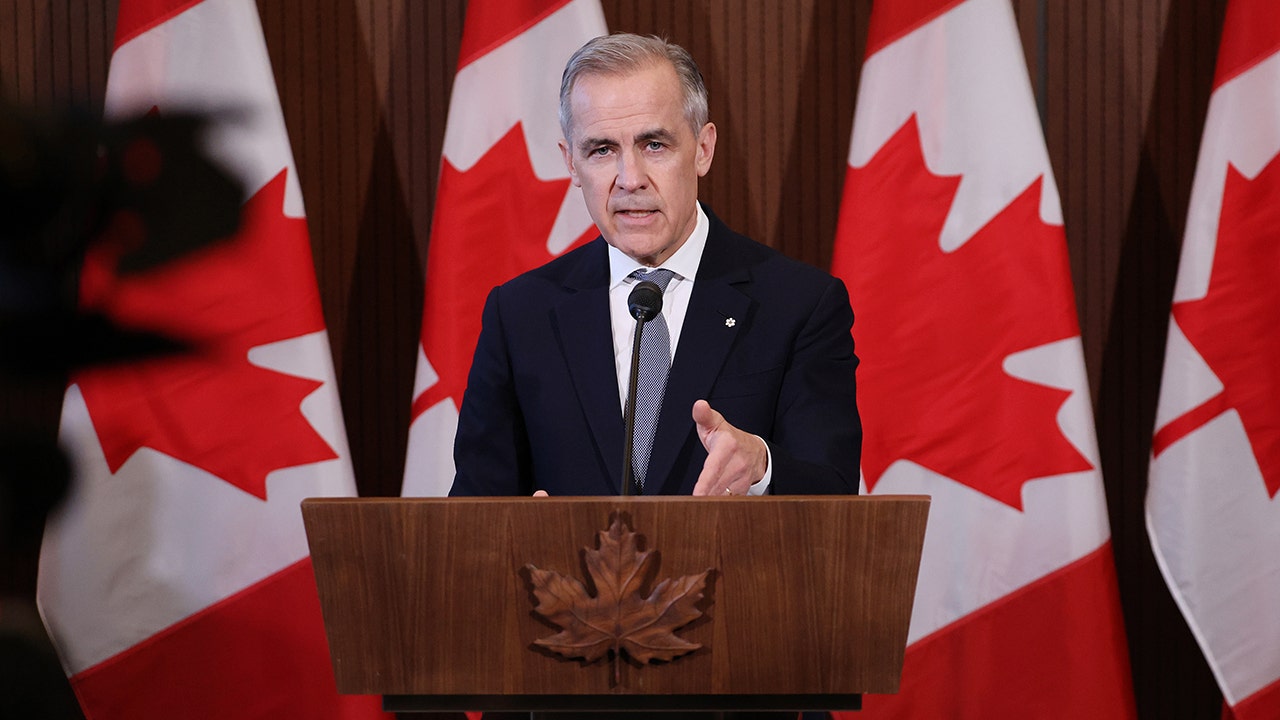
Canadian Prime Minister Mark Carney faced criticism for failing to promptly condemn the assault of a Jewish man walking with his children in a Montreal suburb on Friday.
The man was walking with his three children in a park when an unknown individual approached and sprayed them with water. The assailant then physically assaulted the father, knocking him to the ground and tossing his kippah away, a traditional skullcap worn by observant Jewish men.
On Monday, police in Montreal announced the arrest of a 27-year-old suspect in connection with the assault, an incident that has fueled growing calls for the Canadian government to crack down on rampant antisemitism.
CANADA’S ANTISEMITISM ENVOY RESIGNS, CITING EXHAUSTION AMID HATE SURGE
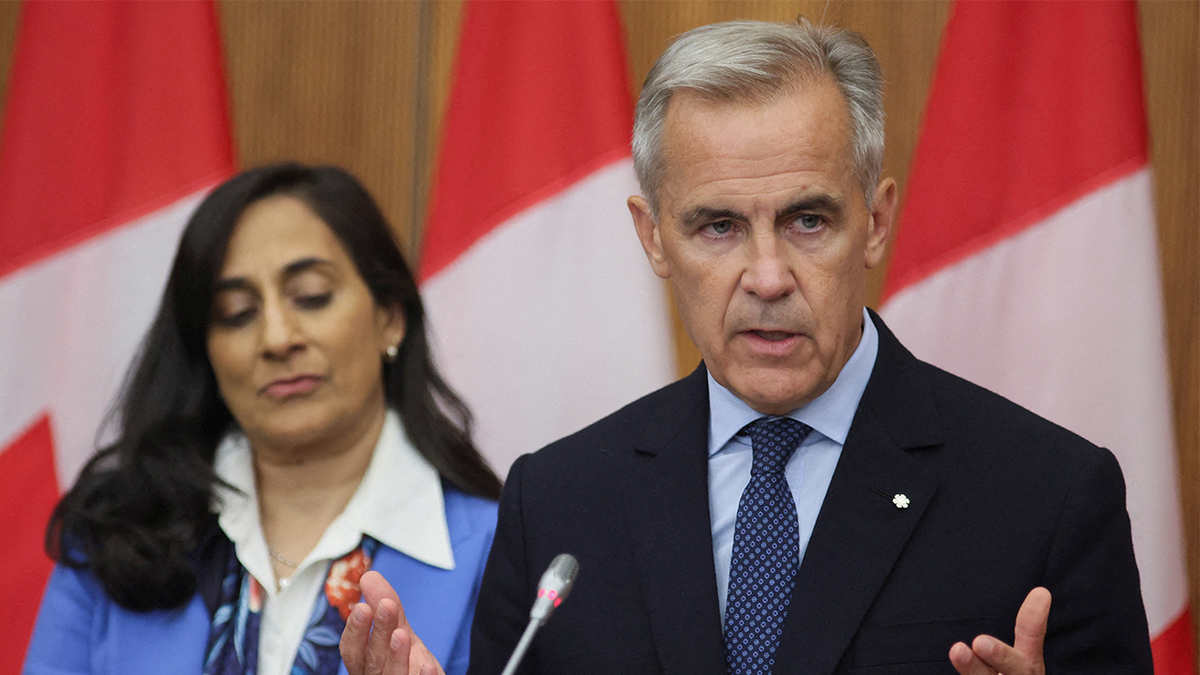
Canadian Prime Minister Mark Carney speaks at a press conference about recognizing Palestinian statehood while Foreign Affairs Minister Anita Anand listens, in Ottawa, Ontario, Canada, on July 30, 2025. (Reuters)
“Canada had the chance to change course after the disaster of [former Prime Minister Justin] Trudeau’s tenure, but instead chose to continue marching toward the abyss. It is beyond doubt that a violent incident like the one we witnessed in Montreal draws direct inspiration from the tailwind Canada’s government, de facto, gives to Hamas,” Israeli Minister for Diaspora Affairs and Combatting Antisemitism Amichai Chikli told Fox News Digital.
“Canada is not yet at the stage of Belgium or the U.K.—both of which have become extremely dangerous for Jews—but it is headed there, slowly and inexorably,” he added.
Carney commented on the incident at 11 p.m. Saturday — roughly a day and a half later — after Israeli Foreign Minister Gideon Sa’ar publicly criticized Ottawa’s response.

Israeli Minister of Diaspora Affairs and Combatting Antisemitism Amichai Chikli condemned the attack on a Jewish man in Montreal. (Shahar Azran/Getty Images)
“The attack on a Jewish father in Montreal late yesterday, in front of his own children, is an appalling act of violence. Everyone in Canada has an inalienable right to live in safety,” Carney posted on X.
Sa’ar had called him out on X, writing, “The incident shown in this video is shocking and stomach-turning. … These are images reminiscent of dark periods of Jewish persecution. This is appalling.
“The Canadian government must do more to fight antisemitism!” he added.
Although Jews account for less than 1% of Canada’s population, antisemitism was behind 18.8% of all reported hate crimes in 2024. Of the 1,342 incidents classified as religiously motivated, 920, or 68.5%, were directed at the Jewish community.
Richard Robertson, director of research and advocacy at B’nai Brith Canada, noted that just a week earlier a synagogue in Victoria, British Columbia, had been defaced with antisemitic threats, underscoring that Jew-hatred has become a nationwide problem.
FAITH UNDER FIRE: NETANYAHU CALLS OUT EFFORTS TO DIVIDE CHRISTIANS AND ISRAEL IN US
“As the situation continues to devolve, Jewish Canadians do not need to be placated with mere lip service. We need our leaders to take clear and unequivocal positions and work vigorously to facilitate change. Anything less only serves to further embolden and enable the vitriolic cohort of our society that continues to attack our community,” Robertson told Fox News Digital.

A man fixes the lock of the doors of Congregation Beth Tikvah as police investigate an alleged arson at the synagogue in the suburb of Dollard-des-Ormeaux in Montreal on Wednesday, Dec. 18, 2024. (Christinne Muschi/The Canadian Press via AP)
“What happened in Montreal on Friday afternoon was absolutely horrific. It must serve as a wake-up call for the entire city. This is what happens when civic leaders permit an atmosphere where hateful thugs feel as if they can act with impunity,” he said.
The attack occurred amid a broader climate of intense antisemitism, which recently led Deborah Lyons, Canada’s special envoy on Holocaust remembrance and combating antisemitism, to resign in July — three months before her term ended — citing physical and emotional exhaustion.
It also took place against a backdrop of strained Canada-Israel relations. Canada is one of four countries, alongside France, Australia and the United Kingdom, that have announced their intention to recognize a Palestinian state.
Canada’s former ambassador to Israel, Vivian Bercovici, told Fox News Digital that it’s difficult to discuss the past two years of rising antisemitism in Canada without looking back to October 2015, when former Prime Minister Justin Trudeau was first elected prime minister.
“In my view, Trudeau’s approach to the conflict was very unsophisticated. He had a very quickly growing Muslim population in Canada, and he was careful not to do anything to alienate those voters,” Bercovici said.

Anti-Israel protesters holding antisemitic posters in Alberta, Canada, on April 13, 2025. (Photo by Artur Widak/NurPhoto via AP)
CLICK HERE TO GET THE FOX NEWS APP
According to Statistics Canada, the share of the population identifying as Muslim more than doubled over 20 years, increasing from 2.0% (579,640 people) in 2001 to 4.9% (1,775,715 people) in 2021.
“What we’ve seen, as in many other parts of the West, is that they have come and demanded that we change to accommodate them — that we change the way we do things. Some of their most consistent demands concern Israel and Jewish communities, which have increasingly become targets,” Bercovici said.
Business
US mortgage rates rise to 6% after three-week slide as oil-driven bond yields climb – The Times of India

The average long-term US mortgage rate edged higher this week, ending a three-week decline as bond yields rose amid oil-price pressures linked to the war with Iran.The benchmark 30-year fixed mortgage rate increased to 6% from 5.98% last week, mortgage buyer Freddie Mac said on Thursday. A year ago, the average rate stood at 6.63%, AP reported.The modest uptick breaks a three-week slide in borrowing costs, with mortgage rates having hovered close to the 6% mark for most of this year. Last week’s average had marked the first time the rate dipped below 6% since September 2022, reaching its lowest level in nearly three and a half years.Mortgage rates are influenced by several factors, including the Federal Reserve’s interest-rate policy, investor expectations about inflation and economic growth, and movements in the bond market.They typically track the direction of the 10-year US Treasury yield, which lenders use as a benchmark for pricing home loans.The 10-year Treasury yield rose to 4.14% at midday Thursday, up from around 4% a week earlier.Treasury yields have moved higher in recent days as rising oil prices added fresh inflation concerns, potentially complicating the Federal Reserve’s plans to cut interest rates.
Business
US stocks today: Dow tumbles 800 points, S&P 500 and Nasdaq slip as oil surges after Iran tanker strike – The Times of India

US stock markets fell on Thursday as investors turned cautious after the previous session’s rally, while rising oil prices and geopolitical tensions weighed on sentiment.The Dow Jones Industrial Average dropped 801 points, or 1.6 per cent, dragged down by losses in stocks such as Caterpillar and Goldman Sachs. The S&P 500 declined 0.9 per cent, while the Nasdaq Composite fell 0.6 per cent.The selloff came as crude oil prices jumped to their highest level since June 2025 after Iran said it had struck an oil tanker with a missile. US West Texas Intermediate crude futures surged 6 per cent to trade above $79 per barrel, while international benchmark Brent crude futures rose about 3 per cent to more than $84 per barrel. Oil prices had stabilised in the previous trading session.Markets had rallied on Wednesday, supported by gains in technology and semiconductor stocks. The Dow had snapped a three-day losing streak, while the S&P 500 and Nasdaq Composite ended the session with solid gains.Despite the ongoing US-Israeli air campaign against Iran, US markets have performed relatively better than European and Asian counterparts this week, largely supported by a rebound in technology stocks that had been hit hard during February’s selloff.The tech-led recovery in the previous session helped the Nasdaq erase its weekly losses, putting the index on track to end the week in positive territory if gains hold through Friday.Investors remain concerned that prolonged disruption to shipping through the Strait of Hormuz — a key global energy corridor –could push oil prices higher and add to inflationary pressures through rising energy and shipping costs.Markets are particularly wary of crude prices moving towards $100 per barrel, which could complicate the Federal Reserve’s efforts to control inflation while considering interest-rate cuts.“For the past couple of years, bringing inflation down has been the Fed’s entire focus, and they were finally making progress. But if energy stays expensive, inflation could start climbing again and that would force the Fed to rethink its plans,” said Adam Sarhan, chief executive of 50 Park Investments, Reuters quoted.According to data compiled by LSEG, investors are increasingly expecting the Federal Reserve to delay a 25-basis-point interest rate cut to September from the previously anticipated July timeline.Among sectors, healthcare led declines on the S&P 500, dropping 1.6 per cent. The energy index, however, gained 0.7 per cent, with shares of ConocoPhillips and Valero Energy rising about 2 per cent each.The CBOE volatility index (VIX), widely seen as a gauge of market fear, rose 0.9 points to 22.08, reflecting cautious investor sentiment. The small-cap Russell 2000 index fell 1 per cent.Travel and tourism stocks, which are sensitive to fuel costs, were under pressure. Delta Air Lines slipped 3.3 per cent, while Royal Caribbean Cruises declined 0.6 per cent.On the other hand, some travel booking companies rallied sharply. Booking Holdings jumped 11 per cent and Expedia surged 8 per cent after a report by The Information said OpenAI was scaling back on-platform shopping checkout plans for ChatGPT, easing concerns about disruption to online marketplace businesses.Chip stocks showed mixed performance. Nvidia edged down 0.3 per cent, while Marvell Technology gained 1.3 per cent.Shares of Broadcom rose 2.9 per cent after the chip designer projected that its artificial intelligence chip revenue could exceed $100 billion next year.Elsewhere, Trade Desk surged 22.5 per cent following a report that OpenAI had held early discussions with the advertising technology company regarding the sale of advertisements.Economic data released on Thursday showed the number of Americans filing new applications for unemployment benefits remained unchanged last week.Investors are also awaiting remarks from Federal Reserve Vice Chair Michelle Bowman later in the day, ahead of the closely watched non-farm payrolls report due on Friday.On the New York Stock Exchange, declining stocks outnumbered advancers by a ratio of 2.48-to-1, while on the Nasdaq the ratio stood at 1.63-to-1.The S&P 500 recorded four new 52-week highs and two new lows, while the Nasdaq Composite registered 17 new highs and 33 new lows.
Business
Beyond oil: How US-Iran war & Middle East crisis may hit India’s economy – sector-wise impact explained – The Times of India

Beyond oil, the Middle East crisis has other implications for the Indian economy, especially if the US-Israel-Iran war continues for a long duration leading to major supply disruptions. In recent days, a series of missile and drone attacks have struck multiple energy and logistics installations across the Gulf region. These incidents have heightened concerns that shipments of oil and gas moving through the Strait of Hormuz – a vital artery for global energy trade – could face disruption.Between March 1 and March 3, important facilities in Saudi Arabia, Qatar, the United Arab Emirates and Oman came under attack. The situation has fueled concerns that the conflict could trigger a wider shock to global energy supplies.But beyond oil, it’s important to note that West Asia plays an important role in supplying India with essential commodities. In 2025, India’s imports from the region of approximately $98.7 billion included critical resources such as energy, fertilisers and industrial inputs.
1. Oil: Immediate risk
Petroleum is the most immediate area of exposure. In 2025, India sourced roughly $70 billion crude oil and petroleum products from West Asia.“Crude oil feeds India’s refineries, which produce petrol, diesel, aviation fuel and petrochemical feedstocks used across the economy. India has about 30 days of stocks, any prolonged disruption in shipments could quickly push up fuel prices, raising transport and logistics costs and feeding into inflation. Farmers would also feel the pressure through higher diesel prices for irrigation pumps and tractors,” says Ajay Srivastava, founder of Global Trade Research Initiative (GTRI).Also Read | Russian crude to rescue! Ships carrying Russia’s oil head to India amid Middle East supply shock: Report
2. LNG Supplies
Supplies of natural gas are also exposed to potential disruptions. In 2025, India sourced liquefied natural gas or LNG worth $9.2 billion from West Asia, which is around 68.4% of its total LNG imports. LNG is also a key input for fertilizer manufacturing units, gas-fired power plants and city gas distribution systems that provide compressed natural gas (CNG) for vehicles and piped gas for household cooking.Signs of this vulnerability have already emerged. Qatar’s Petronet LNG halted LNG deliveries to GAIL starting March 4, 2026 due to restrictions affecting vessel movement.
3. Risks to LPG
Liquefied petroleum gas (LPG) imports from West Asia were $13.9 billion in 2025, making up 46.9 % of India’s total LPG purchases. LPG continues to serve as the main cooking fuel for millions of households. With reserves covering only about two weeks of consumption, any interruption in supply could quickly impact the availability of cooking fuel.
4. Exposure in Fertiliser Supplies
India’s agricultural sector could also feel the impact through fertiliser imports, says GTRI in its report. In 2025, fertiliser purchases from West Asia stood at $3.7 billion. Any disruption in supplies during the crop cycle could lead to reduced fertilizer availability, increase the government’s subsidy burden and eventually push up food prices.Also Read | India’s energy security exposure to Middle East: How much oil, LPG, LNG reserves do we have?
5. Diamond Trade and Exports
India’s diamond export sector is also closely tied to supplies from the Gulf. Diamonds of around $6.8 billion were imported from the Middle East in 2025, which is 40.6% of its total imports of these stones. Rough diamonds are in turn processed in India’s cutting and polishing centres, especially in Gujarat’s Surat, before being exported to international markets as polished gems. Any interruption in the flow of raw diamonds could slow manufacturing activity and have an impact on employment within the jewellery industry.
6. Industrial Raw Material Supplies
A number of industrial inputs sourced from the Gulf are also crucial for India’s manufacturing sector. India bought polyethylene polymers of around $1.2 billion from West Asia in 2025. Polyethylene is widely used in products such as packaging materials, plastic piping, storage containers, consumer goods and agricultural films used in irrigation systems.
7. Construction-Related Materials
India’s construction industry also relies heavily on mineral imports from the region. In 2025, the country imported limestone worth $483 million from West Asia. Limestone is a key ingredient in cement production, and hence any shortage could raise the cost of cement, thereby possibly slowing infrastructure development.
8. Metals Supply Chains
Supply links with West Asia also extend to the metals sector. India imported direct reduced iron of around $190 million from the Middle East region in 2025. Additionally, the country sourced copper wire worth $869 million from West Asia. Copper wire is widely used in power transmission networks, electrical machinery and renewable energy infrastructure.As GTRI notes: Together, these figures highlight how closely India’s economy is tied to West Asian supply chains. “If disruptions to shipping through the Strait of Hormuz continue beyond a week, the effects could quickly spread from energy markets to fertiliser supplies, manufacturing inputs, construction materials and export industries such as diamonds. What begins as a regional conflict could rapidly evolve into a broader supply shock for the Indian economy,” the GTRI report concludes.


US-Israel attack on a premier Tehran hospital targeted newborns, destroyed IVF center

Athletics GM ‘always open’ to Kyler Murray reunion ahead of expected Cardinals release
US mortgage rates rise to 6% after three-week slide as oil-driven bond yields climb – The Times of India

What are Iran’s ballistic missile capabilities?

India Us Trade Deal: Fresh look at India-US trade deal? May be ‘rebalanced’ if circumstances change, says Piyush Goyal – The Times of India

US arrests ex-Air Force pilot for ‘training’ Chinese military

-
 Politics1 week ago
What are Iran’s ballistic missile capabilities?
-
Business6 days ago
India Us Trade Deal: Fresh look at India-US trade deal? May be ‘rebalanced’ if circumstances change, says Piyush Goyal – The Times of India
-
 Politics1 week ago
US arrests ex-Air Force pilot for ‘training’ Chinese military
-
 Business1 week ago
Attock Cement’s acquisition approved | The Express Tribune
-
 Business1 week ago
Households set for lower energy bills amid price cap shake-up
-

 Fashion7 days ago
Policy easing drives Argentina’s garment import surge in 2025
-

 Sports6 days ago
LPGA legend shares her feelings about US women’s Olympic wins: ‘Gets me really emotional’
-

 Fashion7 days ago
Texwin Spinning showcasing premium cotton yarn range at VIATT 2026