

Fashion
Casablanca opens its first store in the United States, in Los Angeles

Published
November 6, 2025
Five months after opening its first boutique on Rue du Faubourg Saint-Honoré in Paris, the Casablanca brand and its founder and artistic director Charaf Tajer announced on Thursday the opening of their first boutique in the United States, at 469 North Rodeo Drive in Beverly Hills.
Located at the corner of Santa Monica Boulevard and Rodeo Drive, the boutique pays tribute to Los Angeles, a city that has been a source of inspiration for Tajer.
“When I was younger, I’d go to LA and be quite obsessed by its many cultures: from skateboarding, cinema, music, the Chicano culture, the architecture and design movements”, said Tajer. “The city is a living paradox. It’s a sunny place by the sea, but it can also be tough and extreme. This utopia of America offset by its grittiness, the fast-paced business and the celebrity. This has many messages, but this raw mix of industry and subculture creates a unique harmony that makes the city. It’s the same philosophy we explore at Casablanca. We love juxtapositions that create something new, that’s our design ethos.”
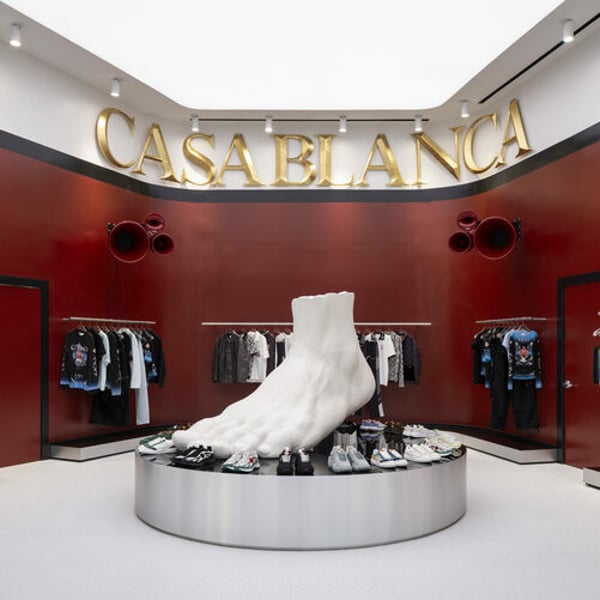
The new flagship store occupies a former bank located in a 20th-century building with soaring ceilings over 10 meters high. The impressive façade features a series of large arches.

Tajer and Steve Grimes, the brand’s artistic director, discovered the location about two years ago and transformed the building into a store that reflects Casablanca’s philosophy, preserving its monumental Greek-inspired architecture and reinterpreting it through a contemporary lens.
“LA is a cultural institution”, adds Grimes. “There is an alluring energy within the city, and having a store in such a prestigious location feels like we are now part of that cultural heritage. Since my first visit, driving down the freeway from LAX and experiencing the views firsthand had an almost nostalgic feel to it – the world has such exposure to the city through cinema, music and entertainment that we have a sense of emotional connection to it.”
Inside the store, a custom-designed audio system by Void makes music a central part of the Casablanca brand identity. In the center, a huge sculpted foot echoes movement and sport. A carmine red wall and antique and modern brushed metal furniture enrich the decor. Airy spaces alternate with more intimate areas punctuated by a few Greek columns.

“Each store we open is about creating something timeless yet modern, with its own personality, but in our Casablanca design language and our handwriting”, continues Tajer. “LA is a home for Casablanca: it’s a place for our community to enjoy our world. We wanted a place where DJs can come play and people can hang out and talk about art and design. Opening our second store here is a tribute to a place that has really shaped us.”
Long known in the Parisian nightlife scene – he was notably artistic director of the Pompon parties – the Moroccan-born Frenchman was also co-founder of the Pigalle label alongside designer Stéphane Ashpool. Twenty years of experience, parties, travel and networking led him to launch his own brand in 2018.
A gradual but serious success, which led the brand to show at Paris Fashion Week a year later. Its second show, which transformed the gardens of the Musée de Montmartre into the “Café de Casablanca”, attracted a huge turnout of celebrities and guests from New York and California.
In recent years, the brand has also forged numerous collaborations. In 2022, Tajer added his tropical graphic signature to a collection of Bulgari bags. In 2023, he teamed up with Caviar Kaspia for a capsule ready-to-wear collection and a limited-edition caviar tin. The brand has also collaborated with S.T. Dupont and Nordstrom, organized memorable parties during Art Basel Miami, and opened its Casablanca Tennis Club in Abu Dhabi last February.
Copyright © 2025 FashionNetwork.com All rights reserved.




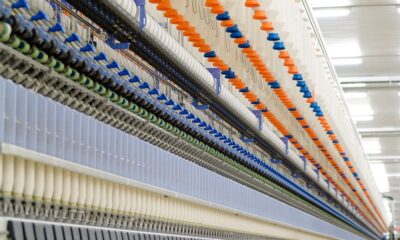

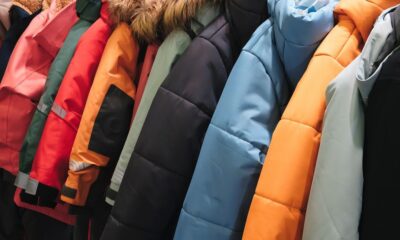

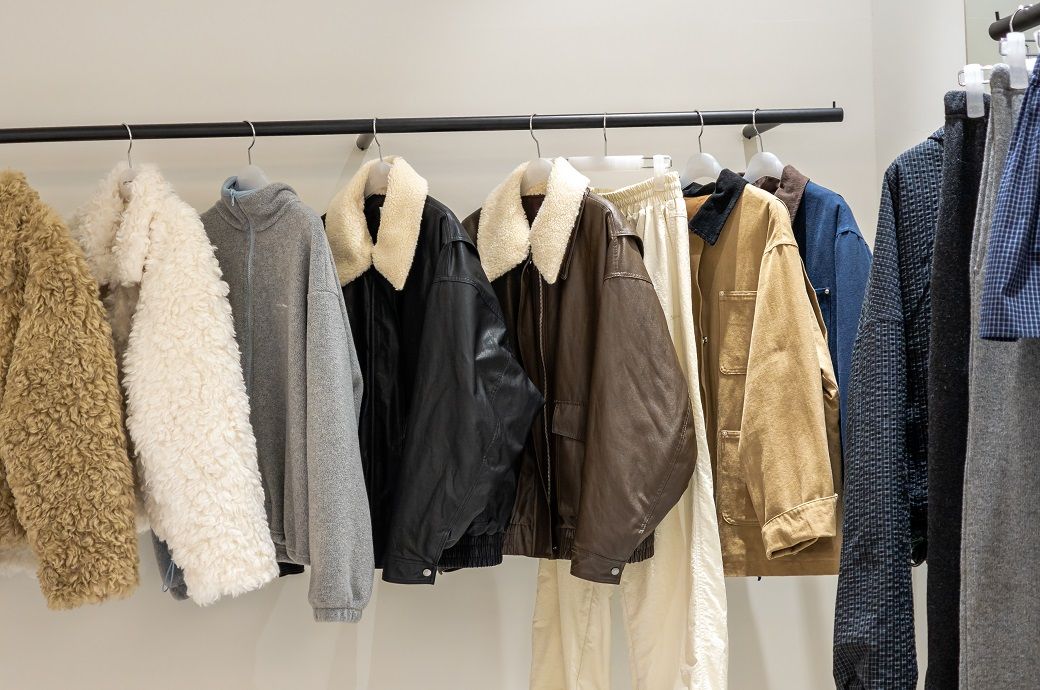
Total apparel imports (HS ** and ** combined) stood at NZ$***.** million (~$***.** million) in January–February ****, down from NZ$***.** million in the same period of ****, marking a decline of **.* per cent year on year.
The country’s imports of knitted apparel (HS **) fell to NZ$***.** million (~$***.** million) in the first two months of current year, compared with NZ$***.** million a year earlier, registering a decline of **.** per cent. Similarly, non-knitted apparel (HS **) imports dropped to NZ$***.** million (~$**.** million) from NZ$***.** million, reflecting a decrease of **.** per cent. The parallel contraction across both segments indicates broad-based weakness in garment imports rather than category-specific pressure.
A perfect storm behind the rupee slide
The current depreciation is not cyclical; it is geopolitical and structural.
The Indian rupee’s sharp fall is creating a dual impact, boosting export competitiveness while simultaneously inflating input, energy, and logistics costs.
MMF segments are most exposed, as import dependence erodes margin gains from currency depreciation.
Demand weakness in the US and EU limits the benefit of improved pricing, creating a cost–demand mismatch.
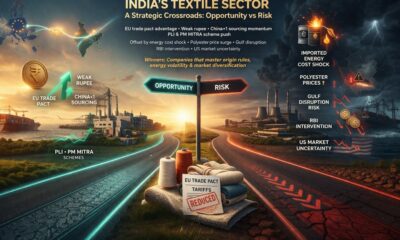
- Oil shock from Middle East conflict: Brent crude surged past $110–115/barrel, sharply increasing India’s import bill
- Foreign capital outflows: Over $19 billion exited Indian equities, pressuring the currency
- Strong US dollar and high interest rates: Capital shifting towards dollar assets
- Trade and geopolitical uncertainty: Weakening investor confidence and export outlook
Together, these forces have pushed the rupee to record lows, with risks of further depreciation if conditions persist.
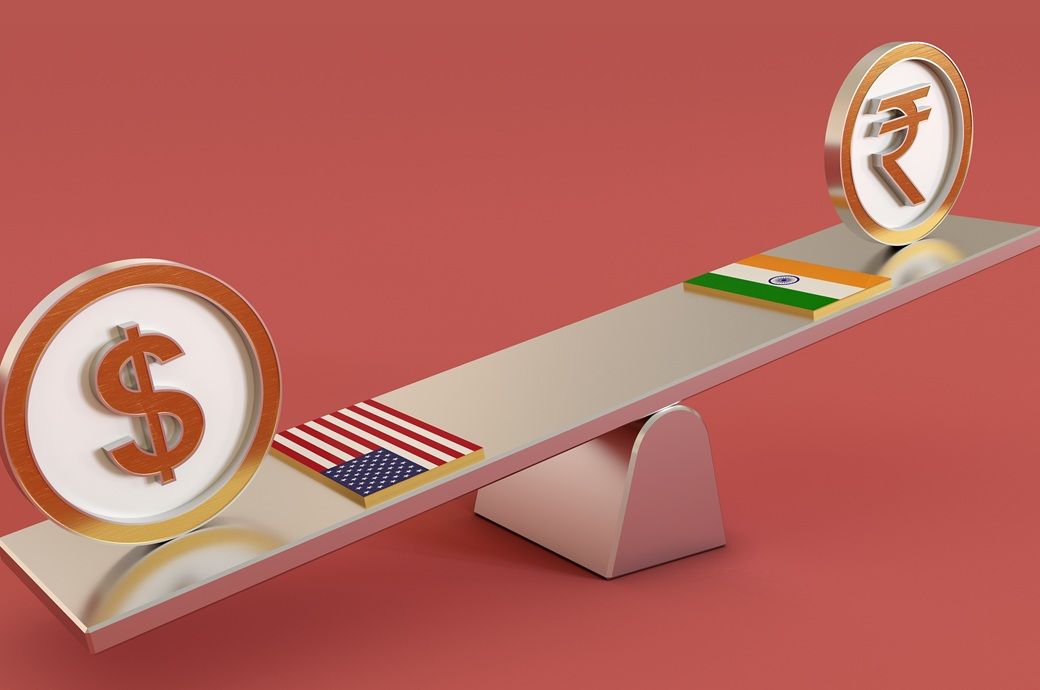
The Indian rupee’s fall past ₹95 per US dollar marks its steepest annual decline in 14 years, representing a critical moment for the textile and apparel (T&A) industry, reshaping cost structures, export competitiveness, and sourcing strategies simultaneously. While a weaker rupee traditionally boosts exporters by improving rupee realisations on dollar-denominated sales and enhancing India’s price competitiveness against peers like Bangladesh and Vietnam, the current depreciation is occurring alongside a sharp rise in crude oil prices and global uncertainty, creating a far more complex operating environment.
The industry’s heavy dependence on imported inputs, particularly in the man-made fibre (MMF) value chain, including polyester, PTA, MEG, dyes, and specialty chemicals, means that the currency shock is directly translating into higher raw material costs. This is further compounded by rising energy and logistics expenses, as fuel-linked inflation drives up power tariffs, freight rates, and processing costs across spinning, dyeing, and finishing segments. As a result, the initial export margin gains are already being diluted, especially for MMF-based manufacturers and vertically integrated players with significant import exposure.
At the same time, rupee volatility is intensifying working capital pressures across the value chain. Higher input costs are inflating inventory values, while fluctuating exchange rates are making export realisations less predictable and increasing the cost of hedging. For small and mid-sized enterprises, this could tighten liquidity cycles and increase dependence on short-term financing.
On the demand side, the situation remains equally challenging: key export markets such as the US and EU are grappling with inflation, cautious consumer spending, and elevated retail inventories, limiting order visibility despite improved pricing competitiveness from India. This creates a structural paradox where Indian suppliers are more cost-effective globally yet face subdued demand and heightened price resistance from international buyers.
Segment-wise, cotton textiles stand relatively insulated due to lower import dependency, whereas MMF and synthetic segments face the sharpest cost pressures, and garment exporters operate in a narrow margin band between currency gains and demand weakness.
In response, the industry is already undergoing strategic recalibration. Manufacturers are gradually shifting towards cotton and blended products to reduce exposure to volatile petrochemical inputs, while also strengthening foreign exchange risk management through increased hedging. There is a renewed push towards supply chain localisation, particularly for chemicals and trims, alongside efforts to renegotiate pricing with global buyers though with limited success in a demand-constrained environment.
Looking ahead, much will depend on the trajectory of crude oil prices, the potential for further rupee depreciation towards the ₹100/$ mark, and the effectiveness of policy interventions in stabilising currency markets. Ultimately, the rupee’s sharp fall is proving to be a double-edged sword for the T&A sector: offering short-term export advantages, but simultaneously accelerating cost inflation and exposing structural vulnerabilities, thereby forcing companies to prioritise efficiency, agility, and financial discipline in an increasingly volatile global trade landscape.
Fibre2Fashion News Desk (DL)
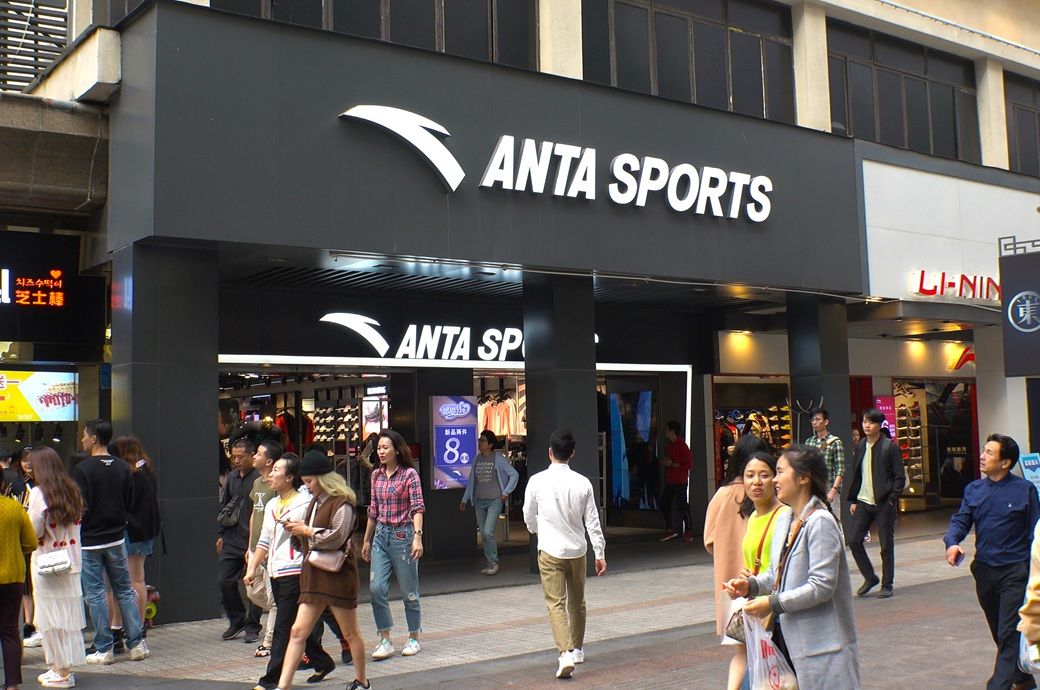
The operating profit increased by 15 per cent to RMB 19.09 billion (~$2.77 billion), while operating margin improved to 23.8 per cent, reflecting strong operational efficiency. Profit attributable to shareholders rose 13.9 per cent to RMB 13.59 billion, excluding one-off gains related to the Amer Sports listing.
Anta Sports has reported revenue of RMB 80.22 billion (~$11.62 billion) in 2025, up 13.3 per cent, strengthening its China market leadership with a 21.8 per cent share.
Operating profit rose 15 per cent, supported by margin improvement and strong growth across brands, especially Fila and Descente.
Solid cash flow, rising R&D investment, and ESG progress further reinforced its global top three position.
The company further expanded its domestic dominance, achieving an estimated market share of around 21.8 per cent, according to industry data. The company’s core ANTA brand generated revenue of RMB 34.75 billion, up 3.7 per cent, with operating profit reaching RMB 7.21 billion, maintaining steady growth, Anta Sports said in a press release.
Fila continued to outperform within the premium sports fashion segment, with revenue increasing 6.9 per cent to RMB 28.47 billion and operating profit rising 10.1 per cent to RMB 7.42 billion. Meanwhile, other brands delivered standout growth, with revenue surging 59.2 per cent to RMB 17 billion and operating profit climbing 55.3 per cent to RMB 4.74 billion. Notably, Descente’s retail sales surpassed RMB 10 billion for the first time.
The group’s financial position remained strong, with free cash flow of RMB 16.11 billion and a net cash position of approximately RMB 31.72 billion at year-end, underscoring its balance sheet strength and liquidity.
Anta also continued to invest in long-term capabilities. Research and development spending rose to RMB 2.2 billion, supported by the rollout of its AI365 strategy aimed at integrating artificial intelligence across the value chain. The company expanded its workforce to over 69,100 employees and supported nearly 300,000 direct and indirect jobs.
On the sustainability front, Anta achieved inclusion in the Hang Seng ESG 50 Index and improved its MSCI ESG rating to ‘AA’. Its total charitable contributions exceeded RMB 800 million in 2025, taking cumulative donations beyond RMB 3.5 billion.
The company’s strong financial and operational performance highlights its ability to scale profitably while investing in innovation, sustainability and brand equity, further consolidating its leadership in China’s highly competitive sportswear market.
Ding Shizhong, executive director and board chairman of Anta Sports, said, “In 2025, amid a complex and rapidly changing environment, we once again delivered resilient growth by staying true to our single focus, multi-brand, globalization strategy. Each of our brands delivered differentiated, high-quality growth. Growth is the best corporate culture, but it is not about simple expansion of scale.”
Fibre2Fashion News Desk (SG)


New Zealand’s apparel imports down 11% to $216 mn in Jan-Feb

Brandy Norwood reveals truth about Wanya Morris relationship in new memoir

Food prices to rise by almost 10% due to Iran war, warns key industry body

-

 Politics1 week ago
Afghanistan announces release of detained US citizen
-

 Sports1 week ago
Broadcast industry CEO says consolidation is ‘essential’ to compete for NFL soaring media rights prices
-

 Tech1 week ago
Can a Home Appliance Fix the Problem of Soft-Plastic Waste?
-
 Business1 week ago
Property Play: Home flippers see smallest profits since the Great Recession, real estate data firm says
-

 Entertainment1 week ago
UN warns migratory freshwater fish numbers are spiralling
-
 Business1 week ago
Gold prices soar in Pakistan – SUCH TV
-

 Fashion1 week ago
ICE cotton slips on weaker crude, profit booking
-
 Business1 week ago
More women are entering wealth management, but few are in advisory roles, study finds