

Business
Centre’s Landmark GST Overhaul Plan: Multi-Slab System May Give Way To 2-Rate Regime, Onus On States

Last Updated:
The new plan, which has been sent to the GST Council and the Rate Rationalisation Group of Ministers (GoM), suggests a shift to a two-rate structure of 5% and 18%

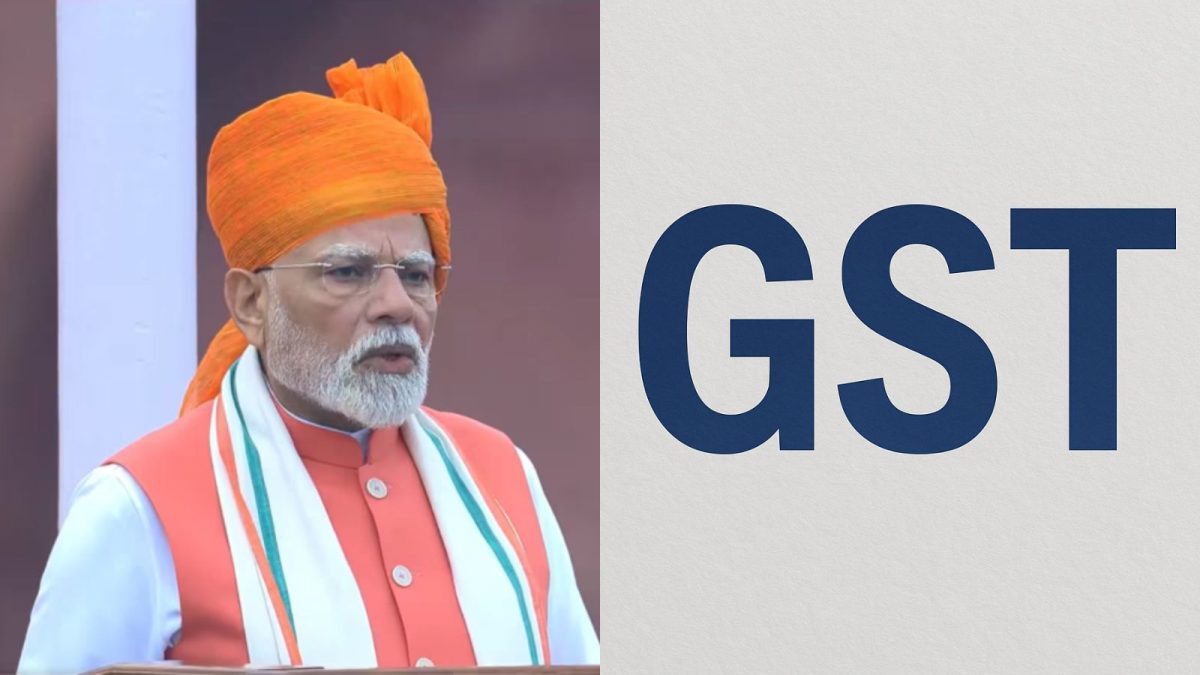
Prime Minister Narendra Modi, during his 12th Independence Speech from the ramparts of the Red Fort, spoke about an overhaul of the GST system. Image/X
The Centre has put forward a landmark proposal to overhaul the Goods and Services Tax (GST) structure, aiming to simplify the current multi-slab system into a more streamlined model. The “Diwali bonanza” announced by Prime Minister Narendra Modi in his Independence Day speech proposes to reduce the existing four GST slabs to just two, at 5% and 18%. The government is keen to see the new consumer- and trader-friendly framework come into effect before the festive season.
According to details accessed by News18, the core of the proposal is a significant rationalisation of rates. The plan suggests that around 99% of commodities used by the common person, including items for students, farmers, and aspirational middle-class consumers, would fall under the lowest tax category of 0 to 5%. These include products from the textile and handicrafts sectors, which are crucial for boosting rural livelihoods. Additionally, essential services and goods like medicines, health, and insurance are also slated to see a reduction in their GST rates if the proposal is cleared.
The new structure also addresses goods currently in the higher tax slabs. Around 90% of these items would be accommodated in the new 18% slab. The proposal carves out a separate, higher category for a few “sin items” considered injurious to health, such as tobacco and pan masala. These goods, along with potentially some forms of gaming, would be subject to a 40% GST rate, the highest legal rate permitted.
Government sources indicate that work on this proposal has been underway since 2022, with inputs from various stakeholders. The move is being driven by a clear directive from the Prime Minister to make the GST system more growth-friendly and beneficial for consumers and Micro, Small, and Medium Enterprises (MSMEs). Other envisaged benefits of the new GST look include quicker refunds and easier tax calculations.
However, the final approval hinges on the states. The proposal will now be put before the GST Council, with a meeting expected in September or October. There is a potential for some opposition-ruled states to resist the move, fearing a short-term loss in revenue. The Centre, however, believes that the new structure will increase consumption, ultimately fueling a higher GDP, and is calling on all states to cooperate with this pro-people reform. The onus is now on them to support the measure for the collective economic benefit.

Pallavi Ghosh has covered politics and Parliament for 15 years, and has reported extensively on Congress, UPA-I and UPA-II, and has now included the Finance Ministry and Niti Aayog in her reportage. She has als…Read More
Pallavi Ghosh has covered politics and Parliament for 15 years, and has reported extensively on Congress, UPA-I and UPA-II, and has now included the Finance Ministry and Niti Aayog in her reportage. She has als… Read More
view comments
Read More


Business
IIP sees 4.8% YoY growth in January; manufacturing & electricity support rise – The Times of India
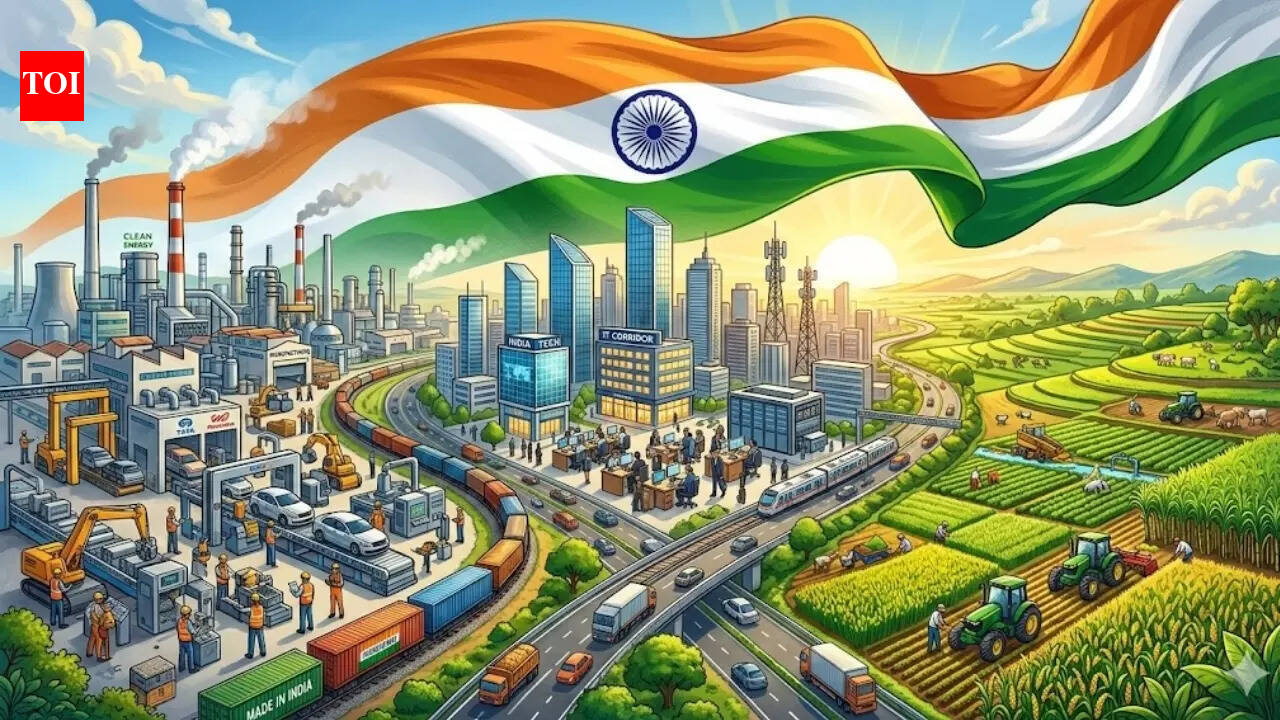
India’s Index of Industrial Production saw a 4.8% increase year-on-year in January 2026, according to the Ministry of Statistics & Programme Implementation. The rise in industrial output was largely driven by a 4.8 per cent expansion in manufacturing and a 5.1 per cent improvement in electricity generation. Mining activity also supported overall growth, registering a 4.3 per cent uptick during the month.Estimates placed IIP at 169.4 for January 2026, compared with 161.6 in January 2025. This follows a stronger reading in December 2025, when industrial production had grown by 7.8 per cent. For January 2026, the sector-specific indices stood at 157.2 for mining, 167.2 for manufacturing and 212.1 for electricity.Within manufacturing, 14 of the 23 industry groups at the NIC two-digit level posted year-on-year gains in January. The strongest contributors were manufacture of basic metals, which rose 13.2 per cent; manufacture of motor vehicles, trailers and semi-trailers, up 10.9 per cent; and manufacture of other non-metallic mineral products, which increased 9.9 per cent. Growth in basic metals was supported by items such as flat products of alloy steel, MS slabs, and hot-rolled coils and sheets of mild steel.The automobile category advanced on the back of higher output of auto components and spare parts, commercial vehicles, and bus and minibus bodies or chassis. In the non-metallic mineral products segment, cement of all types, cement clinkers and stone chips were key contributors.According to use-based classification, output of primary goods grew 3.1 per cent, capital goods rose 4.3 per cent and intermediate goods increased 6 per cent compared with January 2025. Infrastructure and construction goods recorded the sharpest rise at 13.7 per cent, while consumer durables expanded 6.3 per cent. In contrast, consumer non-durables declined by 2.7 per cent. The ministry identified infrastructure and construction goods, intermediate goods and primary goods as the leading drivers of growth under this classification.
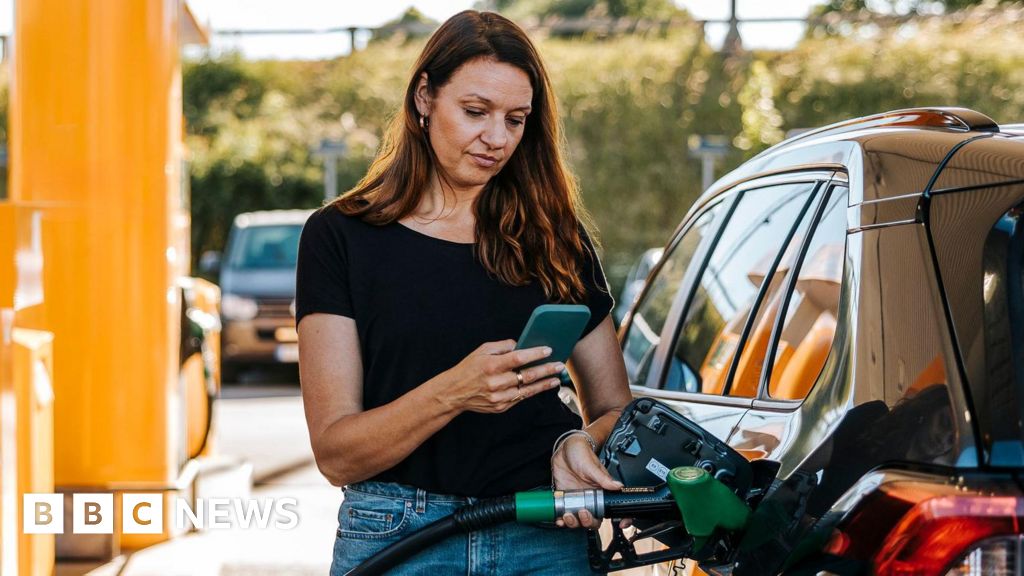
There might also be a more direct impact on food. “Some elements of crude oil are used in fertiliser, and so there could be a cost implication in terms of food prices,” Benjamin Goodwin, partner at banking advisory firm PRISM Strategic Intelligence told the BBC.

Gold prices in Pakistan surged sharply on Monday, with the price of 24-karat gold rising by Rs13,300 per tola, according to the All Pakistan Sarafa Gems and Jewellers Association.
The new price of 24-karat gold per tola stands at Rs563,862, up from Rs550,562.
Updated Gold Rates
24K gold (per 10 grams):
Increased by Rs11,402 to Rs483,420
22K gold (per 10 grams):
Rose by Rs10,453 to Rs443,151
Silver Prices Also Rise
Silver (per tola):
Up Rs188 to Rs10,050
Silver (per 10 grams):
Increased by Rs161 to Rs8,616
International Market Impact
The surge in domestic prices follows gains in the international market, where gold climbed by $133 to $5,411 per ounce, while silver rose by $1.88 to $95.66 per ounce.
Analysts attribute the rally to global economic uncertainty and heightened geopolitical tensions, which typically drive investors toward safe-haven assets like gold.


Apple’s Price-Friendly iPhone 17e Gets a MagSafe Upgrade
IIP sees 4.8% YoY growth in January; manufacturing & electricity support rise – The Times of India

Bangladesh’s BGMEA seeks policy reforms, release of pending incentives

-

 Politics1 week ago
Pakistan carries out precision strikes on seven militant hideouts in Afghanistan
-

 Tech1 week ago
These Cheap Noise-Cancelling Sony Headphones Are Even Cheaper Right Now
-

 Entertainment1 week ago
Viral monkey Punch makes IKEA toy global sensation: Here’s what it costs
-

 Sports1 week ago
Kansas’ Darryn Peterson misses most of 2nd half with cramping
-

 Entertainment1 week ago
Saturday Sessions: Say She She performs "Under the Sun"
-
Sports1 week ago
Mike Eruzione and the ‘Miracle on Ice’ team are looking for some company
-
 Business6 days ago
Households set for lower energy bills amid price cap shake-up
-

 Politics1 week ago
Trump says he will raise US global tariff rate from 10% to 15%, following court ruling