

Business
CVT: constitutional competence and valuation complexities | The Express Tribune


Taxpayers must adopt carefully structured approach to ensure compliance while optimising tax efficiency
Tax collection. Photo: file
KARACHI:
Capital value tax (CVT) is not a novel concept in Pakistan’s fiscal framework. It was first introduced through the Finance Act, 1989, primarily as a tax on the acquisition or transfer of specified assets, including immovable property, motor vehicles, and certain financial instruments.
Over time, its scope and application evolved, and it effectively ceased to operate after its abolition through the Tax Laws (Amendment) Ordinance, 2020.
The present CVT regime was reintroduced under Section 8 of the Finance Act 2022 as Capital Value Tax 2022, complemented by the Capital Value Tax Rules, 2022 (SRO 1797(I)/2022 dated September 29, 2022) with further amendments vide Finance Act 2024. The CVT 2022 significantly expanded its scope, notably extending the tax to certain foreign assets of resident individuals, thereby reviving an old concept in a new constitutional and policy context.
Considering the recent wave of notices for CVT recovery and compliance obligations for high-net-worth individuals, it is timely to revisit its key provisions and complexities. Given these complexities, taxpayers must adopt a carefully structured approach to ensure compliance while optimising tax efficiency.
Scope and rates of CVT 2022
As per CVT 2022, a tax shall be levied on the value of assets at rates specified in the First Schedule for tax year 2022 onwards, with motor vehicles in Pakistan subject to taxation from July 1, 2022. The CVT applies to motor vehicles exceeding 1300cc engine capacity, or electric vehicles with battery capacity over 50 kWh, as well as foreign assets of resident individuals exceeding an aggregate value of Rs100 million. In addition, the tax applies to assets notified by the federal government through official notifications.
The Finance Act 2024 introduced an additional category comprising farmhouses and residential houses within the Islamabad Capital Territory (ICT), which are taxed on the basis of area rather than value.
The rates under CVT 2022 vary according to asset type. Motor vehicles and foreign assets are charged at 1% of their value, while notified assets cannot exceed 5% of their value. Farmhouses in ICT are subject to Rs500,000 for areas between 2,000 and 4,000 square yards, and Rs1,000,000 if the area exceeds 4,000 square yards. Residential houses in ICT are charged Rs1,000,000 for areas between 1,000 and 2,000 square yards, and Rs1,500,000 if the area exceeds 2,000 square yards.
Valuation methodology
The valuation of motor vehicles depends on their origin. Imported vehicles are valued based on the customs-assessed import price plus duties and taxes, while locally manufactured or assembled vehicles are assessed at ex-factory prices inclusive of all applicable duties and taxes.
Vehicles sold at public auction are valued at the auction price, inclusive of duties and taxes. In all cases, the vehicle’s value is reduced by 10% for each year from the end of the financial year in which it was acquired, and the value is treated as zero after five years.
Foreign assets are valued either at their total cost or, if the cost cannot be determined with reasonable accuracy, at fair market value. These values are expressed in the relevant foreign currency and converted into Pakistani rupees using exchange rates notified by the State Bank of Pakistan for the last day of the tax year. For notified assets, the valuation follows the specific method prescribed in the government notification.
Collection and compliance
The mechanism for the collection of CVT varies depending on the asset type. For motor vehicles, customs authorities collect the tax on import, manufacturers or assemblers collect on local purchases, and auctioneers collect at the point of sale. Excise and taxation registration authorities collect the tax at the time of vehicle registration or transfer, except where it has already been collected at the import, purchase, or auction stage.
For foreign assets, the liability to pay CVT falls on the person holding the asset through their income tax return. In the case of assets notified by the federal government, the collection follows the method specified in the relevant notification. Failure to pay or collect the tax renders the person personally liable, including a default surcharge of 12% per annum calculated from the due date until payment.
Key legal and computational issues
CVT 2022 raises several legal and computational questions. Legally, the primary issue is whether the federation has the authority to impose tax on foreign assets located outside Pakistan. Additionally, under Entry 50 of the Federal Legislative List, there is debate over whether the federal government can tax immovable property or not based on the fact that it specifies “not including taxes on immovable property”.
Other questions concern the treatment of assets previously declared under the Foreign Assets (Declaration and Repatriation) Act, 2018, the appropriate exchange rate for valuation, and whether historical cost or fair market value should be used. Computational complexities also arise, such as whether foreign liabilities should be deducted from gross asset values to determine the net capital value. These questions along with the jurisdictional challenges form the core of ongoing deliberations surrounding CVT.
Judicial interpretations
The High Courts of Sindh and Lahore have upheld the constitutionality of CVT 2022, ruling that parliament possesses legislative competence to tax the capital value of foreign assets held by resident individuals. The courts clarified that the “immovable property” exception in Entry 50 applies only to domestic property and does not restrict the federal government from taxing global assets. The CVT is considered a tax on the capital value of assets, not on the property itself, allowing the federal government to tax assets outside provincial jurisdictions.
The Appellate Tribunal Inland Revenue (ATIR) has addressed procedural and valuation issues, affirming that assets declared under past amnesty schemes are immune from prosecution for concealment but are not exempt from valid taxes like CVT. The ATIR has also emphasised that valuations must include proper accounting for related foreign liabilities to ensure taxation applies only to the net capital value.
In June 2023, the Supreme Court of Pakistan granted interim relief to petitioners, balancing revenue interests with taxpayers’ rights. Petitioners were directed to deposit 50% of the disputed CVT, with the remaining 50% secured via bank guarantees, effectively staying full recovery until the court determines the federal government’s authority to tax immovable property located abroad.
Legal clarity vs practical challenges
The revival of CVT raises fundamental questions about federal taxing powers, global wealth taxation, and valuation methodology. While High Courts have affirmed parliament’s competence to tax foreign assets of resident individuals, the matter remains under Supreme Court scrutiny.
Beyond constitutional validation, practical challenges persist in ensuring fair computation, accurate valuation, and the avoidance of double economic burden. As enforcement intensifies, clarity in both legal interpretation and administrative practice will determine whether CVT becomes a sustainable fiscal instrument or a recurring source of litigation.
The writer is a tax professional with extensive experience in corporate and international taxation in Pakistan


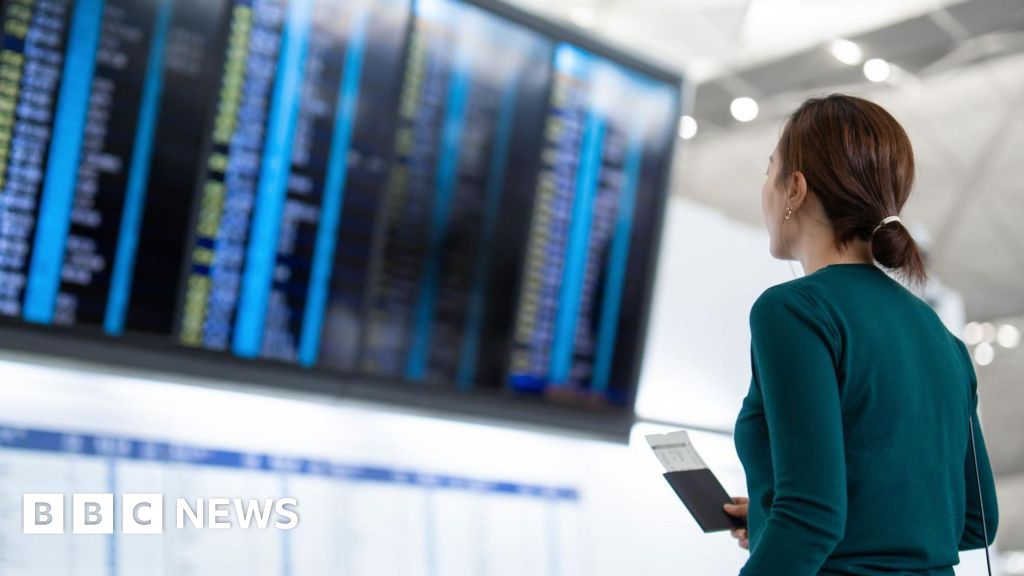
The consultancy Teneo says airspace restrictions caused by the conflict have forced airlines to reroute many flights.
Source link
Business
Us-India Trade Talks: US–India trade deal: Where do talks stand & what to expect – explained – The Times of India
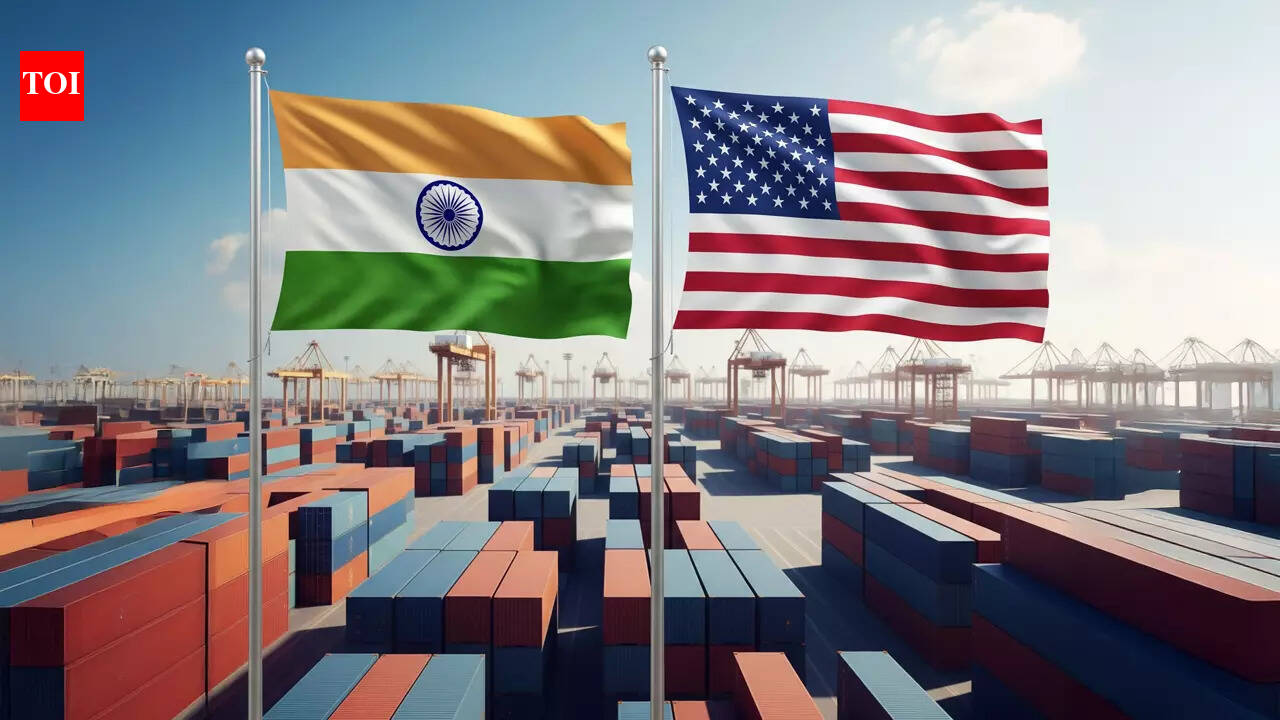
Fresh negotiations between India and the United States are underway in Washington, DC this week, with officials indicating that a long-running effort to seal a bilateral trade agreement is nearing completion.A senior US official, responding to queries on the progress of the talks, said, “The Trump administration and India continue to have positive and productive discussions towards a finalised trade deal.” The negotiations come as Indian representatives visit the American capital for discussions scheduled from April 20 to 22, marking a renewed push to conclude the first phase of the agreement.People familiar with the matter suggested that only a handful of issues remain unresolved. “Most of it is almost done,” one official said on condition of anonymity, adding, “There aren’t many loose ends left.” The current round is expected to concentrate on closing these remaining gaps, with much of the agreement already worked out.The Indian side is being led by Darpan Jain, Additional Secretary in the Department of Commerce, accompanied by officials from the customs department and the ministry of external affairs. On the US side, Brendan Lynch, Assistant US Trade Representative for South and Central Asia, is heading the negotiations under the Office of the US Trade Representative.The timing of the talks follows recent developments in the US tariff structure. After the US Supreme Court struck down reciprocal tariffs imposed under the 1977 International Emergency Economic Powers Act, the US administration introduced a temporary flat 10% tariff on all countries for 150 days starting February 24. These changes had earlier delayed a planned February meeting between the chief negotiators, with discussions now resuming under the revised framework.In addition to tariff-related matters, negotiators are also expected to address two Section 301 investigations initiated by the US Trade Representative. India has contested these probes, seeking their withdrawal and arguing that the notices lack adequate justification.The ongoing discussions build on a framework for an interim agreement announced on February 7, which outlined reciprocal and mutually beneficial trade measures. The framework reaffirmed a commitment to broader bilateral trade agreement (BTA) negotiations launched by US President Donald Trump and Prime Minister Narendra Modi on February 13, 2025, aimed at enhancing market access.US Ambassador to India Sergio Gor described the visit of the Indian delegation as a significant step towards finalising the deal. In a post on X, he said, “The Indian trade delegation will be arriving in Washington this week. A great step to finalise our bilateral trade deal. A win-win for both nations!”Commerce and Industry Minister Piyush Goyal also indicated that the first tranche of the agreement is close to completion. “We have almost finalised our free trade agreement, the first tranche of the bilateral trade agreement with them. We are trying to close the Ts and dots on that and work out what would be the mechanism by which India can get a preferential access, market access in the US market compared to our competitors,” he said at the India-Korea Business Forum in New Delhi.He added, “We have almost finalised the first tranche of bilateral trade agreement with them… We are trying to work out what would be the mechanism on which India would get a preferential access in the US market compared to our competitors. The team will be discussing this while they are in Washington.”With senior officials from both sides now engaged in discussions and most substantive issues already settled, expectations are building that an announcement on the proposed agreement could follow soon.
Business
US stocks today: Wall Street inches higher as markets eye ceasefire deadline; Dow jumps 300 points, S&P 500 remains flat – The Times of India
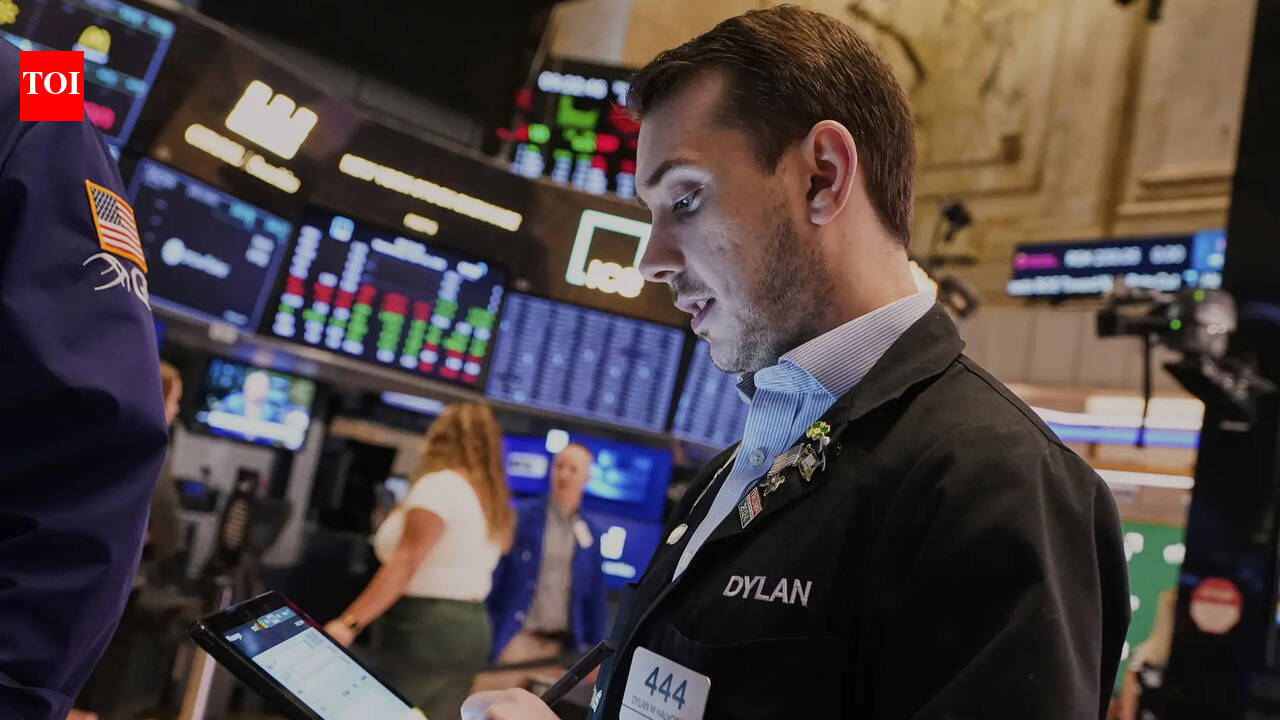
US stocks moved higher on Tuesday, as investors remained optimistic over a possible extension of the US-Iran ceasefire. Markets showed early strength, with the Dow Jones Industrial Average rising 0.56% or 279 points to 49,721.56 around 8 pm IST. The S&P 500 inched up 0.2% to 7,129, while the Nasdaq Composite gained 96 points or 0.4% to reach 24,500. As trading progressed, the upward momentum strengthened, with the Dow climbing 397 points, or 0.8%, and the S&P 500 adding 0.2%, putting it within reach of another record high. The Nasdaq remained modestly higher. Investor sentiment was shaped in part by developments in the Middle East. Oil prices, which had surged a day earlier amid renewed disruption to the Strait of Hormuz, eased on Tuesday. Brent crude slipped 0.7%% to $94.78 per barrel ahead of the expected expiry of a two-week ceasefire between the United States and Iran. The conflict has driven sharp swings in oil markets, with prices ranging from about $70 before the war to peaks of $119 as concerns over a prolonged closure of the key shipping route intensified. Economic data released during the session pointed to continued resilience in consumer activity. US retail sales rose 1.7% from the previous month to $752.1 billion, beating expectations, largely due to higher petrol prices. Spending remained relatively steady even when excluding gasoline sales, indicating broader stability in consumption during the first full month of the conflict. Global markets presented a mixed picture, with European indices trading unevenly after a stronger performance in Asia, where South Korea’s Kospi index jumped 2.7%. In the bond market, US Treasury yields edged higher, with the 10-year yield ticking up to 4.27% from 4.26% the previous day. Attention is also turning to Washington, where Kevin Warsh, nominated by US President Donald Trump to lead the Federal Reserve, is scheduled to testify before Congress later in the day. Investors are expected to closely watch his remarks for indications on interest rate policy and the central bank’s independence.(Disclaimer: Recommendations and views on the stock market, other asset classes or personal finance management tips given by experts are their own. These opinions do not represent the views of The Times of India.)


Florida top scorer Thomas Haugh to return, pass on NBA draft

King Charles adorns Windsor in surprise move after Andrew’s exit
Air fares soar by nearly a quarter, research shows

-

 Fashion5 days ago
France’s LVMH Q1 revenue falls 6%, shows resilience amid Iran war
-

 Sports1 week ago
The case for Man United’s Fernandes as Premier League’s best
-

 Entertainment1 week ago
Palace left in shock as Prince William cancels grand ceremony
-
 Business1 week ago
UK could adopt EU single market rules under new legislation
-

 Entertainment6 days ago
Is Claude down? Here’s why users are seeing errors
-

 Fashion1 week ago
Energy emerges as biggest cost driver in textile margins
-
 Business1 week ago
Delta Air Lines unveils first new Delta One suite in premium cabin arms race
-

 Fashion1 week ago
Asia claims largest share of markets on Kearney FDI Confidence Index