

Sports
CFP quarterfinal takeaways: Ole Miss’ wild upset, Indiana’s dominance and more


The second edition of the College Football Playoff quarterfinals gave us two classics and two statement wins. On Wednesday in the Goodyear Cotton Bowl Classic, No. 10 Miami rode an early 14-0 burst and a clutch late touchdown drive to a 24-14 upset of No. 2 Ohio State. The Hurricanes advanced to the semis to face No. 6 Ole Miss, which won an incredible back-and-forth Allstate Sugar Bowl 39-34 over No. 3 Georgia on Thursday night.
On the opposite side of the bracket, in Thursday’s first two games, No. 5 Oregon, a 2.5-point favorite over No. 4 Texas Tech, countered a brilliant defensive performance with an even better defensive performance in a 23-0 shutout in the Capital One Orange Bowl. Then, in Pasadena at the Rose Bowl Game Presented by Prudential, No. 1 Indiana throttled No. 9 Alabama 38-3. We have three first-time CFP semifinalists, and the only team that has been here before (Oregon) is looking for its first national title. We are living in wild times in this college football universe.
Here are the key plays and takeaways for each game.
Jump to a game: Ole Miss-Georgia | Alabama-Indiana | Oregon-Texas Tech | Miami-Ohio State



What just happened?
Ole Miss scored 20 fourth-quarter points, avenged its only regular-season loss and advanced to the CFP semifinals for the first time. Trinidad Chambliss threw for 362 yards and two touchdowns, two different Rebels players topped 120 receiving yards, the Rebels’ defense made a huge late stop, and Lucas Carneiro absolutely crushed three big field goals, including the game-winning 47-yarder with six seconds left.
After a slow start, Georgia used a 21-6 run to take a nine-point halftime lead. Running backs Nate Frazier and Cash Jones combined for 124 yards on 14 touches to pace a physical attack. However, the Bulldogs scored only three points on their first four second-half possessions, and some magical scrambles from Chambliss and a couple of touchdowns from Kewan Lacy allowed Ole Miss to take a 34-24 lead early in the fourth quarter. Georgia responded, as the Dawgs always do, quickly driving for a score, getting the ball back (with help from a dreadful face mask non-call) and driving again. But Ole Miss stiffened and forced a Peyton Woodring field goal with 56 seconds left, and a 40-yard bomb from Chambliss to De’Zhaun Stribling set up Carneiro’s game winner.
Impact plays
It felt like this game had as many huge win probability changes as all the other quarterfinals combined. The first big one came late in the first half, when Lacy fumbled and Daylen Everette returned it 47 yards for a touchdown. That produced a 21% swing and gave Georgia a 21-12 halftime lead after Ole Miss botched a shot at a late field goal. The odds continued to favor the Dawgs through the third quarter, with help from a fake punt that helped to set up a field goal and a 24-19 Georgia advantage.
The fourth quarter was a roller coaster. Ole Miss’ win probability at the start of the quarter was just 24.2%, but it zipped past 50% after Chambliss threw a gorgeous 44-yard pass to Harrison Wallace III and a Lacy TD gave the Rebels a 27-24 lead. Georgia went for it on fourth-and-2 at its own 33, but Suntarine Perkins sacked Gunner Stockton and recovered a fumble. Chambliss found Wallace for another TD, and it was 34-24 Rebels. Win probability: 89.7%.
Eight minutes later, Ole Miss’ win probability was back down to 31.8% when Georgia had a first-and-goal down 34-31, but the Rebels forced a field goal, and the 40-yard bomb to Stribling was worth 28.2% win probability — from 47.3% to 75.5%. So many wild swings. What a game.
See you next fall, Dawgs
In a way, Georgia was ahead of schedule. With a first-year starting quarterback (Stockton), a sophomore star running back (Frazier), a new offensive line and a defense undergoing massive turnover for the second straight season, the Dawgs almost lost twice in September and didn’t show a ton of national title upside. But the defense rounded into beautiful form late in the season, the Dawgs won their second straight SEC title, and they hit the CFP looking like a contender. But their second game against Ole Miss was even wilder than their first (a 43-35 UGA win), and though they usually win brawls, they couldn’t win this one.
It sure seems like they’re going to return a lot in 2026, though, especially on a defense that unearthed quite a few young stars. The 2021-22 champs are going to be disappointed with a second straight quarterfinal defeat, but they’re going to be right back in the mix a year from now.
What’s next
Either Ole Miss or Miami will play for the national title. What a world we live in. The Rebels and Hurricanes will meet in the Vrbo Fiesta Bowl next Thursday. It’s the first semifinal for both teams. Miami won their last meeting, but since it happened in 1950, I’m guessing it won’t have much bearing on this one.
At first glance, this matchup is as fascinating as it is rare. Miami’s defensive front has dominated of late, and it will be interesting to see if the Rebels can get Lacy going, but Chambliss might be the best dual-threat QB in the country at the moment, and his escapability could come in handy against Rueben Bain Jr. and Akheem Mesidor. Meanwhile, Miami’s power running might find success, but if the Rebels stiffen well in key moments again, they could force field goals and find the edge. Either way, the lower half of the bracket is going to produce a team playing for its first title in either 24 years (Miami) or 63 years (Ole Miss).


What just happened?
The No. 1 team played like the No. 1 team. With Ohio State’s upset loss, Indiana became a significant national title favorite, and the Hoosiers weren’t about to let a three-loss underdog get in their way. After an initial three-and-out, the Hoosiers scored on six of their next seven possessions, and they didn’t allow the Crimson Tide to score until late in the third quarter, after they had knocked Bama quarterback Ty Simpson out of the game. In the end, IU’s first Rose Bowl trip in 58 years ended like most Indiana games this season: with backup quarterback Alberto Mendoza playing.
Impact plays
This game didn’t have many impact plays; it was just comprehensive domination, and it started pretty early. Heisman winner Fernando Mendoza was sacked on two of IU’s first three plays, but the Hoosiers established their efficiency game — lots of power running, lots of quick passing — in a nearly nine-minute field goal drive. The Hoosiers’ defense then stuffed a fourth-and-1 attempt, Mendoza completed a 21-yard touchdown pass to Charlie Becker, and IU was off and running. Mendoza hit Omar Cooper Jr. for another score right before halftime, then found Elijah Sarratt at the end of another long drive in the third quarter. And after Bama’s lone field goal, Kaelon Black and Roman Hemby broke into the open for touchdown runs.
I wrote in the quarterfinal preview that Bama could put itself in position for an upset if the Tide slowed the Hoosiers’ run game, if Simpson had some time in the pocket and if they took advantage of fourth-down opportunities. Black and Hemby combined for 188 rushing yards, Simpson had to check down constantly because of pressure and good coverage (his 12 completions gained just 67 yards), and the Tide went 0-for-2 on fourth downs. Hence the blowout.
See you next fall, Tide
I also wrote in the preview that Alabama played like a scrappy underdog, winning on the margins and gutting out close games. It took a 4-1 record in one-score games — and, yes, a friendly CFP committee that chose not to drop the Tide in the rankings after their blowout loss in the SEC championship game — to get them to the quarterfinals, but it wasn’t the first time a Kalen DeBoer team knew how to gut out tough wins. He’s pretty good at game management.
A team with Bama’s blue-chip talent, however, shouldn’t have to rely on scrappy play and game management (even if it’s nice to know you can). The Tide never established a ground game this season — Alabama backs had just eight carries for 15 yards Thursday — and Simpson seemed to wear down late in the season after having to carry the brunt of the production. The defense was very good but not elite, and against top-four teams in the SEC title game (Georgia) and Rose Bowl (IU), the Tide lost by a combined score of 66-10. Bama has maintained a high level since DeBoer took over for Nick Saban two seasons ago, but the Tide still underachieved a bit. It will be fascinating to see what DeBoer does to close the gap between production and expectation.
What’s next
Curt Cignetti’s Hoosiers have aced just about every test they’ve been given this season, and now they face a new test: a rematch. They’ll play Oregon in the Peach Bowl on Jan. 9; the Hoosiers won 30-20 in Eugene on Oct. 11; Oregon’s Brandon Finney Jr. scored on a 35-yard pick-six to tie the score for the Ducks early in the fourth quarter, but a Mendoza-to-Sarratt touchdown put IU ahead with 6:23 left, and after an immediate interception, IU sealed the win with a short field goal.
The Hoosiers outgained the Ducks by 59 yards (and 0.6 yards per play) and controlled the second half, but with two playoff wins by a combined 40 points, Oregon is in fine form. Both teams play fast, physical ball, and though Indiana will be deservedly favored, it should be a hell of a contest.


What just happened?
Oregon kicked a field goal in the first quarter, and the game was over. Basically. Tech’s defense played heroic ball, but the Ducks dominated the Red Raiders’ offense so thoroughly that nothing else mattered. Oregon allowed just 215 total yards, with four turnovers and three turnovers on downs; its offense’s only touchdowns came on drives of 6 and 28 yards, and it still hasn’t done much damage against elite defenses in 2025. But the Ducks’ own elite defense carried the day.
Impact plays
With the Red Raiders’ offense so ineffective, they needed some serious turnover luck to have a chance. Instead, Oregon recovered all five of the game’s fumbles — three of its own and both of Tech’s — and that removed all hope. Despite allowing just 88 yards in the first half, the Ducks led only 6-0 when Matayo Uiagalelei changed the game with a strip sack of Behren Morton. He grabbed the ball himself and took it to the Tech 6, setting up the first of two short Jordon Davison touchdowns.
0:35
Oregon forces a fumble to set up a Jordon Davison TD
Oregon extends their lead after a forced fumble leads to a 6-yard touchdown run from Jordon Davison.
Oregon’s win probability jumped from 70.2% to 85.9% in those two plays, and although Tech responded with two solid, sustained drives, the first ended when the Red Raiders’ line got blown up on a fourth-and-1 run by J’Koby Williams, and the second ended when Morton threw a poor pass into double coverage and it was easily picked by Brandon Finney Jr. Finney picked off two passes and recovered a fumble. The freshman corner was brilliant.
See you next fall, Red Raiders
Here’s a sampling of the notes I took when Tech had the ball:
Another Tech 3&O (three-and-out), and Morton’s sacked for 17-yard loss by Tuioti. Yikes. (Yards: Oregon 100, Tech -2.)
Everything I hoped for from the UO O vs TT D matchup, but Tech’s O hasn’t shown up.
Awful pick from Morton to Brandon Finney. Woof. Oregon starts at the TT 33.
HUGE 50-yard cutback run by Williams but 3&O from there. Stone Harrington hooks a 54-yarder wide left.
Morton makes a couple of 3rd down completions to dig out of hole, but Cameron Dickey fumbles. Jeez. Oregon ball at the TT 29.
3&O for Tech, of course.
Another 3&O to start Q3: run stuff, pass batted down, short pass, punt returned by Malik Benson into Tech territory. Guh.
Run stuff, dropped screen (iffy pass), sack-and-strip for Uiagalelei. Good lord.
When I asked if we could trust the Tech offense in the quarterfinal preview, I didn’t expect such a resounding answer. Both offense and special teams imploded, leaving coach Joey McGuire with a pretty clear glimpse of the state of his program. Loading up on brilliant transfer defenders led to a Big 12 title and a first playoff bid, and so many stars made plays in Miami: Edge rusher David Bailey had two TFLs (one sack) and two pass breakups, tackle Lee Hunter had two TFLs, linebacker Ben Roberts had another interception to go with the pair he snagged in the Big 12 championship game (he was in on 16 tackles, and Jacob Rodriguez was in on 11). Tech held Oregon to just 3.8 yards per play. The defense did its job. But the offensive line couldn’t move Oregon’s defensive front, and Morton — who entered with the lowest Total QBR of any quarterfinal quarterback — was not up for the moment. For Tech to both return to this stage and perform better the next time around, those expensive deficiencies must be addressed.
Still, this was an incredible breakthrough season for the Red Raiders, and for all the stories about how much they spent, they most certainly got their money’s worth. The Big 12 has looked great in bowl season, and Tech was by far its best team, even if only one unit showed up in Miami.
What’s next
Oregon now gets a revenge opportunity: A Peach Bowl rematch against Indiana. The Ducks’ offense will face burden of proof in the matchup — they averaged just 4.2 yards per play against IU the first time around 3.8 against Tech — but the defense will likely be up for the challenge.


What just happened?
Miami combined steady and efficient offense with a 72-yard Keionte Scott pick-six to race to a 14-0 lead, and when Ohio State rallied to get to within 17-14 in the second half, the Hurricanes responded with a perfect five-minute, 70-yard touchdown drive to ice the game.
Miami’s defense dominated early. Star ends Rueben Bain Jr. and Akheem Mesidor combined for three sacks in the first half, and Ohio State punted on four of its first five drives. After Julian Sayin hit Jeremiah Smith for a 59-yard bomb in the second quarter, Scott pounced on a telegraphed screen pass and took it the other way for a score.
The second half was a battle of toughness. Ohio State established a solid run game and got a few more big catches from Smith — he finished with seven catches for 157 yards and a touchdown — and crawled back to within 17-14. But Miami dusted off burly North Dakota State transfer CharMar Brown; in his first six touches of the CFP, he gained 31 yards. After the Hurricanes pulled off third-and-4 and third-and-3 conversions, Brown scored from 5 yards with 55 seconds left. Jakobe Thomas‘ interception sealed the upset.
Impact plays
Miami controlled the early going, but a Mark Fletcher Jr. fumble prevented the Canes from taking a quick lead. He made up for it with a 9-yard touchdown catch off of a faked Carson Beck sneak, and Scott’s pick-six shifted the odds in the Hurricanes’ favor.
0:35
Miami stuns Buckeyes with a 72-yard pick-six
Miami’s Keionte Scott intercepts Julian Sayin and takes it 72 yards to the house for the Hurricanes.
After cutting Miami’s lead to 17-14, Smith caught a huge, 16-yard pass on third-and-15 as the clock ticked under eight minutes. But a holding penalty — the first accepted penalty of the game — forced the Buckeyes backward. After a 53-yard punt was nullified by an illegal formation penalty, a shorter punt set up Miami at the 30. The Hurricanes basically iced the game with a lovely, 13-yard screen pass to CJ Daniels on third downs (he moved the chains three times on third downs), but Brown’s touchdown officially sealed it.
See you next fall, Buckeyes
Ohio State’s season was almost perfectly crafted for another national title run. The Buckeyes survived a rock fight against Texas in Week 1, then won their next 11 games by an average of 39-8. And though they lost to Indiana in the Big Ten championship game, they were still set up beautifully for a title run. Instead, they failed to offset a growing trend. In the first five quarterfinal games of the 12-team playoff era, the teams that had a first-round bye have fallen behind by scores of 14-0 (Boise State vs. Penn State), 34-0 (Oregon vs. Ohio State), 17-3 (Arizona State vs. Texas), 20-3 (Georgia vs. Notre Dame) and now 14-0 (Ohio State vs. Miami). The first-round bye, combined with a neutral site bowl, haven’t yet proved to be any sort of reward. Miami took the fight to the rusty Buckeyes early and was rewarded for it.
Ohio State heads into 2026 in perfectly solid shape, of course. Sayin will return after throwing for 3,610 yards and 32 touchdowns in 2025 (he had 287 and one TD on Wednesday night), and the major stars in the skill corps — Smith and running back Bo Jackson (11 carries for 55 yards) — should be back as well. The Buckeyes are built to compete every year in a 12-team playoff era.
Still, a missed opportunity is a missed opportunity. After looking like the best team in the country for 12 games, the Buckeyes finished 2025 with back-to-back losses, and as Miami made this game a test of physicality and toughness, Ohio State couldn’t respond appropriately.
What’s next
After becoming the first double-digit seed to win a playoff game, Miami has now become the first to reach a semifinal as well. It was very much in doubt whether Mario Cristobal’s Hurricanes would make the CFP at all, but they’ve made the most of the opportunity. They’ll play Ole Miss in the Vrbo Fiesta Bowl.
This was, quite simply, the biggest Miami win since 2002. With loads of former Hurricanes greats on the sideline — from Michael Irvin, to Ray Lewis, to former coach Jimmie Johnson — college football’s history was very much present in Arlington. And the Hurricanes managed to overcome both recent ghosts and Ohio State’s talent to survive and advance.
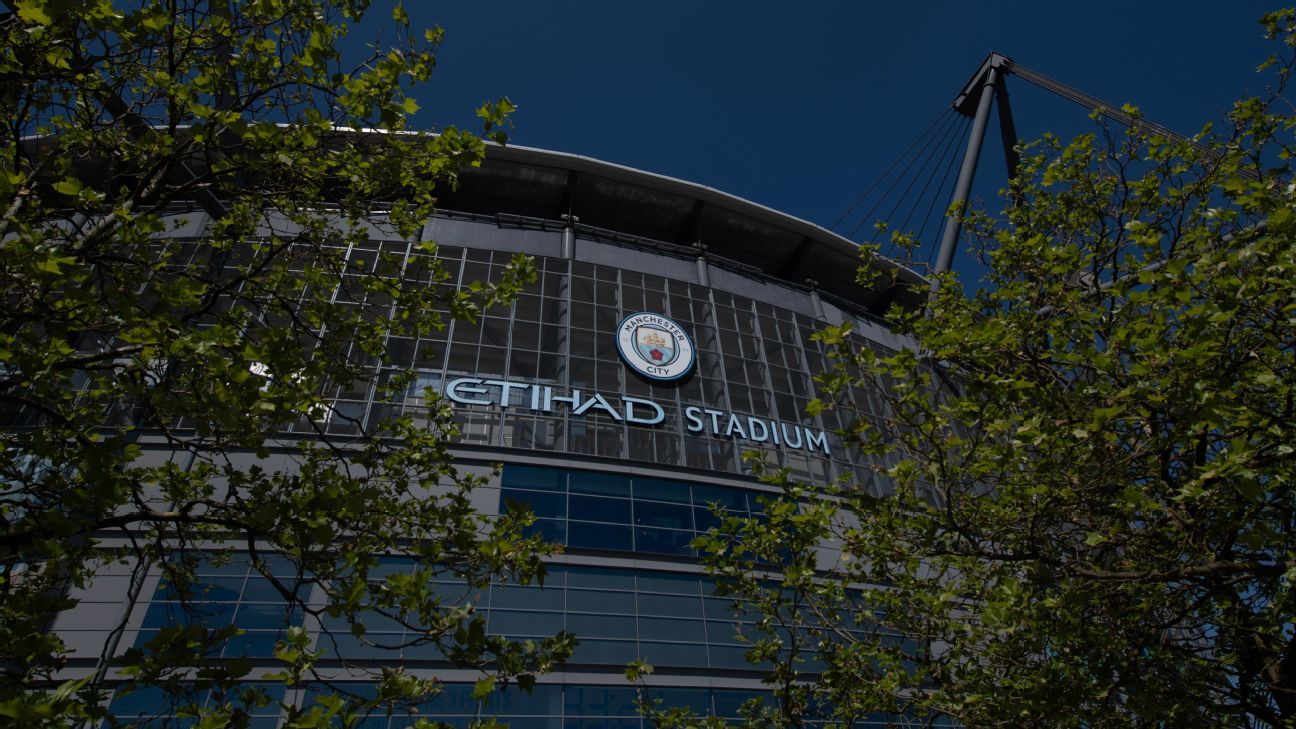
Over three years have passed since the Premier League announced it was charging Manchester City for breaching a long list of rules related to alleged wrongdoing. Most of them relate to actions taken to circumvent financial regulation, from false accounting to making payments off the books to failing to cooperate with investigators. City deny the charges.
Depending on the number of charges on which they are found guilty (if any) City could face a range of sanctions, from fines and points deductions to being stripped of titles to outright expulsion from the Premier League. If they’re found guilty — depending on the nature and number of the charges — they also run the risk of having to pay damages via the league’s arbitration process as other clubs could seek compensation for lost revenue. A three-person independent panel is tasked with issuing a verdict.
“While the complexity of the Manchester City case is undeniable — and unique in a sporting context — similar commercial cases have reached decisions in far less time than the 15 months we’ve seen here,” Stefan Borson, head of sport at London-based law firm McCarthy Denning, tells ESPN. “There are few legitimate excuses, and there is an urgent need for progress.”
Let’s start with the obvious: Why is this taking so long?
To some degree, we can only speculate because the whole process is shrouded in secrecy. This is partly due to the fact that the Premier League’s own rules allow defendants to request confidential hearings, and partly due to British law and safeguards that protect defendants in certain situations.
One example illustrates this well. The investigation into City began in Dec. 2018 following the publication of the “Football Leaks” documents by the German magazine “Der Spiegel.” But we only found out that there even was an investigation in March 2021 after a High Court judgement ruled against City, who had tried to block investigators’ access to documents. The start date of the investigation was later confirmed in official documents, but there wasn’t even confirmation from the Premier League that City were even under scrutiny.
It’s a similar story with the hearings themselves, which are confidential and held in private. We know they started on Sept. 16, 2024, at the International Dispute Resolution Centre in London because this was leaked, and media photographed lawyers for both sides arriving and leaving the venue. We know the hearing concluded in Dec. 2024 because Manchester City mention it in their 2024-25 annual report and because, in Feb. 2025, Pep Guardiola, the City coach, said the verdict would come out “in one month.”
One month? Wow, it’s been 12 months and counting…
Yes, and that tells you the degree to which everybody’s lips have been sealed in this process. There is so little that we know about it, other than the charges. For example, we don’t even know for certain the identity of the three members of the independent commission that will sit in judgement. The trio was assembled by Murray Rosen, chair of the Premier League’s judicial panel at the time. Some reports suggest Rosen named himself to the panel, but that is unconfirmed.
Anyway, if the hearing concluded in Dec. 2024, why it is taking so long for the panel to issue a verdict?
Correct.
We’re in the realm of speculation here, but there are several reasons cited by sports lawyers.
The first is that this is a massive, hugely complicated case. We’re not even certain of the exact number of charges. It came to be known as the “115 charges” case because that’s the number of bullet points in the original document, but according to multiple reports, the number of individual rule breaches in the document is 130, though it’s possible that some are overlapping (i.e. one action violates multiple rules).
It’s also possible, as some reports have suggested, that since the original document was issued, more charges were added, most likely relating to failure to cooperate. Whatever the number, each of the charges must be proved individually with specific evidence.
Furthermore, many of the charges in practice allege deliberate intent to mislead regulators and/or obstruct investigators. The panel isn’t just deciding whether City breached spending regulations, but whether they intentionally breached them and then covered it up to violate the spirit of the rules and, later, knowingly withheld evidence. To make an analogy, it’s the difference between speeding on the highway and speeding on the highway while remotely manipulating the police officer’s radar gun and then spewing a bunch of sovereign citizen nonsense to intentionally screw up your traffic stop. The burden of proof is far higher in the latter case.
Bear in mind that the panel won’t just be issuing a verdict and a sentence. It will be issuing what are known as “written reasons” detailing how it arrived at its conclusions. These “written reasons” could form the basis of any appeal — whether by City or by the Premier League — and therefore need to be “bullet-proof” when it comes to scrutiny.
Still… They’ve had more than a year to issue a verdict since the hearing concluded in Dec. 2024 and, presumably, they have staff to help them…
That’s where another factor comes in. It’s highly likely that the panel members aren’t working on this full-time. You’d assume all three have day jobs and other commitments; presumably, the panel allocated a certain amount of time to hear and deliberate on the case, but it proved to be far more complex than anticipated, and so they members have had to work around their calendars, finding time as and when.
“The members of the independent commission have undoubtedly had other commitments since the hearing ended and they will be acutely aware of making the decision as robust against appeal as possible, given the unprecedented scrutiny this ruling will attract,” said Borson.
Why wouldn’t more time have been allocated to the deliberations?
That’s another mystery. I guess if you want top-notch legal and financial experts to deliberate, you have to accept that they will be in demand elsewhere. This isn’t a jury that’s being sequestered in a room; these are senior figures who handle very important cases in their everyday lives. They can’t just check out indefinitely.
There’s another potential explanation here. While it’s a remote possibility, it would help explain a number of the mysteries surrounding this case.
What’s that?
What if, separate from the arbitration proceedings, the Premier League and City are trying to hammer out some sort of settlement deal? After all, the Premier League is nothing more than its 20 member clubs. If they all agree on an outcome, that’s that. Now, I think it’s unlikely, partly because clubs are notoriously leaky (and there hasn’t been a peep) and partly because it would be extremely difficult to agree to something all sides could accept.
What might it look like? City would need to admit to some level of wrongdoing and take some level of punishment, while rival clubs would need to drop threats of legal action to recover damages.
How would one even do this? Maybe by dumping the blame on the people running the club and arguing that City’s owners were entirely unaware and were, in fact, duped by the folks they employed. And then negotiating a sanction severe enough — massive fine? Some vacated titles? — that the “victim clubs” accept it, but not so severe that it ruins City’s chance of being competitive in the medium term. Why? Because otherwise, they’re not going to accept it and will take their chances with the commission and, possibly, the appeal.
Again, I think it’s highly unlikely, but it would explain why deliberations are taking so long. And it would give the Premier League closure and allow it to move on. Because even when the verdict does come in, it’s highly likely that the losing side will appeal. And this will only drag the process out further, which is not good for the Premier League.
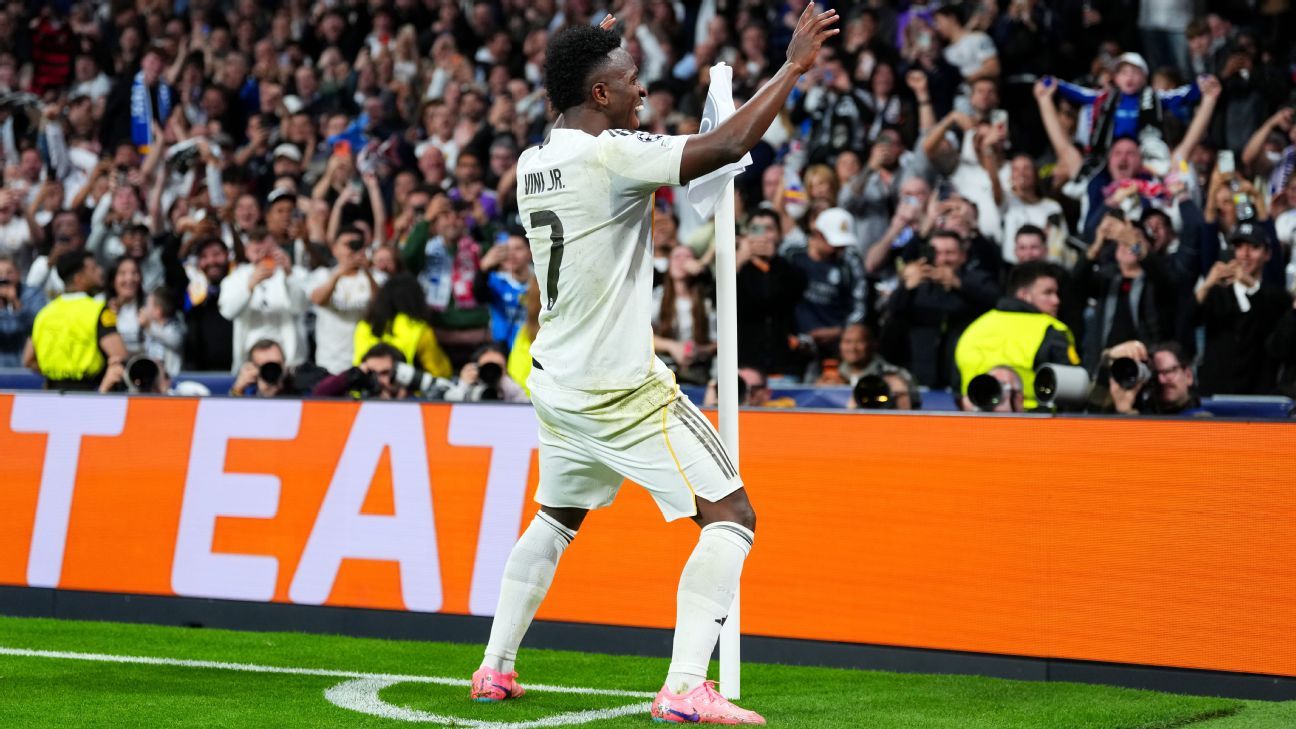
After being loudly booed, Vinícius Júnior danced again. This time in front of Real Madrid supporters while leading his team to the round of 16 of the Champions League, a week after accusing a Benfica opponent of racially insulting him.
The Brazilian scored in the 80th minute to clinch a 2-1 victory for the record 15-time European champions in the second leg of their playoff tie to progress 3-1 on aggregate.
Vinícius celebrated by dancing by the corner flag just like in the first leg — then in front of Benfica fans — which ignited a confrontation with the Portuguese team’s players and the accusation that Gianluca Prestianni called him a racist slur.
“I’m glad Vini dances and keeps dancing, that means he’s scoring goals,” said Madrid goalkeeper Thibaut Courtois.
“That’s our Vinícius,” added midfielder Aurélien Tchouaméni, who scored Madrid’s first goal in the 16th, a couple of minutes after Benfica had taken the lead through Rafa Silva.
Prestianni, who has denied racially insulting Vinícius and has been defended by Benfica, was provisionally suspended one match by UEFA and did not play Wednesday even though the Argentine traveled to the Spanish capital. UEFA earlier Wednesday rejected Benfica’s last-minute appeal against the provisional suspension.
Last week’s match was halted for nearly 10 minutes after the referee installed the anti-racism protocol following Vinícius’ complaint to him.
On Wednesday, Vinícius scored on a breakaway, calmly sending a low shot past the goalkeeper for his sixth goal in his past five matches for Madrid.
The more than 3,000 Benfica fans at the Bernabéu jeered nearly every time Vinícius touched the ball. They celebrated when he lost control of the ball early in the game. The Benfica supporters also booed emphatically when the name of the Brazilian player was announced in the starting lineup ahead of the match.
The boos gradually lost force as the match went on and Madrid took control of the game.
Vinícius also participated in the buildup of what would have been Madrid’s second goal, but it was disallowed for offside.
Before Wednesday’s match, Madrid fans displayed a banner saying “No To Racism.” A “respect” banner also was shown behind one of the goals at the Bernabéu.
Real Madrid said in a statement after the match it “urgently requested” the club’s disciplinary committee to open a procedure to expel a fan who was caught by television cameras performing a Nazi salute before the match.
Madrid said the supporter appeared to be part of its organized fan group behind one of the goals at the Bernabeu.
“This member was identified by the club’s security staff moments after appearing on the broadcast and was immediately expelled from the Santiago Bernabeu Stadium,” the club said. “Real Madrid condemns this type of gesture and expression that incites violence and hatred in sports and society.”
Madrid fans also jeered when Benfica central defender Nicolás Otamendi touched the ball. Otamendi, who is also Argentine, was one of the players that confronted Vinícius after the Brazilian’s celebration by the Benfica flag.
Also missing for Benfica was coach José Mourinho, the former Madrid coach who was sent off late in the first leg for complaining to the referee. Mourinho did not participate in the pregame news conference Tuesday and was expected to watch the match from the stands at the Bernabéu.
Madrid defender Raúl Asencio had to be carried off the field on a stretcher and taken to a local hospital for tests after a hard collision with teammate Eduardo Camavinga in the second half.
The central defender hit the ground hard and had to be attended to for a few minutes on the field. The medical staff immobilized him before taking him off the field.
Madrid coach Álvaro Arbeloa said Asencio apparently injured his neck but “it wasn’t serious.”
Madrid were already without France forward Kylian Mbappé, who missed Wednesday’s game with a knee injury.
“I hope it’s not serious, and he can come back in a few days or weeks,” Arbeloa said.
“Without Kylian, we need [Vini] even more. … He has to be our leader.”
ESPN’s Alex Kirkland and The Associated Press contributed to this report.
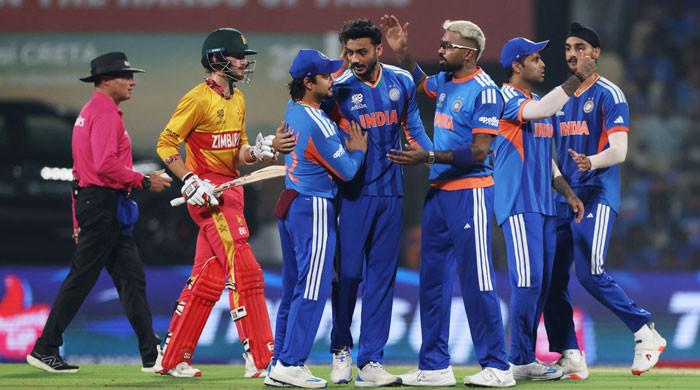
- India beat Zimbabwe by 72 runs in Super Eight clash.
- Zimbabwe scored 184/6 while chasing 257-run target.
- Hardik Pandya bags Player of the Match award.
Blistering fifties from Abhishek Sharma and Hardik Pandya, complemented by a clinical bowling performance, steered India to a dominant 72-run triumph over Zimbabwe in their crucial Super Eights encounter of the ICC Men’s T20 World Cup at the MA Chidambaram Stadium on Thursday.
The victory marked India’s first win in the Super Eights stage and kept them in contention to qualify for the semi-finals.
Furthermore, the outcome of the crucial Group 1 fixture also marked Zimbabwe’s exit, confirming South Africa’s qualification into the knockouts.
Consequently, India’s remaining Super Eights match, scheduled to be played against West Indies in Kolkata on Sunday, has now become a virtual quarter-final as both teams have two points in as many games.
Set to chase a daunting 257-run target, the Chevrons’ batting unit could accumulate 184/6 in their 20 overs despite Brian Bennett’s unbeaten half-century.
The right-handed opener waged a lone battle for Zimbabwe against the home side, top-scoring with 97 not out from just 59 deliveries, featuring eight fours and six sixes.
He also shared crucial partnerships with fellow opener Tadiwanashe Marumani and skipper Sikandar Raza, who remained the other notable run-getters for Zimbabwe, scoring 20 and 31, respectively.
Left-arm pacer Arshdeep Singh was the standout bowler for India as he took three wickets for 24 runs in his four overs, while Varun Chakravarthy, Shivam Dube and Axar Patel chipped in with one apiece.
Zimbabwe captain Sikandar Raza’s decision to field first backfired as his team’s bowling unit conceded 256/4 in their 20 overs.
The home side got off to a decent start to their innings as their new opening pair of Sanju Samson and Sharma put together 48 runs at a blazing pace until Blessing Muzarabani got rid of the former in the fourth over.
Samson, who played his second match of the tournament, made a 15-ball 24, laced with two sixes and a four.
Following his dismissal, Sharma was joined by in-form top-order batter Ishan Kishan in the middle, and the duo further strengthened India’s command by knitting a 72-run partnership.
Zimbabwe captain Sikandar Raza eventually broke the threatening partnership in the 11th over by dismissing Kishan, who walked back after scoring 38 off 24 deliveries with the help of four fours and a six.
Sharma was then involved in a brief 30-run partnership with captain Suryakumar Yadav until eventually falling victim to Tinotenda Maposa in the 13th over.
The left-handed opener, who registered ducks in each of his first three T20 World Cup 2026 matches, remained the top-scorer for India with a 30-ball 55, studded with four sixes and as many fours.
Yadav followed suit 11 balls later and walked back after a blazing 33-run cameo, which came off just 13 deliveries, and featured five boundaries, including three sixes.
Tilak Varma and Hardik Pandya then ensured an equally dominant finish with the bat for India as they raised an unbeaten 84-run partnership for the fifth wicket.
Pandya was the core aggressor of the quickfire stand and made an unbeaten 50 off just 23 deliveries, smashing four sixes and two fours.
Varma, on the other hand, was equally impressive, scoring a 16-ball 44 not out, comprising four sixes and three fours.
For Zimbabwe, Richard Ngarava, Maposa, Muzarabani and skipper Raza could pick up a wicket apiece.


This AI Agent Is Designed to Not Go Rogue

What’s going on with Premier League’s 115 charges against Man City?

Policy easing drives Argentina’s garment import surge in 2025

-
 Tech7 days ago
A $10K Bounty Awaits Anyone Who Can Hack Ring Cameras to Stop Sharing Data With Amazon
-
 Business6 days ago
US Top Court Blocks Trump’s Tariff Orders: Does It Mean Zero Duties For Indian Goods?
-

 Fashion6 days ago
ICE cotton ticks higher on crude oil rally
-
 Business5 days ago
Eye-popping rise in one year: Betting on just gold and silver for long-term wealth creation? Think again! – The Times of India
-

 Entertainment5 days ago
Viral monkey Punch makes IKEA toy global sensation: Here’s what it costs
-
 Sports6 days ago
Brett Favre blasts NFL for no longer appealing to ‘true’ fans: ‘There’s been a slight shift’
-

 Entertainment6 days ago
The White Lotus” creator Mike White reflects on his time on “Survivor
-
 Sports5 days ago
Kansas’ Darryn Peterson misses most of 2nd half with cramping