

Business
Chancellor to face more questions after Budget overshadowed by major leak

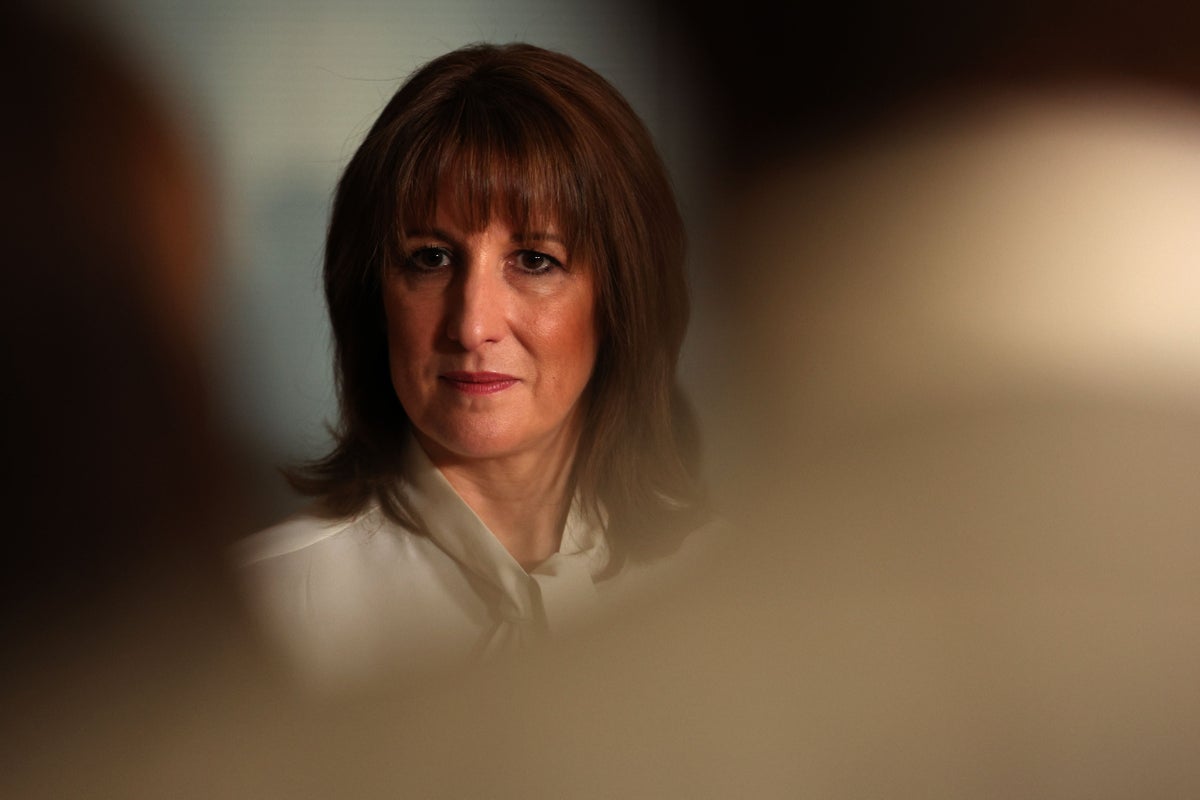
Rachel Reeves will face further questions after delivering a Budget that raised tax by £26 billion but was overshadowed by an unprecedented leak.
The Chancellor’s decisions put Britain on course for a record tax burden as she hiked levies after weaker economic forecasts left holes in her previous spending plans.
The increases are also needed to pay for increased welfare spending, with Ms Reeves announcing the abolition of the two-child benefit cap, expected to lift 450,000 children out of poverty.
Having abandoned plans for a manifesto-busting income tax rise, the Chancellor opted for a range of smaller tax increases to pay for Government spending and build a larger buffer against her borrowing rules.
These include a new pay-per-mile tax for electric vehicles, increased taxes on online betting and a so-called “mansion tax” on homes worth more than £2 million.
But she continued to face accusations of breaching Labour’s election promise not to raise taxes on “working people” after deciding to keep tax thresholds frozen until 2030/31 and levying national insurance on some pension contributions.
Ms Reeves sought to defend herself on Wednesday, telling a press conference the manifesto had been “very clear it was the rates of income tax, national insurance and VAT” that would not be raised.
But she added: “I’m not going to get into semantics. I recognise that we are asking people to contribute more by freezing those allowances.”
While the Chancellor faces questions from the media on Thursday, economists at the influential Institute for Fiscal Studies (IFS) and Resolution Foundation think tanks will give their full verdicts on her Budget.
In its initial response, the Resolution Foundation warned of a hit to living standards after the Office for Budget Responsibility (OBR) said threshold freezes had contributed to a downgrade in forecasts for real household disposable income.
And experts said taxing pension contributions would both reduce workers’ take-home pay and see many people saving even less for their retirement.
Ruth Curtice, chief executive of the Resolution Foundation, called the Chancellor’s Budget “front-footed – and front-loaded” on cost of living support, but argued that Ms Reeves’s decision to stick to her “manifesto tax pledge has cost millions of low-to-middle earners”.
“Over half a million larger families will get a major income boost next spring, while typical energy bills will be cut by around £130 annually for the next three years, though support then fades away,” she said.
“Sensible tax reforms will also help to level up the tax treatment of income. But, ironically, sticking to her manifesto tax pledge has cost millions of low-to-middle earners, who would have been better off with their tax rates rising than their thresholds being frozen.”
She said the Chancellor “has taken steps to repair the public finances” by “more than doubling the headroom against her fiscal rules” but warned debt remained up and “the fiscal repair job has been put on hold for three years”.
Meanwhile, the IFS described the Budget as a “spend now, pay later” announcement, saying Ms Reeves was relying “heavily” on tax rises just before the next election and expressing “scepticism” about whether these would be implemented.
Conservative leader Kemi Badenoch said the Budget was a “total humiliation” for Rachel Reeves and “if she had any decency she would resign”.
But the Budget announcement was overshadowed by an unprecedented blunder that saw the OBR publish its assessment of the economy and the Chancellor’s plans before Ms Reeves had even begun her speech.
The OBR apologised, blaming a “technical error”, and its chairman Richard Hughes said an internal investigation had been launched to “get to the fundamental causes and make sure it doesn’t happen again”.
The investigation will report to the OBR’s oversight board, the Treasury and the Commons Treasury Committee and Mr Hughes said he would “abide by the recommendations” – including if they suggest he should quit.

A Southwest Airlines Boeing 737 airplane lands at Los Angeles International Airport after arriving from Chicago on March 7, 2026 in Los Angeles, California.
Kevin Carter | Getty Images
Southwest Airlines forecast second-quarter earnings below analyst estimates, citing higher fuel prices, while holding off on updating its full-year 2026 forecast.
Southwest expects to earn between 35 cents and 65 cents a share in the current quarter, while analysts polled by LSEG expected 55 cents a share.
The airline in January forecast earnings per share of $4 this year, saying that it expected its new initiatives would pay off. Southwest has sought to increase revenue with checked bag fees and seat assignment fees.
“Achieving this outcome would require lower fuel prices and/or stronger revenue performance to offset higher fuel expense. The Company expects to provide updates to this guidance as appropriate,” Southwest said in an earnings release Wednesday.
Airlines have been either cutting their full-year forecasts or holding off on further forecasts because of volatile prices for jet fuel, generally their biggest expense after labor. They are also pulling back on their capacity growth plans to cut costs, which can drive up airfare when fewer seats are for sale.
Southwest said it expects its capacity to be flat to up no more than 1% in the second quarter, and unit revenues to rise by 16.5% to as much as 18.5% over last year.
“Demand continues to be strong, and we remain focused on controlling what we can control by managing costs, optimizing revenue initiatives, and directing capacity toward higher‑return opportunities,” CEO Bob Jordan said in the earnings release.
Here’s what the company reported for first quarter compared with Wall Street expectations, according to consensus estimates from LSEG:
- Earnings per share: 45 cents vs. 47 cents cents expected
- Revenue: $7.25 billion vs. $7.27 billion expected
Southwest swung to a profit of $227 million, or 45 cents a share in the first quarter, compared with a $149 million loss, or a loss of 26 cents per share, a year earlier.
Revenue rose nearly 13% to $7.25 billion compared with $6.43 billion in the year-earlier period.

Billionaire investor Justin Sun is suing the family’s World Liberty crypto venture after spending $45m on its tokens.
Source link


Southwest Airlines forecasts quarterly earnings below estimates on higher fuel

Google debuts ‘workspace intelligence’ to power AI agents across gmail, docs, chat
Trump family crypto firm sued over alleged ‘extortion’

-

 Fashion6 days ago
France’s LVMH Q1 revenue falls 6%, shows resilience amid Iran war
-

 Entertainment1 week ago
Is Claude down? Here’s why users are seeing errors
-

 Sports1 week ago
PSL 11: Peshawar Zalmi win toss, opt to field first against Quetta Gladiators
-

 Tech1 week ago
The Deepfake Nudes Crisis in Schools Is Much Worse Than You Thought
-

 Tech1 week ago
Human-machine teaming dives underwater
-

 Tech1 week ago
Bremont Is Sending a Watch to the Moon’s Surface
-
 Business1 week ago
BP sees ‘exceptional’ oil trading result as Iran war sends crude costs soaring
-

 Fashion1 week ago
What no one is saying about the 2026 apparel slowdown