

Politics
China state oil majors ‘suspend’ Russian oil buys due to sanctions

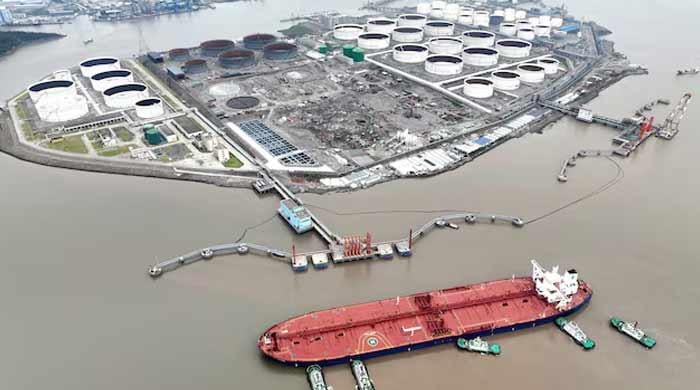
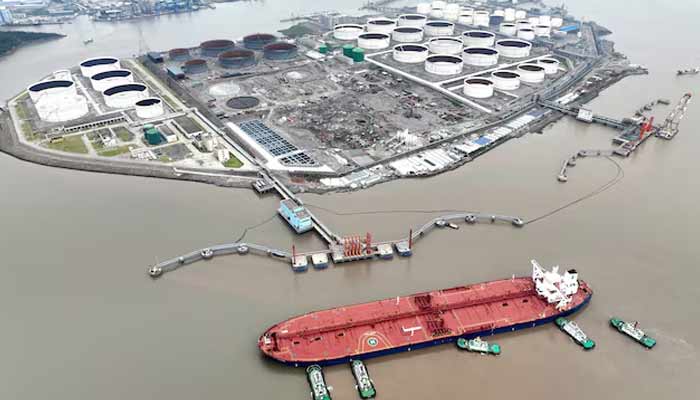
- US sanctions hit Moscow’s two largest oil companies.
- India poised to sharply cut Russian oil imports.
- Russia faces demand drop from two biggest customers.
SINGAPORE: Chinese state oil majors have suspended purchases of seaborne Russian oil after the United States imposed sanctions on Rosneft and Lukoil, Moscow’s two biggest oil companies, multiple trade sources said on Thursday.
The move comes as refiners in India, the largest buyer of seaborne Russian oil, are set to sharply cut their crude imports from Moscow to comply with the US sanctions imposed over the Kremlin’s invasion of Ukraine.
A sharp drop in oil demand from Russia’s two largest customers will put a strain on Moscow’s oil revenues and force the world’s top importers to seek alternative supplies and push up global prices.
Chinese national oil companies PetroChina, Sinopec, CNOOC and Zhenhua Oil will refrain from dealing in seaborne Russian oil at least in the short-term due to concern over sanctions, the sources said.
The four companies did not immediately respond to requests for comment.
While China imports roughly 1.4 million barrels of Russian oil per day by sea, most of that is bought by independent refiners, including small operators known as teapots, although estimates of purchases by state refiners vary widely.
Vortexa Analytics pegged Russian oil purchases by Chinese state firms at under 250,000 bpd for the first nine months of 2025, while consultancy Energy Aspects put it at 500,000 bpd.
Unipec, the trading arm of Sinopec, stopped Russian oil buying last week after Britain designated Rosneft and Lukoil, as well as shadow fleet ships and Chinese entities, including a major Chinese refiner, two trade sources said.
Rosneft and Lukoil sell most of their oil to China through intermediaries instead of directly dealing with buyers, traders said.
Independent refiners, meanwhile, are likely to pause buying to assess the impact of sanctions but would still look to continue Russian oil purchases, several traders said.
Prior to Wednesday’s sanctions announcement, offers for November-loading ESPO crude slid to a premium of $1 per barrel to ICE Brent, versus previous trades done in early October at a $1.70 premium.
China also imports approximately 900,000 bpd of Russian oil by pipeline, all of it going to PetroChina, which several traders said was likely to be little affected by sanctions.
India and China are expected to turn to other supplies, pushing up prices for non-sanctioned oil from the Middle East, Africa and Latin America, traders said.
- Contract supports APG-66 and APG-68 radar systems.
- Work to be completed by March 2036.
- Includes multiple allies under foreign military sales plan.
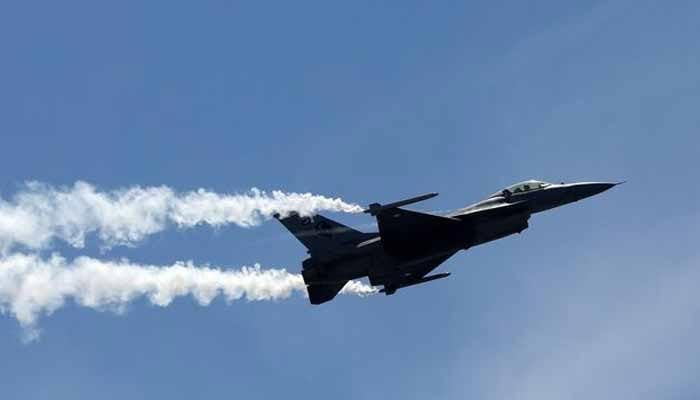
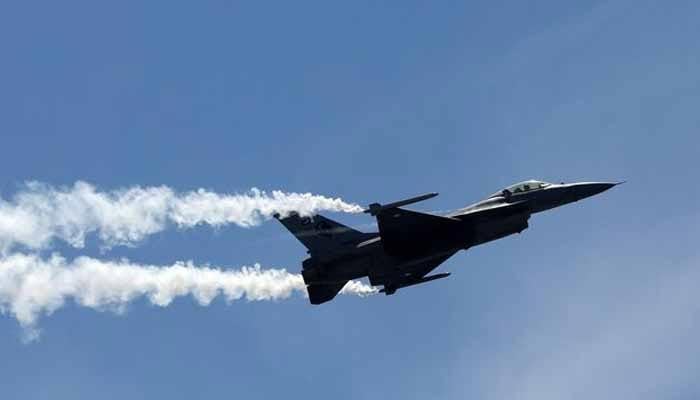
The United States Air Force has contracted Northrop Grumman Systems Corp. in a $488 million deal to provide engineering and technical support for F-16 radar systems under its Foreign Military Sales programme, with Pakistan among the beneficiary countries.
According to an official award notice issued by the US Department of War, the firm-fixed-price, indefinite-delivery/indefinite-quantity contract covers support for F-16 System Programme Office Foreign Military Sales (FMS) as well as Air Force and Navy requirements.
The contract includes engineering and technical support for APG-66 and APG-68 radar systems. The work will be carried out at Linthicum Heights, Maryland, and is expected to be completed by March 31, 2036.
The contract involves foreign military sales to multiple countries, including Bahrain, Belgium, Chile, Denmark, Egypt, Greece, Indonesia, Iraq, Israel, Jordan, Korea, Morocco, the Netherlands, Norway, Oman, Pakistan, Poland, Portugal, Romania, Thailand and Türkiye.
The US Air Force said the contract was awarded on a sole-source basis. Fiscal 2026 non-appropriated, Air Force and Navy funds amounting to $2,644,922 have been obligated at the time of the award.
The Air Force Lifecycle Management Centre at Hill Air Force Base, Utah, is the contracting authority for the agreement, which was awarded on April 27, 2026.
The development comes months after the United States, in December 2025, approved the sale of advanced technology and support services worth $686 million for Pakistan’s F-16 fighter aircraft fleet.
According to a letter from the US Defence Security Cooperation Agency (DSCA) to Congress dated December 8, the package covers Link-16 data link systems, cryptographic gear, avionics upgrades, training, and wide-ranging logistical support.
The DSCA says the decision aligns with Washington’s broader strategic aims, stating the sale “will support the foreign policy and national security objectives of the United States by allowing Pakistan to retain interoperability with US and partner forces in ongoing counterterrorism efforts and in preparation for future contingency operations.”
The letter notes that the upgrades are intended to modernise Pakistan’s Block-52 and Mid-Life Upgrade F-16s and address operational safety requirements. According to the letter, the sale will “maintain Pakistan’s capability to meet current and future threats by updating and refurbishing its Block-52 and Mid Life Upgrade F-16 fleet.”
- US approves of sales to Qatar, UAE, Kuwait and Israel.
- US govt says emergency exists to waive congressional review.
- Washington faces scrutiny for military ties with Kuwait, UAE, Qatar.
US President Donald Trump’s administration has bypassed congressional review to approve military sales totaling over $8.6 billion to Middle Eastern allies Israel, Qatar, Kuwait and the United Arab Emirates.
The State Department announcements on Friday came as the US and Israel’s war against Iran marked nine weeks since its start and more than three weeks since a fragile ceasefire came into effect.
The State Department said US Secretary of State Marco Rubio determined that an emergency existed that required immediate sales to those countries and waived the congressional review requirements for the sales.
The announcements included approving military sales to Qatar of Patriot air and missile defence replenishment services costing $4.01 billion and of Advanced Precision Kill Weapon Systems (APKWS) costing $992.4 million.
The principal contractor in the APKWS sales to Qatar, Israel and the UAE was BAE Systems, the State Department said.
RTX and Lockheed Martin were the principal contractors in the integrated battle command system sale to Kuwait and in the Patriot air and missile defense replenishment sale to Qatar, the State Department added.
Northrop Grumman was also a principal contractor in the Kuwaiti sale.
Over the years, Washington has faced scrutiny for military ties with Kuwait, the UAE and Qatar over those countries’ human rights track records that rights advocates say involve restrictions on and reported abuses of minorities, journalists, voices of dissent, the LGBT community and labourers.
Those nations have denied supporting or engaging in domestic rights abuses.
US support for Israel has also come under scrutiny from rights experts, particularly over Israel’s assault on Gaza that has killed tens of thousands, caused a hunger crisis and led to assessments of genocide from scholars and a UN inquiry.
Israel calls its actions self-defence after Hamas-led fighters killed 1,200 people in an October 2023 attack.
Washington has maintained support for its allies.
- Pentagon announced withdrawal of 5,000 troops.
- Transatlantic tensions simmer over Iran, tariffs.
- Germany on right track with Bundeswehr expansion: minister.
BERLIN: A planned drawdown of US troops from Germany should spur Europeans to strengthen their own defences further, German Defence Minister Boris Pistorius said on Saturday, following the latest salvo from Washington against transatlantic ties.
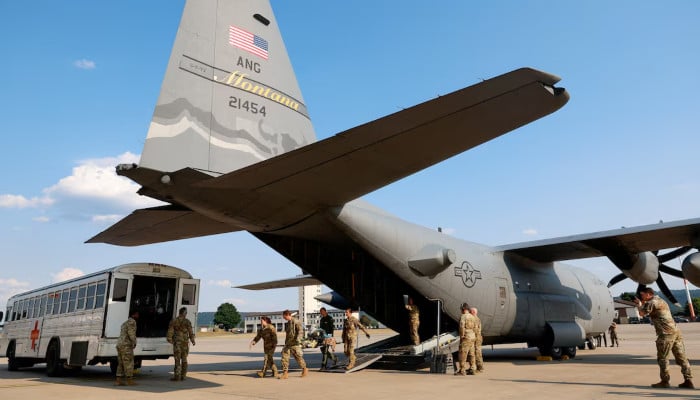
The Pentagon announced on Friday that the United States would withdraw 5,000 soldiers from Germany, its largest European base, as a rift over the Iran war and tariff tensions place further strain on relations between the US and Europe.
Pistorius said the move was expected.
Trump had threatened a drawdown in forces earlier this week after sparring with German Chancellor Friedrich Merz, who has questioned Washington’s strategy in the Middle East.
Germany boosting troops, military infrastructure
Pistorius said the partial withdrawal would affect a current US presence of almost 40,000 soldiers stationed in Germany. Other estimates put the active-duty troop presence at 35,000.
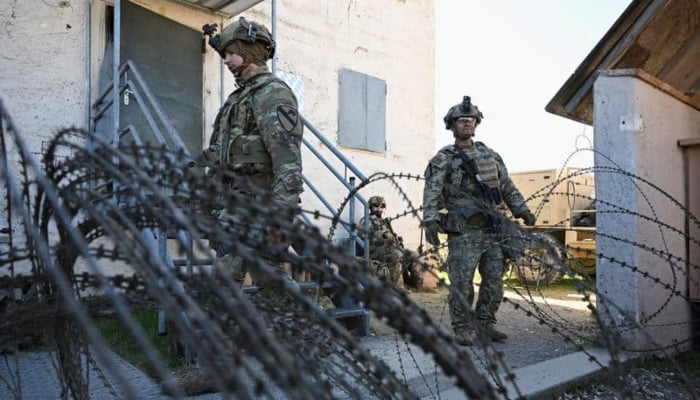
“We Europeans must take on more responsibility for our own security,” Pistorius said, adding, “Germany is on the right track” by expanding its armed forces, speeding up military procurement and building infrastructure.
Germany wants to boost the number of active-duty Bundeswehr soldiers from a current 185,000 to 260,000, though critics of the defence minister have called for more in response to a widely perceived growing threat from Russia.
Nato members have pledged to take on more responsibility for their own defence but with tight budgets and vast gaps in military capability it will take years for the region to meet its own security needs.
Long-range fire battalion cancelled
The US military presence in Germany, which began as an occupation force after World War Two, peaked during the 1960s when hundreds of thousands of American military personnel were stationed there to counter the Soviet Union during the Cold War.
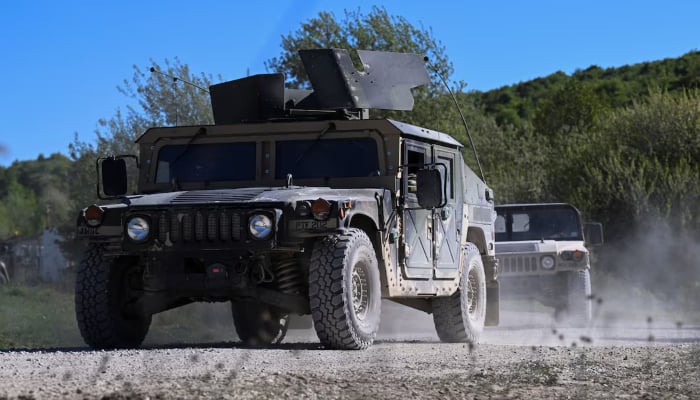
The US presence includes the giant Ramstein airbase and Landstuhl hospital, both of which have been used by the US to support its war in Iran, as well as previous conflicts in Iraq and Afghanistan.
The Pentagon decision means one full brigade will leave Germany and a long-range fires battalion that was due to be deployed later this year will be cancelled.
The loss of the long-range fires will be a particular blow to Berlin, as it had been due to form a significant extra element of deterrence against Russia while Europeans developed such long-range missiles themselves.


Andy Serkis on making the animated version of "Animal Farm"

The Tovala Oven and Meal Kit Is Like a Robot Chef of Future Past

Harry Styles, Zoe Kravitz in major wedding planning mode after big step

-

 Tech5 days ago
A Brain Implant for Depression Is About to Be Tested in Humans
-

 Tech1 week ago
They Wanted to Join Raya. They’ve Been on the Waiting List for Years
-

 Tech1 week ago
Why Do I Like Dyson’s PencilVac So Much?
-

 Tech5 days ago
Almost 90% of women leave tech industry within 10 years | Computer Weekly
-

 Fashion1 week ago
North India cotton yarn steady despite continued push by spinners
-

 Sports5 days ago
Toulouse fall to first home defeat for a year | The Express Tribune
-

 Entertainment1 week ago
Anne Hathaway makes shocking confession about Taylor Swift’s music
-

 Entertainment5 days ago
Norway joins Type 26 Frigate Programme to boost NATO naval power