

Fashion
China to scrap tariffs for most of Africa from May: Xi Jinping

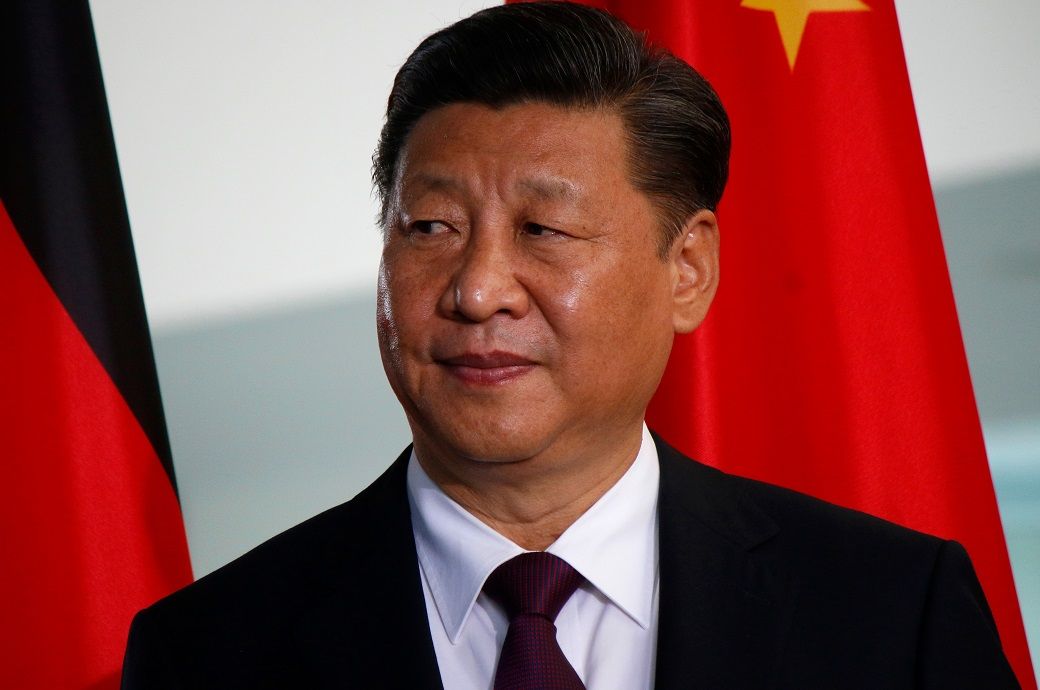
In his congratulatory message to the 39th African Union (AU) Summit at Addis Ababa, he highlighted efforts to upgrade the ‘green channel’ for African exports.
President Xi Jinping has announced that China will fully implement zero-tariff treatment for 53 African countries with which it has diplomatic ties from May 1.
In his message to the 39th African Union Summit at Addis Ababa, he highlighted efforts to upgrade the ‘green channel’ for African exports.
UN chief Antonio Guterres praised the decision and called for other countries to take the same measure.
Praising the policy decision, UN Secretary General Antonio Guterres appealed at the Summit “to all developed countries and to all countries with a large economic potential to take exactly the same measure.”
“Africa needs free trade for its goods, and Africa cannot be penalised, being a continent with enormous economic difficulties, by trade policies that are restrictive and by tariffs that do not allow African products to be competitive,” the UN chief was quoted as saying by a Chinese state-controlled media outlet.
Noting the ‘multiplication of tariffs’ in recent times, Guterres reiterated his strong support for free trade and his advocacy for “reducing the tariff levels at the global level in order to be able to provide for global prosperity”.
Fibre2Fashion News Desk (DS)











NSO director Nguyen Thi Huong told a press conference that the solid start offers a foundation to achieve full-year growth target even as global uncertainties loom.
Vietnam’s economy expanded by 7.83 per cent in Q1 2026 compared to 7.07 per cent in Q1 2025, as strong consumer demand and resilient manufacturing underpinned growth despite mounting global uncertainties.
Growth was broad-based across all major sectors.
Foreign trade activity picked up sharply.
Growth pressures could intensify in Q2 as the Middle East conflict drives up oil prices and input costs.
Growth was broad-based across all major sectors. The industry and construction sector grew by 8.92 per cent year on year (YoY), contributing 44.08 per cent to overall expansion, with processing and manufacturing continuing to act as the main engine after posting 9.73 per cent growth.
Foreign trade activity picked up sharply, with exports of goods and services rising by 19.85 per cent YoY and imports rising by 24.27 per cent YoY, reflecting stronger demand for raw materials, a domestic media outlet reported.
NSO, however, cautioned that growth pressures could intensify in the second quarter as the Middle East conflict drives up oil prices and input costs, increasing risks to supply chains and production.
Fibre2Fashion News Desk (DS)

The Asset Sale was negotiated by a special committee of independent directors, received unanimous approval by Allbirds’ Board of Directors, and is subject to approval by Allbirds’ common stockholders.
Allbirds has entered a definitive agreement to sell its intellectual property and select assets to American Exchange Group for an estimated $39 million, subject to shareholder approval.
The transaction is expected to close in the second quarter of 2026, after which the company plans to dissolve and distribute remaining net proceeds to shareholders in the third quarter, following wind-down costs.
A proxy statement describing the transaction and seeking stockholder approval of the Asset Sale and subsequent dissolution and winding down of the Company (the ‘Dissolution’), is expected to be filed no later than April 24, 2026.
The transaction is expected to close in the second quarter of 2026 and a distribution to stockholders of net proceeds, taking into account wind-down expenses, is anticipated to be made in the third quarter of 2026.
Joe Vernachio, CEO of Allbirds, stated, “We are incredibly thankful to our teams for the work they have been doing to fuel our product engine, build awareness of Allbirds and deliver an engaging customer experience. Over the past decade, Allbirds has evolved into a lifestyle footwear brand known for modern design, innovative materials and unparalleled comfort. This next chapter with AXNY builds on the foundational work already completed and sets up the brand to thrive in the years ahead.”
Note: The headline, insights, and image of this press release may have been refined by the Fibre2Fashion staff; the rest of the content remains unchanged.
Fibre2Fashion News Desk (RM)

P&C v.3.2, which came into effect on April 1, follows an independent assessment of BCI’s standard against recognised regenerative programmes and industry-wide consultations to ensure alignment on the proposed changes.
“Our P&C is a living resource routinely updated to remain relevant and reflective of farmer realities. As climate change threatens farming communities, we have gone further to strengthen their focus on continuous improvement in relation to the principles of regenerative agriculture throughout our field-level standard,” Jannis Bellinghausen, BCI’s senior director of standards system integrity, said in a release from the organisation.
Better Cotton Initiative has launched a new version of its principles and criteria (P&C), marking the next step in the organisation’s journey to becoming a regenerative standards system.
P&C v.3.2, which came into effect on April 1, follows an independent assessment of BCI’s standard against recognised regenerative programmes and industry-wide consultations to ensure alignment on the proposed changes.
BCI’s P&C already covered soil health, biodiversity and natural habitats, water, pesticides and fertilisers use, and, where relevant, livestock. All these areas remain central to the standard.
The updated P&C strengthens the existing requirement of farmers to demonstrate continuous improvement by ensuring they place greater focus on regenerative agriculture when setting targets and annual activities.
Further updates to the field-level standard were made to the P&C’s management, natural resources, crop protection and decent work sections to enhance clarity and auditability.
In June 2025, BCI announced that it would transition to become a regenerative standards system at its conference in Izmir, Turkiye.
BCI head offices are in the United Kingdom and Switzerland.
Fibre2Fashion News Desk (DS)


Zendaya reveals shocking ‘tattoo’ truth about mom Claire

Wellness brand announces new product range for those on weight-loss jabs

Greggs launches chicken version of sausage and vegan rolls in ‘iconic trilogy’

-

 Sports1 week ago
2026 NCAA men’s hockey tournament: Schedule, results
-
Uncategorized4 days ago
[CinePlex360] Please moderate: “Trump signals p
-
Uncategorized1 week ago
[CinePlex360] Please moderate: “Further tariff
-

 Tech3 days ago
Our Favorite iPad Is $50 Off
-

 Entertainment3 days ago
Joe Jonas shares candid glimpse into parenthood with Sophie Turner
-

 Politics7 days ago
Trump considers asking Arab allies to help to pay for Iran war
-

 Sports1 week ago
Fakhar Zaman denies ball-tampering charge in PSL match | The Express Tribune
-

 Entertainment1 week ago
Demystifying the PTI