

Business
Costco tops Wall Street’s sales and revenue expectations


Customers walk in the parking lot outside a Costco store on Dec. 2, 2025 in Chicago, Illinois.
Scott Olson | Getty Images
Costco on Thursday surpassed Wall Street’s quarterly expectations and posted year-over-year sales growth of 8.2% as the retailer attracted more digital sales and opened new locations.
The warehouse club does not share a full-year outlook.
On the company’s earnings call, CFO Gary Millerchip said e-commerce gains were one of the strengths of the quarter. Digital sales jumped by 20.5% year over year. Traffic on its website increased 24% year over year and traffic on its app shot up 48%. Same-day delivery service offered through Instacart in the U.S. and Uber and DoorDash internationally grew at a faster pace than overall digital sales.
Costco had a positive start to the busiest weeks of the holiday season, too. Millerchip said Black Friday was a record-breaking day for the warehouse club’s U.S. e-commerce business, generating over $250 million in non-food orders.
Here’s how Costco did in its fiscal first quarter compared with what Wall Street was expecting, based on a survey of analysts by LSEG:
- Earnings per share: $4.50 vs. $4.27 expected
- Revenue: $67.31 billion vs. $67.14 billion expected
Costco has attracted new members and higher sales at its clubs and online as U.S. consumers across incomes seek value while shopping for groceries, household essentials, holiday gifts and more.
Along with its warehouse club competitors, Costco has gained traction with younger customers who are signing up for memberships. Costco has also benefitted from a membership fee increase in the U.S. and Canada, which took effect in September 2024, and kicked in as new members signed up or as existing customers’ renewed their annual memberships when they lapsed.
In the three-month period that ended Nov. 23, Costco’s net income rose to $2 billion, or $4.50 per share, from $1.80 billion, or $4.04 per share, in the year-ago quarter. Revenue increased to $67.31 billion from $62.15 billion in the year-ago quarter.
Comparable sales, an industry metric that takes out the impact of one-time factors like store openings and closures, increased 5.9% in the U.S. and 6.4% across the globe.
Sales in non-food were led by pharmacy, gold and jewelry, tires, small electrics and apparel, which grew by double-digits year-over-year, Millerchip said.
In the first quarter, Costco opened eight new warehouse clubs, including a relocation in Canada, its third location in France, four new locations in the U.S. and two additional Canadian business centers, CEO Ron Vachris said on the company’s earnings call. Business centers tend to sell bulk items intended for restaurants and other types of businesses. Those additional locations bring its total store count to 921 around the world.
He said the company plans to continue to open 30 or more clubs per year in future years.
As a warehouse club, Costco relies on membership fees to boost its revenue and help keep the price of its items low. With higher tariffs, however, the retailer has dealt with rising costs. About a third of Costco’s U.S. sales come from imported goods.
Inflation “remained relatively consistent with recent quarters,” Millerchip said. He said in grocery, Costco saw higher inflation in commodities such as beef, seafood and coffee, but that was offset by lower inflation in eggs, cheese, butter and produce.
In non-food, he said Costco saw low single-digit inflation for the third consecutive quarter, primarily driven by gold and imported goods.
Millerchip said on the earnings call that Costco has looked for ways to reduce the impact of the duties, including sourcing more items from the U.S., consolidating buying across the globe to lower the cost of goods and swapping out categories or items to ones that aren’t as exposed to steep tariff costs.
Its private label, Kirkland Signature, is another way to offset tariff prices because it has more control over the supply chain, he said.
In late November, Costco sued the Trump administration to get a full refund of new tariffs that it has paid so far this year and to block those import duties from being collected from the company as it waits for a Supreme Court ruling on the duties.
As of the end of the quarter, Costco had 81.4 million total paid members, up 5.2% year over year and 145.9 million cardholders, up 5.1% year over year, Millerchip said. Its renewal rate in the U.S. and Canada was 92.2% and its worldwide rate was 89.7%, slipping a bit as more customers sign up for memberships online and those members renew at a slightly lower rate.
As of Thursday’s close, Costco’s shares have declined nearly 4% so far this year. That trails the S&P 500’s 17% gains during the same period. However, over the past five years, Costco’s stock has jumped by 141%. The company’s stock closed at $884.48 on Thursday, bringing its market value to $392.67 billion.




Joni Lamb, the president of Daystar Television Network, a televangelism broadcaster she founded with her husband, Marcus Lamb, turning their family into stars of Christian entertainment, died on Thursday. She was 65.
In an announcement posted on Daystar’s website, the company described the cause as “serious health matters” exacerbated by a recent back injury. It did not say where she died.
On a trip to Jerusalem in 1983, shortly after the couple married, Mr. Lamb visited the Mount of Olives and felt God telling him to move to Montgomery, Ala., and start a Christian TV station. He and Ms. Lamb poured their energy and modest finances into the effort and began appearing on the air two years later.
By the time they founded Daystar — in Texas in 1997 — they were experienced entrepreneurs and performers. After just a few years, they owned 24 stations around the country. By 2010, they had become the second-largest Christian broadcaster, after Trinity Broadcasting Network, and were reaching more than 200 countries, The Dallas Morning News reported.
Compared with other televangelists, the Lambs “are younger and come across as more ordinary folks,” David Clark, the president of a rival Christian broadcaster, told The Fort Worth Star-Telegram in 2001. “They come across as being sincere.”
Mr. Clark added: “Marc is sharp, and his wife, Joni, is a big asset.”
The Lambs frequently appeared on their own network in a talk show format, discussing the pleasures and challenges of domestic life in a Christian idiom. Ms. Lamb, who liked to break into song, was Daystar’s leading talk show host, over the decades moderating shows like “Taking a Break With Joni” and “Joni Table Talk.” She would often be surrounded by other female regulars, putting questions to a male guest who had wisdom to impart.
The prominent pastor Jentezen Franklin visited earlier this year, for example, to discuss his new book, “The Power of Short Prayers.” The conversation slipped easily into evangelism.
“For someone watching right now: You’ve been listening; God’s opened your heart,” Ms. Lamb said. “In fact, your heart’s already been opened for some time, as you’ve been looking, searching, and you tried everything else. Always say, ‘Why don’t you try Jesus?’ A simple prayer: That will change your life for eternity.”
During the episode she was flanked, as she often was, by her two daughters, Rachel Lamb Brown and Rebecca Lamb Weiss, and referred to her husband by his first name, as if the viewers at home were family friends.
In 2021, Mr. Lamb died, at 64, of Covid-19, after having frequently suggested that people should pray instead of getting vaccinated. Ms. Lamb announced his death on air.
The travails of the Lamb family were often incorporated into the station’s programming. In 2010, Mr. Lamb admitted on live TV to an extramarital affair and described an attempt to extort millions of dollars in blackmail.
“Christian TV took a soap opera turn,” The Dallas Morning News wrote of the episode.
In 2020, Daystar returned a $3.9 million Paycheck Protection Program loan after the CBS program “Inside Edition” investigated the company’s purchase of a Gulfstream jet used by the Lamb family for beach and golf trips.
Four years later, a panel of Ms. Lamb’s talk show regulars questioned her on air about an accusation by her son, Jonathan, that there had been a coverup of a family member’s sexual molestation of his infant daughter. Ms. Lamb denied that any abuse had occurred, and after an investigation, no charges were filed.
Joni Lynn Trammell was born on July 19, 1960, in Greenville, S.C., where she grew up. Her father, Billy Frank Trammell, worked for a local refrigeration and heating company and would evangelize with friends he made playing basketball. Her mother, Sandra (Hudson) Trammell, competed in the Miss Greenville beauty pageant.
The Lambs met at a Greenville church in 1980, when Mr. Lamb, a traveling Pentecostal preacher, was visiting. They married in 1982.
Their early investments in TV stations came fortuitously, at a time of deregulation that The Star-Telegram would describe as “market bottom.” They later made money buying and selling small broadcast towers, and selling airtime to ministries and churches.
In 2023, Ms. Lamb married Doug Weiss, a sex therapist who became a co-host on Daystar. He survives her; other survivors include her three children and several grandchildren.
On air earlier this year, Ms. Lamb told viewers that the Christian faith guaranteed a posthumous reward.
“When you pray that prayer, and you receive Jesus, he forgives your sins,” she said. “When you die, you’re going to heaven.”
Business
US consumer price inflation hits 3.8% in April, highest in nearly 3 years as Iran war fuels energy costs – The Times of India
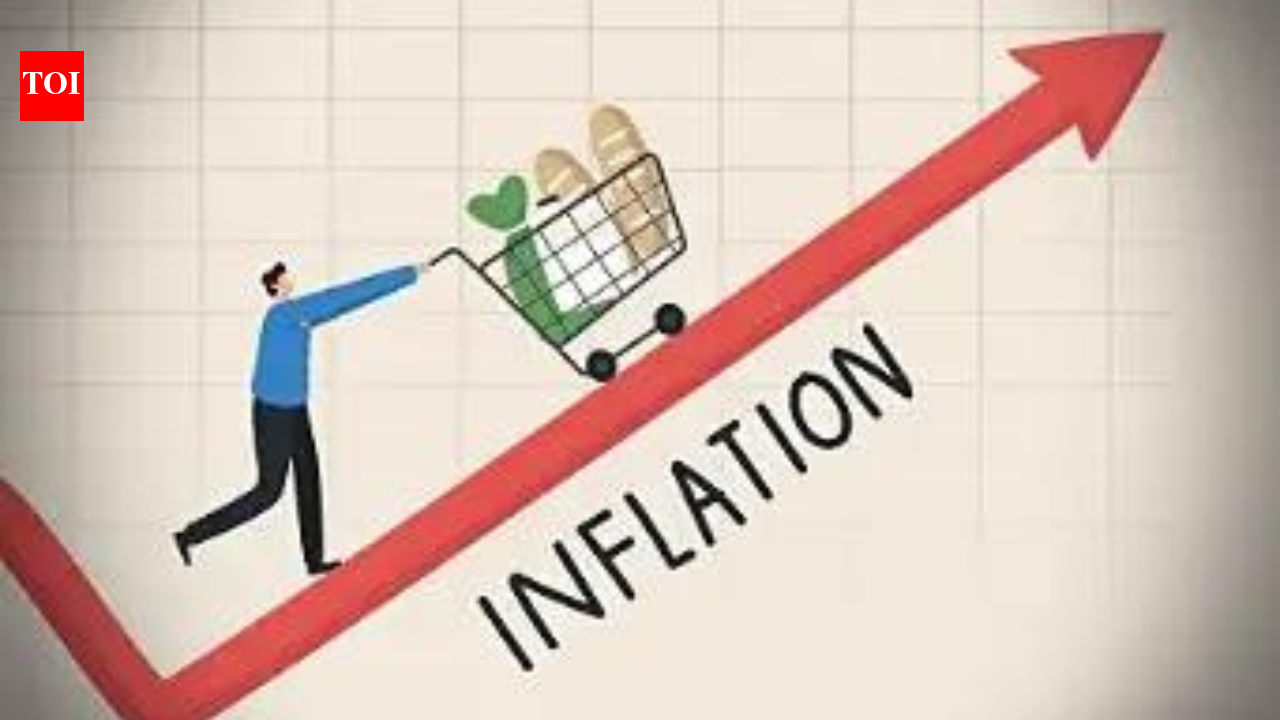
US inflation rose in April to 3.8 per cent as surging fuel costs amid the ongoing Iran-US conflict drove up consumer prices, hitting a three-year high complicating the Federal Reserve’s path on interest rates.Data released by the Labor Department on Tuesday showed the Consumer Price Index (CPI) increased 0.6 per cent in April after a 0.9 per cent jump in March, the biggest monthly rise since June 2022. On an annual basis, inflation accelerated to 3.8 per cent, marking the highest year-on-year increase, since May 2023.Petrol prices in the US are now more than 28 per cent higher than a year ago, according to official data. AAA estimates show average gasoline prices have crossed $4.50 per gallon, roughly 44 per cent above year-ago levels, squeezing household budgets and raising concerns about broader economic fallout.The spike in energy prices follows the escalation of hostilities between the US, Israel and Iran earlier this year. Markets were rattled after Tehran blocked access through the Strait of Hormuz — a critical global energy route that handles nearly one-fifth of the world’s oil and liquefied natural gas supplies.Core inflation, which excludes food and energy prices, remained relatively contained. Core CPI rose 0.4 per cent month-on-month and 2.8 per cent annually, suggesting that higher fuel costs have not yet fully spread across the wider economy.Food prices also edged higher in April. Grocery costs rose 0.7 per cent from March, led by increases in meat prices after a slight decline in the previous month.The latest inflation reading adds to uncertainty for the Federal Reserve, which had earlier been expected to begin cutting interest rates in 2026. Policymakers are now signalling caution amid fears that prolonged geopolitical tensions and elevated oil prices could trigger another wave of inflation.US President Donald Trump has repeatedly criticised the Fed for not lowering borrowing costs faster to support economic growth. Attention is now turning to Kevin Warsh, Trump’s nominee to succeed outgoing Federal Reserve Chair Jerome Powell, whose Senate confirmation is expected this week.Higher fuel costs are also beginning to weigh on corporate America. Appliance maker Whirlpool Corporation said last week that quarterly revenue fell nearly 10 per cent, warning that the war-driven economic slowdown had severely dented consumer confidence.
EBay has turned down a 56 billion US dollar (£41.4 billion) takeover move from GameStop, labelling the proposal as “neither credible or attractive”.
GameStop boss Ryan Cohen launched an unsolicited offer of 125 dollars (£92.40) per share – half in cash and half in GameStop stock – to eBay shareholders last week.
However, the online marketplace’s board confirmed on Tuesday that it had now rejected the move.
In a letter, eBay chairman Paul Pressler said it reviewed the offer but believes that eBay is a “strong, resilient business”.
He added: “We have sharpened our strategic focus, strengthened execution, enhanced our marketplace and seller experience, and consistently returned capital to shareholders.
“With its differentiated global marketplace and a clear strategy, eBay’s board is confident that the company, under its current management team, is well-positioned to continue to drive sustainable growth, execute with discipline, and deliver long-term value for our shareholders.”
GameStop, which runs around 1,600 shops around the US, said it started accumulating eBay shares earlier this year and currently has a 5% stake.
Mr Cohen had previously indicated he would take his proposal directly to eBay shareholders if the company’s board rejected the deal.

[CinePlex360] Please moderate: “Ever Seen A Sar

Who could replace Keir Starmer as Britain’s prime minister?
WPForms

-

 Politics1 week ago
Iran weighs US reply delivered via Pakistan as Trump signals opposition to deal terms
-

 Tech1 week ago
DHS Demanded Google Surrender Data on Canadian’s Activity, Location Over Anti-ICE Posts
-
 Business1 week ago
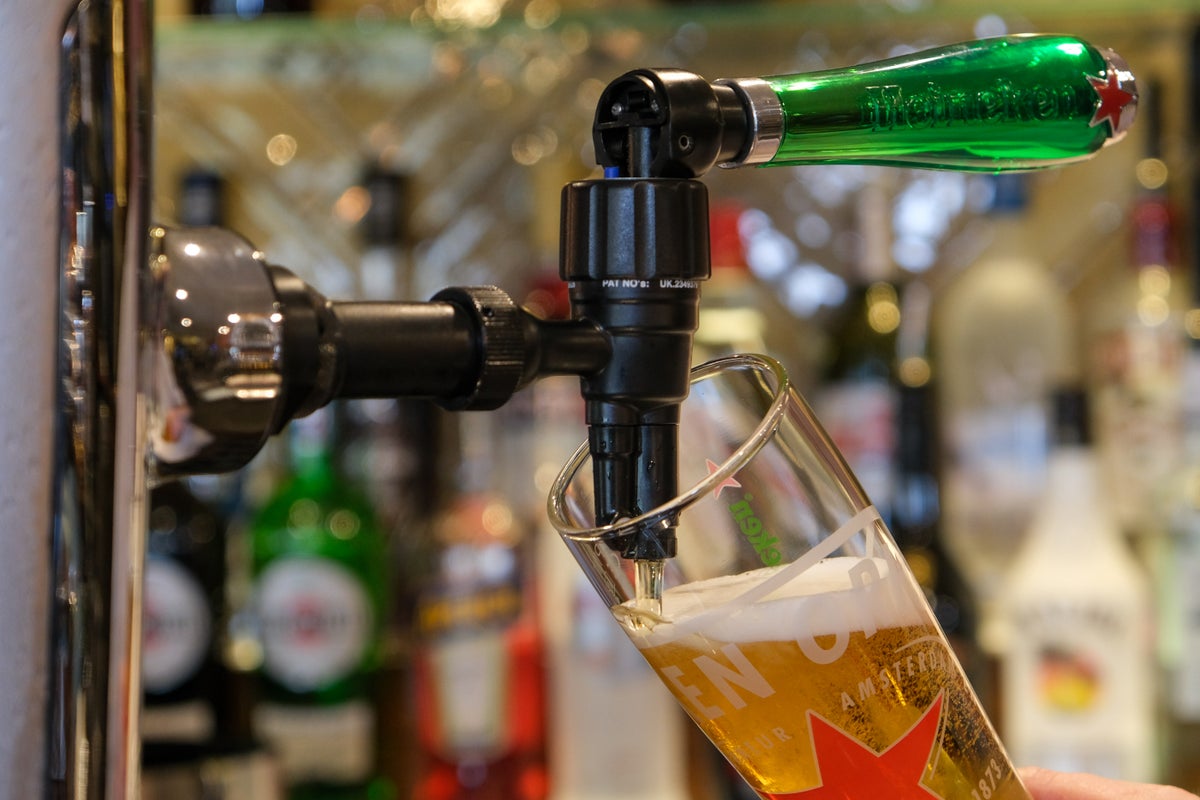
Heineken to invest £44.5m in hundreds of pubs creating 850 jobs
-

 Entertainment1 week ago
Jelly Roll reacts to daughter Bailee Ann’s major life milestone
-
 Business1 week ago
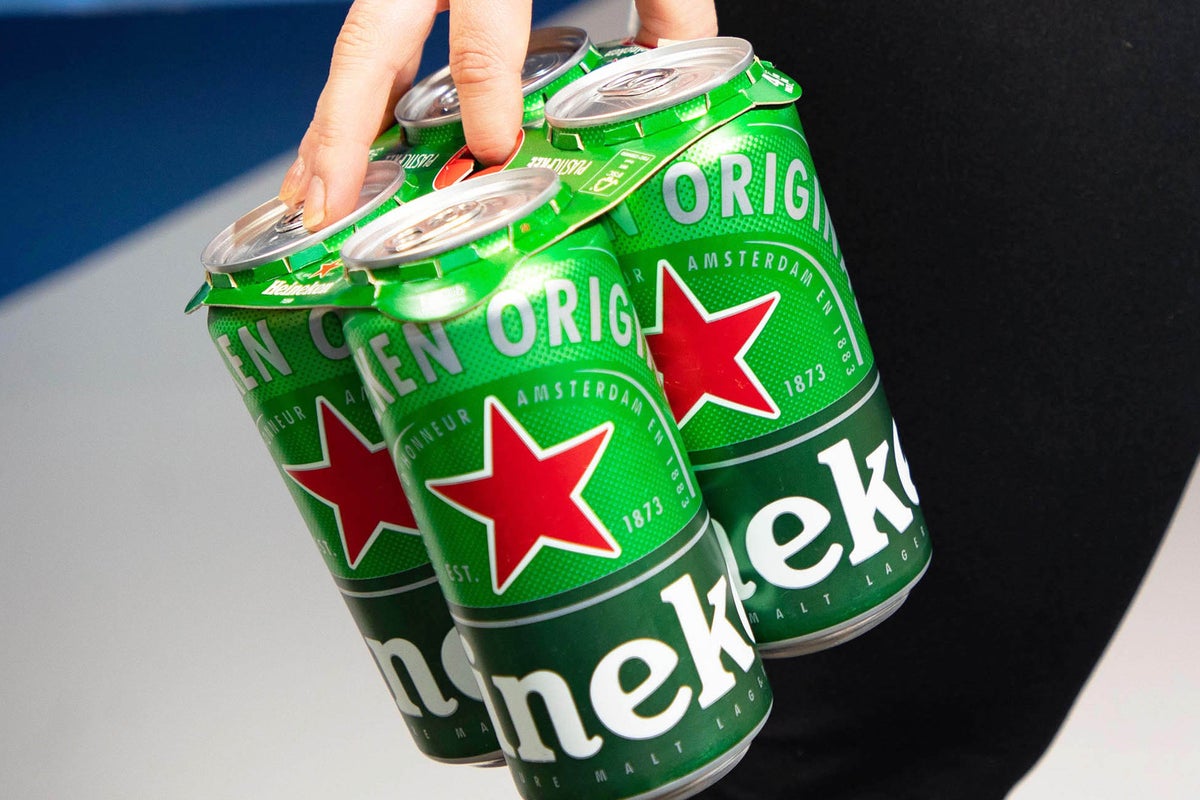
Heineken plans huge investment in hundreds of UK pubs ahead of World Cup
-

 Tech4 days ago
A new frontier: Identity stack evolves for agentic systems | Computer Weekly
-

 Tech4 days ago
‘Orbs,’ ‘Saucers,’ and ‘Flashes’ on the Moon: Pentagon Drops New UFO Files
-

 Tech5 days ago
What Microsoft Executives Really Thought About OpenAI in 2018