

Fashion
‘Cotton 2040’ unveiled at 4th Global Cotton Conference in New Delhi

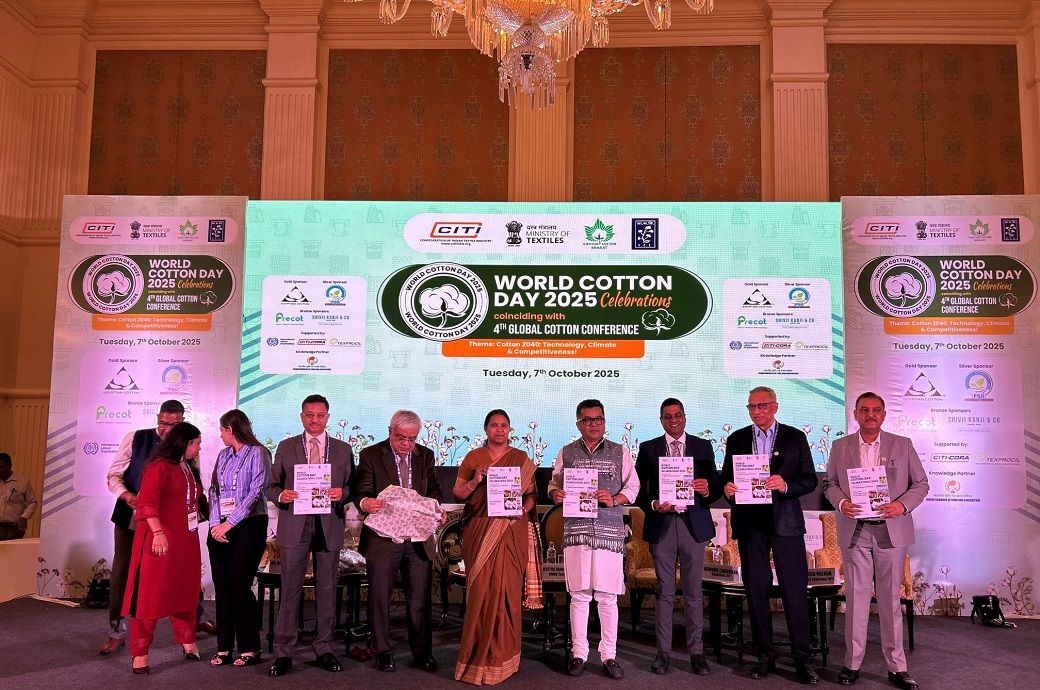
The Union Minister of State for Textiles Pabitra Margherita inaugurated the 4th Global Cotton Conference in New Delhi on October 7. Margherita also released a White Paper on Cotton titled ‘Cotton 2040: Shaping the Future Through Technology, Climate Resilience and Global Competitiveness’ jointly developed by the Confederation of Indian Textile Industry (CITI) and the Indian Chamber of Food and Agriculture (ICFA) on the occasion.
Union Minister of State for Textiles Pabitra Margherita inaugurated the 4th Global Cotton Conference in New Delhi on October 7, releasing a White Paper titled ‘Cotton 2040.’
Organised by CITI, the Ministry of Textiles, and CCI, the event highlighted India’s leadership potential in cotton, focusing on technology, sustainability, and competitiveness.
The 4th Global Conference is being jointly organised by CITI, the Union Ministry of Textiles, and the Cotton Corporation of India as part of the World Cotton Day 2025 celebrations. The theme of the Conference is ‘Cotton 2040: Technology, Climate & Competitiveness’.
The International Labour Organization (ILO), the Cotton Textiles Export Promotion Council (TEXPROCIL), and CITI-CDRA are supporting the program. The Indian Chamber of Food and Agriculture is the Knowledge Partner.
In 2021, the United Nations General Assembly officially recognised October 7 as World Cotton Day in recognition of the vital role played by cotton in society.
In his address, Margherita said India must strive to attain leadership position in quality, sustainability, and ethical production. The Kasturi Cotton initiative has the potential to contribute immensely to the ‘5F’ (farm-fibre-factory-fashion-foreign) vision of the Government, he pointed out.
The Minister said India and Russia could forge deeper ties in the textiles and apparel arena. He added that the government was committed to the welfare of farmers.
CITI chairman Ashwin Chandran said India has the potential to dominate the global cotton economy. Cotton Corporation of India CMD Lalit Kumar Gupta stressed on the need for improving the yield of the Indian cotton sector. He added that there was a need to accord more focus on innovation, improved farm practices, and the use of technology.
TEXPROCIL vice chairman Ravi Sam said cotton remains a pillar of India’s textile sector. He said that 63 per cent of India’s apparel exports are cotton-based.
Textile Commissioner Dr M Beena reiterated that a focus on technology and innovation is the need of the hour. Federation of Seed Industry of India vice chairman Dr Rajvir Singh Rathi highlighted the role of the seeds ecosystem in the development of India’s textile sector.
Cotton Analytics global consultant Dr Terry Townsend underlined the importance of the cotton sector in the global economy and how greater use of technology could mitigate the impact of climate change.
CITI deputy chairman Dinesh Nolkha delivered the Vote of Thanks at the session.
Cotton is one of the most important commercial crops cultivated in India, lies at the heart of the country’s textile ecosystem, and is a source of livelihood for millions of farmers and those engaged in related activities. However, the cotton sector in India lags in productivity compared to many of its peers, CITI said in a release.
For the benefit of lakhs of cotton growing farmers, India’s FY26 Budget had announced a ‘Mission for Cotton Productivity’. “This 5-year mission will facilitate significant improvements in productivity and sustainability of cotton farming and promote extra-long staple cotton varieties. The best of science & technology support will be provided to farmers. Aligned with our integrated 5F vision for the textile sector, this will help in increasing incomes of the farmers and ensure a steady supply of quality cotton for rejuvenating India’s traditional textile sector,” Union Finance Minister Nirmala Sitharaman had said in her Budget speech.
Fibre2Fashion News Desk (HU)










The package establishes a modern framework for both sides, enabling frictionless access to a market of 460 million consumers in key sectors, delivering economic benefits to both parties.
European Commission President Ursula von der Leyen and Swiss President Guy Parmelin yesterday signed a broad package of agreements aimed at deepening and expanding EU-Switzerland ties.
By aligning standards and rules in closely integrated areas, it will provide legal certainty, simplify trade in goods like medical devices and food products, and ease cross-border supply for businesses on both sides.
By aligning standards and rules in closely integrated areas, it will provide legal certainty, simplify trade in goods like medical devices and food products, and ease cross-border supply for businesses on both sides of the border.
Additionally, it will ensure more consistent rules for individuals who live, work or study across the EU-Swiss border. Switzerland will contribute to the development of legislation in the areas covered by the package and will have the opportunity to influence these rules as they are being designed.
“By modernising and deepening our ties across key sectors, from trade and transport to health and energy—we are strengthening legal certainty, fostering innovation and creating new opportunities for our citizens and businesses,” von der Leyen said in a release from the Commission.
The package includes updates to four already existing agreements, which already give Switzerland access to the EU internal market, regarding air transport, land transport, the free movement of persons and mutual recognition of conformity assessment.
New agreements on food safety, electricity, health and Switzerland’s participation in the EU Agency for the Space Programme were signed. A new agreement introduced a permanent and fair financial contribution by Switzerland to economic and social cohesion within the EU.
Apart from a protocol on parliamentary cooperation, the package includes also a joint declaration on the establishment of a high-level dialogue on the broad bilateral package.
Fibre2Fashion News Desk (DS)
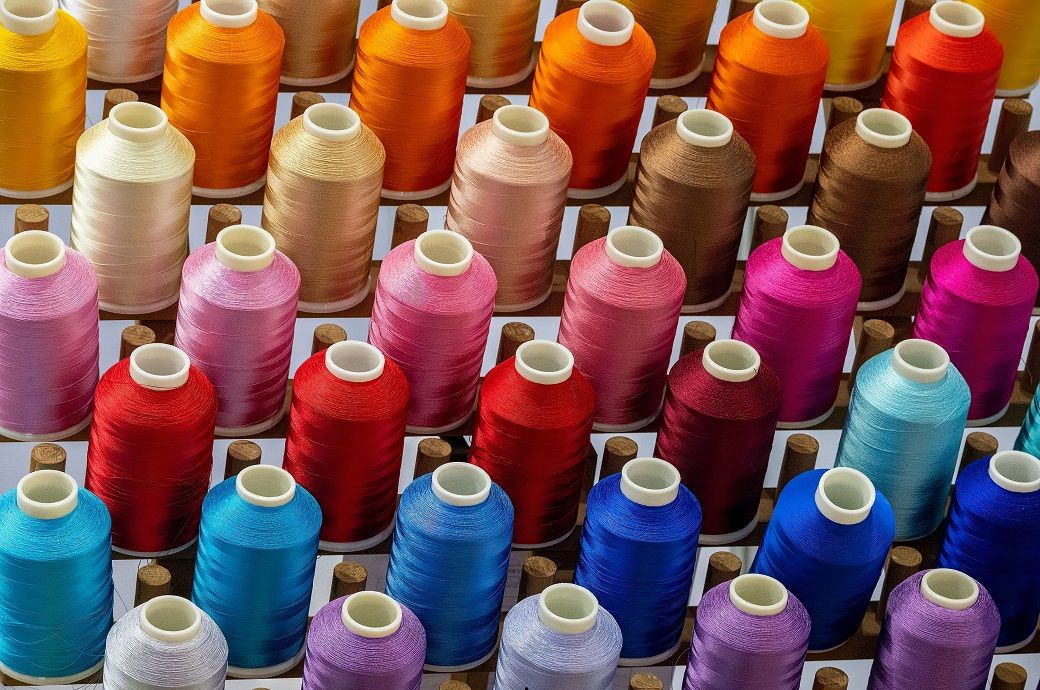
Following earlier increases in purified terephthalic acid (PTA), melt and PSF, Indian producers have now raised PFY prices. POY, FDY and PTY prices have been increased by ****;* per kg across all deniers and lustres with effect from March *, reflecting rapid cost pass-through amid heightened volatility in crude-linked value chains, according to the market sources.
In the previous weekly revision effective February **, ****, PTA was increased by ****;*.** per kg to ****;**.** per kg, while monoethylene glycol (MEG) was retained at ****;**.** per kg. Polyester melt prices were raised by ****;*.** per kg to ****;**.** per kg. Downstream PSF prices were also revised upward by ****;*.** per kg from March *.


These $500 Windows Laptops Show That the MacBook Neo Has Serious Competition

US Senate rejects bid to limit Trump’s Iran war powers

Sydney Leroux teases comeback after missing 2025 NWSL season

India Us Trade Deal: Fresh look at India-US trade deal? May be ‘rebalanced’ if circumstances change, says Piyush Goyal – The Times of India

What are Iran’s ballistic missile capabilities?

Households set for lower energy bills amid price cap shake-up

-
Business6 days ago
India Us Trade Deal: Fresh look at India-US trade deal? May be ‘rebalanced’ if circumstances change, says Piyush Goyal – The Times of India
-
 Politics7 days ago
What are Iran’s ballistic missile capabilities?
-

 Politics7 days ago
US arrests ex-Air Force pilot for ‘training’ Chinese military
-
Business1 week ago
Households set for lower energy bills amid price cap shake-up
-
 Business6 days ago
Attock Cement’s acquisition approved | The Express Tribune
-
 Fashion1 week ago
OECD GDP growth slows to 0.3% in Q4 amid mixed trends
-

 Fashion6 days ago
Policy easing drives Argentina’s garment import surge in 2025
-

 Sports1 week ago
Top 50 USMNT players of 2026, ranked by club form: USMNT Player Performance Index returns