

Business
Could oil hit $200 a barrel? Experts warn of risks if Iran war drags on – The Times of India

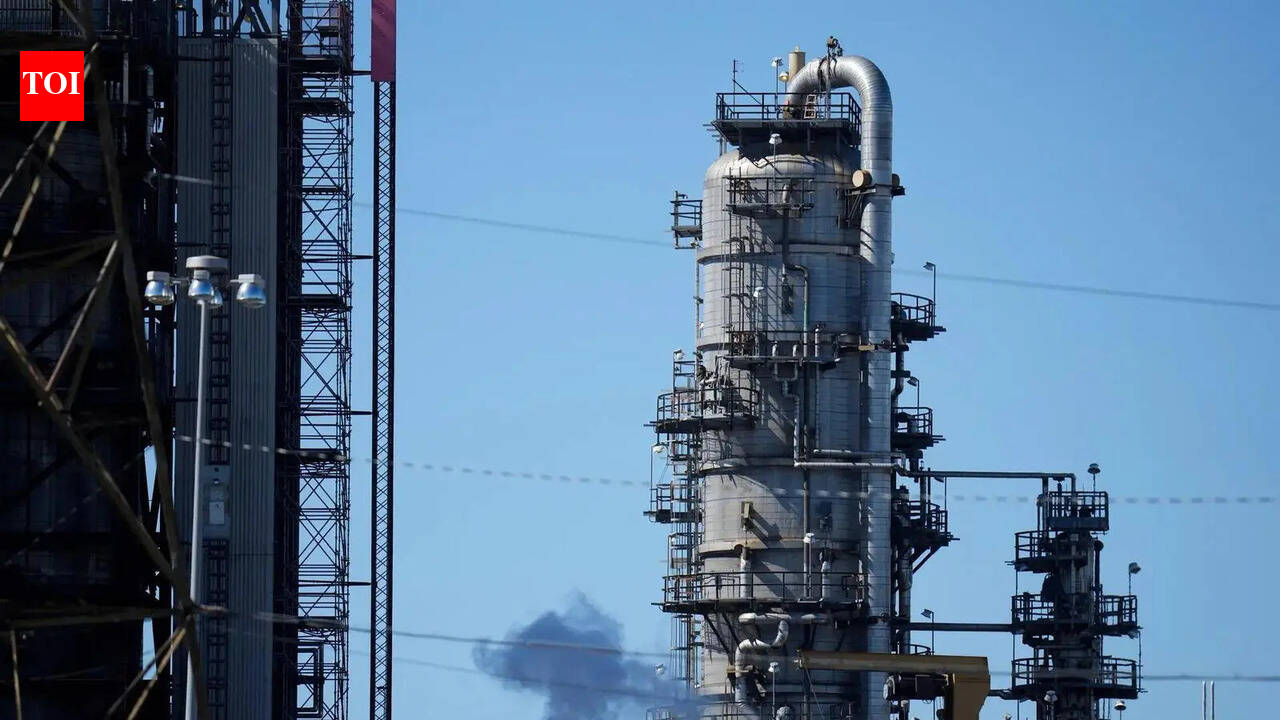
As the Middle East crisis escalates, crude oil prices could surge to $150 or $200 a barrel if the near-closure of the Strait of Hormuz continues over the next six to eight weeks. The disruption is a result of the ongoing war involving the US, Israel, and Iran, which has already prompted Persian Gulf producers to cut millions of barrels of daily supply.According to energy-market consultancy FGE NexantECA, the impact on the global oil market could be enormous. “Every week, 100 million barrels of oil is not going through, and every month, 400 million barrels are not going through,” Chairman Emeritus Fereidun Fesharaki told Bloomberg on Tuesday. “So, within a period of time, these losses to the market will be astronomical,” he said. Fesharaki highlighted that the physical reality of supply disruptions would determine oil prices, rather than political statements.“The market will choke, and the prices will go up. It doesn’t matter what the president says on the political front,” he added. His statement comes as US President Donald Trump has earlier suggested possibility to end the conflict. Oil prices have already surged sharply this month amid the conflict, with Brent crude climbing above $110 per barrel and US West Texas Intermediate (WTI) crude trading above $100. Brent crude rose $2.26, or about 2 per cent, to $115.04 a barrel in early trade, after hitting its highest level since March 19 in the previous session. US WTI crude gained $3.10, or around 3 per cent to $105.96 a barrel, marking its highest level since March 9.Analysts warn that if the Strait of Hormuz remains effectively closed, the global oil market could face further shocks, potentially pushing prices even higher.



Business
Big drop! Why bench strength of TCS, Infosys, Wipro & other IT companies has fallen by around 75,000 people – The Times of India

Indian IT sector majors – Tata Consultancy Services (TCS), Wipro, Infosys, HCL Tech, and Tech Mahindra – have seen their bench strength drop by 25% in the last two years. Bench strength acts as a traditional reserve workforce with an aim to be a cushion during demand fluctuations. This buffer has contracted sharply, declining by roughly one-fourth over the past two years, and industry observers believe it may not return to earlier levels even if growth revives.Across major firms such as TCS, Infosys, Wipro, HCLTech and Tech Mahindra, the number of employees on the bench has dropped by around 75,000, falling from nearly three lakh to about 2.25 lakh, according to industry estimates cited by experts in an ET report.The proportion of unassigned employees has also narrowed considerably. “The bench across IT services is currently between 8-15% of the workforce compared to over 20% earlier,” said Pareekh Jain, CEO of EIIRTrend. Similarly, TeamLease Digital estimates the current range at 8-12%, down from 20-30% in previous years.
Deeper Shift In IT Sector Bench Strength Trends
Historically, companies maintained a sizeable bench by hiring in anticipation of future projects, ensuring that skilled personnel were readily available when demand materialised. This approach was viable during periods of rapid expansion. However, firms are now moving away from that model and tightening workforce utilisation.Companies that once operated with 4-5% of employees on the bench are now targeting significantly lower levels, often between 1% and 1.5%. In some cases, stricter policies have been introduced. For instance, in TCS bench duration has been capped at around 35 days annually, after which performance evaluations are initiated, and employees who remain unallocated may be asked to exit.Experts indicate that this shift is not merely cyclical but reflects a deeper structural change. “The concept of bench does not make sense unless an IT services firm can predict skill or role-based demand with 90% accuracy three months in advance,” said Gaurav Vasu, founder of UnearthInsight.Slower industry growth has been identified as the primary driver behind this contraction, rather than technological disruption. “Low growth is the bigger factor in bench reduction today. When growth returns, firms may not need to rebuild their bench because local hiring in different countries has increased significantly over the last five to six years,” Jain said.Over the past two years, hiring patterns have undergone a clear shift. Demand for traditional mid-level delivery roles has declined by roughly 20–30 per cent, while requirements for skills in artificial intelligence, generative AI, data, and cloud technologies have increased by about 30–40 per cent across the same firms, according to Neeti Sharma, CEO of TeamLease Digital.Global capability centres, however, present a more varied trend, with mid-level recruitment showing relatively greater resilience. “Leadership hiring has grown in line with overall demand, with the share of such roles increasing from around 15% in 2024 to around 20% in 2025. What has changed is the nature of these roles. Today, more than 50% of job demand is driven by emerging skills, especially in AI, cloud, and platform engineering,” said Kapil Joshi, CEO of IT staffing at Quess Corp. In contrast, hiring at the entry level has declined by around 30–35 per cent during the same period, he added.The changes are also affecting how quickly professionals are placed. The average time required to assign a benched engineer with 8–12 years of experience has lengthened to 60–90 days, compared with 30–45 days earlier, Sharma told ET.
Salary Trends
Compensation trends are diverging as well. Premiums for lateral hiring in non-AI roles have reduced to 10–20 per cent, down from 25–35 per cent in FY 2022–23. In contrast, professionals with AI capabilities continue to command premiums of 20–30 per cent and tend to secure offers more quickly, Sharma said. According to Quess data, premiums for generative AI roles range between 15–40 per cent depending on the position.The broader career structure within IT services firms is also evolving. “The people manager role is not disappearing, but its responsibilities are narrowing, shifting toward revenue expansion and profitability management away from headcount oversight,” Vasu said.

But investors remain wary as the Wall Street Journal story came on the same day the US president threatened to destroy Iran’s key oil export hub and desalination plants unless it accepts a deal, while also suggesting diplomacy was making headway.
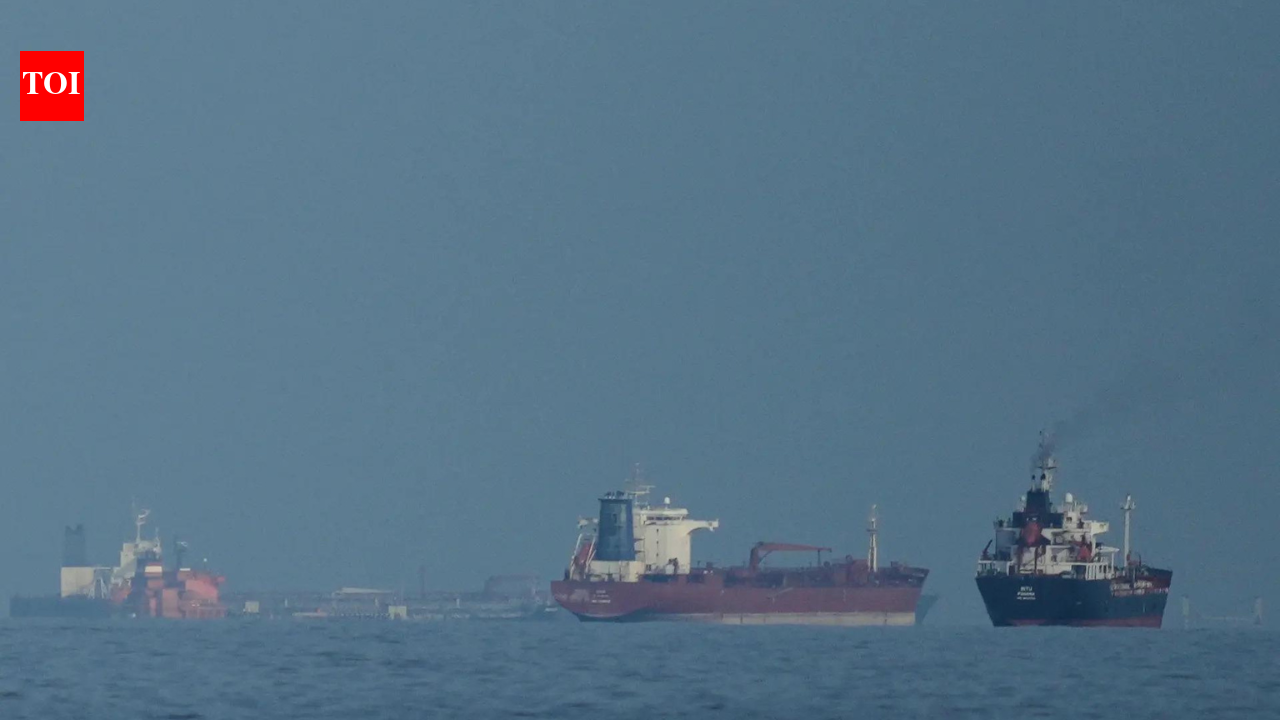
The news comes as governments around the world scramble to implement measures to ease the burden of surging fuel prices while also looking to conserve energy, with one-fifth of global crude and gas passing through the waterway.
The Journal, citing administration officials, said Trump and his aides had come to the conclusion that a mission to reopen the waterway would extend the length of the mission past his four- to six-week timeline.
It added that he had decided to focus on battering Iran’s missiles and navy, before looking to pressure Iran diplomatically to reopen the Strait.
Both main oil contracts fell Tuesday, though West Texas Intermediate and Brent were still sitting well above $100 a barrel.
And most equity markets rose. Hong Kong, Shanghai, Sydney, Singapore, Wellington and Jakarta were all up, while Tokyo fluctuated.
Seoul, Taipei and Manila fell.
However, Trump also threatened Monday to destroy Kharg Island, through which most of Iran’s crude passes, if a peace deal is not reached.
He warned US forces would destroy “all of their Electric Generating Plants, Oil Wells and Kharg Island (and possibly all desalinization plants!).”
Destroying civilian infrastructure could constitute a war crime, experts say.
Iran has previously threatened to retaliate by targeting energy infrastructure and desalination plants in its Arab neighbours that host the US military, fanning fears of a wider conflict.
But Trump also said officials were speaking to a “more reasonable regime” in Tehran, which has denied any talks and accused the president of lying about negotiations as cover while preparing a ground invasion.
US Secretary of State Marco Rubio voiced hope for working with elements within Iran’s government.
Market experts warned that any US ground operation or wider Iranian retaliation could send oil prices to levels not seen since July 2008, when Brent hit almost $150 a barrel.
‘De-escalation and re-escalation’
In a sign Iran was determined to keep control of Hormuz, state media reported Monday that a parliamentary commission had approved plans to impose tolls on vessels transiting it.
With Trump flipping between hope for talks and threats, analysts said investors were having to walk a tightrope.
“The market continues to be headline-driven as the Trump Administration has delivered a variety of messages surrounding de-escalation and re-escalation of the war in Iran,” Wolfe Research’s Chris Senyek said.
With the war now in its fifth week, governments are moving to shore up their economies.
Economy ministers and central bankers from the G7 club of rich countries met in Paris to discuss the war’s effects, with many countries introducing energy-saving measures or cutting fuel taxes to help consumers.
Dubai said it will provide support worth more than $270 million to help businesses and families, while Norway will temporarily cut diesel and petrol taxes and Bangladesh ordered civil servants to switch off lights and turn down air conditioning to save power.
Sri Lanka announced a nearly 40 percent increase in electricity prices from Wednesday as it battles an energy shortage.
Colombo has raised fuel prices three times this month, increasing them by more than a third, and has imposed a four-day working week in a bid to save energy.
“From here, the burden shifts from military outcomes to economic endurance. The question is no longer how high oil spikes, but how long elevated energy costs bleed into growth, margins, and consumption,” said SPI Asset Management’s Stephen Innes.
Federal Reserve boss Jerome Powell also provided a little support, saying Monday the bank could look past energy shocks because they “have tended to come and go pretty quickly” but monetary policy changes take time to flow through the economy.
While the spike in energy prices threatens to send inflation soaring again, he added that officials “feel like our policy is in a good place for us to wait and see how that turns out” and “inflation expectations do appear to be well-anchored beyond the short term”.
Key figures at around 0230 GMT
Brent North Sea Crude: DOWN 1.3 percent at $106.04 a barrel
West Texas Intermediate: DOWN 0.7 percent at $102.22 a barrel
Tokyo – Nikkei 225: DOWN 0.1 percent at 51,820.30 (break)
Hong Kong – Hang Seng Index: UP 0.5 percent at 24,869.71
Shanghai – Composite: UP 0.3 percent at 3,935.05
Euro/dollar: UP at $1.1474 from $1.1460 on Monday
Pound/dollar: UP at $1.3207 from $1.3183
Dollar/yen: UP at 159.71 yen from 159.69 yen
Euro/pound: DOWN at 86.88 pence from 86.93 pence
New York – Dow: UP 0.1 percent at 45,216.14 (close)
London – FTSE 100: UP 1.6 percent at 10,127.96 (close)

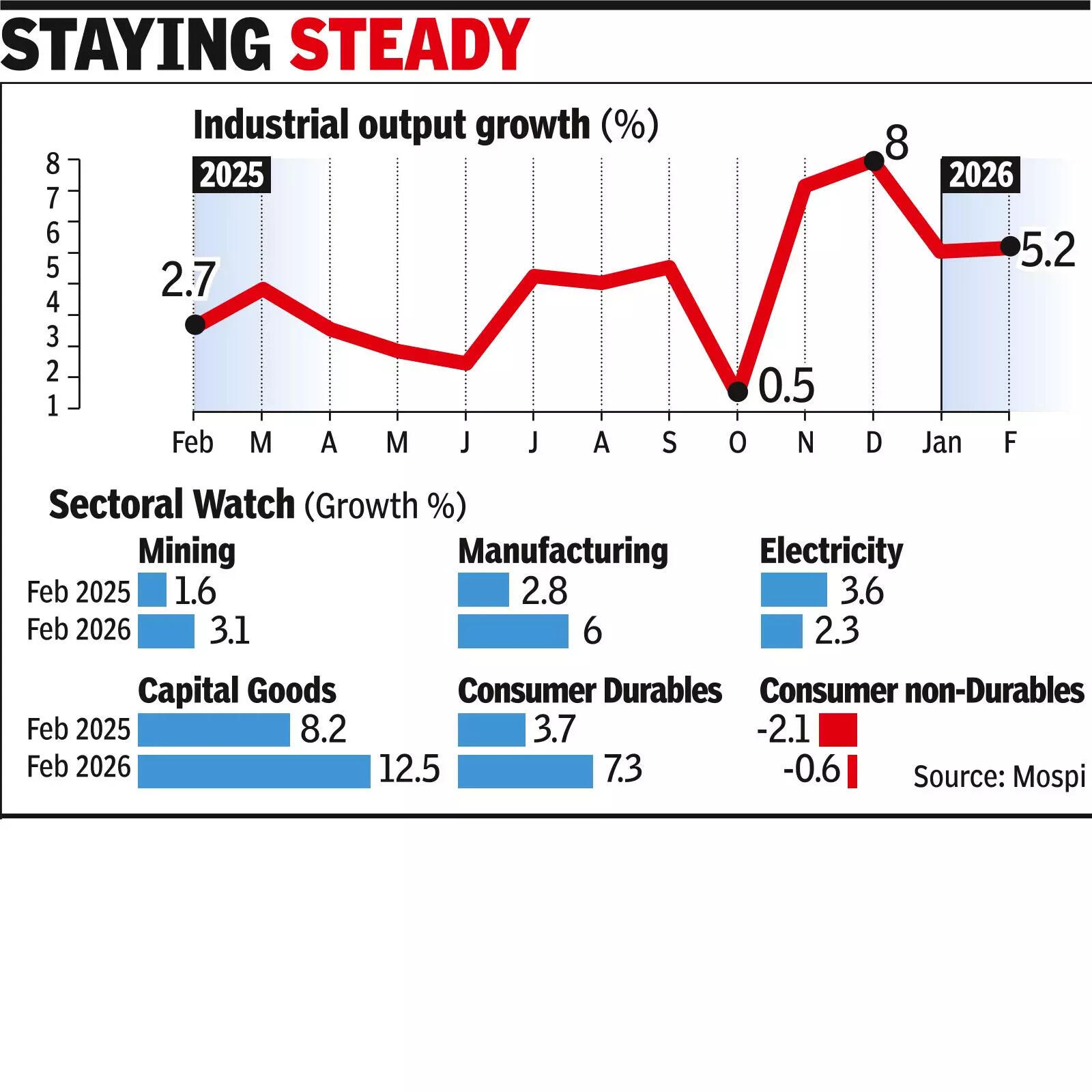
NEW DELHI : The country’s industrial output growth accelerated in Feb, led by a recovery in the manufacturing sector, but the West Asia conflict is expected to weigh heavily on the crucial sector in the months ahead.Data released by the National Statistics Office (NSO) on Monday showed the index of industrial production rose 5.2 per cent in Feb, a tad higher than the upwardly revised 5.1% in Jan. The manufacturing sector rose 6 per cent in Feb, higher than 2.8 per cent in Feb last year and above the 5.3 per cent in Jan.Within the manufacturing sector, 14 out of 23 industry groups grew in Feb compared to the same month a year earlier. The top three positive contributors in Feb were — manufacture of basic metals (13.2 per cent), manufacture of motor vehicles, trailers and semitrailers (14.9 per cent) and manufacture of machinery and equipment (10.2 per cent), according to the statistics office. The electricity and mining sectors remained sluggish, rising 2.3 per cent and 3.1 per cent respectively.Experts expect the West Asia conflict to hurt factory sector expansion. Aditi Nayar, chief economist, ICRA, said the agency expects IIP growth to decelerate to 3 per cent-4 per cent in March, amid the unfolding adverse impact of the West Asia crisis on some manufacturing segments, both through the price and availability channels, and weaker electricity performance in the month.


Methanol jumps nearly 150% as oil surge disrupts markets
Could oil hit $200 a barrel? Experts warn of risks if Iran war drags on – The Times of India

2026 World Cup playoffs: Who will claim the final six spots?

-

 Politics7 days ago
Afghanistan announces release of detained US citizen
-

 Sports7 days ago
Broadcast industry CEO says consolidation is ‘essential’ to compete for NFL soaring media rights prices
-

 Entertainment7 days ago
UN warns migratory freshwater fish numbers are spiralling
-

 Tech7 days ago
Can a Home Appliance Fix the Problem of Soft-Plastic Waste?
-
 Business7 days ago
Property Play: Home flippers see smallest profits since the Great Recession, real estate data firm says
-
 Business7 days ago
Gold prices soar in Pakistan – SUCH TV
-

 Fashion7 days ago
ICE cotton slips on weaker crude, profit booking
-
 Business7 days ago
More women are entering wealth management, but few are in advisory roles, study finds