Connect with us

Business

Covid inquiry hears impact on firms and staff

Published

on

Covid inquiry hears impact on firms and staff


Ben King,

Simon Browning and

Archie Mitchell,Business reporters

Getty Images A bartender in vintage trousers, black T-shirt and a dark green flat cap wears a face mask as he carries a tray of drinks towards customers Getty Images

Workers and business leaders have told the Covid-19 inquiry about the devastation they faced during the pandemic and the difficulties they faced accessing support.

Business owners described breaking into tears as they were forced either to lay off staff or shut up shop entirely, while employees told how they feared for their jobs.

The comments were included in 8,000 submissions from the public, and come as the third stage of the inquiry focuses on the measures taken to support workers’ incomes and keep businesses afloat when the pandemic struck.

According to the Treasury, £140bn was spent on support for businesses, much of it going to pay people’s wages when they were forced to stay at home.

The inquiry heard how, on his first day as chancellor in 2020, Rishi Sunak was presented with a briefing on the impact of the Covid outbreak on growth and financial stability.

Two months later, the Treasury concluded the economy was “in hibernation”, with the sharpest fall in output for nearly 100 years.

Sunak is one of the people who will appear before the inquiry, and Bank of England governor Andrew Bailey will also give evidence in the coming weeks.

Monday’s session opened with emotional video testimony from business owners and freelancers whose livelihoods were upended when Covid lockdowns started.

In the video, Lowri, an events freelancer, explained how she had become desperate as her income stopped and her freelance work vanished. She fought back tears as she explained she qualified for no support. She had a mortgage and a child at home, with “no savings” for back up.

Last week the report on the second phase of the inquiry, into political decision-making, found the government had done “too little, too late”.

The current module, expected to last until just before Christmas, will examine the unprecedented economic intervention rolled out when the first lockdown was announced in March 2020.

The largest scheme, the Coronavirus Job Retention Scheme, known as furlough, covered 11.7 million jobs between March 2020 and September 2021, at a cost of £70bn.

It paid a portion of employees’ wages to ensure they still had an income even if they could not go to work, and to keep businesses going so that they could reopen later.

There was also a support scheme for self-employed people, loan schemes for businesses and business rates relief.

Questions were raised over the scale of the financial support, the strength of safeguards against fraud and error, and whether it delayed people taking up new work roles.

In submissions to the inquiry, employees told the inquiry how they were worried of losing their jobs and faced a scramble to pay bills through the pandemic, with some missing out on furlough payments after being made redundant.

However, others said their careers were rescued by the furlough programme, while some business owners said they were saved by government support schemes and spared having to make redundancies.

As part of the submissions, the owner of a small retailer told the inquiry: “One awful day, I had to call 80% of my staff and tell them that we had to make them redundant because there was no job for them anymore.

“And I cried, I didn’t sleep all night, I was so, so, upset. I had people that had worked for me for seven, eight years, that I had to say, ‘I’m so sorry, I literally can’t afford to pay you anymore because we’ve got no business’.”

Describing flaws in the furlough system, one Northern Irish contributor said her husband lost his job in the run-up to the scheme coming to an end. “It then got extended, but he’d already been let go,” she said.

The Eat Out to Help Out scheme, which was introduced by Sunak, split opinion among bosses.

“When we reopened, it helped to get people back into the pub and it helped us increase our profits,” the finance director of a large English food and drinks firm said.

But an operations manager at a travel and hospitality firm in Wales said: “When we look back, it probably wasn’t the right thing to do, given where we were with the pandemic.”

The Covid Inquiry, chaired by Baroness Hallett, is expected to look at 10 areas in total, and provide lessons for managing future pandemics.

This phase of the inquiry will also look at the additional funding provided for public services such as the railways to keep them running during lockdowns, and support for the voluntary and community sector.

It will examine decisions on benefits, sick pay and support for vulnerable people.

Also appearing before the inquiry are:

  • Former Treasury officials James Benford and Dan York-Smith
  • Representatives of the charities Child Poverty Action Group, Long Covid Support and Disability UK
  • Former Downing Street special adviser Ben Warner
  • Former director general for analysis of the Covid-19 Taskforce, Robert Harrison.

Last week, Sunak told the BBC the government and scientific community were “operating in a highly uncertain environment”.

“I think we do need to view the decisions taken through that lens.

“But it’s important that lessons [are] learned so that we can be better prepared if there’s ever another pandemic.”


Source link

Continue Reading
Click to comment

Leave a Reply

Your email address will not be published. Required fields are marked *

Business

Pakistan’s crisis differs from world | The Express Tribune

Published

on

Pakistan’s crisis differs from world | The Express Tribune


Multiple elite clusters capture system as each extracts benefits in different ways

Pakistan’s ruling elite reinforces a blind nationalism, promoting the belief that the country does not need to learn from developed or emerging economies, as this serves their interests. PHOTO: FILE


KARACHI:

Elite capture is hardly a unique Pakistani phenomenon. Across developing economies – from Latin America to Sub-Saharan Africa and parts of South Asia – political and economic systems are often influenced, shaped, or quietly commandeered by narrow interest groups.

However, the latest IMF analysis of Pakistan’s political economy highlights a deeper, more entrenched strain of elite capture; one that is broader in composition, more durable in structure, and more corrosive in its fiscal consequences than what is commonly observed elsewhere. This difference matters because it shapes why repeated reform cycles have failed, why tax bases remain narrow, and why the state repeatedly slips back into crisis despite bailouts, stabilisation efforts, and policy resets.

Globally, elite capture typically operates through predictable channels: regulatory manipulation, favourable credit allocation, public-sector appointments, or preferential access to state contracts. In most emerging economies, these practices tend to be dominated by one or two elite blocs; often oligarchic business families or entrenched political networks.

In contrast, Pakistan’s system is not captured by a single group but by multiple competing elite clusters – military, political dynasties, large landholders, protected industrial lobbies, and urban commercial networks; each extracting benefits in different forms. Instead of acting as a unified oligarchic class, these groups engage in a form of competitive extraction, amplifying inefficiencies and leaving the state structurally weak.

The IMF’s identification of this fragmentation is crucial. Unlike countries where the dominant elite at least maintains a degree of policy coherence, such as Vietnam’s party-led model or Turkiye’s centralised political-business nexus, Pakistan’s fragmentation results in incoherent, stop-start economic governance, with every reform initiative caught in the crossfire of competing privileges.

For example, tax exemptions continue to favour both agricultural landholders and protected sectors despite broad consensus on the inefficiencies they generate. Meanwhile, state-owned enterprises continue to drain the budget due to overlapping political and bureaucratic interests that resist restructuring. These dynamics create a fiscal environment where adjustment becomes politically costly and therefore systematically delayed.

Another distinguishing characteristic is the fiscal footprint of elite capture in Pakistan. While elite influence is global, its measurable impact on Pakistan’s budget is unusually pronounced. Regressive tax structures, preferential energy tariffs, subsidised credit lines for favoured industries, and the persistent shielding of large informal commercial segments combine to erode the state’s revenue base.

The result is dependency on external financing and an inability to build buffers. Where other developing economies have expanded domestic taxation after crises, like Indonesia after the Asian financial crisis, Pakistan’s tax-to-GDP ratio has stagnated or deteriorated, repeatedly offset by politically negotiated exemptions.

Moreover, unlike countries where elite capture operates primarily through economic levers, Pakistan’s structure is intensely politico-establishment in design. This tri-layer configuration creates an institutional rigidity that is difficult to unwind. The civil-military imbalance limits parliamentary oversight of fiscal decisions, political fragmentation obstructs legislative reform, and bureaucratic inertia prevents implementation, even when policies are designed effectively.

In many ways, Pakistan’s challenge is not just elite capture; it is elite entanglement, where power is diffused, yet collectively resistant to change. Given these distinctions, the solutions cannot simply mimic generic reform templates applied in other developing economies. Pakistan requires a sequenced, politically aware reform agenda that aligns incentives rather than assuming an unrealistic national consensus.

First, broadening the tax base must be anchored in institutional credibility rather than coercion. The state has historically attempted forced compliance but has not invested in digitalisation, transparent tax administration, and trusted grievance mechanisms. Countries like Rwanda and Georgia demonstrate that tax reforms succeed only when the system is depersonalised and automated. Pakistan’s current reforms must similarly prioritise structural modernisation over episodic revenue drives.

Second, rationalising subsidies and preferential tariffs requires a political bargain that recognises the diversity of elite interests. Phasing out energy subsidies for specific sectors should be accompanied by productivity-linked support, time-bound transition windows, and export-competitiveness incentives. This shifts the debate from entitlement to performance, making reform politically feasible.

Third, Pakistan must reduce its SOE burden through a dual-track programme: commercial restructuring where feasible and privatisation or liquidation where not. Many countries, including Brazil and Malaysia, have stabilised finances by ring-fencing SOE losses. Pakistan needs a professional, autonomous holding company structure like Singapore’s Temasek to depoliticise SOE governance.

Fourth, politico-establishment reform is essential but must be approached through institutional incentives rather than confrontation. The creation of unified economic decision-making forums with transparent minutes, parliamentary reporting, and performance audits can gradually rebalance power. The goal is not confrontation, but alignment of national economic priorities with institutional roles.

Finally, political stability is the foundational prerequisite. Long-term reform cannot coexist with cyclical political resets. Countries that broke elite capture, such as South Korea in the 1960s or Indonesia in the 2000s, did so through sustained, multi-year policy continuity.

What differentiates Pakistan is not the existence of elite capture but its multi-polar, deeply institutionalised, fiscally destructive form. Yet this does not make reform impossible. It simply means the solutions must reflect the structural specificity of Pakistan’s governance. Undoing entrenched capture requires neither revolutionary rhetoric nor unrealistic expectations but a deliberate recalibration of incentives, institutions, and political alignments. Only through such a pragmatic approach can Pakistan shift from chronic crisis management to genuine economic renewal.

The writer is a financial market enthusiast and is associated with Pakistan’s stocks, commodities and emerging technology


Source link

Continue Reading

Business

India’s $5 Trillion Economy Push Explained: Why Modi Govt Wants To Merge 12 Banks Into 4 Mega ‘World-Class’ Lending Giants

Published

on

India’s  Trillion Economy Push Explained: Why Modi Govt Wants To Merge 12 Banks Into 4 Mega ‘World-Class’ Lending Giants


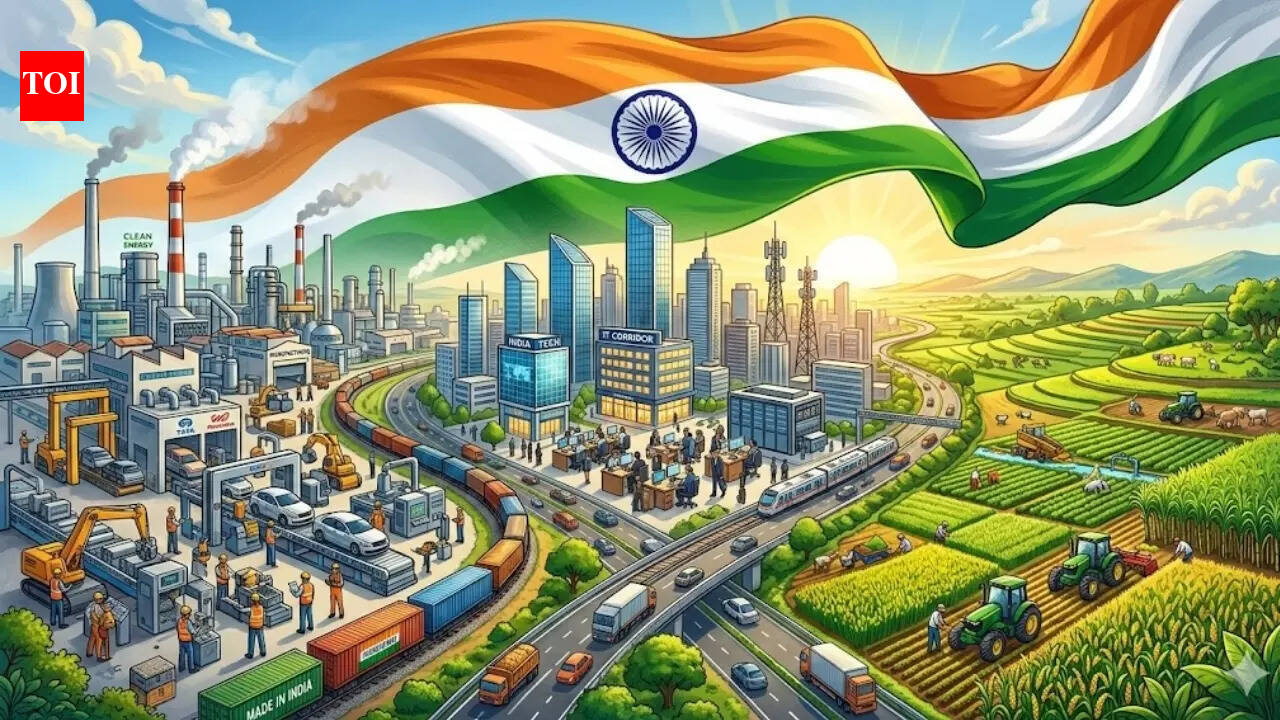
India’s Public Sector Banks Merger: The Centre is mulling over consolidating public-sector banks, and officials involved in the process say the long-term plan could eventually bring down the number of state-owned lenders from 12 to possibly just 4. The goal is to build a banking system that is large enough in scale, has deeper capital strength and is prepared to meet the credit needs of a fast-growing economy.

The minister explained that bigger banks are better equipped to support large-scale lending and long-term projects. “The country’s economy is moving rapidly toward the $5 trillion mark. The government is active in building bigger banks that can meet rising requirements,” she said.

Why India Wants Larger Banks

Add Zee News as a Preferred Source


Sitharaman recently confirmed that the government and the Reserve Bank of India have already begun detailed conversations on another round of mergers. She said the focus is on creating “world-class” banks that can support India’s expanding industries, rising infrastructure investments and overall credit demand.

She clarified that this is not only about merging institutions. The government and RBI are working on strengthening the entire banking ecosystem so that banks grow naturally and operate in a stable environment.

According to her, the core aim is to build stronger, more efficient and globally competitive banks that can help sustain India’s growth momentum.

At present, the country has a total of 12 public sector banks: the State Bank of India (SBI), the Punjab National Bank (PNB), the Bank of Baroda, the Canara Bank, the Union Bank of India, the Bank of India, the Indian Bank, the Central Bank of India, the Indian Overseas Bank (IOB) and the UCO Bank.

What Happens To Employees After Merger?

Whenever bank mergers are discussed, employees become anxious. A merger does not only combine balance sheets; it also brings together different work cultures, internal systems and employee expectations.

In the 1990s and early 2000s, several mergers caused discomfort among staff, including dissatisfaction over new roles, delayed promotions and uncertainty about reporting structures. Some officers who were promoted before mergers found their seniority diluted afterward, which created further frustration.

The finance minister addressed the concerns, saying that the government and the RBI are working together on the merger plan. She stressed that earlier rounds of consolidation had been successful. She added that the country now needs large, global-quality banks “where every customer issue can be resolved”. The focus, she said, is firmly on building world-class institutions.

‘No Layoffs, No Branch Closures’

She made one point unambiguous: no employee will lose their job due to the upcoming merger phase. She said that mergers are part of a natural process of strengthening banks, and this will not affect job security.

She also assured that no branches will be closed and no bank will be shut down as part of the consolidation exercise.

India last carried out a major consolidation drive in 2019-20, reducing the number of public-sector banks from 21 to 12. That round improved the financial health of many lenders.

With the government preparing for the next phase, the goal is clear. India wants large and reliable banks that can support a rapidly growing economy and meet the needs of a country expanding faster than ever.


Source link

Continue Reading

Business

Stock market holidays in December: When will NSE, BSE remain closed? Check details – The Times of India

Published

on

Stock market holidays in December: When will NSE, BSE remain closed? Check details – The Times of India


Stock market holidays for December: As November comes to a close and the final month of the year begins, investors will want to know on which days trading sessions will be there and on which days stock markets are closed. are likely keeping a close eye on year-end portfolio adjustments, global cues, and corporate earnings.For this year, the only major, away from normal scheduled market holidays in December is Christmas, observed on Thursday, December 25. On this day, Indian stock markets, including the Bombay Stock Exchange (BSE) and National Stock Exchange (NSE), will remain closed across equity, derivatives, and securities lending and borrowing (SLB) segments. Trading in currency and interest rate derivatives segments will continue as usual.Markets are expected to reopen on Friday, December 26, as investors return to monitor global developments and finalize year-end positioning. Apart from weekends, Christmas is the only scheduled market holiday this month, making December relatively quiet compared with other festive months, with regards to stock markets.The last trading session in November, which was November 28 (next two days being the weekend) ended flat. BSE Sensex slipped 13.71 points, or 0.02 per cent, to settle at 85,706.67, after hitting an intra-day high of 85,969.89 and a low of 85,577.82, a swing of 392.07 points. Meanwhile, the NSE Nifty fell 12.60 points, or 0.05 per cent, to 26,202.95, halting its two-day rally.


Source link

Continue Reading

Trending