

Business
‘Darkest Day Of My Life’: Vedanta Founder Anil Agarwal’s Son Agnivesh Dies At 49


Last Updated:
Anil Agarwal announced the death of his son Agnivesh Agarwal due to cardiac arrest. Tributes poured in as the Vedanta Group family mourns this loss and requests privacy.



Anil Agarwal announced the death of his son Agnivesh Agarwal due to cardiac arrest. Tributes poured in as the Vedanta Group family mourns this loss and requests privacy. (Pic: Facebook)
Agnivesh Agarwal, son of Anil Agarwal, chairman of the Vedanta Group, passed away at the age of 49 following a sudden cardiac arrest in New York, the industrialist said on Wednesday.
In a statement shared on X, Anil Agarwal described the loss as the “darkest day” of his life. He said Agnivesh had earlier suffered injuries in a skiing accident in the United States and was undergoing treatment at Mount Sinai Hospital. According to the family, his recovery had been progressing well and doctors were optimistic before his condition deteriorated unexpectedly.
Today is the darkest day of my life.My beloved son, Agnivesh, left us far too soon. He was just 49 years old, healthy, full of life, and dreams. Following a skiing accident in the US, he was recovering well in Mount Sinai Hospital, New York. We believed the worst was behind us.… pic.twitter.com/hDQEDNI262
— Anil Agarwal (@AnilAgarwal_Ved) January 7, 2026
“Following a skiing accident in the US, he was recovering well in Mount Sinai Hospital. We believed the worst was behind us. But fate had other plans, and a sudden cardiac arrest snatched our son away from us,” Agarwal wrote.
Born in Patna on June 3, 1976, Agnivesh was educated at Mayo College in Ajmer and went on to build a distinguished professional career. He played a key role in establishing Fujairah Gold and later served as Chairman of Hindustan Zinc, earning respect across the global business community.
Remembering his son, Agarwal described Agnivesh as a sportsman, musician and leader, known for his humility, warmth and compassion. “Beyond all his achievements, he remained simple, deeply human and kind. To me, he was not just my son. He was my friend, my pride, my world,” he wrote.
The Vedanta chairman said the family was devastated by the loss. “Kiran and I are broken,” he said, referring to his wife, adding that Agnivesh was also his closest confidant.
Agarwal also recalled his son’s strong belief in India’s future and their shared commitment to social development. He renewed a personal pledge to donate more than 75% of his earnings to social causes and said he would live an even simpler life in Agnivesh’s memory.
“We shared a dream to ensure that no child sleeps hungry, no child is denied education, every woman stands on her own feet, and every young Indian has meaningful work,” Agarwal wrote. “I do not know how to walk this path without you, but I will try carrying your light forward.”
Funeral details were not immediately announced.
January 07, 2026, 23:00 IST
Read More
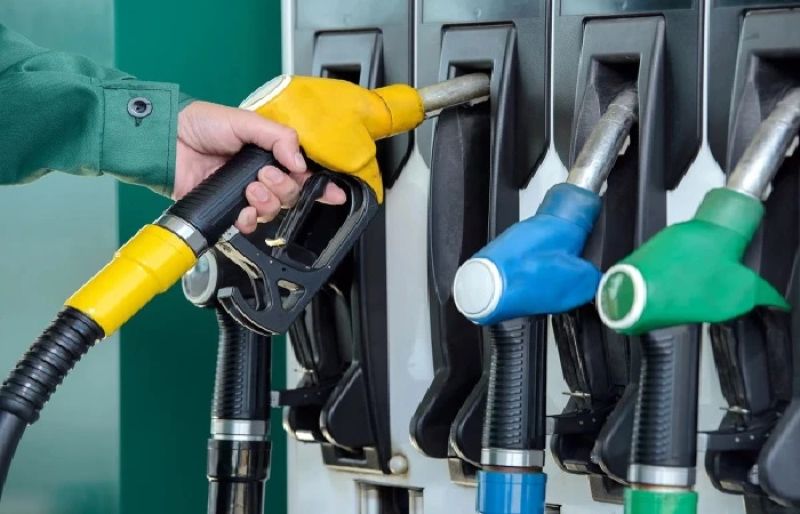
The federal government announced a Rs26.77 per litre hike in the price of petrol and high-speed diesel each on Friday, according to a notification issued by the Petroleum Division.
The new prices will be effective from April 25, 2026 for a week, the notification stated.
Following the increase, the price of HSD has jumped from Rs353.42 to Rs380.19, while the petrol price now stands at Rs393.35.
The government has been reviewing petroleum prices every Friday night following the now-paused US-Israel war on Iran, which began on February 28.
In the previous weekly review, the prime minister announced a reduction of Rs32.12 per litre in the price of high-speed diesel, while the petrol price remained unchanged.
The government jacked up petrol and diesel prices despite oil prices falling globally on Friday after it appeared a second round of Middle East talks was back on, bolstering prospects for an end to a war that has crippled energy shipments from the Gulf.
Oil prices had been climbing earlier as investors worried about a lack of progress in ending the Middle East crisis, with Tehran keeping the Strait of Hormuz closed and the US maintaining a blockade of Iranian ports.
But they dropped on reports that Iran’s Foreign Minister Abbas Araghchi was to arrive in Islamabad on Friday night.
Brent crude, the international benchmark contract, fell back below $100 a barrel.
facebook twitter
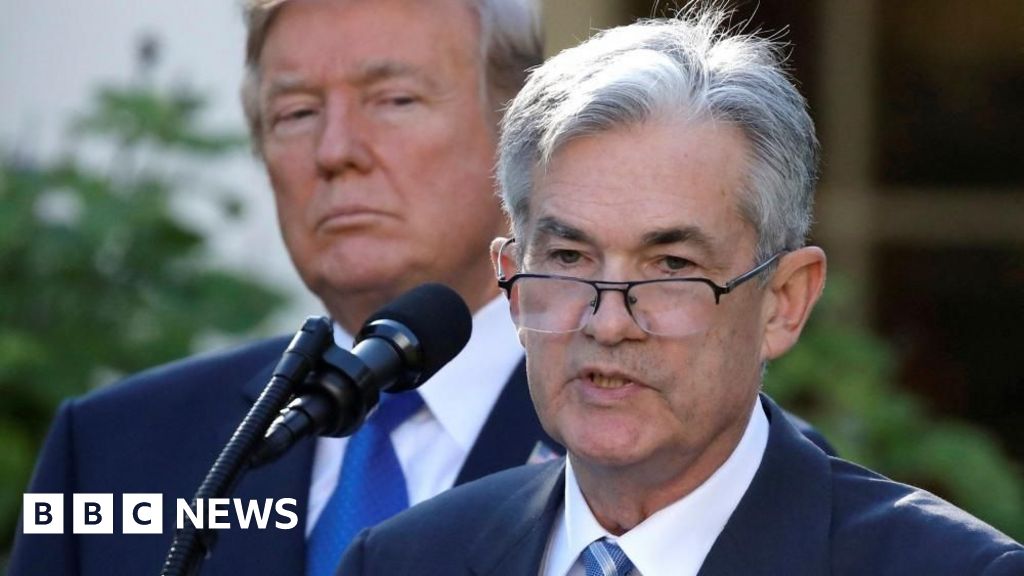
Powell’s term is nearing its end and the US Senate is considering Trump’s nominee for his replacement, Kevin Warsh. A key Republican, Thom Tillis, has withheld his support for Warsh unless the Trump administration would drop its investigation into Powell.
Business
Intel bags big gains! Chipmaker’s shares jump 26% on blockbuster results; how Trump admin benefits – The Times of India
Intel share price soared sharply on Friday after the chipmaker delivered a first-quarter performance that exceeded market expectations. And the win was not just for the chipmaker, but also the whole of US!The stock climbed 26.7% during trading on Friday, marking what could be its strongest single-day gain since 1987. Momentum continued after the closing bell, with shares rising a further 20% in after-hours trading as investors reacted to signs of a sustained turnaround driven by artificial intelligence.Intel reported revenue of $13.58 billion (€11.6bn) for the quarter, ahead of the $12.3 billion (€10.5 bn) forecast and up 7.2% from a year earlier. Adjusted earnings per share came in at $0.29, far exceeding expectations of $0.01.A key contributor to this performance was the company’s Data Centre and AI (DCAI) division, which delivered revenue of $5.05 billion (€4.2bn), up 22.4% year-on-year and well above analyst estimates of $4.41 billion (€3.77bn). The results indicate strong demand for Intel’s Xeon 6 processors and Gaudi 3 AI accelerators, particularly among enterprise clients and cloud service providers.Chief executive Lip-Bu Tan pointed to a broader shift in artificial intelligence usage as a major factor behind the growth. He said, “the next wave of AI will bring intelligence closer to the end user, moving from foundational models to inference to agentic.” He added, “This shift is significantly increasing the need for Intel’s CPUs and wafer and advanced packaging offerings.”The company also issued an upbeat outlook for the second quarter, forecasting revenue in the range of $13.8 billion (€11.8billion) to $14.8 billion (€12.6billion), surpassing investor expectations of $13 billion (€11.1billion).
But how is Washington winning?
The rally has had a direct impact on the US administration’s investment in Intel. In 2025, during a period of severe financial strain for the company, the administration of Donald Trump acquired a 9.9% stake in a move aimed at stabilising the business. The government invested $8.9 billion (€7.8bn) at a share price of $20.47 (€18.01), with $5.7 billion (€5bn) of that amount coming from previously approved but unpaid grants, according to the Euro News.At the time, Intel was facing multi-billion dollar losses and operational challenges, prompting concerns over its viability. As part of the intervention, the company cancelled planned factory projects in Germany and Poland, redirected focus towards US-based manufacturing, and reduced its global workforce by 25%, cutting around 25,000 jobs.Following the latest jump, Intel’s shares are now trading at $81.3 (€71.5), representing an increase of nearly 300% since the government first took its stake. The sharp rise highlights how the company’s improved financial performance has translated into substantial gains for the US administration.


NASCAR makes major change in front office, including new CEO in unprecedented move: report

Extended interview: Don Cheadle – CBS News

Charlie Sheen updates on relationship with old pal Jon Cryer

-

 Fashion1 week ago
France’s LVMH Q1 revenue falls 6%, shows resilience amid Iran war
-

 Tech1 week ago
CYBERUK ’26: UK lagging on legal protections for cyber pros | Computer Weekly
-

 Sports5 days ago
WWE WrestleMania 42 Night 2: Live match results and analysis
-

 Sports1 week ago
Faheem Ashraf backs Islamabad United’s push, calls league a ‘career-changing platform’
-

 Sports5 days ago
NCAA men’s gymnastics championship: All-time winners list
-
 Business1 week ago
PepsiCo earnings beat estimates as North American food business improves
-

 Tech1 week ago
Anthropic Plots Major London Expansion
-
 Business1 week ago
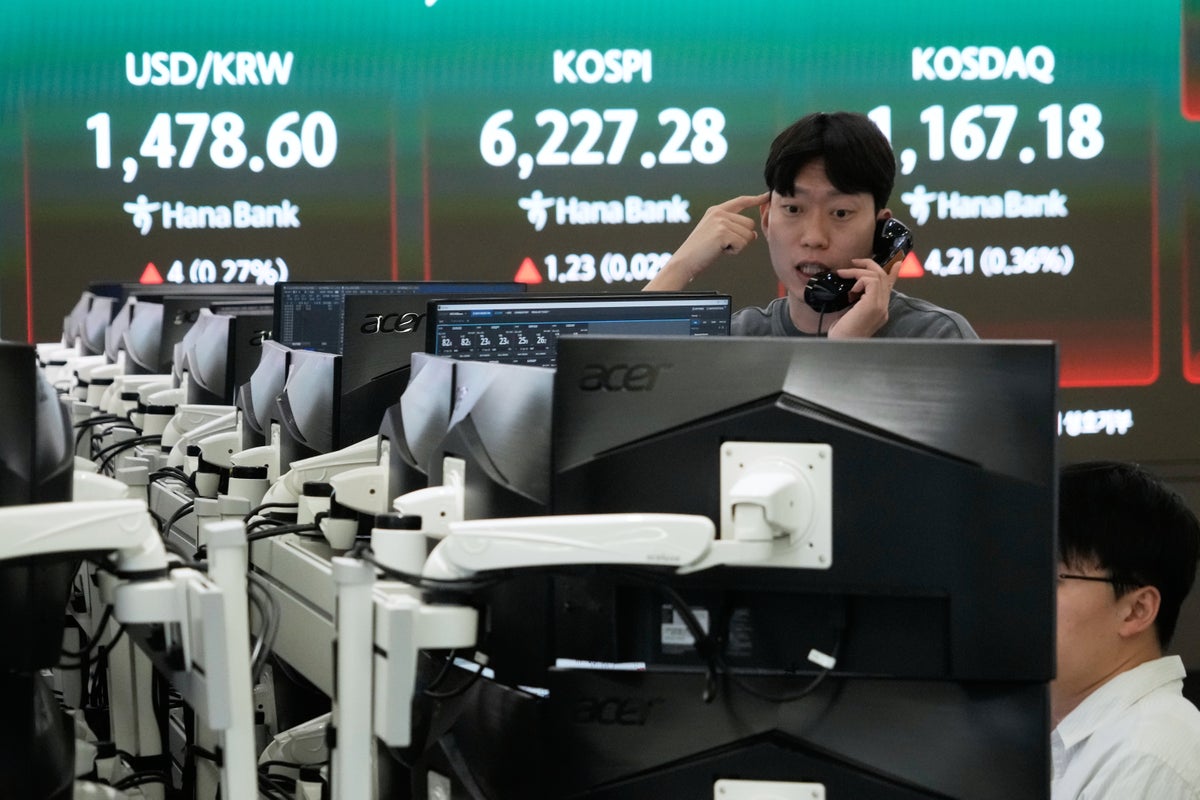
Oil prices fall again amid Middle East ceasefire hopes