

Business
De minimis: How US shoppers will be hit as the tariff exemption ends


Osmond Chia & Laura BlaseyBusiness reporters in Singapore & Washington DC
 Getty Images
The US has pulled the plug on a long-running global tariff exemption that has been widely used by buyers of low-cost goods.
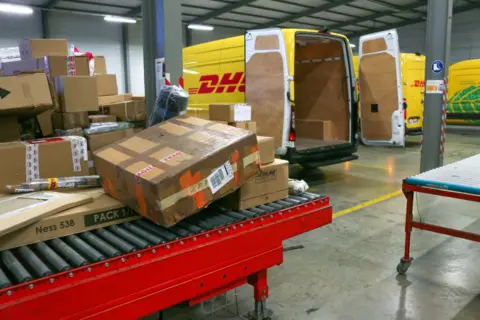
From Friday, imports valued at $800 (£592) or less will no longer be duty-free and will face tighter customs checks, in a move set to affect millions of shipments a day.
Last year, almost 1.4 billion packages – worth a total of more than $64bn – entered America without being charged duties under a rule called the de minimis exemption, according to US Customs.
Experts say US President Donald Trump’s policy change will hit small businesses hardest and shoppers should brace for higher prices and fewer options – at least until the dust settles.
“I’ve reached the point of acceptance, but when I first heard the news about two and half, three weeks ago, I felt like it might be the end for my business,” said Katherine Theobalds, founder and creative director of Buenos Aires-based shoe brand Zou Xou. “It still might – that remains to be seen.”
What’s the de minimis rule?
De minimis is a Latin term that broadly translates to “about the smallest things”, often used in legal contexts to describe matters too trivial to merit concern.
The de minimis exemption was introduced in 1938 to avoid the expense of collecting only small amounts of import duties in the US.
The rule’s threshold rose over the years, allowing e-commerce firms and global retailers that ship small packages to the US to thrive.
The exemption was often associated with companies like Chinese e-commerce giants Shein and Temu, which delivered Americans cheap goods that could be quickly shipped from the manufacturing source – with no warehouse stock or associated overhead costs.
But while Shein and Temu helped pioneer this way of working, many other businesses – foreign and domestic, large and small – came to incorporate the “loophole” into their supply chains and sales models.
Executives at Tapestry – the parent company of US fashion brand Coach, which is known for leather bags that sell from roughly $200 to $1,000 – told analysts this month that it expects to take a $160m hit to its profits due to changing tariff policies, with about a third of that attributed to the elimination of the de minimis rule.
Coach has rapidly expanded in recent years in a comeback campaign fuelled by Gen Z shoppers and Tapestry remains confident the momentum will offset some of the impact of tariffs. Still, the elimination of de minimis represents a logistical challenge.
Shipments under the exemption made up more than 90% of all the cargo entering the country, according to US customs.
The president and his predecessor, Joe Biden, criticised the policy as harmful to US businesses and said it has been abused to smuggle illegal goods, including drugs like fentanyl.
In a phone call with reporters on Thursday, Trump’s trade adviser, Peter Navarro, said the move will “save thousands of American lives by restricting the flow of narcotics” through the mail, as well as add $10bn a year to US coffers.

 AFP via Getty Images
Trump fast-tracked the rule’s repeal with an executive order this year, well ahead of a planned 2027 expiry date.
With the necessary documentation, shippers will pay duties based on the country of origin’s tariff rate. Otherwise, they can choose to pay a fixed fee between $80 and $200 per package, according to the White House.
The second option, which is aimed to give postal services more time to adjust to the change, will only be available for six months.
Mainland China and Hong Kong were the first to be cut from the de minimis rule in May, prompting e-commerce giant Temu to halt direct sales to the US.
Letters and personal gifts worth less than $100 will still be duty-free.
Smaller variety, longer waits
US consumers may see less variety of goods in shops and on e-commerce platforms as businesses get to grips with customs documentation, trade experts have told the BBC.
Smaller firms need time to adjust as they have mostly been spared from such paperwork until now, said Tam Nguyen from logistics administration firm GOL Solution. The company handles exports from South East Asia to the US.
“You need to indicate the source of all the materials in a product, which can come from many countries with different tax rates. This would absolutely make shipments slower.”
The complexity could deter sellers from offering a broader range of products for export, she added.
That could have a particular impact on more niche markets.
Christopher Lundell, is a 53-year-old psychologist based in Portland, Oregon who also DJs and mixes music as a hobby. He is an avid vinyl record collector who recently became aware of the de minimis exemption suspension when he tried to – unsuccessfully – buy a $5 rare record from a seller in the UK.
“He cancelled my order and said, ‘I’m sorry but the UK is not shipping to the United States anymore.'”
Mr Lundell says he tries his best to find US-based record sellers before searching online for overseas sellers based in countries like the UK, Japan and China. He adds that he understands the need to protect US businesses, but says that he believes a blanket suspension of the de minimis exemption is “political theatre”.
Some orders may also be frozen for the next few weeks. Ms Nguyen said clients, including some in the healthcare sector, have halted orders.
Major postal services in the UK, Europe and and the Asia-Pacific region paused deliveries to the US this week.
The operators blamed uncertainty about how the tariffs would work and a lack of time to prepare.
Prices to rise
Without the exemption, businesses will have to factor in tariffs the US has imposed on the country of origin, which came into effect for most nations in August.
Those levies can be as low as 10% for countries like the UK and Australia, while goods from Brazil and India face the highest tariffs at 50%.
Following the change, specific duties will be imposed of $80 per item for countries with tariffs of 16% or less, $160 for shipments from countries with between 16% and 25% tariffs or $200 for items from countries with higher tariffs.
A senior administration official downplayed consumer concerns, saying that the move will “benefit” Americans by making them “safer” and “prosperous”.
Some American businesses welcomed the news, arguing the elimination would level the playing field.
“Gap Inc. welcomes the Administration’s decision to suspend duty-free de minimis treatment worldwide. The de minimis loophole has long provided an opportunity for some importers & retailers to avoid paying their fair share of US duties,” the company said in a statement.
Small firms, in particular, will feel the strain from the costly audits needed to clear US customs, making it tough for sellers to keep prices stable, said trade expert Deborah Elms.
With many postal services holding off on US shipments, sellers may have to pay for more expensive express couriers to reach American buyers for now, said Ms Elms from research firm Hinrich Foundation.
British retailer Wool Warehouse is among firms that have paused orders from the US.
“There is a lot of uncertainty at the moment” due to the short time firms have had to figure out shipment process and fees involved, said managing director Andrew Smith.
His firm hopes to resume orders to the US – its largest export market – within two weeks, he said, adding that time is needed to wait to see how other companies have responded to the changes.
Prices of its goods – mostly wool and crafting materials sourced globally – are likely to rise by up to 15%, said Mr Smith.
The company also plans to revamp its website to indicate the tariff rate chargeable for each product, he said.
“We’re aiming for full transparency so people know what it will cost with certainty and then they can decide whether they want to make the purchase or not.”
At Zou Xou, Ms Theobalds specialises in artisan-made women’s shoes, crafted by small workshops in Argentina, that sell for between $200-$300. She began her career in New York, and has focussed her business on American customers.
She has long operated a two-tier system – customers either receive shoes from a US warehouse where she keeps some stock, or shipped direct from Argentina through DHL.
Larger shipments of shoes into the US were already subject to customs fees, she says, but sending one or two pairs from Buenos Aires to a customer was achieved cheaply and efficiently because of the de minimis exemption.
Now, she’s not sure how to factor in the added costs and is exploring several options and hoping to get more clarity on how to shift her business model.
Equally important, she said, is how businesses like hers explain the changes to consumers.
She worries that even if pricing doesn’t change much, a duty process that seems too complicated could turn off even those who want a higher-end product.
“The reason our customers come to us is because they appreciate the artisanal quality. They could have always gone to a mass retailer,” she says. “But what people will have to think about is ‘does that matter to me all that much, or do I just want a pair of shoes?'”
A boost for China?
US-based retailers stand to gain if prices of goods ordered from overseas rise, Ms Elms said.
“If it’s too expensive, they’ll probably go to Walmart or Target to buy it there,” she said.
But with so many goods being sent from around world now being subject to customs duties, US consumers may once again turn to China for cheaper options.
Chinese companies like Shein and Temu have set up distribution centres in the US that will help ease some of the cost of tariffs, said Ms Nguyen.
And China is “months ahead” in figuring out the paperwork as compared to firms in other countries that are now scrambling to get up to speed, she added.
There may be fewer competitors in the overall market, as the end of the de minimis exemption makes it harder for small businesses to launch e-commerce sites, said Ms Nguyen.
“It used to be: Set up a site, list products and start shipping. But now that low-cost entry point is gone.”
Additional reporting by Nadine Yousif and Bernd Debusmann Jr
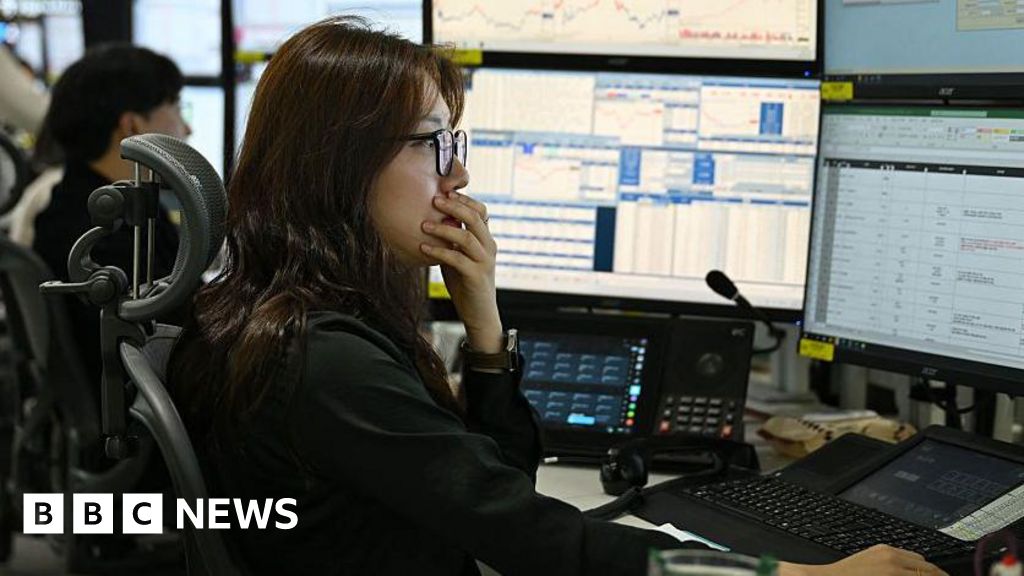
The conflict in the Middle East has rattled financial markets and global energy prices have soared.
Source link

Last Updated:
Petrol, Diesel Price On March 4: Check City-Wise Rates Across India Including In Delhi, Mumbai and Chennai.




Petrol, Diesel Prices On March 4.
Petrol and Diesel Prices on March 4, 2026: OMCs update petrol and diesel prices daily at 6 AM, aligning them with fluctuations in global crude oil prices and currency exchange rates. This daily revision promotes transparency and ensures consumers have access to the most up-to-date and accurate fuel prices.
Petrol Diesel Price Today In India
Check city-wise petrol and diesel prices on March 4:
| City | Petrol (₹/L) | Diesel (₹/L) |
|---|---|---|
| New Delhi | 94.72 | 87.62 |
| Mumbai | 104.21 | 92.15 |
| Kolkata | 103.94 | 90.76 |
| Chennai | 100.75 | 92.34 |
| Ahmedabad | 94.49 | 90.17 |
| Bengaluru | 102.92 | 89.02 |
| Hyderabad | 107.46 | 95.70 |
| Jaipur | 104.72 | 90.21 |
| Lucknow | 94.69 | 87.80 |
| Pune | 104.04 | 90.57 |
| Chandigarh | 94.30 | 82.45 |
| Indore | 106.48 | 91.88 |
| Patna | 105.58 | 93.80 |
| Surat | 95.00 | 89.00 |
| Nashik | 95.50 | 89.50 |
Key Factors Behind Petrol and Diesel Rates
Petrol and diesel prices in India have remained unchanged since May 2022, following tax reductions by the central and several state governments.
Oil Marketing Companies (OMCs) update fuel prices daily at 6 am, adjusting for fluctuations in global crude oil markets. While these rates are technically market-linked, they are also influenced by regulatory measures such as excise duties, base pricing frameworks, and informal price caps.
Key Factors Influencing Fuel Prices in India
-
Crude Oil Prices: Global crude oil prices are a primary driver of fuel prices, as crude is the main input in petrol and diesel production.
-
Exchange Rate: Since India relies heavily on crude oil imports, the value of the Indian rupee against the US dollar significantly affects fuel costs. A weaker rupee typically translates to higher prices.
-
Taxes: Central and state-level taxes constitute a major portion of retail fuel prices. Tax rates vary across states, leading to regional price differences.
-
Refining Costs: The cost of processing crude oil into usable fuel impacts retail prices. These costs can fluctuate depending on crude quality and refinery efficiency.
-
Demand-Supply Dynamics: Market demand also influences fuel pricing. Higher demand can push prices up as supply adjusts to consumption trends.
How to Check Petrol and Diesel Prices via SMS
You can easily check the latest petrol and diesel prices in your city through SMS. For Indian Oil customers, text the city code followed by “RSP” to 9224992249. BPCL customers can send “RSP” to 9223112222, and HPCL customers can text “HP Price” to 9222201122 to receive the current fuel prices.
 Click here to add News18 as your preferred news source on Google.
Follow News18 on Google. Join the fun, play games on News18. Stay updated with all the latest business news, including market trends, stock updates, tax, IPO, banking finance, real estate, savings and investments. To Get in-depth analysis, expert opinions, and real-time updates. Also Download the News18 App to stay updated.
March 04, 2026, 07:33 IST
Read More

Gold slumped more than 5%, ending a four-day rally on Tuesday. The metal was weighed down by a stronger dollar and fading prospects of an interest rate cut as inflation concerns intensified against the backdrop of a potentially prolonged conflict in West Asia. Spot gold was down 5.6% at $5,029.59 an ounce whereas prices had hit an over four-week high in the previous session. US gold futures lost 5.1% to $5,041.50.The US dollar, a competing safe-haven asset, rose to an over one-month peak, making dollar-priced bullion less affordable for holders of other currencies. US Treasury yields rose for a second consecutive session.Indian bullion traders and associations are speculating that gold could attain Rs 2 lakh per 10 gm and silver may well scale Rs 3.5 lakh per kg if the conflict does not abate swiftly.Spot silver fell 11.2% to $79.42 an ounce after climbing to a more than four-week high on Monday. As the Iran conflict entered its fourth day, crude oil benchmarks jumped over 8% in response.


European Commission, Switzerland sign broad package of agreements

Barcelona disappointed, proud as Copa rally vs. Atleti falls short

Liverpool lose 9th of season in ‘same old story,’ Slot says

-

 Politics6 days ago
US arrests ex-Air Force pilot for ‘training’ Chinese military
-

 Politics6 days ago
What are Iran’s ballistic missile capabilities?
-
 Business1 week ago
Households set for lower energy bills amid price cap shake-up
-
 Business5 days ago
Attock Cement’s acquisition approved | The Express Tribune
-

 Fashion5 days ago
Policy easing drives Argentina’s garment import surge in 2025
-

 Sports1 week ago
Top 50 USMNT players of 2026, ranked by club form: USMNT Player Performance Index returns
-

 Sports6 days ago
Sri Lanka’s Shanaka says constant criticism has affected players’ mental health
-
 Business1 week ago
Lucid widely misses earnings expectations, forecasts continued EV growth in 2026