

Business
Deadline Announced For Filing TDS/TCS Correction Statements — File On Time To Avoid Missing Credit In Form 26AS Or AIS

New Delhi: The Income Tax Department has announced the deadline for filing TDS (Tax Deducted at Source) and TCS (Tax Collected at Source) correction statements for the financial year 2024–25. Taxpayers and deductors are advised to file correction statements promptly to ensure that tax credits are properly reflected in their Form 26AS and Annual Information Statement (AIS).
The Central Board of Direct Taxes (CBDT) has urged all deductors to verify the accuracy of their TDS and TCS filings before the due date. Errors in these statements — such as incorrect PAN details, mismatched challan information, or inaccurate deduction entries — can lead to tax credit mismatches for taxpayers at the time of filing their Income Tax Returns (ITR).
The correction process allows deductors to amend any errors or omissions in the original TDS/TCS statement submitted via the TRACES (TDS Reconciliation Analysis and Correction Enabling System) portal. Timely filing of correction requests ensures that the corrected data is updated in the taxpayer’s Form 26AS and AIS, avoiding delays or discrepancies during tax filing.
Failure to submit the correction statement within the prescribed timeline may result in the taxpayer not receiving proper credit for taxes deducted or collected on their behalf. This could also trigger notices or mismatches while processing the ITR.
Taxpayers can check the status of their TDS/TCS credits on the Income Tax e-filing portal or through TRACES. The government continues to emphasize the importance of timely compliance to maintain transparency and accuracy in tax reporting.





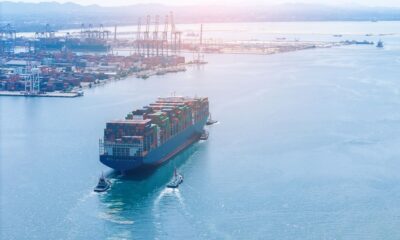
A global recession and widespread fuel rationing are likely if the conflict in the Middle East does not end soon, a leading economic body has warned ahead of a meeting of international allies to try to find a way to end the blockade of the Strait of Hormuz.
Oxford Economics’s latest research shows that the number of tankers passing through the Strait is already down 98 per cent, and if the key shipping route remains closed for an extended period it would see existing oil inventories continually depleted and the current shortfall of 2m barrels per day rising sharply.
That would mean a shortage around the world of 12 per cent of usual oil consumption, requiring fuel rationing and a big hit to world economic growth this year.
“In our prolonged Iran war scenario, we estimate the gap widens to around 13m barrels per day by the sixth month,” said head of oil and gas forecasting, Bridget Payne.
“That represents an unprecedented shortage of around 12 per cent of consumption, leading to widespread rationing concentrated in emerging economies, with significant hits to activity and supply chain disruption.
“Our modelling shows this scenario would trigger a global recession and slow world GDP growth to 1.4 per cent in 2026.”
Oxford’s research shows that the need for rationing would accelerate from the fourth month onward, with the US and Canada among the most protected from this due to both their large domestic production of oil and also their refining capabilities.
Europe, with better refining and strong government policy, sits on a middle ground – but “remains exposed if disruption is prolonged”, says the report.
“Emerging economies across the Asia Pacific and sub-Saharan Africa are the most exposed, combining heavy import dependence with limited inventory cover and, in many cases, weak fiscal and institutional capacity to manage shortages,” it adds.
There are concerns in Bangladesh that it may be the first nation to run out of fuel. Drivers have been pictured queuing for hours to fill up their tanks, while universities have closed as the nation tries to protect its diminishing reserves.
Elsewhere, a raft of countries have taken proactive steps to protect their supplies.
Egypt has ordered shops and restaurants to close early to save on energy consumption, Pakistan has enacted a four-day work week, Philippines has ordered government fuel consumption reduced and Myanmar introducing alternate driving days.
Oxford further reports “panic buying and black markets for LPG” (Liquefied Petroleum Gas) cropping up in India and petrol stations being empty in Thailand.
It comes as foreign secretary Yvette Cooper hosts talks with a coalition of countries to reopen the crucial Strait of Hormuz shipping lane.
Meanwhile, the International Monetary Fund (IMF) warned Britain’s economy is “especially exposed” to spiralling prices because of its reliance on gas‑fired power, with fertiliser supply disruption also contributing to food price inflation which is expected to surge close to 10 per cent later this year.
Keir Starmer has been cautioned the public that price rises are “inescapable” this year due to the conflict in the Middle East, but the government has repeatedly said there is no call for fuel rationing at this stage – though they remain monitoring matters “hour by hour”.
Mr Starmer has also confirmed a virtual gathering will take place on Thursday hosting over 30 nations – not including the US – with a view to finding solutions to reopen the Strait of Hormuz.
Earlier in March, a former BP chief who served as advisor to Gordon Brown when he was prime minister said that the UK should prepare for fuel shortages and urged the government to take stock to ensure “crucial sectors [like] the health service, food supply, hospitals” were amply supplied.
On Wednesday night Donald Trump made further comments to suggest the war would end in weeks rather than months, but “the military timeline differs from the economic one,” said Oxford Economics’ chief global economist Ryan Sweet in response.
“The Strait of Hormuz is still effectively closed, and the baseline assumes that it won’t change until the end of April, removing additional oil supply from the market and adding to the economic costs with each passing day.”
The firm are forecasting average prices for Brent crude oil to be at $113 across April to June. On Thursday morning it sat at $109.
“Governments have been left scrambling to try to limit the impact on companies and consumers, with more rationing of energy likely to come into play,” said Susannah Streeter, chief investment strategist at Wealth Club.
.jpeg)
“The UK government has held off announcing short-term support for sections of society which will be worst hit by the ramp-up in energy bills, with specific help not expected until the autumn. At this stage, with the government still mulling how to alleviate the pain of the energy shock, there could still be phased in hikes to fuel duty, as planned, from September.
“The big concern will be about further damage to energy facilities across the Gulf. The repair work is already likely to take years, and further destruction is likely to keep oil and gas prices elevated for even longer. Brent crude has jumped sharply, reflecting these worries, and European and UK gas futures have also jumped and are set to stay highly volatile.
“Around a fifth of global LNG supplies are usually transported through the Strait of Hormuz, but it remains largely impassable, and it’s becoming clear that there is going to be no easy exit from this war, with a lack of planning increasingly evident.”
Meanwhile, a new report from the Office for National Statistics (ONS) has also highlighted the state of concern among British businesses over energy costs across the second half of the year.
Over half (55 per cent) of businesses expressed some level of concern about energy prices, rising to nearly three-quarters (74 per cent) for businesses with 10 or more employees. In addition, almost two in five (37 per cent) of firms with 10-plus employees said they held concerns over international conflicts impacting supply chains across the coming year.
The questions were asked of businesses during March, after the Middle East conflict had started.

Panic selling returned to the Pakistan Stock Exchange (PSX) on Thursday as President Donald Trump said the United States would continue to attack Iran, with the benchmark KSE-100 Index sinking by about 5,500 points during the opening minutes of business.
At 9:35am, the benchmark index was hovering at 150,022, down by 5,489 points or 3.45%.
However, by 11:00 the equities recovered some losses and the index was trading at 151,621.26 points down by 3,890.30 or 2.57 percent.
Experts opined that the jubilation of yesterday’s market halt has been completely wiped out as the ‘ceasefire rally’ crashed into a harsh geopolitical reality.
Offloading was observed in key sectors, including automobile assemblers, cement, commercial banks, oil and gas exploration companies, OMCs and power generation.
Index-heavy stocks, including MARI, OGDC, POL, PPL, MCB, MEBL, NBP and UBL, traded in the red.
On Wednesday, the PSX had staged a powerful rally with the benchmark KSE-100 Index surging past the key psychological barrier of 150,000 points as improving investor sentiment.
The KSE-100 Index closed at 155,511.57 points, registering a sharp gain of 6,768.25 points or 4.55%.
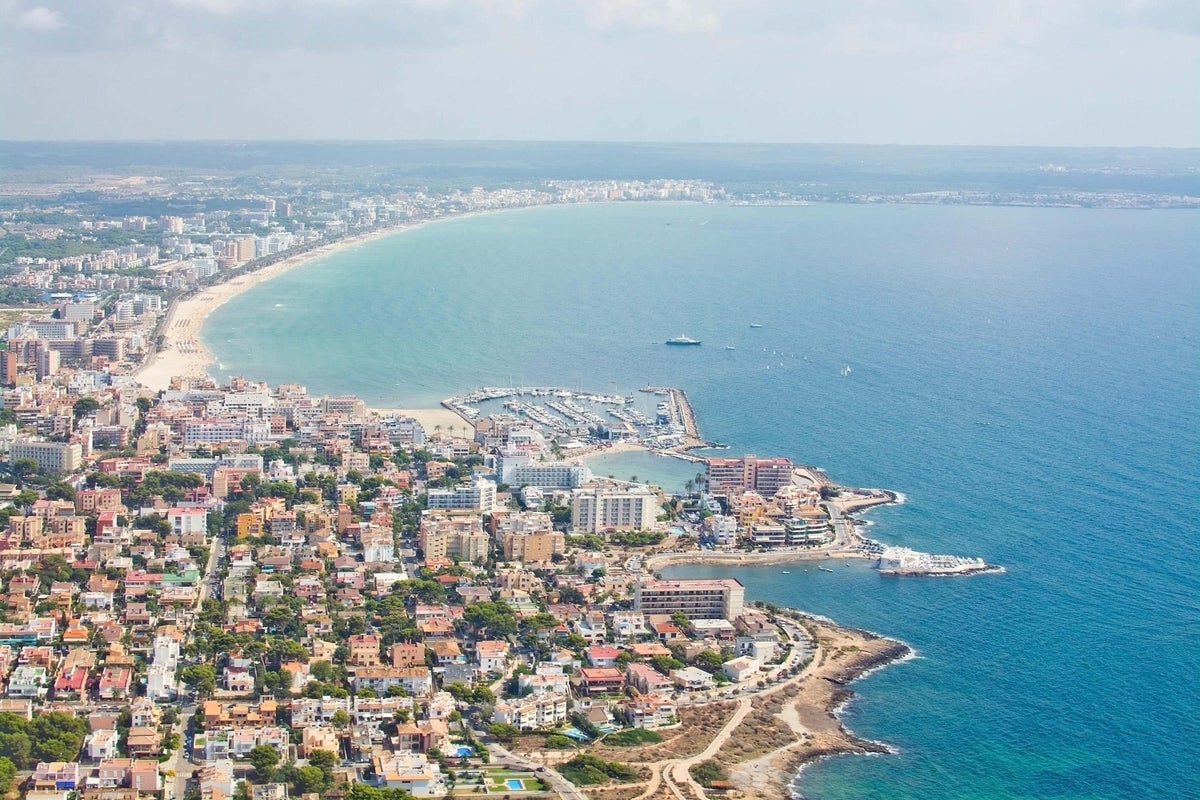
Travel agent Lastminute.com said war in the Middle East has impacted some 17,000 bookings, while holidaymakers are shifting towards alternative destinations like the Canary Islands and Sardinia.
The website, which offers holiday packages to destinations including Dubai and Abu Dhabi, said it was having to “adapt quickly” to travellers changing their preferences in light of the conflict.
The US-Israeli war with Iran, which escalated at the end of February, led to disruption and cancellations of some flights to Gulf states including the United Arab Emirates, Saudi Arabia and Qatar.
The airspace closures, coupled with consumer sentiment when it comes to travel taking a hit, affected approximately 17,000 bookings, Lastminute revealed.
It said the total volume of affected travel around the region is currently the equivalent of about a day and a half of its normal daily operations.
Despite the conflict influencing where and when people choose to book trips, the “overall intent to travel remains high”, according to Lastminute.
Consumers have been seeking reassurance and flexibility, and early booking patters indicate a shift in the preferences of travellers.
It noted increased demand toward alternative destinations such as Spanish archipelagos the Canary and Balearic Islands, Italian islands Sicily and Sardinia, and other European city breaks.
Lastminute’s chief executive Alessandro Petazzi said: “We continue to closely monitor the evolving situation in the Middle East, with supporting our customers remaining our top priority.
“At the same time, Lastminute.com’s flexible, pan-European model enables us to adapt quickly as travel patterns evolve, with demand naturally rebalancing across destinations.”
The Netherlands-based company reported a 15% jump in revenues to 361 million euro (£315 million) for the 2025 financial year, compared with the year before.
Adjusted earnings before tax and other costs increased by a third to 55 million euro (48 million).
The company said it was remaining “vigilant” against the geopolitical situation in the Middle East, but added that it was sticking to forecasts of a roughly 10% increase in revenues and profits in the year ahead.

Trump’s war could see fuel rationing and global recession within months, experts warn

India-Bangladesh textile trade reset: 5 shocks to watch now

Kanye West embraces North as fans celebrate his comeback

Property Play: Home flippers see smallest profits since the Great Recession, real estate data firm says

Ho Chi Minh City bizs adjust production plans, seek new supply chains

Centre plans to cut broken rice share in PDS, boost ethanol feedstock supply – The Times of India

-
Business1 week ago
Property Play: Home flippers see smallest profits since the Great Recession, real estate data firm says
-
 Fashion1 week ago
Ho Chi Minh City bizs adjust production plans, seek new supply chains
-
Business1 week ago
Centre plans to cut broken rice share in PDS, boost ethanol feedstock supply – The Times of India
-

 Fashion1 week ago
India’s Gen Z to drive half of fashion market by 2030: Reedseer
-

 Entertainment1 week ago
Andrew holds breath as King Charles plans bombshell move amid probe
-
 Business1 week ago
Co-op boss quits after ‘toxic culture’ claims reported by BBC
-
 Business6 days ago
How do you spot a fake online review?
-

 Fashion1 week ago
Japan’s apparel imports rise 22.9% to $2 bn in February 2026