

Politics
Deadly crash prompts US to suspend foreign truck driver visas

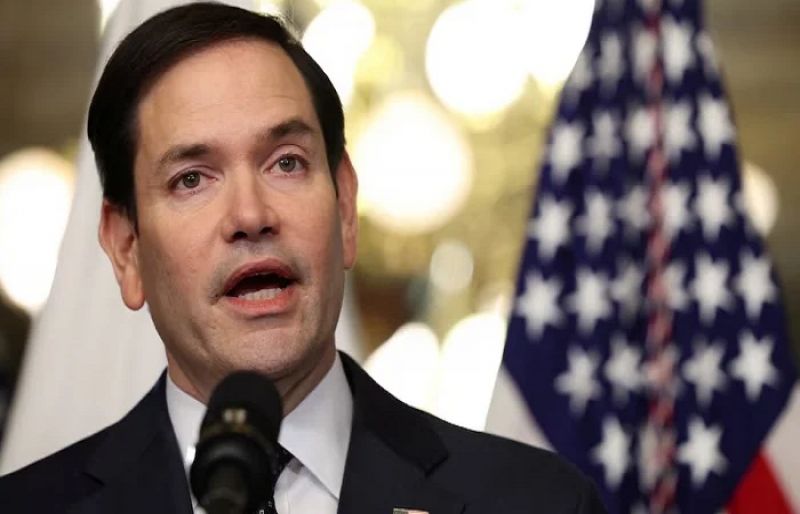

The Trump administration on Thursday abruptly halted the issuance of US visas for truck drivers following a fatal crash that drew national attention, marking its latest sweeping move against foreign visitors.
Effective immediately, we are pausing all issuance of worker visas for commercial truck drivers,” Secretary of State Marco Rubio wrote on X.
The increasing number of foreign drivers operating large tractor-trailer trucks on US roads is endangering American lives and undercutting the livelihoods of American truckers, he wrote.
Rubio’s action came after a truck driver was charged with killing three people on a highway in Florida while making an illegal U-turn.
Harjinder Singh, who is from India, allegedly entered the United States illegally from Mexico and failed an English examination after the crash, according to federal officials.
The case has gathered wide media attention and has been highlighted by officials in Florida, controlled by Trump’s Republican Party.
With the lieutenant governor flying to California to extradite Singh personally alongside immigration agents on Thursday.
The crash has taken on a political dimension in part as Singh received his commercial license in California and also lived in the West Coast state.
Which is run by the rival Democratic Party and opposes Trump’s crackdown on immigration.
“This crash was a preventable tragedy directly caused by reckless decisions and compounded by despicable failures,”.
Transportation Secretary Sean Duffy said.
California Governor Gavin Newsom’s office responded that the federal government under Trump had issued a work permit to Singh, who sought asylum, and that California had cooperated in extraditing him.
Even before the crash, Republican lawmakers had been targeting foreign truckers, pointing to a rising number of accidents without providing evidence of a direct link to immigrants.
In June, Duffy issued a directive that truck drivers must speak English.
Truck drivers have long been required to pass tests that include basic English proficiency, but in 2016, under former president Barack Obama, authorities were told not to take truckers off the road solely on account of language deficiencies.
Changing face of truckers
The number of foreign-born truck drivers in the United States more than doubled between 2000 and 2021 to 720,000, according to federal statistics.
Foreign-born drivers now make up 18% of the industry — in line with the US labour market as a whole, but a departure for a profession long identified with white, working-class men.
More than half of the foreign-born drivers come from Latin America, with sizable numbers in recent years from India and Eastern European nations, especially Ukraine, according to industry groups.
The influx of foreign drivers has come in response to demand.
A study earlier this year by the financial company altLine said the United States faced a shortage of 24,000 truck drivers, costing the freight industry $95.5 million per week as goods go undelivered.
Widening visa curbs
Trump has long made opposition to immigration a signature issue, rising to political prominence in 2016 with vows to build a wall on the Mexican border.
Rubio has taken a starring role in Trump’s efforts by cracking down on visas.
The State Department said this week that it has rescinded more than 6,000 student visas since Trump took office — four times more than during the same period last year — and an official said all 55 million foreigners with US visas are liable to “continuous vetting.”
Rubio has ordered scrutiny of applicants’ social media accounts and proudly removed students who campaigned against Israel’s offensive in Gaza.
Using a law that allows him to rescind visas for people deemed to counter US foreign policy interests.
The State Department over the weekend also paused visitor visas meant for severely wounded children from Gaza to receive treatment.
The decision came after Laura Loomer — a far-right activist close to Trump who has described the September 11, 2001, terror attack as an inside job — said she spoke to Rubio and warned of “Islamic invaders” from Gaza.
- Shah’s popularity driven by social media and youth connection.
- RSP party’s manifesto promises job creation and economic growth.
- Final results covering 165 seats decided by direct vote expected within days.
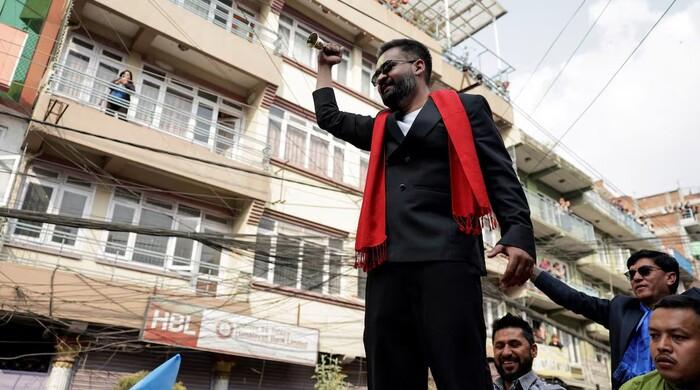
After Nepal’s historic youth-led uprising last September killed 77 people and forced then-Prime Minister KP Sharma Oli to resign, a 35-year-old rapper-turned-politician posted a typically terse message to millions of followers on social media.
“Dear Gen Z, the resignation of your killer has come,” Balendra Shah — popularly known only as Balen — wrote. “Now your generation will have to lead the country. Be prepared.”
Five months on, the musician who cut his political teeth in 2022 when he became the mayor of the capital Kathmandu, is poised to become Nepal’s next prime minister following the country’s first election since the September uprising.
Shah’s Rastriya Swatantra Party (RSP) was leading in around 100 seats, far ahead of its main rivals, early counting trends from the election commission showed on Friday.
Final results, covering 165 seats decided by direct vote and 110 through proportional representation, are expected within days.
The Nepali Congress, currently in second place, has already conceded defeat, and analysts said the RSP’s dominant showing means it will likely form the next government.
“Balen Shah is so popular that now buses coming to Kathmandu have stickers on them saying, ‘Headed to Balen’s city'”, said Bipin Adhikari, a constitutional law expert who teaches at Kathmandu University.
If Shah is able to take power, it would cap a dramatic rise for a man who entered the public spotlight with rap music critical of the establishment and parleyed his popularity to ascend to high political office.
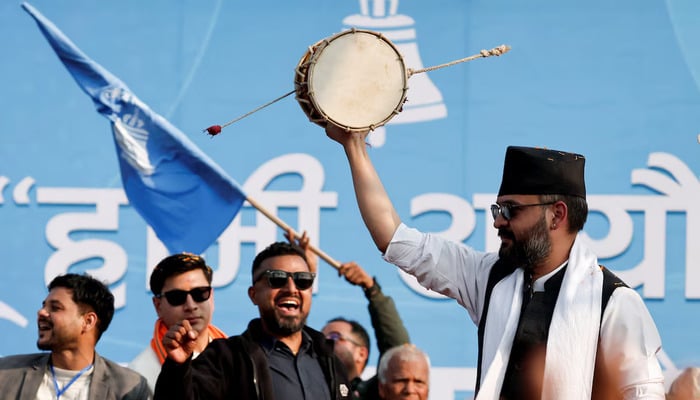
It would also potentially reshape the politics of Nepal, a small Himalayan nation wedged between China and India, that has long been dominated by a handful of established parties.
‘Not a cakewalk’
Some of Shah’s nationwide appeal is driven by the work he has done as the mayor of Kathmandu, where he focused on improving the urban infrastructure, such as waste management, and ensuring the delivery of services like healthcare.
He has also faced criticism, including from Human Rights Watch, for allegedly using police to seize the properties of street vendors and landless people.
Shah — who resigned as mayor in January to contest the general election — did not respond to requests for an interview and questions from Reuters sent via email.
Unlike much of Nepal’s political elite comprising veterans from older generations, Shah has made it a habit to largely shun the mainstream press.
Instead, it is his prolific social media presence, with over 3.5 million followers on platforms like Facebook, that enables him to connect directly with young Nepalis.
“What makes Balen special is that he stays connected with the youth through his short messages on social media, but it would not be a cakewalk for him after becoming prime minister,” said independent political analyst Puranjan Acharya.
‘Let me speak’
Born to a father who practiced traditional Ayurvedic medicine and a homemaker mother, Shah showed an early inclination towards poetry that evolved into a love of rap music, influenced by American artists including Tupac Shakur and Curtis “50 Cent” Jackson, according to an aide.
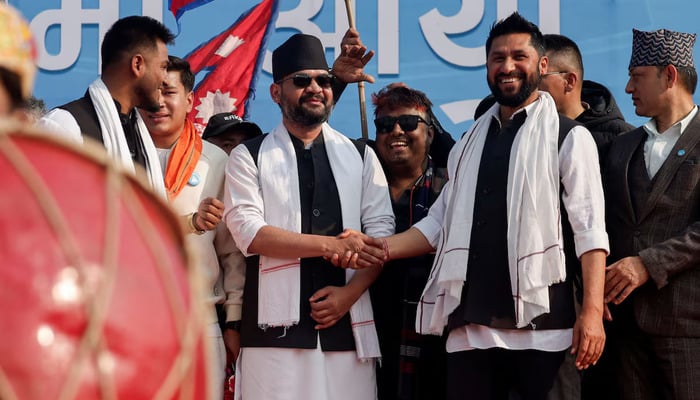
After securing an undergraduate degree in civil engineering in Nepal, Shah went on to study for a master’s degree in structural engineering in southern India — by which time he had already emerged as a rap star in his home country.
His songs, often taking on Nepal’s ruling class, struck a chord with many in a country where about 20% of the 30 million population live in grinding poverty.
Released in 2019, one of Shah’s best-known songs, “Balidan” — or sacrifice in the Nepali language — has over 12 million views on YouTube.
Its lyrics read:
“Let me speak, sir, it is not a crime,
Let me open the mind, I am not a curse to the palace,
My mind is not bad, it is not afraid to speak the truth.”
‘Wood attacked by termites’
Last December, Shah joined the RSP, led by former TV host-turned-politician Rabi Lamichhane, as its prime ministerial candidate.
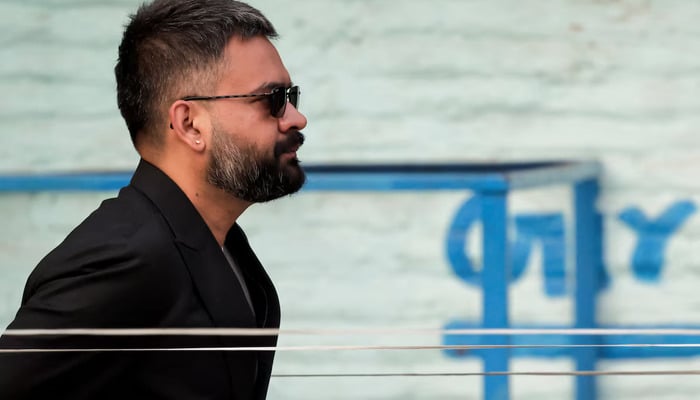
In its manifesto, Shah’s RSP has vowed to create 1.2 million jobs and reduce forced migration, in an effort to tap into frustration over unemployment and low wages that have pushed millions of Nepalis to search for work overseas.
The party has also pledged to raise Nepal’s per capita income from $1,447 to $3,000, more than double the nation’s economy to $100 billion GDP and provide safety nets such as healthcare insurance for the entire population — all within five years.
At the national level, analysts foresee that if he is elected, much of Shah’s success will depend on the talent he surrounds himself with to overhaul a moribund administrative system, riven by corruption.
“It needs a team, experts and support,” Acharya said, “Under the existing state apparatus, he can’t perform and he will be finished like wood attacked by termites.”
- US grants India 30-day Russian oil waiver.
- Congress says Washington dictates India’s oil choices.
- Tamil Nadu CM questions India seeking foreign approval.
KARACHI: India’s Narendra Modi-led government has come under renewed criticism from opposition parties and sections of the public after the United States said it had temporarily allowed Indian refiners to buy Russian oil stranded at sea, The News reported.
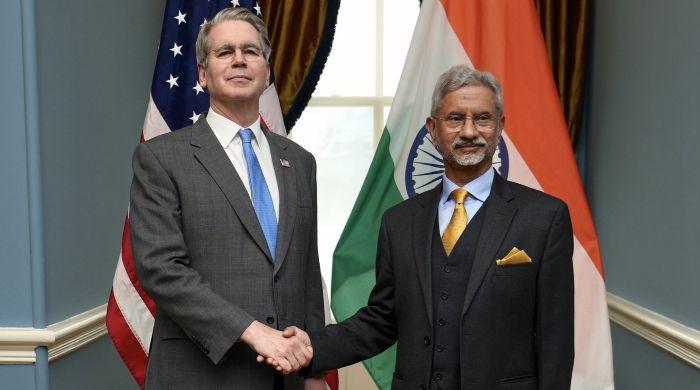
The criticism centres on a statement by US Treasury Secretary Scott Bessent, who said in a post on X early Friday that the Treasury Department was issuing a 30-day waiver to allow Indian refiners to purchase Russian oil in order to keep oil flowing into the global market.
Opposition parties argued that the move made India appear dependent on Washington’s approval. In a post on X, the Congress party said the Modi government had led the country “to a situation where the United States is now deciding where India can buy oil from and where it cannot”.
The waiver, which the US Treasury Secretary Scott Bessent said was issued to “enable oil to keep flowing into the global market,” comes under heightened tensions in the Middle East following the US-Israeli attack on Iran, sparking uncertainty around oil.
It should be noted that India had earlier said it would stop purchasing Russian oil as part of a trade deal with the US.
MK Stalin, chief minister of the southern state of Tamil Nadu, questioned why India should appear to seek approval from any foreign government to meet its energy needs.
“Equally troubling is the sinking of the unarmed Iranian warship IRIS Dena by the United States soon after it participated in the International Fleet Review 2026 naval exercise hosted by India in Visakhapatnam. When a ship that came to India as part of a multinational exercise meets such a fate, India cannot appear silent or passive,” he added.
Bessent further added, “This deliberately short-term measure will not provide significant financial benefit to the Russian government as it only authorises transactions involving oil already stranded at sea. India is an essential partner of the United States, and we fully anticipate that New Delhi will ramp up purchases of US oil. This stop-gap measure will alleviate pressure caused by Iran’s attempt to take global energy hostage.”
Journalist Rana Ayyub added with America’s permission, “we now sound like an American colony”.
India was the top buyer of Russian seaborne crude after Moscow’s 2022 Ukraine invasion, but in January its refiners started to reduce purchases under pressure from Washington. Cutting Russian oil purchases helped New Delhi avoid 25 per cent tariffs and clinch an interim trade deal with the US.
India is vulnerable to energy supply shocks, with crude stocks covering only about 25 days of demand. India receives about 40% of its oil imports from the Middle East through the Strait of Hormuz.
According to The Guardian, which quoted Reuters, a source directly involved with the matter said India had approached Trump’s administration seeking approval to buy Russian crude imports because of the Iran conflict.
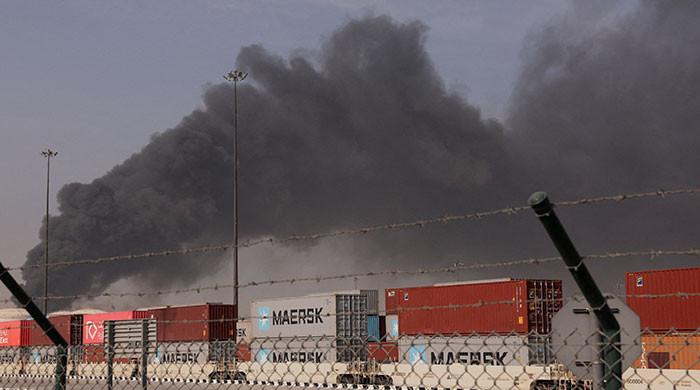
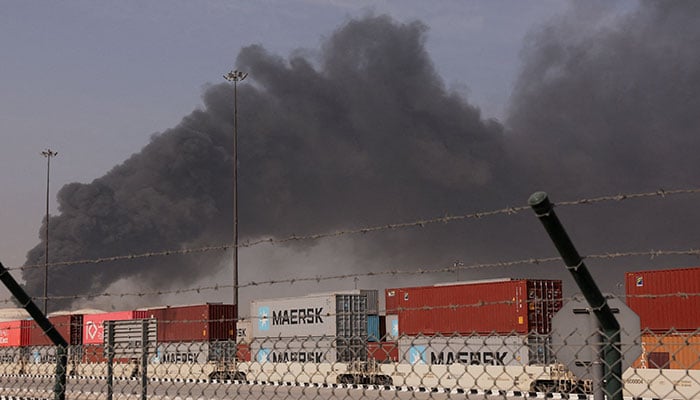
On November 14, 1979 — 10 days after Iranian students seized the US embassy in Tehran — then US president Jimmy Carter signed Executive Order 12170. With a single order, Washington froze roughly $8 billion in Iranian government assets held in the US.
The move was executed through the US Treasury’s Office of Foreign Assets Control — and it marked the beginning of America’s modern sanctions war against Iran.
Citibank, Chase Manhattan, Bank of America, HSBC, Standard Chartered, BNP Paribas, Deutsche Bank, Commerzbank, Credit Suisse and Barclays — along with Shell, Total, ENI, Siemens, General Electric and Boeing — all walked away from Iran as sanctions tightened. One by one, the world’s largest banks, energy companies and industrial giants walked away from Iran, leaving the country financially alone.
Iran needed to convert oil revenues into usable foreign currency. Iran needed to pay for weapons components and missile electronics sourced through global procurement networks. Iran needed to fund proxy operations from Hezbollah to the Houthis. Iran needed to maintain clandestine banking channels to move money across borders.
Iran needed front companies and shadow traders to sell oil despite sanctions. Iran needed drones and cash across Iraq, Syria and Lebanon. In short, Iran did not just need oil revenue, it needed a global sanctions-evasion architecture to turn oil into power.
Red alert: For 47 years, that architecture had an address: Dubai — a neutral trading hub where money was welcome even when its origins were complicated.
For 20 years, the US Treasury tried to close the Iran-Dubai connection and never fully succeeded — not for lack of effort, but because the UAE, for its own sovereign economic reasons, consistently declined to cooperate.
On February 28, 2026, Iran launched ballistic missiles, drone attacks and cruise missiles against the UAE.
Why did Iran attack its own financial pipeline? Perhaps regime survival simply overrode economic logic. Perhaps the relationship was already poisoned; the UAE had been quietly coordinating with Israel since the Abraham Accords of 2020.
Or perhaps the most unsettling explanation is institutional: that the IRGC — a parallel state within a state, with its own enemies list, and its own logic — had simply stopped making decisions in Iran’s national interest. The missile commands didn’t consult a cabinet — they consulted their own calculus.
Between February 28 and March 4, Iran fired 189 ballistic missiles, 941 drones and three cruise missiles at the UAE — 1,133 projectiles in six days.
Red alert: According to The Wall Street Journal, the UAE is considering cutting off Iranian access to billions of dollars held in the Gulf state.
Imagine this: For 47 years, Iran built a financial architecture in Dubai that the US Treasury could never fully dismantle. Now, after more than a thousand missiles and drones, Dubai may do in a single decision what Washington spent two decades trying to achieve.
Iran did not just fire at a city. It may have fired at its own financial pipeline. And in doing so, it may have finally convinced its last banker to pull the plug.
The writer is an Islamabad-based columnist.
Disclaimer: The viewpoints expressed in this piece are the writer’s own and don’t necessarily reflect Geo.tv’s editorial policy.
Originally published in The News


Flipkart Layoffs 2026: Why Has E-Commerce Firm Sacked Around 500 Employees?

Nepal’s rapper-mayor Balendra Shah poised to become prime minister

US–Israel War With Iran Sends Shockwaves Through Global Business – SUCH TV

Attock Cement’s acquisition approved | The Express Tribune

India Us Trade Deal: Fresh look at India-US trade deal? May be ‘rebalanced’ if circumstances change, says Piyush Goyal – The Times of India

Policy easing drives Argentina’s garment import surge in 2025

-
Business1 week ago
Attock Cement’s acquisition approved | The Express Tribune
-
Business1 week ago
India Us Trade Deal: Fresh look at India-US trade deal? May be ‘rebalanced’ if circumstances change, says Piyush Goyal – The Times of India
-
 Fashion1 week ago
Policy easing drives Argentina’s garment import surge in 2025
-

 Sports1 week ago
LPGA legend shares her feelings about US women’s Olympic wins: ‘Gets me really emotional’
-

 Entertainment1 week ago
Bobby J. Brown, “The Wire” and “Law & Order: SUV” actor, dies of smoke inhalation after reported fire
-
 Fashion1 week ago
South Korea’s Misto Holdings completes planned leadership transition
-

 Entertainment1 week ago
Pakistan’s semi-final qualification scenario after England defeat New Zealand
-

 Fashion1 week ago
Texwin Spinning showcasing premium cotton yarn range at VIATT 2026