

Business
Deckers Brands stock sinks 15% after soft outlook raises concerns about Hoka, Ugg growth


Hoka shoes are seen in a store in Krakow, Poland on February 1, 2023.
Jakub Porzycki | Nurphoto | Getty Images
Shares of footwear maker Deckers Brands plunged 15% Friday after the company trimmed its sales guidance for Hoka and Ugg — the two brands driving its growth — over concerns that tariffs are leading to a slide in demand.
Hoka, an up-and-coming running shoe brand, is now expected to grow by a low-teens percentage in fiscal 2026 after growing 24% in the year-ago period, while Boots brand Ugg is expected to grow in the range of a low to mid single-digit percentage, after growing 13% in the year-ago period.
In May, the company said Hoka and Ugg were expected to grow in the mid-teens and mid-single digits, respectively, in fiscal 2026 but it caveated that forecast by saying it was conceived prior to the introduction of President Donald Trump’s tariffs. At the time, it quantified the expected impact to its costs but said it remained to be determined what kind of impact the new duties could have on demand.
When reporting fiscal second-quarter earnings on Thursday, finance chief Steven Fasching said the impacts tariffs and higher prices are having on demand are now more clear.
“Part of the framework that we gave at the beginning of the year really said if tariffs did not have an impact on consumers, how we saw kind of certain growth, and we still believe that, right? But we do know and we are more currently seeing some impacts on the U.S. consumer,” Fasching told analysts on the company’s conference call. “So as U.S. consumers are beginning to see some price increases. It is impacting their purchase behavior within the consumer discretionary space.”
He added the guidance isn’t far off from what the company originally thought but acknowledged there is a “little bit of a reduction” in its forecast.
The slower pace of growth for Deckers’ two top-performing lines, along with the trim to their sales guidance, signals the two brands could be losing momentum after years of outperformance. Together, Hoka and Ugg account for the vast majority of Deckers’ revenue and have been critical in offsetting weaknesses in other categories.
CEO Dave Powers, however, downplayed fears of a long-term slowdown, telling investors that both brands remain strong among core consumers.
“We’re confident in the long-term trajectory of our portfolio,” Powers said. “While tariffs and inflation are creating near-term pressure, Hoka and Ugg continue to lead in brand heat and market share gains across their categories.”
Beyond Hoka and Ugg, Deckers’ full-year revenue guidance came in lower than analysts’ expectations. In fiscal 2026, the company expects revenue of about $5.35 billion, shy of Wall Street’s $5.45 billion forecast, according to LSEG. It expects earnings per share to be between $6.30 and $6.39, roughly in line with the $6.32 per share estimate, according to LSEG.
In the company’s call with analysts, Fasching warned that tariff costs could total about $150 million this fiscal year. Executives said they expect to offset roughly half of those costs through price adjustments and cost-sharing with factory partners.
Deckers’ shares have dropped more than 55% year to date, leaving investors on edge about any signs of decelerating demand.




Business
Airlines spent 56.4% more on jet fuel in month after Iran war started, U.S. government says

A technician prepares to refuel a Delta Airlines aircraft at the Austin-Bergrstrom International Airport on April 10, 2026 in Austin, Texas.
Brandon Bell | Getty Images
U.S. airlines spent 56.4% more on jet fuel in March, the month after the U.S.-Israel strikes on Iran began, than they did in February, U.S. government data released Wednesday shows.
U.S. carriers spent $5.06 billion on fuel in March, up from $3.23 billion in February. It was 30% more than what they paid in March 2025, according to the Department of Transportation.
Airlines have lowered or scrapped their 2026 forecasts altogether because of the spike in fuel, their biggest expense after labor. Some carriers have scaled back growth plans to cut costs and avoid having too much expensive capacity in the markets.
The spike in jet fuel was even sharper and topped $4 a gallon in some markets in April as the war continued and the Strait of Hormuz was effectively closed.
Spirit Airlines collapsed over the weekend, and the carrier said the surge in jet fuel costs foiled its plans to emerge from bankruptcy midyear.
Other major carriers told Wall Street as they reported earnings last month that they expect customers to cover the higher jet fuel costs by early 2027, if not the end of this year.
So far, booking trends show consumers are still traveling, In March, travel agency ticket sales rose 12% from a year ago to $10.4 billion, with the number of domestic trips up 5% and international up 1%, according to the Airlines Reporting Corp.

Novo Nordisk is looking for deals more than ever before, the CEO of the Danish drugmaker said in an interview with CNBC on Wednesday.
“If our ambition is to help hundreds of millions of patients out there, then we need not just the best, but the broadest pipeline in the world,” said Novo Nordisk CEO Mike Doustdar. “So let’s go and see who else basically has assets that are complementary to what we have. And we are quite active with those [business development] talks and acquisitions, and you’ll see more of those as well going forward.”
Novo created the market for GLP-1 weight loss drugs with its weekly shots Ozempic and Wegovy. More recently, the company has faced concerns from analysts about whether Novo’s pipeline is robust enough for it to remain a leader in the increasingly competitive obesity drug space.
Mike Doustdar, chief executive officer of Novo Nordisk A/S, during an interview in New York, US, on Wednesday, Feb. 11, 2026.
Michael Nagle | Bloomberg | Getty Images
Rival Eli Lilly has already overtaken Novo in market share for weekly GLP-1 shots, though Novo has taken an early lead in the new category of GLP-1 pills for weight loss.
Doustdar said he disagrees with the concerns about Novo’s upcoming treatments, arguing the drugmaker has “one of the best pipelines in the industry.” He pointed to Novo’s CagriSema, a drug candidate that targets GLP-1 and amylin, that Novo hopes will be approved at the end of this year, and an experimental amylin-targeting drug called zenagamtide that Novo has accelerated development of, among other assets.
“Of course, there’s a lot of things in my pipeline that right now I have the privy to look into and get excited (about) but not have shared it yet with the world,” he said. “So I am incredibly excited about our pipeline, and I would just say to the investors who are a little bit skeptical, wait and see.”
Doustdar spoke to CNBC after the company said its Wegovy pill performed better than expected in the first quarter, and it raised its full-year profit guidance.
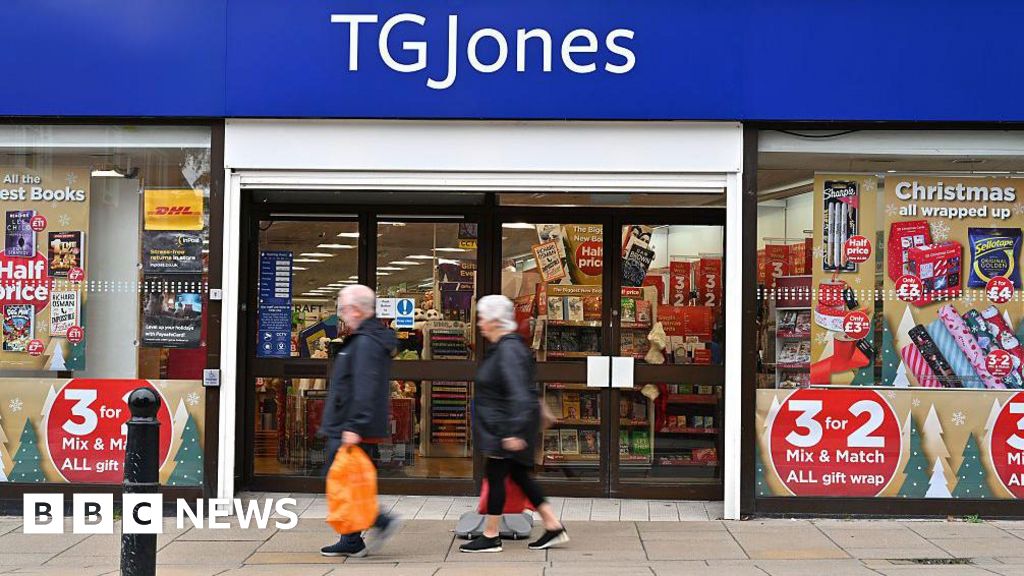
The stores were purchased by Modella Capital last year, and then rebranded under the name TGJones.
Source link

Airlines spent 56.4% more on jet fuel in month after Iran war started, U.S. government says

Mexico City Is Sinking. A Powerful NASA Satellite Just Exposed How Fast

Iran conflict may have motivated Trump dinner shooting suspect: report

Pro wrestling star Steph De Lander reveals how colleague’s advice helped lead her to title triumph at ACW

‘I had £20,000 stolen and had to fight a 13-month fraud reporting rule to get it back’

Norway joins Type 26 Frigate Programme to boost NATO naval power

-
 Sports1 week ago
Pro wrestling star Steph De Lander reveals how colleague’s advice helped lead her to title triumph at ACW
-
Business1 week ago
‘I had £20,000 stolen and had to fight a 13-month fraud reporting rule to get it back’
-
 Entertainment1 week ago
Norway joins Type 26 Frigate Programme to boost NATO naval power
-
 Business7 days ago
PSX plunges over 4,800 points | The Express Tribune
-
 Tech1 week ago
This Ambitious Laptop Doesn’t Leave Much Room for Your Hands
-

 Tech6 days ago
Almost half of UK businesses hit by cyber attacks | Computer Weekly
-

 Sports1 week ago
Match officials announced for HBL PSL 11 qualifier – SUCH TV
-

 Tech5 days ago
This Indigenous Language Survived Russian Occupation. Can It Survive YouTube?