

Business
Defence export boom sparks call for economic reset | The Express Tribune

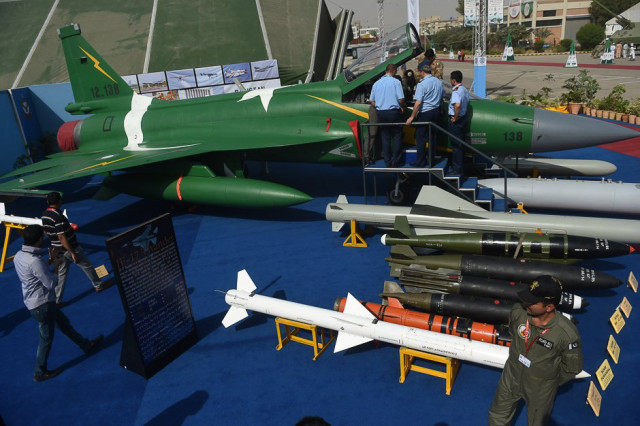
Business leaders say Pakistan must leverage $13bn pipeline to rethink trade ties, build long-term competitiveness
LAHORE:
As Pakistan enters a phase marked by unprecedented defence export opportunities and an equal chance to reposition itself within evolving global economic dynamics, business leaders are calling for a fundamental restructuring of the country’s external economic relationships to achieve sustainable, self-driven growth.
Former president of the South Asian Association for Regional Cooperation (SAARC) Chamber of Commerce and Industry Iftikhar Ali Malik has urged the government and the private sector to prioritise competitiveness, investment and innovation as the cornerstones of Pakistan’s economic revival. He said the country stands at a critical juncture where it can either continue a cycle of crisis management or break free towards genuine economic sovereignty. “For too long, we have been caught in a trap of external assistance that has weakened our structural foundations and discouraged strategic planning,” said Malik. He added that the current global realignment, combined with growing interest in emerging markets and regional connectivity initiatives, presents Pakistan with a rare opportunity to recalibrate its economic priorities and pursue growth on its own terms.
The trade veteran stressed that attracting long-term foreign direct investment should take precedence over short-term capital inflows linked to balance of payments pressures. Such investments, he said, would bring not only capital but also technology transfer, managerial expertise and crucial access to global markets. Equally important is rebuilding confidence among domestic entrepreneurs and diaspora investors, who can provide the foundation for sustained economic expansion, he added.
Another prominent businessman, who requested anonymity, pointed to Pakistan’s growing defence sector as a potential game-changer for the broader economy. Following the Pakistan-India conflict in May 2025, Pakistan’s defence exports have surged to approximately $13 billion, though a majority of this volume remains in the pipeline, opening new avenues for economic diversification.
“The defence export boom is not just about military hardware; it represents a validation of Pakistani manufacturing capabilities and technical expertise,” the businessman said. “These export orders are creating, and will continue to create, ripple effects across the private sector, helping manufacturers identify new international markets and establishing Pakistan as a reliable supplier. Beyond the immediate foreign exchange benefits, which are substantial, this is building institutional capacity and global credibility that can be leveraged across multiple industries.”
He added that the defence sector’s success demonstrates what Pakistani industry can achieve when it focuses on quality, innovation and compliance with international standards, lessons that should be applied across other sectors of the economy.
Malik, however, emphasised that redefining Pakistan’s external economic relations requires a more balanced diplomatic approach, where trade agreements and regional connectivity projects are driven by national competitiveness rather than urgent financing needs. Diversifying export markets and reducing overreliance on traditional partners would strengthen Pakistan’s negotiating position globally, he said. Both business leaders said the future lies in leveraging innovation across sectors, including digitalisation, fintech, agritech and renewable energy. These areas, they noted, offer opportunities to bypass traditional development constraints and integrate directly into global value chains while creating quality employment for Pakistan’s young population.
This transformation, they argued, demands sustained commitment, transparent governance and accountability. “This is not about quick fixes or cosmetic reforms; it requires genuine ownership of the reform process and a long-term vision that prioritises resilience and sustainability over short-term expediency. If we can maintain this focus, Pakistan can emerge as a self-confident and productive economy, integrated into the global system on an equal footing,” Malik added.




Business
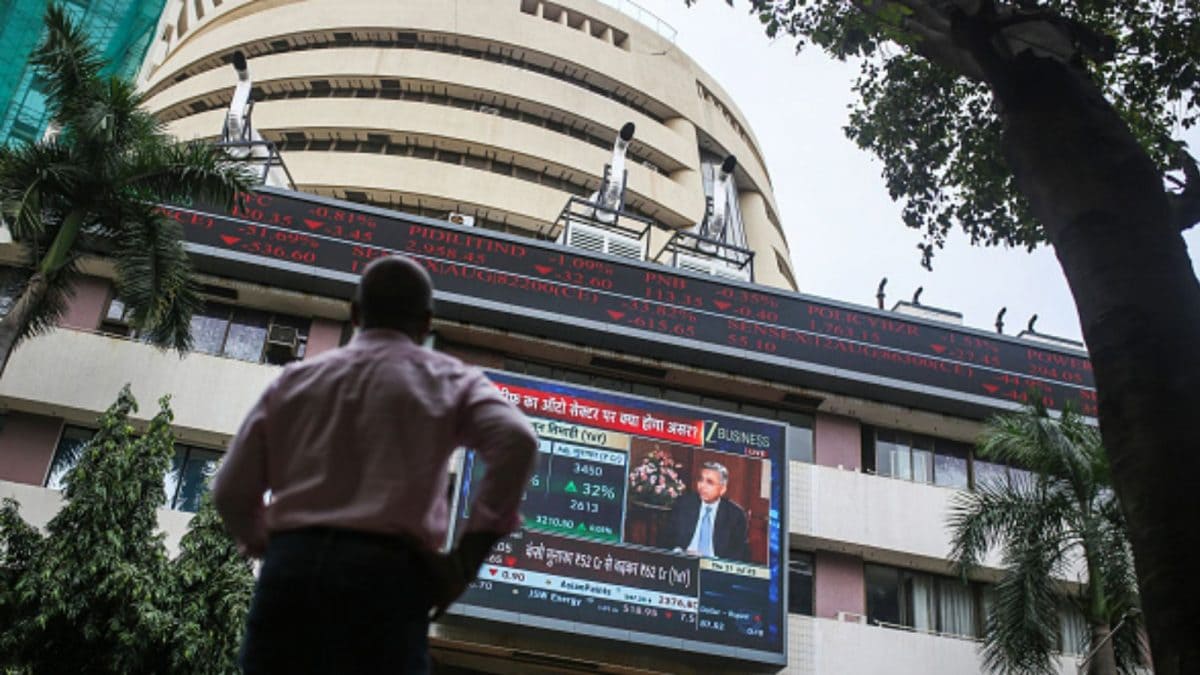
Stock Market Updates: Sensex Tanks 1,100 Points, Nifty Tests 24,450; India VIX Jumps Over 11%
Last Updated:
The Nifty50 and the Sensex declined at open amid weak global cues.




Sensex Today
Indian benchmark equity indices extended their losses in a volatile trading session on Friday as investors remained cautious amid escalating tensions in West Asia linked to the US-Iran conflict.
As of 3:19 PM, the Nifty50 was trading 1.21 per cent or 300 points down at 24,465, and the Sensex was trading 1,136 points or 1.42 per cent down at 78.879.
Market volatility spiked during the session, with the India VIX rising as much as 11.31% to 19.88.
Among Nifty50 constituents, InterGlobe Aviation, ICICI Bank, and Max Healthcare Institute were the top losers. On the other hand, Bharat Electronics Limited, Reliance Industries, and NTPC Limited were among the top gainers.
Broader markets also traded lower, with the Nifty Midcap 100 and Nifty Smallcap 100 declining 0.47% and 0.06%, respectively.
On the sectoral front, the Nifty IT Index was the only major gainer, rising 0.34% on the back of gains in Persistent Systems and Infosys.
Meanwhile, the Nifty Realty Index emerged as the worst-performing sector, falling nearly 2%, dragged down by losses in Godrej Properties, The Phoenix Mills, and Prestige Estates Projects.
The Nifty Private Bank Index and Nifty Financial Services Index were also among the major laggards during the session.
Global cues
Most markets across the Asia-Pacific region traded in the red as crude oil prices climbed amid rising concerns over supply disruptions linked to the escalating conflict involving the United States, Israel, and Iran.
In Asia, mainland China’s CSI 300 Index slipped around 0.1%, while South Korea’s Kospi Index declined 1.6%.
Overnight on Wall Street, the S&P 500 fell 0.57%, while the Dow Jones Industrial Average dropped 1.61%. The Nasdaq Composite ended 0.26% lower.
Market uncertainty also intensified after Letitia James and attorneys general from 23 US states reportedly filed another lawsuit seeking to block tariff measures announced by Donald Trump.
Oil and gold prices
Oil prices surged as traders remained concerned about potential supply disruptions. According to a Reuters report, Brent crude futures rose nearly 5% to $85.41 per barrel in the previous session.
During the Asian trading session, Brent Crude Oil was trading 0.15% higher at $84.16 per barrel.
Meanwhile, safe-haven demand pushed Gold Futures up 1.34% to $5,146.39, supported by ongoing geopolitical tensions.
 Click here to add News18 as your preferred news source on Google.
Follow News18 on Google. Join the fun, play games on News18. Stay updated with all the latest business news, including market trends, stock updates, tax, IPO, banking finance, real estate, savings and investments. To Get in-depth analysis, expert opinions, and real-time updates. Also Download the News18 App to stay updated.
March 06, 2026, 09:20 IST
Read More

ISLAMABAD: Pakistan and the International Monetary Fund held virtual discussions during which the IMF reportedly urged the government to increase petrol and diesel prices immediately, according to official sources.
No Subsidy on Fuel
Sources said the IMF advised Pakistan not to provide any subsidy on petroleum products and instead pass the full impact of global price increases on to consumers.
The lender also emphasised that the government must ensure the Petroleum Development Levy (PDL) target of Rs1,468 billion by June 30 remains unaffected.
Revenue Collection Update
Officials revealed that Rs822 billion has already been collected through the petroleum levy during the first six months of the fiscal year, achieving more than 60% of the annual target between July and December.
Measures to Control Current Account Deficit
The talks also focused on potential steps to manage Pakistan’s current account deficit.
Proposals under consideration include:
Shifting schools and colleges to online classes
Introducing smart working arrangements in government offices and universities
Adjusting market and shop timings
Promoting online delivery services for groceries and restaurants
Officials said a comprehensive implementation plan will be prepared based on these recommendations.
Petroleum Supply Situation
Despite discussions on fuel pricing, sources confirmed that Pakistan’s petroleum reserves remain at satisfactory levels, ensuring stable fuel availability in the country.
Business
Asian stocks today: Kospi drops 1.6% as Middle East tensions weigh on markets – The Times of India
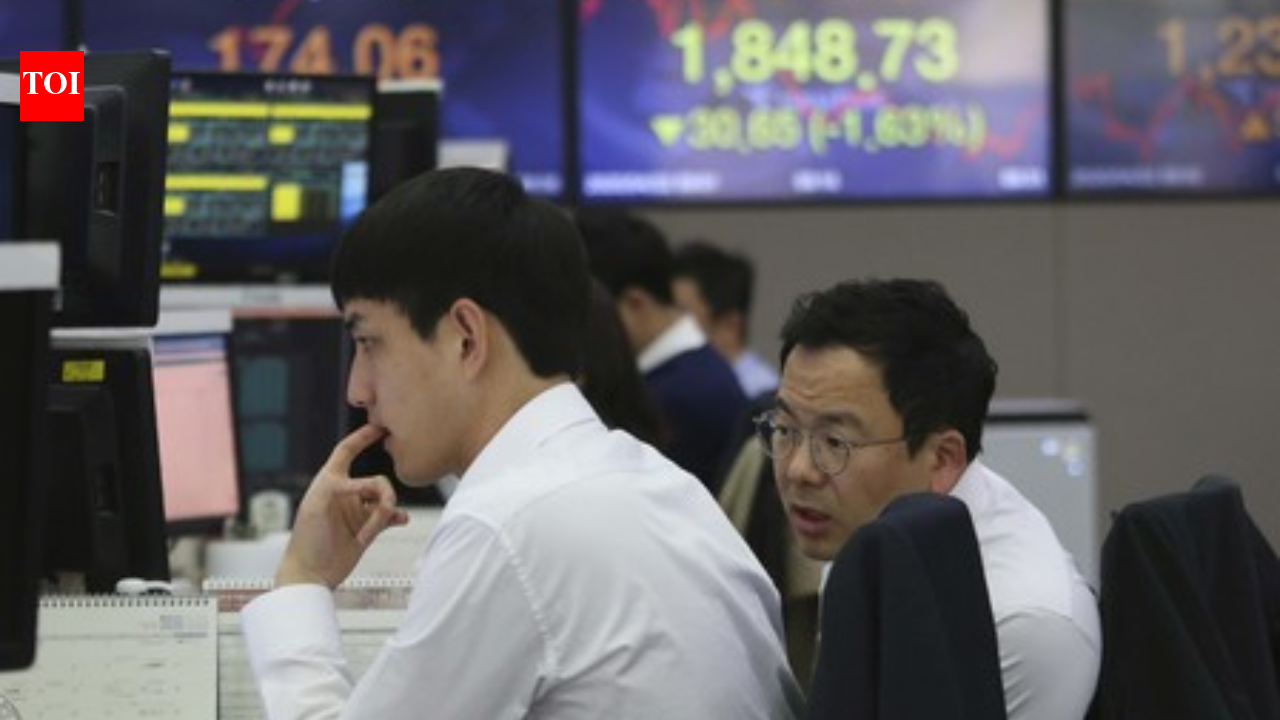
Asian stocks mostly fell on Friday as the ongoing conflict in the Middle East continued to unsettle global markets, while oil prices remained elevated despite some efforts to ease supply concerns.After a difficult week on trading floors, investors are heading into the weekend uncertain about when the US-Israel war on Iran and Tehran’s attacks across the Gulf region might end.Global equities have been battered by the crisis, which has pushed crude prices sharply higher and raised fears of renewed inflation that could weigh on the global economy. Oil prices have surged by about a fifth since last Friday, the day before the attacks began.Although markets saw a rebound in the middle of the week, analysts warned that the longer the conflict continues, the more pressure it will put on financial markets.“It is too soon to suggest that stocks have bottomed,” wrote IG chief market analyst Chris Beauchamp, as quoted by AFP.“Unless the war ends soon- and if anything a more intense conflict seems more likely- markets will struggle. Volatility remains elevated, which means we should expect plenty of two-way price action, but a continued decline for the moment seems likely, even with short-term bounces along the way.”The conflict also appears unlikely to ease soon. Iranian foreign minister Abbas Araghchi said Thursday that Iran was neither seeking a ceasefire nor negotiations with the United States.Asian markets largely followed losses on Wall Street, where all three main indexes ended lower despite staging late rallies.Seoul again saw sharp movement. The Kospi index, which plunged nearly 19 percent on Tuesday and Wednesday before rebounding more than nine percent on Thursday, fell another 1.5 per cent.Sydney, Singapore, Wellington, Manila and Jakarta were also down, while Tokyo, Hong Kong, Shanghai and Taipei managed gains.Concerns about rising crude prices have also intensified fears that inflation could climb again, potentially forcing central banks to reconsider plans to cut interest rates, with some analysts warning that rate hikes could even return.While Iran has not officially shut off the Strait of Hormuz, shipping through the key waterway has all but dried up. Around a fifth of the world’s crude supply and large volumes of gas normally pass through the strait.There was some relief in oil markets after US Interior Secretary Doug Burgum said officials were considering measures to ease the surge in prices.The White House also temporarily eased sanctions against Russia on Thursday, allowing Russian oil currently stranded at sea to be sold to India until April 3.Treasury Secretary Scott Bessent said the waiver was issued “to enable oil to keep flowing into the global market.”Earlier this week, US President Donald Trump pledged to protect ships passing through the Strait of Hormuz.Other countries have also taken steps to secure supplies. According to Bloomberg News, China has asked its largest oil refiners to suspend exports of diesel and gasoline amid fears of shortages.Despite the small pullback, oil prices remain high. By the end of trading Thursday, Brent crude had risen about 19 percent since last Friday, while West Texas Intermediate had climbed more than 22 percent, briefly crossing $80 a barrel for the first time since January last year.Investors are also watching the release of US jobs data later on Friday for clues about the strength of the world’s largest economy.At around 0230 GMT, oil prices were higher, with West Texas Intermediate rising 2.0 percent to $79.38 per barrel and Brent North Sea Crude up 1.5 percent at $84.10 per barrel. In equity markets, Seoul’s Kospi fell 1.6 percent to 5,497.51, while Tokyo’s Nikkei 225 rose 0.4 percent to 55,490.04. Hong Kong’s Hang Seng Index gained 0.9 percent to 25,557.59 and Shanghai’s Composite edged up 0.1 percent to 4,111.86. In currency trading, the euro strengthened to $1.1617 from $1.1604 on Thursday, while the pound rose slightly to $1.3367 from $1.3357. The dollar slipped to 157.51 yen from 157.55 yen, and the euro rose to 86.91 pence from 86.87 pence.


Australian wool market gains on strong merino demand

UN Rights Chief Condemns Killing of Khamenei, Calls for Probe into Iran School Strike
Stock Market Updates: Sensex Tanks 1,100 Points, Nifty Tests 24,450; India VIX Jumps Over 11%

-
 Business1 week ago
Attock Cement’s acquisition approved | The Express Tribune
-

 Fashion1 week ago
Policy easing drives Argentina’s garment import surge in 2025
-

 Politics1 week ago
What are Iran’s ballistic missile capabilities?
-
 Business1 week ago
India Us Trade Deal: Fresh look at India-US trade deal? May be ‘rebalanced’ if circumstances change, says Piyush Goyal – The Times of India
-

 Politics1 week ago
US arrests ex-Air Force pilot for ‘training’ Chinese military
-

 Sports7 days ago
LPGA legend shares her feelings about US women’s Olympic wins: ‘Gets me really emotional’
-
 Business7 days ago
Greggs to reveal trading amid pressure from cost of living and weight loss drugs
-

 Sports1 week ago
Sri Lanka’s Shanaka says constant criticism has affected players’ mental health