

Business
Developing Rosebank oil field ‘pure climate vandalism’, Scottish Green insists


Scottish Greens will “call out the lies of big polluters”, co-leader Gillian Mackay said as she branded plans to develop the Rosebank oil field as “pure climate vandalism”.
Ms Mackay spoke out as demonstrators opposed to drilling the site gathered in London on Saturday.
Plans to develop the North Sea field – which is estimated to contain up to 300 million barrels of oil – have been submitted again by owners Equinor.
However, Ms Mackay told the Scottish Green Party conference in Edinburgh: “We have to be the party that calls out the lies of big polluters.”
Ms Mackay, who was elected co-leader with fellow MSP Ross Greer in August, told her fellow Scottish Greens: “Drilling for new oil and gas in fields like Rosebank will do nothing to lower energy bills or protect our planet.
“It is pure climate vandalism and we have to stop Rosebank.”
Development of the oil field, which lies 80 miles west of Shetland, had been approved by the Conservative government in 2023 but that decision was challenged in the courts in the wake of a Supreme Court ruling which said the emissions created from burning fossil fuels should be considered when granting permission for new drilling sites.
Her comments came as Zack Polanski, leader of the Green Party of England and Wales, insisted the UK is “one of the most nature depleted countries in the world”.
Addressing protesters in London, Mr Polanski said: “The very least this Government need to do is to stop making things worse.”
Ms Mackay also used her conference speech to hit out at the UK Government over the closure of Scotland’s only oil refinery in Grangemouth.
Hundreds of jobs were lost after owners Petroineos closed the refinery earlier this year, with Ms Mackay, who grew up in the area saying: “I’m sick of governments and corporations using tags like ‘just transition’ as a cheap slogan.
“What happened in Grangemouth is not a just transition.
“Our communities don’t need empty words, words don’t pay the bills, or put food on the table.
“They need real plans to provide real jobs and real opportunities.”
Ms Mackay insisted: “That site could have been saved. Labour promised to save it – they promised £200 million – and the message from the workers is clear: show us the money.”
She said that the Grangemouth plant “could have been nationalised”, adding: “We cannot leave the future of our communities in the hands of billionaires who are all too happy to abandon us when the money dries up.”
With the Scottish Greens having set the target of overtaking Labour in May’s Holyrood ballot, Ms Mackay said her party was “on the verge of a historic election” with the “chance to elect more green voices than ever before”.
She also told how the birth of her first child, Callan, in June meant she had “never felt more committed to building a greener Scotland”.
She joked that she was speaking at Saturday’s conference “in relatively one piece, without too much baby dribble on me” as she said the Green model, with two co-leaders at the helm, had allowed her to take on the challenge.
“In other parties there would have been a whole load of barriers to a new mum being elected to a leadership role,” Ms Mackay said.
“It is only because of our co-leadership model and the support of ordinary members, I have been afforded this opportunity.”
She continued: “The support I have had says something about our party and the values we stand for.
“When I think about the country I want us to be, it is one where we support each other, one where we lift each other up and one where we do things differently.”
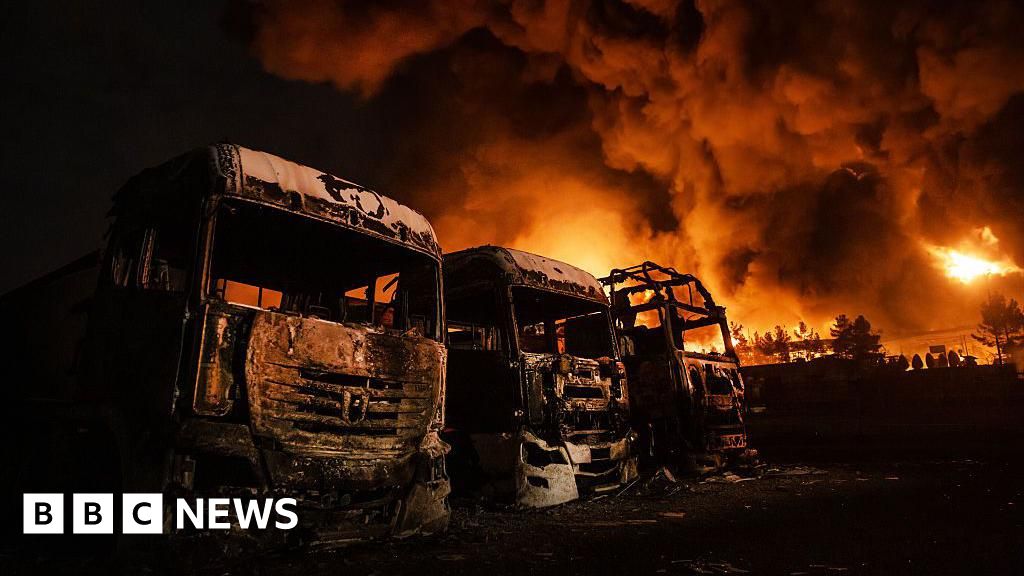
Major disruption to energy supplies threatens to push up prices for consumers and businesses around the world.
Source link
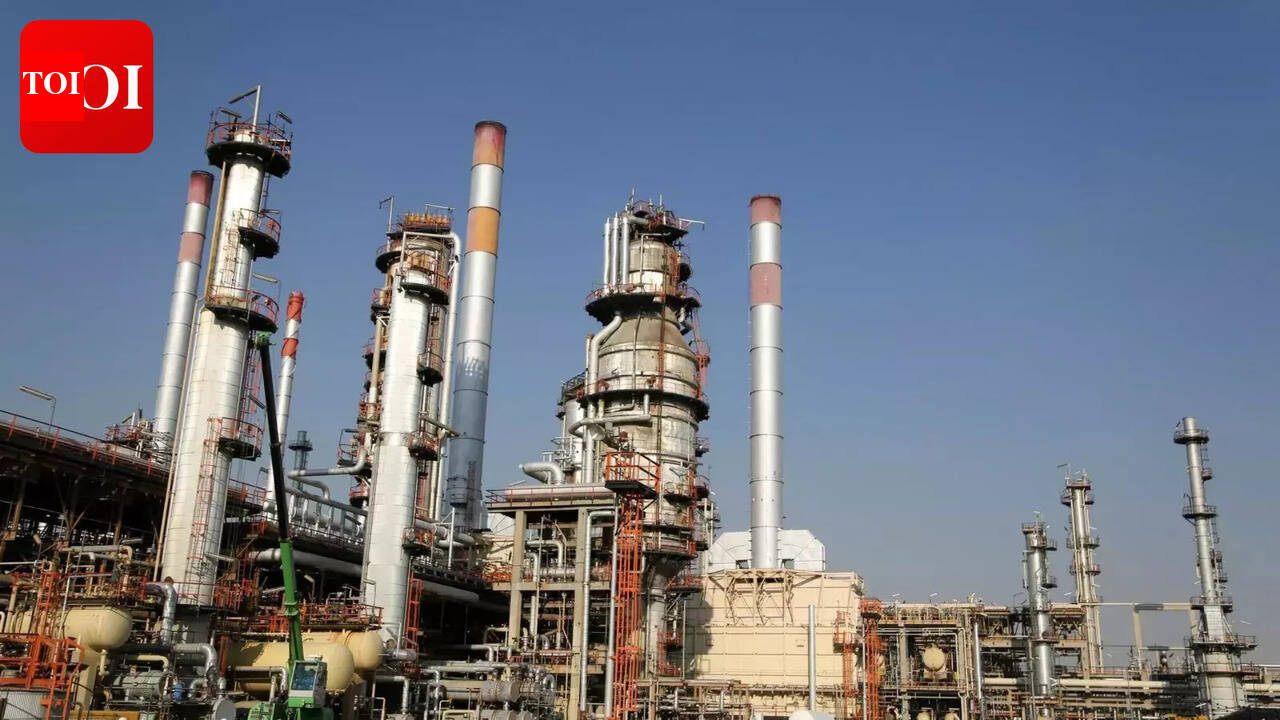
Saudi Aramco jumped the most since April 2023 on Sunday as the Iran war entered its second week, prompting supply disruptions that may send oil prices higher when global markets reopen. Shares of the state-backed oil giant climbed as much as 4.9% in Riyadh before paring gains to close up 4.1%, on the first day of trading for the stock since Brent crude prices topped $90 a barrel on Friday.Brent may climb further after UAE and Kuwait started reducing oil production amid a near-closure of Strait of Hormuz waterway, adding to interruptions affecting worldwide energy supply and exports. “For Aramco, we believe that the gain in oil prices would offset a decline in exports,” said Junaid Ansari, head of research and strategy at Kamco Investment Co. “We also believe that Aramco should be able to re-route a bulk of its shipments to the Red Sea. It’s just about logistics and handling the excess capacity.” Aramco has been redirecting oil cargoes to Red Sea facilities on Saudi Arabia’s west coast to avoid the Strait of Hormuz.

ISLAMABAD:
The Middle East once again stands on the verge of a dangerous escalation. What began as a confrontation between Iran and Israel risks evolving into a broader regional conflict involving the Gulf states and major global powers. Such a development would carry profound implications for global energy security and economic stability.
The big war clouds gathering over the Gulf are not merely a regional security concern. They represent a geopolitical confrontation with the potential to reshape global energy markets, international trade and economic stability. If the current escalation expands into a wider Gulf conflict, the shockwaves will be felt far beyond the Middle East.
The rapidly intensifying tensions in the region risk transforming what began as limited strikes and retaliatory attacks between Iran and Israel, backed by the United States and its allies, into a broader regional confrontation. Increasing missile and drone exchanges have heightened fears that the Gulf Cooperation Council (GCC) states may become directly involved. Should this happen, the Middle East could once again become the epicentre of a conflict with global consequences.
The Gulf occupies a uniquely strategic position in the global economy, both for sea and air routes. Nearly one-third of the world’s seaborne oil trade passes through the Strait of Hormuz, making it one of the most sensitive chokepoints in international commerce. Even a temporary disruption in this narrow corridor can trigger volatility in energy markets, driving up oil and LNG prices, increasing transport costs and fuelling inflation worldwide.
History offers a sobering reminder that conflicts in the Gulf rarely remain localised. From the Iran-Iraq war in the 1980s to the Gulf wars that followed, instability in the region has repeatedly reshaped global energy markets and geopolitical alliances. The current escalation carries similar risks at a time when the global economy is already grappling with inflation, supply chain disruptions and geopolitical fragmentation.
Beyond the immediate military dimension, the crisis must also be understood within the broader context of global power competition. The Middle East has long been central to international geopolitics due to its vast energy reserves and its geographic location linking Asia, Europe and Africa. Control over energy supply routes has historically been a key determinant of global influence.
In today’s evolving geopolitical landscape, this factor has gained renewed significance. China, now one of the world’s largest energy consumers, relies heavily on oil imports from the Middle East. Any disruption in regional energy supplies would therefore have consequences not only for global energy markets but also for the balance of economic power among major economies.
Behind the immediate military confrontation lies a deeper strategic contest shaping global geopolitics. The Gulf remains central to the control of energy flows that sustain the world economy, and influence over these supply routes has historically translated into geopolitical leverage. As emerging economies, particularly China, depend heavily on Middle Eastern energy imports, disruptions or shifts in regional alliances could alter the balance of economic influence among major global powers. In this sense, the current escalation reflects not only regional rivalries but also a broader strategic competition unfolding across the international system.
For the Gulf states themselves, the stakes are particularly high. Over the past several decades, many GCC economies have pursued ambitious strategies to diversify beyond oil by investing in financial services, logistics, real estate development, tourism and advanced industries. These economic transformation plans depend heavily on regional stability, peace and investor confidence.
A prolonged military confrontation would threaten these gains. Conflict in the initial days has already disrupted airlines and shipping routes, endangered energy infrastructure and triggered capital flight from regional markets. Brent surged near $85 per barrel. LNG shipping rates soared 650% to $300,000 per day. QatarEnergy declared force majeure, shut down production and halted LNG supplies. Export cargoes of essential food commodities such as rice, fresh fruits and vegetables have halted at various points of origin, endangering the food security of GCC states, particularly those small states with limited local production.
Rising defence expenditures may also divert resources away from long-term development priorities such as infrastructure, education and technological innovation. Another troubling dimension of the current tensions is the risk that geopolitical rivalry may increasingly be framed through sectarian narratives. Relations between Iran and several Gulf states already contain elements of Sunni-Shia competition. If the confrontation intensifies, sectarian polarisation could deepen divisions across the region and make diplomatic solutions more difficult.
Such a development would weaken the Muslim world economically and politically and may send it back to conditions reminiscent of the 1960s. Instead of focusing on economic modernisation, innovation and human capital development, states could find themselves allocating growing resources to defence procurement and military alliances.
For countries like Pakistan, the economic consequences of a wider Gulf war would be immediate and significant. Pakistan remains heavily dependent on imported fuel from Saudi Arabia, the wider Middle East and LNG from Qatar. Food commodities are imported from global sources, and any sharp increase in global energy, shipping costs and food prices would widen the country’s trade deficit by around $4-5 billion and intensify inflationary pressures, while exacerbating the current account deficit.
Furthermore, Pakistan’s external trade relies substantially on foreign shipping companies. War-risk insurance premiums, higher sea freight charges and disruptions in maritime routes would raise the cost of both imports and exports. These pressures would further strain an economy already navigating fiscal and external sector challenges.
Remittances present another important concern, providing a cushion for the current account. Millions of Pakistani workers are employed across Gulf economies and send a major share of remittances from Gulf countries. Any economic slowdown or instability in the region could affect employment opportunities and remittance inflows – one of Pakistan’s most vital sources of foreign exchange and rupee stability.
At this critical moment, restraint and diplomacy are essential. Escalation may serve short-term strategic objectives, but the long-term costs of a wider regional war would be immense. The Middle East has already endured decades of instability and conflict; another large-scale confrontation would deepen humanitarian suffering while undermining economic progress.
History offers a clear lesson: wars in the Gulf rarely remain confined to the region. They reshape global markets, redraw alliances and influence the trajectory of the world economy. Preventing such an outcome requires diplomacy, dialogue and leadership capable of recognising the heavy cost of further escalation.
The Gulf has long been the world’s energy heartland; turning it into a battlefield would endanger not only regional stability but the foundations of the global economy itself.
The writer is a former vice president of KCCI, an independent economic analyst focusing on global trade, energy economics and geopolitical risk


Rihanna’s Beverly Hills home hit by gunfire; suspect arrested, LAPD says
Iran war: Oil prices jump above $100 for first time in four years

King Charles urges unity, brighter future, wishing Happy Commonwealth Day

-

 Fashion1 week ago
South Korea’s Misto Holdings completes planned leadership transition
-
 Politics1 week ago
Iran launches retaliation against Israel, launches ballistic missiles
-

 Entertainment1 week ago
Al Jazeera broadcast interrupted by emergency missile alert in Qatar
-
 Politics2 days ago
India let Iran warship dock the day US sank another off Sri Lanka, say officials
-

 Sports1 week ago
College basketball star suspended by team for spitting toward opposing fan
-
 Fashion1 week ago
India’s real GDP estimated to grow 7.6% in FY26 under new base FY23
-

 Sports1 week ago
Transfer rumors, news: Man City, Man United in for Anderson
-

 Sports2 days ago
Pakistan set for FIH Pro League debut | The Express Tribune