

Tech
DHS Wants a Fleet of AI-Powered Surveillance Trucks

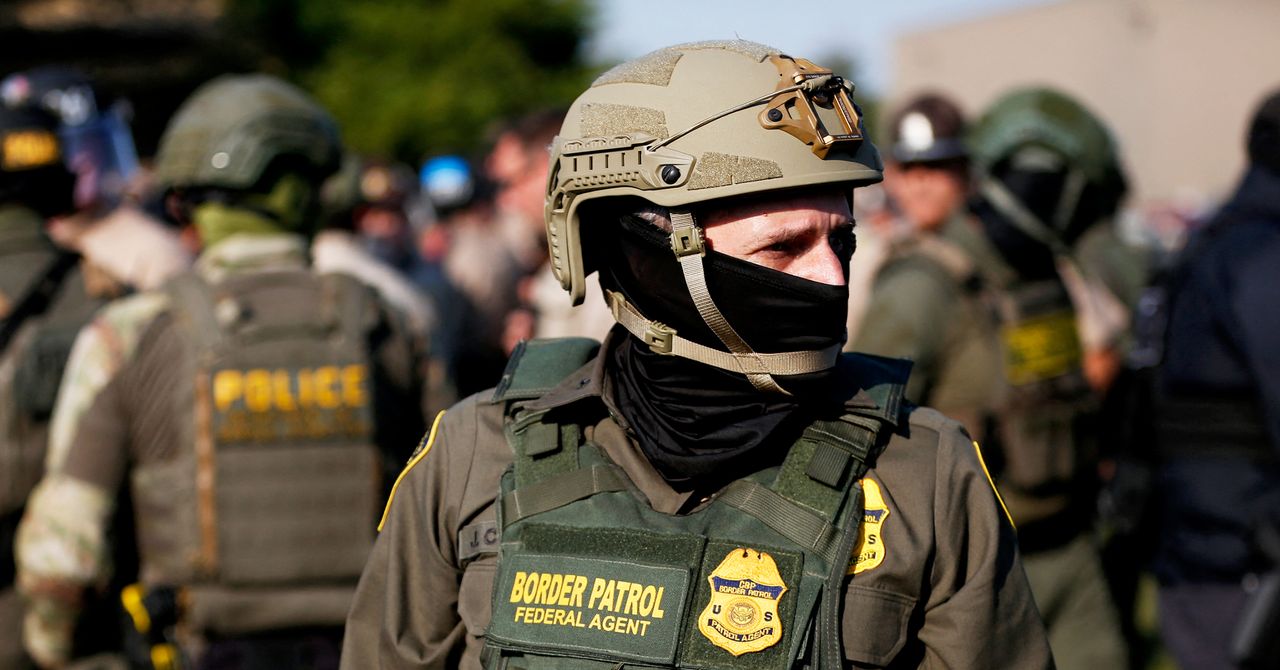
The US Department of Homeland Security is seeking to develop a new mobile surveillance platform that fuses artificial intelligence, radar, high-powered cameras, and wireless networking into a single system, according to federal contracting records reviewed by WIRED. The technology would mount on 4×4 vehicles capable of reaching remote areas and transforming into rolling, autonomous observation towers, extending the reach of border surveillance far beyond its current fixed sites.
The proposed system surfaced Friday after US Customs and Border Protection quietly published a pre-solicitation notice for what it’s calling a Modular Mobile Surveillance System, or M2S2. The listing includes draft technical documents, data requirements, and design objectives.
DHS did not respond to a request for comment.
If M2S2 performs as described, border patrol agents could park their vehicles, raise a telescoping mast, and within minutes start detecting motion several miles away. The system would rely heavily on so-called computer vision, a kind of “artificial intelligence” that allows machines to interpret visual data frame by frame and detect shapes, heat signatures, and movement patterns. Such algorithms—previously developed for use in war drones—are trained on thousands if not millions of images to distinguish between people, animals, and vehicles.
The development of M2S2 comes amid the Trump administration’s sweeping crackdown on undocumented immigrants across the US. As part of this push, which has sparked widespread protests and condemnation for the brutal tactics used by immigration authorities, Congress boosted DHS’s discretionary budget authority to roughly $65 billion. The GOP’s “One Big Beautiful Bill” allocates over $160 billion for immigration enforcement and border measures—most of it directed to DHS—with the funds scheduled to be distributed over multiple years. The administration has sought to increase DHS funding by roughly 65 percent, proposing the largest expansion in the agency’s history to fund new border enforcement, detention capacity, and immigration surveillance initiatives.
According to documents reviewed by WIRED, locations of objects targeted by the system would be pinpointed on digital maps within 250 feet of their true location (with a stretch goal of around 50 feet) and transmit that data across an app called TAK—a government-built tactical mapping platform developed by the US Defense Department to help troops coordinate movements and avoid friendly fire.
DHS envisions two modes of operation: one with an agent on site and another where the trucks sit mostly unattended. In the latter case, the vehicle’s onboard AI would conduct the surveillance and send remote operators alerts when it detects activity. Missions are to be logged start to finish, with video, maps, and sensor data retained for a minimum of 15 days, locked against deletion “under any circumstances.”













Design Within Reach carries some of the best and coolest home decor you can find, from modern couches to fantastic office chairs and fun designers like Herman Miller and Dusen Dusen. It’s not a cheap store to shop at, though, which is what makes these coupons something to jump on. Unlock online-exclusive discounts of up to 50%, free shipping, plus 20% off featured brands and 15% off office furniture bundles with Design Within Reach promo codes and Summer 2025 sale events. Save on hundreds of stylish items, including our favorite Design Within Reach office chairs, plus some other fantastic home gear we’ve earmarked for testing.
Extra 25% Off at Design Within Reach
Upgrade your digs to sleek Eames-esque mid-century modern design for up to 25% off furniture with Design Within Reach promo code EXTRA25. Head to Design Within Reach’s sale page for huge markdowns of live-proof, luxe furniture and household items like storage furniture, bar stools, chairs, couches, cabinetry, accessories, and more. And don’t forget to use that Design Within Reach promo code for even more savings.
Get 15% Off Furniture With Design Within Reach Promo Codes
On Design Within Reach’s website, you’ll see an expansive catalogue with a huge range of furniture to revamp any room—from couches and credenzas to coffee tables and bar stools for way less than normal designer prices. Flos lamps, known for mixing functionality and style, are now 20% off for a limited time. These colorful table lamps start at $255, with wall sconces, pendants, and more on sale.
Summer’s here, and it’s better late than never to get some great outdoor furniture. During Design Within Reach’s outdoor sale event, you can get up to 30% off great outdoor furniture essentials, like outdoor sectionals, chaise lounge chairs, benches, and outdoor tables. You can get bonus savings with sitewide Design Within Reach promo codes during this time. But you can still save thousands of dollars, on top of 50% off markdowns. If you’ve been eyeing the Eames Lounge Chair, Aeron Chair, or Noguchi table, this is your chance to save over $1,500.
One of the easiest ways to get a design within reach coupon is by signing up for their emails. When you sign up for DWR’s email list, you’ll get 15% off your first order, plus, you’ll be the first to know of flash sale events and discount codes when the updates are sent straight to your inbox.
You can ditch the delivery fees with Quick-Ship free shipping offers. You can save up to $699 and get complimentary shipping sitewide on orders of $2,000 or more. Explore the many items with quick-ship and free shipping offers, including sofas, storage pieces, coffee tables, and more iconic furniture. Check out their New to Sale deals too, with 40% off select bar stools, 20% off sectionals, and decor for 50% off. Design Within Reach’s end-of-season sales are some of the best times to save big on those pricier purchases, but you’ll be surprised to find that many new arrivals will go on sale too. While you’re browsing the Sale section, you can use the filter button to organize by category, specific designers, brands, and even price. Unleash your inner interior designer and go wild.
Shop up to 50% Off Design Within Reach Clearance Sale Deals
Buying furniture and other household items can be one of the biggest purchases one makes in their life. Luckily, Design Within Reach has some great furniture deals, with clearance deals that are even steeper than their usual sale discounts. These deals include last-chance furniture discounts, with up to 50% off on all home categories and decor—including light fixtures, tables, ottomans, furniture cushions, and more. Check out Design Within Reach clearance deals and take advantage of the final sale prices, where furniture items are at their lowest prices yet—before they go out of stock.
More Ways to Save on Design Within Reach Furniture
Design Within Reach is also here for small business owners and design industry professionals, to help them jumpstart and elevate their businesses in style. They can apply to the free DWR Trade program, where they will receive sitewide discounts every day, a dedicated Account Executive, exclusive promotions only available to Trade members, and exclusive and discounted Trade pricing across Design Within Reach’s 200 premium design brands in one place.
Our Favorite Design Within Reach Gear
Design Within Reach has a huge range of designers and home pieces, from massive couches to decor and chargers. They carry Herman Miller pieces we love from our guide to the Best Office Chairs, plus chargers from Courant that we recommend in our Best Wireless Chargers guide. We’ve also got our eye on couches and sheets from designers like Hay and Dusen Dusen to test too that you can find at Design Within Reach.

As the Trump administration phases out the use of animal experimentation across the federal government, a biotech startup has a bold idea for an alternative to animal testing: nonsentient “organ sacks.”
Bay Area-based R3 Bio has been quietly pitching the idea to investors and in industry publications as a way to replace lab animals without the ethical issues that come with living organisms. That’s because these structures would contain all of the typical organs—except a brain, rendering them unable to think or feel pain. The company’s long-term goal, cofounder Alice Gilman says, is to make human versions that could be used as a source of tissues and organs for people who need them.
For Immortal Dragons, a Singapore-based longevity fund that’s invested in R3, the idea of replacement is a core strategy for human longevity. “We think replacement is probably better than repair when it comes to treating diseases or regulating the aging process in the human body,” says CEO Boyang Wang. “If we can create a nonsentient, headless bodyoid for a human being, that will be a great source of organs.”
For now, R3 is aiming to make monkey organ sacks. “The benefit of using models that are more ethical and are exclusively organ systems would be that testing can be meaningfully more scalable,” Gilman says. (R3’s name comes from the philosophy in animal research known as the three R’s—replacement, reduction, and refinement—developed by British scientists William Russell and Rex Burch in 1959 to promote humane experimentation.)
New drugs are often tested in monkeys before they’re given to human participants in clinical trials. For instance, monkeys were critical during the Covid-19 pandemic for testing vaccines and therapeutics. But they’re also an expensive resource, and their numbers are dwindling in the US after China banned the export of nonhuman primates in 2020.
Animal rights activists have long pushed to end research on monkeys, and one of the seven federally funded primate research facilities across the country has signaled it would consider shutting down and transitioning into a sanctuary amid growing pressure. The US Centers for Disease Control and Prevention is also winding down monkey research, part of a bigger trend across the government to reduce reliance on animal testing.
As a result, Gilman says, there aren’t enough research monkeys left in the US to allow for necessary research if another pandemic threat emerges. Enter organ sacks.
Organ sacks would in theory offer advantages over existing organs-on-chips or tissue models, which lack the full complexity of whole organs, including blood vessels.
Gilman says it’s already possible to create mouse organ sacks that lack a brain, though she and cofounder John Schloendorn deny that R3 has made them. (For the record, Gilman doesn’t like the term “brainless” to describe the organ sacks. “It’s not missing anything, because we design it to only have the things we want,” she says.) Gilman and Schloendorn would not say how exactly they plan to create the monkey and human organ sacks, but said they are exploring a combination of stem-cell technology and gene editing.
It’s plausible that organ sacks could be grown from induced pluripotent stem cells, says Paul Knoepfler, a stem cell biologist at the University of California, Davis. These stem cells come from adult skin cells and are reprogrammed to an embryonic-like state. They have the potential to form into any cell or tissue in the body and have been used to create embryo-like structures that resemble the real thing. By editing these stem cells, scientists could disable genes needed for brain development. The resulting embryo could then be incubated until it grows into organized organ structures.
“Tavajoh! Tavajoh! Tavajoh!” a man’s voice announces, before going on to narrate a string of numbers in no apparent order, slowly and rhythmically. After nearly two hours, the calls of “Attention!” in Persian stop, only to resume again hours later.
The broadcast has been playing twice a day on a shortwave frequency since the start of the US-Israel attack on Iran on February 28.
According to Priyom, an organization which tracks and analyses global military and intelligence use of shortwave radio, using established radio-location techniques, the broadcast was first heard as the US bombing of Iran began. It has since played on the 7910 kHz shortwave frequency like clockwork—at 02.00 UTC and again at 18.00 UTC.
Over the weekend, Priyom said it had identified the likely origin of the broadcast. Using multilateration and triangulation techniques, the group traced the signal to a shortwave transmission facility inside a US military base in Böblingen, southwest of Stuttgart, Germany.
The site lies within a restricted training area between Panzer Kaserne and Patch Barracks, with technical operations possibly linked to the US army’s 52nd Strategic Signal Battalion, headquartered nearby.
That identification narrows the field, but it does not reveal who is behind the transmissions or who they are meant for.
The two-hour-long transmission is divided into five to six segments, each lasting up to 20 minutes. Each opens with “Tavajoh!” before shifting into a string of numbers in Persian, sometimes punctuated with an English word or two. Five days into the broadcast, radio jammers were heard attempting to block the frequency. The following day, the transmission shifted to a different frequency—7842 kHz.
Radio communication experts believe the broadcast is likely part of a Cold War–era system known as number stations.
The Return of the Numbers
Number stations are shortwave radio broadcasts that play strings of numbers or codes that sound random—like the one now heard in Iran. “It is an encrypted radio message used by foreign intelligence services, often as part of a complex operation by intelligence agencies and militaries,” says Maris Goldmanis, a Latvian historian and avid numbers stations researcher.
Number stations are most commonly associated with espionage. “For intelligence agencies, it is important to communicate with their spies to gather intelligence,” says John Sipher, a former US intelligence officer who served 28 years in the CIA’s National Clandestine Service. “This is not always possible in person due to political constraints or conflict. This is where number stations come in.”
While the use of number stations can be traced back to the First World War, they gained prominence during the US-Soviet Cold War. As espionage grew more sophisticated, governments used automated voice transmissions of coded numbers to communicate with agents, Goldmanis says. Citing declassified KGB and CIA documents, he adds that number stations were widely used during this period, often as Morse code transmissions and, in many cases, as two-way communications, with agents reporting back using their own shortwave transmitters.
“Nowadays, you have various satellite and encrypted communications technologies,” Sipher says. “But during the Cold War and even before that, governments had to find ways to do this without being noticed, and broadcasting coded messages was one way to communicate with your assets discreetly.”
The apparent randomness of the numbers means they can be understood only with a codebook, Sipher adds. “Nobody can make heads or tails of it or understand what it says unless you have the codebook that can give you hints to decrypt the code,” he says, noting that such systems must be set up and coordinated in advance.
A Signal Without a Sender
While the likely origin of the signal may now be clearer, its purpose and intended recipient remain unknown.
Because the broadcasts are encrypted and designed to be covert, those details may remain unclear for years, Goldmanis says. The structured nature of the transmission—its fixed schedule and consistent use of frequencies—further suggests it is part of a planned operation.


How Jaxon Smith-Njigba’s contract extension impacts Seahawks

China sees rise in new FDI firms despite lower inflows
Vets to be legally required to publish price lists and cap prescription fees

Japan suffers shocking collapse to Venezuela in World Baseball Classic

Strategic oil stocks to be released ‘immediately’ in Asia and Oceania: IEA

New Income Tax Act 2025 To Take Effect From April 1: 10 Key Changes That Will Affect Your Money

-
 Sports1 week ago
Japan suffers shocking collapse to Venezuela in World Baseball Classic
-
 Entertainment1 week ago
Strategic oil stocks to be released ‘immediately’ in Asia and Oceania: IEA
-
Business1 week ago
New Income Tax Act 2025 To Take Effect From April 1: 10 Key Changes That Will Affect Your Money
-

 Sports1 week ago
Transfer rumors, news: Real Madrid open to Camavinga exit, as Premier League clubs circle
-

 Sports1 week ago
PCB files complaint over allowing Bangladesh to take review on penultimate ball – SUCH TV
-
 Business7 days ago
Stocks and pound rise as US rate call approaches
-
 Tech6 days ago
Justice Department Says Anthropic Can’t Be Trusted With Warfighting Systems
-

 Sports6 days ago
March Madness 2026 – How to watch in SA, start time, schedule, TV channel for NCAA championship basketball tournament