

Business
Diary of a CEO host Steven Bartlett explains what drives him towards success


Entrepreneur Steven Bartlett says the pursuit of his endeavours is what makes him happy – not whether they are a success.
The host of the Diary of a CEO podcast, Bartlett grew in prominence as the youngest-ever investor on Dragon’s Den. One of his deals, for an energy drink brand, has recently become the most valuable company to emerge from the show, worth over £150m.
Elsewhere he is also a private investor or founder in a range of companies – including his latest venture Steven.com, which has attained a valuation of more than £320m and which he says he wants to grow into the “Disney of the creator economy”.
His primary podcast, meanwhile, surpassed a billion views globally in 2024 and was last year included in the top five pods globally on Spotify, while this time he was speaking on Evgeny Lebedev’s Brave New World podcast.
Bartlett’s insight tends to therefore carry much weight, both with burgeoning entrepreneurs and those focused on self-improvement, which makes his latest foray into discussing his approach to a multi-focused working lifestyle so intriguing – where he says he has “killed” the idea that his accomplishments will make him content, instead focusing on the process.
“I’m well aware nothing I accomplish will make me happier. This is ‘arrival fallacy’: this horrible thing that happens, when you believe that when you arrive [at what you’re striving for], you’ll become x [such as happy, satisfied or elated],” he told Lebedev, who is a shareholder of The Independent and majority owner of the Evening Standard.
“I’ve killed arrival fallacy completely. At the same time the thing that keeps me content and stable is the pursuit itself.
“I love the pursuit of things. That allows for when I’m perfectly content, as long as I’m pursuing, and I have no belief that arriving or material success is going to change me at all.”
He added: “Maybe kids? Maybe that’s a different thing. I don’t know that’s just a hypothesis, but outside of that I love waking up every day and getting to live a life and working with cool people on things I care about that’s challenging me.
“The game of life is the process I believe: the pedals, not the podium.”
Bartlett delved into his younger years on the podcast, explaining his upbringing and the impact that had on his approach to entrepreneurship.
He revealed the impact his mother and his home life had on his outlook towards trying new things and aiming for material goals initially, recounting stories of raising money for school trips and getting a vending machine installed for a lower price than the school was initially going to manage.
“From a very early age I’d learnt this very important thing: there isn’t really a gap between an idea and doing it,” he said.
“If I could give my kid anything it would be that exact lesson somehow, that you can have an idea and it can appear in the world.
“In hindsight, at 16 or 18 years old, that’s the defining trait of my ideology. I remember saying to my friends, ‘If you told me I need to go to the moon next week, my default is to believe there’s a way. There’s someone going, there’s a rocket going, I just need to find out who and find a way to get on.’”
The premises he speaks around are features in an upcoming book entitled Just F***ing Do It, which is about the principles of doing a thing – potentially regardless of successful outcome or not.
Stories in the book, Barltett says, are framed around lessons from interviewees, lessons around mentality and strategy and discussions of neuroscience.
And, repeatedly, he highlights the importance of not focusing solely on the end goal and acknowledging that as long as he’s giving his best, automatic success isn’t guaranteed – and that’s perfectly fine.
“My default is to be empathetic with myself and to realise all I can do is my best,” Bartlett says. “If I don’t address everything [going on] it doesn’t result in me catastrophising or beating myself up. My natural inclination is to give myself a break.”
Business
Rs 20,000 crore gold, silver rush: What will people buy this Akshaya Tritiya? – The Times of India
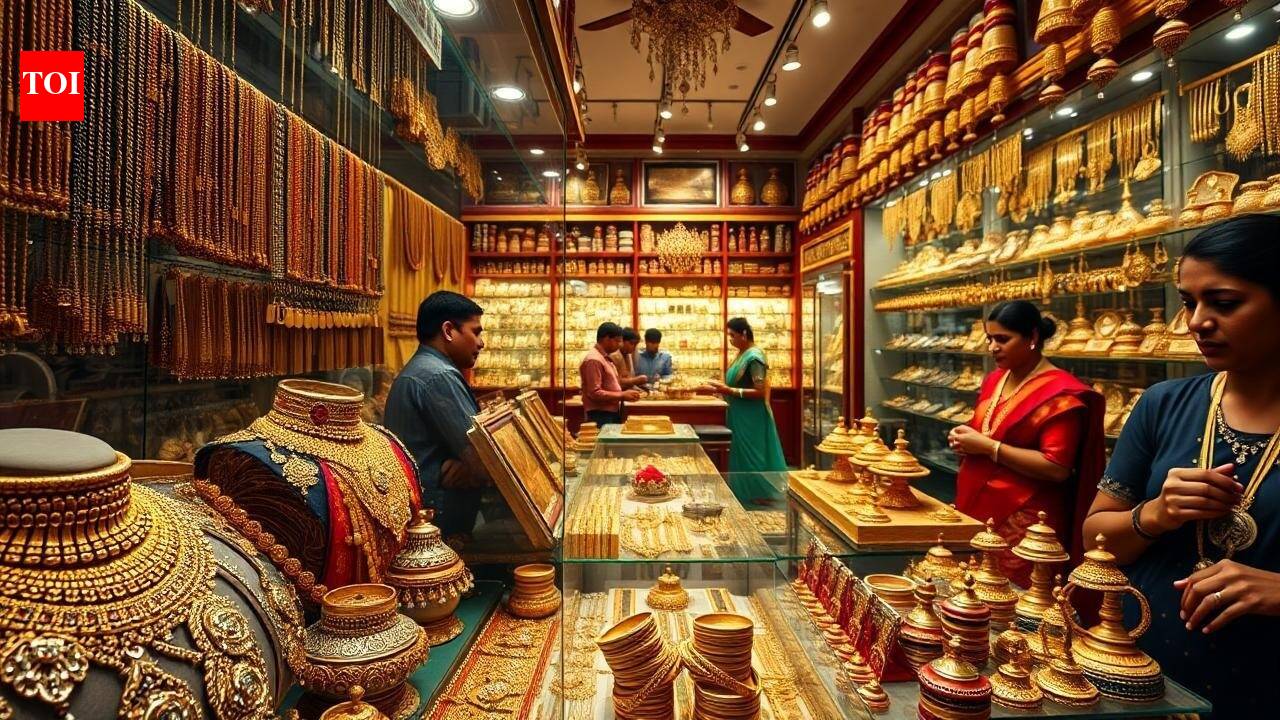
This Akshaya Tritiya, India’s gold and silver markets are heading for bumper purchases, with overall trade likely to cross Rs 20,000 crore even as record-high prices reshape buying patterns. The estimate, shared by the Confederation of All India Traders (CAIT), is higher than last year’s Rs 16,000 crore, signalling growth in value despite a sharp rise in bullion rates.Prices for the yellow metal have surged sharply over the past year, going from Rs 1,00,000 per 10 grams, to Rs 1.58 lakh. Meanwhile, silver has shown a steeper rally, jumping from Rs 85,000 per kilogram to Rs 2.55 lakh per kilogram. According to CAIT, this sharp escalation has not weakened demand, but is instead prompting consumers to make more deliberate and value-oriented purchases.Praveen Khandelwal, member of parliament from Chandni Chowk and secretary general of CAIT told ANI, “Akshaya Tritiya has traditionally been one of India’s most auspicious occasions for purchasing gold… While gold continues to dominate, the nature of purchasing is evolving significantly in response to steep price escalation.”Commenting on customer preference, CAIT national president BC Bhartia highlighted, “There is a clear shift towards lightweight, wearable jewellery, alongside a stronger focus on silver and diamond products. Attractive incentives such as reduced making charges and complimentary gold coins are also helping sustain consumer interest.”Despite the increase in overall trade value, the quantity of metals being sold tells a different story. Pankaj Arora, National President of the All India Jewellers and Goldsmith Federation (AIJGF), an associate of CAIT, explained that the projected Rs 16,000 crore gold trade amounts to nearly 10,000 kilograms (10 tonnes) at current rates. The value, spread across an estimated 2 to 4 lakh jewellers, translates to average sales of only 25 to 50 grams per jeweller, “clearly indicating a sharp decline in volume”.Meanwhile for silver, the estimated Rs 4,000 crore trade corresponds to around 1,56,800 kilograms (157 tonnes), resulting in average sales of about 400 to 800 grams per jeweller during the festival period. “These figures underline a critical shift: while the value of business is expanding due to rising prices, actual consumption is contracting,” Khandelwal said.This gap between value and volume is also reshaping consumer’s buying pattern, with smaller items and lightweight jewellery gaining popularity. At the same time, jewellers are facing challenges due to fluctuating prices, especially when it comes to managing inventory.Even so, festive demand remains steady, with markets witnessing healthy footfall. “Consumers are now adopting a more cautious and pragmatic approach, balancing traditional beliefs with financial discipline,” Khandelwal added.At the same time, it’s not just about physical gold anymore as consumers are increasingly exploring alternatives like digital gold, Sovereign Gold Bonds and gold ETFs, drawn by the promise of liquidity, safety and flexibility when prices are volatile.CAIT and AIJGF have urged jewellers to comply with mandatory hallmarking standards, including HUID certification, and advised buyers to verify the purity and authenticity of their purchases.

Lauren Elcock is among the young Londoners who say rising rents are forcing them to quit the capital.
Source link
As governments across the world restricted the movements of their citizens during Covid lockdowns from 2020, people spent more time online. We bought more online and socialised more online, and this brought us closer to the people who want to scam us. At the same time, realistic video impersonations, voices, websites, and texts became more commonplace, and scammers increased their use of social media including WhatsApp.

Rs 20,000 crore gold, silver rush: What will people buy this Akshaya Tritiya? – The Times of India

Prince Harry corrects blunder before peace with King Charles suffers again
The cost of rising rents: Working four jobs and pushed on to benefits

-

 Entertainment6 days ago
Palace left in shock as Prince William cancels grand ceremony
-

 Sports6 days ago
The case for Man United’s Fernandes as Premier League’s best
-

 Politics1 week ago
Chinese, Taiwanese will unite, Xi tells Taiwan opposition leader
-

 Entertainment1 week ago
Dua Lipa hits major career high ahead of wedding with Callum Turner
-
 Business1 week ago
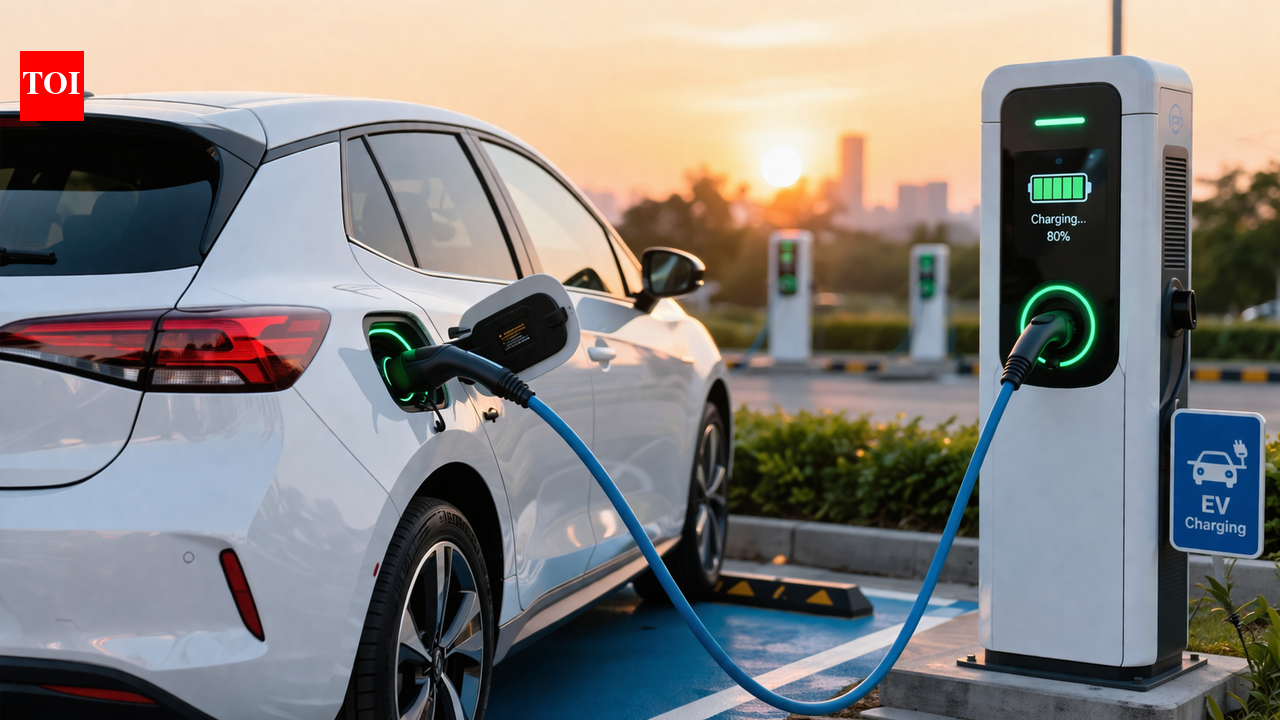
100% road tax waiver for electric cars, new rules for 2, 3 and 4 wheelers – what Delhi govt’s draft EV policy says – The Times of India
-
 Business6 days ago
UK could adopt EU single market rules under new legislation
-
 Business1 week ago
The FAA wants gamers to apply for air traffic control jobs
-

 Fashion6 days ago
Energy emerges as biggest cost driver in textile margins