Business
Digital Personal Loans Stay On Positive Trajectory In H1 FY26: Report
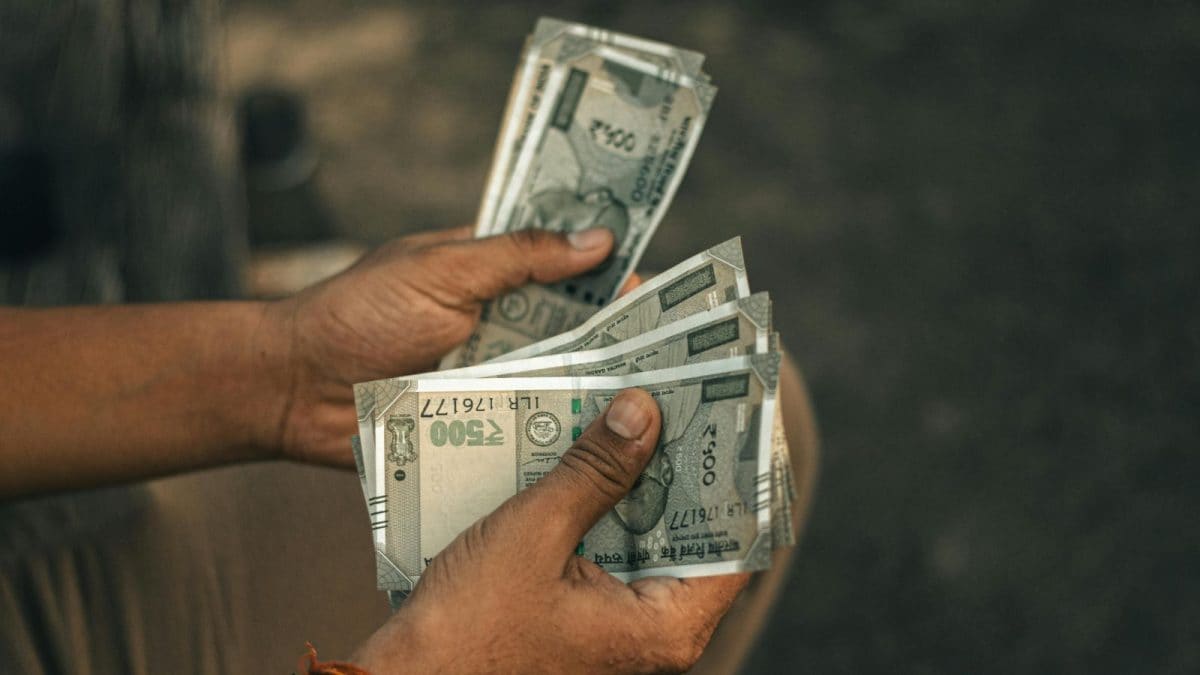
New Delhi: Digital non-banking financial companies (NBFCs) are now central to India’s personal loan market, significantly contributing to the expansion of formal credit, and digital personal loans remain critical to the nation’s credit landscape, a report said on Wednesday.
In the first half of the current financial year (H1 FY26), 6.4 crore digital personal loans, worth Rs 97,381 crore, were sanctioned, making up 80 per cent of all personal loan volumes and 19 per cent of sanction value.
“Meanwhile, the average sanctioned ticket size rose to Rs 15,177, compared to Rs 23,327 in the same period last year (H1 FY24 25),” RBI-recognised self-regulatory organisation, Fintech Association for Consumer Empowerment (FACE) said in its report.
Additionally, sanction volumes grew from 5.9 crore in H1 FY25 to 6.4 crore in H1 FY26, while sanctioned value increased from Rs 78,084 crore to Rs 97,381 crore, signalling stronger demand and improved underwriting quality.
“Ticket size growth indicates a shift toward higher value lending as borrowers build credit history and repayment performance continues to improve,” the report noted. At the same time, outstanding digital personal loan portfolios reached 5.99 crore accounts and Rs 1.28 lakh crore as of September, with portfolio quality improving to 2.1 per cent days past due (dpd) 90 plus.
FACE CEO Sugandh Saxena said: “The FinTech lending ecosystem is operating in sync with the public policy objective of digital financial inclusion for inclusive growth and resilience.” Access to formal, suitable, convenient, and safe digital credit options is critical to support individuals and the country’s consumption and resilience. India’s digital lending market is scaling sustainably on the foundation of customer-protection, prudence, and risk management, Saxena added.
Credit distribution continues to widen, with 60 per cent of sanctioned value from borrowers under 35 years, 17 per cent sanctioned to women, and 53 per cent originating from tier III and beyond, demonstrating sustained expansion of formal credit access into young and emerging segments, the report highlighted.
Business
‘Europe won’t be blackmailed,’ Danish PM says in wake of Trump Greenland threats
ReutersDenmark’s Prime Minister Mette Frederiksen says “Europe won’t be blackmailed” by Donald Trump’s tariff threats over Greenland.
She and other European leaders issued a joint statement on Sunday saying the plan risks a “dangerous downward spiral” with the US.
Early on Monday morning, Trump said, “NATO has been telling Denmark, for 20 years, that “you have to get the Russian threat away from Greenland.” […] Now it is time, and it will be done!!!”
The US president has said he will impose new taxes on eight US allies in February if they oppose his proposed takeover of the autonomous Danish territory.
Trump insists Greenland is critical for US security and has not ruled out taking it by force – a move that has drawn widespread criticism.
In a post on Truth Social in the early hours of Monday morning, Trump said that Nato has been telling Denmark to “get the Russian threat away from Greenland” for 20 years. Denmark, he continued, “has been unable to do anything about it”.
The new tariffs would be imposed on Denmark, Finland, France, Germany, the Netherlands, Norway, Sweden and the UK.
In their joint statement, the eight countries said that “tariff threats undermine transatlantic relations”, reiterating that they “stand in full solidarity with the Kingdom of Denmark and the people of Greenland”.
The countries stressed they are “committed to strengthening Arctic security as a shared transatlantic interest” as members of the Nato military alliance.
“We stand ready to engage in a dialogue based on the principles of sovereignty and territorial integrity that we stand firmly behind,” the statement reads.
Separately, Frederiksen wrote on Facebook: “We want to cooperate and we are not the ones seeking conflict. And I am happy for the consistent messages from the rest of the continent: Europe will not be blackmailed.”
“It is all the more important that we stand firm on the fundamental values that created the European community.”
Meanwhile, UK Prime Minister Sir Keir Starmer said he had had phone calls on Sunday with Frederiksen, as well as European Commission President Ursula von der Leyen and Nato Secretary-General Mark Rutte, before speaking to Trump.
A spokeswoman for Starmer’s office said he had reiterated his position that Greenland’s security was a priority for all Nato members. “He also said that applying tariffs on allies for pursuing the collective security of Nato allies is wrong,” the spokeswoman added.
Trump has threatened to impose a 10% tariff on goods from Denmark, Norway, Sweden, France, Germany, the UK, the Netherlands and Finland, which would come into force on 1 February, but could later rise to 25% – and would last until a deal was reached.
“These Countries, who are playing this very dangerous game, have put a level of risk in play that is not tenable or sustainable,” he wrote, adding: “This is a very dangerous situation for the Safety, Security and Survival of our Planet”.
The US president insists Greenland is critical for US security and has said previously that Washington would get the territory “the easy way” or “the hard way”.
Greenland is a sparsely populated but resource-rich and its location between North America and the Arctic makes it well placed for early warning systems in the event of missile attacks and for monitoring vessels in the region.
US Treasury Secretary Scott Bessent on Sunday told NBC News’ Meet the Press that “Greenland can only be defended if it is part of the US, and it will not need to be defended if it is part of the US”.
“I believe that the Europeans will understand that this is best for Greenland, best for Europe and best for the United States,” he said.
Speaking to BBC Newshour, Norwegian Foreign Minister Espen Barth Eide said mutual respect for sovereignty is the “non-negotiable” core principle of international law and co-operation.
“If we are to live in peace and if we are to be able to co-operate on shared problems, we have to start by the mutual recognition of each others sovereignty and territorial integrity,” she added.
It is still unclear how the tariffs will affect those Trump has already imposed on the UK and EU. French President Emmanuel Macron, who is working to co-ordinate the European response to the tariff threats, said he would request that the EU activate its “anti-coercion instrument” if Trump does impose them.
The US president is due to speak at the World Economic Forum in Davos, Switzerland on Wednesday on the theme “how can we co-operate in a more contested world?” Macron, as well as the leaders of Germany and the EU, will also be attending the annual conference.
Canadian Prime Minister Mark Carney, who will also be there, said his country was “concerned by the recent escalation” and that it would be “significantly increasing Arctic security — strengthening our military and investing in critical infrastructure”.
“Canada strongly believes that the best way to secure the Arctic is by working together within Nato,” he also wrote on X.
Mark Rutte, meanwhile, said he had spoken to Trump “regarding the security situation in Greenland and the Arctic”.
“We will continue working on this, and I look forward to seeing him in Davos later this week,” he added.
EPA/ShutterstockPublic anger in both Denmark and Greenland at Trump’s threats over Greenland appears undiminished. Demonstrations against Trump’s takeover plans were held in Greenland’s capital, Nuuk, on Saturday – before the tariff announcement – as well as in Danish cities.
These rallies coincide with a visit to Copenhagen by a delegation from the US Congress. Its leader, Democratic Senator Chris Coons, described Mr Trump’s rhetoric as “not constructive”.
The island’s representative to the US has said that the last time Greenlanders were asked if they wanted to be part of the US, in January 2025, only 6% were in favour of doing so, while 85% were against.
A recent poll suggests that most Americans also oppose US control of Greenland. A Reuters/Ipsos poll, which was released last Wednesday, indicated just 17% of Americans support the US taking Greenland, compared to 47% who said they opposed Trump’s push to acquire the island.
Business
Top stocks to buy: Stock recommendations for the week starting January 19, 2026 – check list – The Times of India
Stock market recommendations: According to Motilal Oswal Financial Services Ltd, the top stock picks for the week (starting January 19, 2026) are 360 One, and Canara HSBC Life. Let’s take a look:
360 One360 One WAM is a structural growth story given tailwinds from India’s expanding wealth pool, new team onboarding, and synergies from recent acquisitions which underpin long-term growth visibility. It delivered a strong 3QFY26, driven by robust inflows and operating leverage. Operating revenue grew 33% YoY, led by a sharp 45% YoY rise in ARR income, while disciplined cost control reduced the cost-to-income ratio by 320bp YoY to 49.6%, supporting healthy profit growth. PAT grew 20% YoY despite a sharp decline in other income. Growth was fueled by strong net ARR inflows of ₹147b, with record AMC inflows and sustained momentum in wealth management driven by wallet share gains and carry income-led retention improvement. Management remains confident of further CI ratio improvement toward 45–46% as ET Money and HNI businesses move toward breakeven. Management guides for 22–24% AUM growth, translating into 21%/22% revenue/PAT CAGR over FY25-28.Canara HSBC LifeCanara HSBC Life Insurance represents a compelling banca-led compounding story, underpinned by strong distribution moats and significant headroom for efficiency-driven growth. The insurer has consistently outperformed the industry over the past decade by leveraging its deep bancassurance partnerships, led by Canara Bank and complemented by HSBC, which together provide access to a large, sticky, and increasingly segmented customer base.With penetration among Canara Bank customers still very low and branch productivity materially below private-bank peers, incremental gains from better analytics, digital enablement, and branch activation offer a long runway for growth at low acquisition cost. HSBC adds a high-quality layer through affluent, NRI, salary, and corporate customers, supporting superior persistency and value accretion. Alongside this, gradual diversification into agency and other channels improves reach and reduces concentration risk without materially diluting long-term economics. A favorable shift in product mix toward non-par and protection, improving operating efficiency, and rising scale are driving steady expansion in value creation metrics, positioning Canara HSBC Life as a structurally improving, capital-efficient life insurer with sustained growth visibility and strong return potential over the medium term.(Disclaimer: Recommendations and views on the stock market, other asset classes or personal finance management tips given by experts are their own. These opinions do not represent the views of The Times of India)
Business
China hits 2025 economic growth target as exports boom
China’s economy grew by 5% last year, as record exports helped the world’s second largest economy meet its annual target.
Beijing had set a goal of “around 5%” economic growth in 2025, despite struggles to boost domestic spending and a prolonged property crisis.
China reported the world’s largest-ever trade surplus last week – the value of goods and services sold overseas compared to its imports – of $1.19tn (£890bn), driven by a rise in exports to markets outside the US, as President Donald Trump continued his tariffs policy.
But official figures released on Monday also showed that China’s economic growth slowed to a rate of 4.5% in the final three months of 2025 compared to a year earlier.
As well as China’s exporters moving away from the American market, China’s economic resilience was helped by lower-than-expected US tariffs after Beijing and Washington agreed a tariffs pause.
While China’s manufacturers continued to boost exports, the country is grappling with a number of issues in its domestic economy.
The country has been struggling with an ongoing property crisis and rising local government debt, which has made businesses more hesitant to invest and consumers cautious about spending.
Other new data on Monday showed that new home prices continued to fall in December, as the government struggled to stabilise the property market. Prices dropped 2.7% last month compared to a year earlier, the sharpest decline in five months. Property investment also fell 17.2% last year.
At the same time retail sales rose by just 0.9% in December, the slowest rate in three years.
But the country’s factory output increased by 5.2% in December from a year earlier, beating the 4.8% growth in November.
China’s leaders have pledged “proactive” policies this year as they look to increase domestic spending and shift reliance away from exports and investments.
-
Tech6 days agoNew Proposed Legislation Would Let Self-Driving Cars Operate in New York State
-
Sports1 week agoClock is ticking for Frank at Spurs, with dwindling evidence he deserves extra time
-
Entertainment6 days agoX (formerly Twitter) recovers after brief global outage affects thousands
-
Fashion1 week agoSouth India cotton yarn gains but market unease over US tariff fears
-
Fashion1 week agoChina’s central bank conducts $157-bn outright reverse repo operation
-
Sports1 week agoUS figure skating power couple makes history with record breaking seventh national championship
-
Sports4 days agoPak-Australia T20 series tickets sale to begin tomorrow – SUCH TV
-
Business1 week agoModern seafood processing zone planned at Korangi harbour | The Express Tribune