

Business
Disney raises prices for streaming packages


Thomas Fuller | Lightrocket | Getty Images
Disney on Tuesday unveiled price increases for its streaming subscription packages beginning Oct. 21.
The stand-alone Disney+ ad-supported plan will see a $2 increase to $11.99 per month, while the premium no-ads plan will jump $3 to $18.99 per month or get a $30 annual hike to $189.99 per year.
The Disney+ and Hulu ad-supported package will increase by $2 per month, and both of the bundles with Disney+, Hulu and ESPN will see a $3 monthly increase. The packages with Disney+, Hulu and HBO Max will also both increase by $3 per month.
The NFL+ plans will remain at the same pricing.
The company previously alluded to the price increases on its third-quarter earnings call, adding that it expects a modest increase in Disney+ subscribers in its fourth fiscal quarter. Disney last raised prices for its packages in October 2024, with most plans increasing by $1 to $2.
The price hikes come as the entertainment company has faced intense scrutiny for its handling of “Jimmy Kimmel Live!” after Disney subsidiary ABC pulled the show off air last week over the host’s controversial comments about the alleged killer of conservative activist Charlie Kirk.
The company announced nearly a week later that the show would return to air on Tuesday, after viewers and late-show hosts criticized Disney for its actions.
In the interim, some fans took to social media to announce they were canceling their Disney+ subscriptions in solidarity with Kimmel.
Disney did not immediately respond to CNBC’s request for comment on the price changes.




Panic selling returned to the Pakistan Stock Exchange (PSX) on Thursday as President Donald Trump said the United States would continue to attack Iran, with the benchmark KSE-100 Index sinking by about 5,500 points during the opening minutes of business.
At 9:35am, the benchmark index was hovering at 150,022, down by 5,489 points or 3.45%.
However, by 11:00 the equities recovered some losses and the index was trading at 151,621.26 points down by 3,890.30 or 2.57 percent.
Experts opined that the jubilation of yesterday’s market halt has been completely wiped out as the ‘ceasefire rally’ crashed into a harsh geopolitical reality.
Offloading was observed in key sectors, including automobile assemblers, cement, commercial banks, oil and gas exploration companies, OMCs and power generation.
Index-heavy stocks, including MARI, OGDC, POL, PPL, MCB, MEBL, NBP and UBL, traded in the red.
On Wednesday, the PSX had staged a powerful rally with the benchmark KSE-100 Index surging past the key psychological barrier of 150,000 points as improving investor sentiment.
The KSE-100 Index closed at 155,511.57 points, registering a sharp gain of 6,768.25 points or 4.55%.
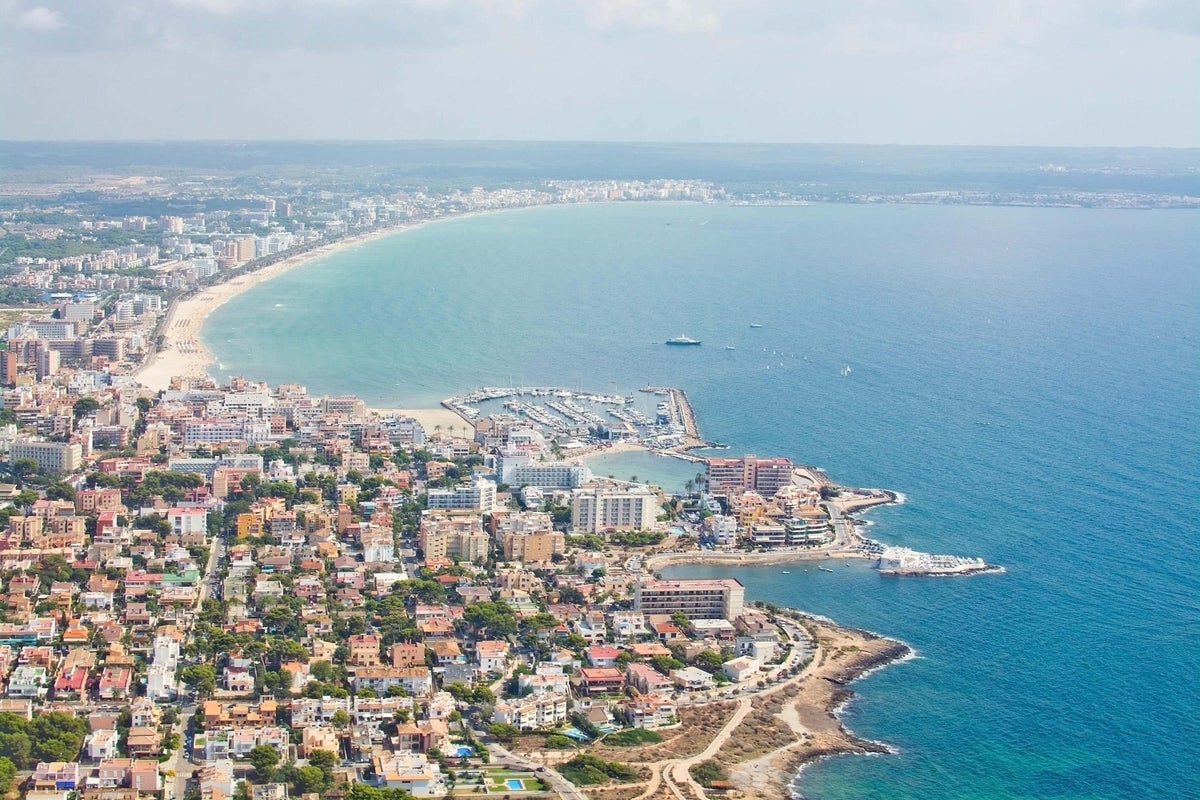
Travel agent Lastminute.com said war in the Middle East has impacted some 17,000 bookings, while holidaymakers are shifting towards alternative destinations like the Canary Islands and Sardinia.
The website, which offers holiday packages to destinations including Dubai and Abu Dhabi, said it was having to “adapt quickly” to travellers changing their preferences in light of the conflict.
The US-Israeli war with Iran, which escalated at the end of February, led to disruption and cancellations of some flights to Gulf states including the United Arab Emirates, Saudi Arabia and Qatar.
The airspace closures, coupled with consumer sentiment when it comes to travel taking a hit, affected approximately 17,000 bookings, Lastminute revealed.
It said the total volume of affected travel around the region is currently the equivalent of about a day and a half of its normal daily operations.
Despite the conflict influencing where and when people choose to book trips, the “overall intent to travel remains high”, according to Lastminute.
Consumers have been seeking reassurance and flexibility, and early booking patters indicate a shift in the preferences of travellers.
It noted increased demand toward alternative destinations such as Spanish archipelagos the Canary and Balearic Islands, Italian islands Sicily and Sardinia, and other European city breaks.
Lastminute’s chief executive Alessandro Petazzi said: “We continue to closely monitor the evolving situation in the Middle East, with supporting our customers remaining our top priority.
“At the same time, Lastminute.com’s flexible, pan-European model enables us to adapt quickly as travel patterns evolve, with demand naturally rebalancing across destinations.”
The Netherlands-based company reported a 15% jump in revenues to 361 million euro (£315 million) for the 2025 financial year, compared with the year before.
Adjusted earnings before tax and other costs increased by a third to 55 million euro (48 million).
The company said it was remaining “vigilant” against the geopolitical situation in the Middle East, but added that it was sticking to forecasts of a roughly 10% increase in revenues and profits in the year ahead.
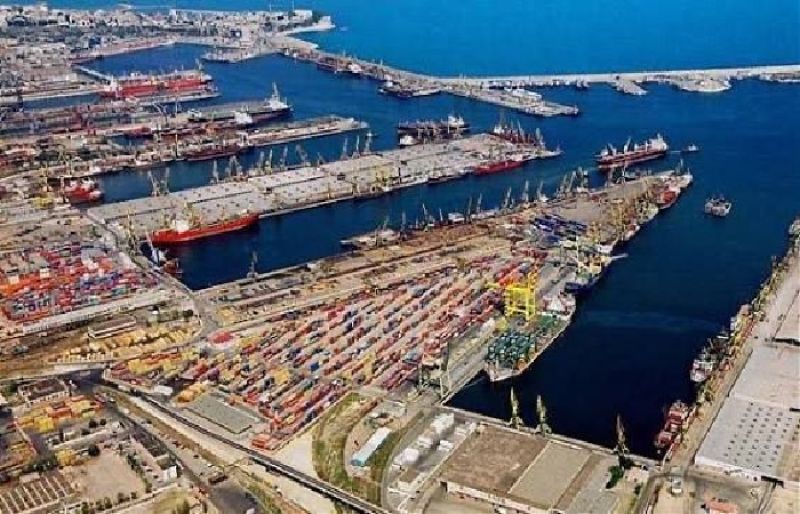
Islamabad: Pakistan and Romania have taken a significant step toward strengthening bilateral economic ties by signing a Memorandum of Understanding on port cooperation.
The agreement was signed between the National Company “Maritime Ports Administration” S.A. Constanța and the Karachi Port Trust during a virtual ceremony.
The MoU was formalized by Mihai Teodorescu, General Manager of Constanța Port Administration, and Rear Admiral Shahid Ahmed, Chairman of Karachi Port Trust.
Senior officials from the Ministries of Foreign Affairs and Transport of both countries attended the ceremony, along with ambassadors Dan Stoenescu and Ilyas Mehmood Nizami. Representatives from the Pakistan-Romania Business Council were also present.
The agreement aims to enhance maritime connectivity between Karachi Port and the Port of Constanța on the Black Sea, facilitating smoother trade flows between South Asia and Europe.
It is expected to support Pakistan’s maritime sector and blue economy while strengthening Romania’s position as a key logistical gateway to the European Union.
Constanța Port, one of the largest ports on the Black Sea, provides strategic access to Central and Western Europe via the Danube corridor.
This route enables efficient transport of goods to major European hubs, offering a cost-effective and sustainable logistics solution.
Officials say improved connectivity between the two ports will open new avenues for bilateral trade. Romanian exports—including machinery, industrial equipment, chemicals, and agricultural products—are likely to gain better access to Pakistani and regional markets.
At the same time, Pakistani exports will benefit from more efficient entry points into Europe.
The agreement also establishes a framework for cooperation in port management, training, and exchange of expertise, including the formation of a joint working group.
Romanian Ambassador Dan Stoenescu emphasized that the initiative will help expand Romania’s economic footprint in Asia and contribute to balanced trade growth. He noted that enhanced maritime links will play a vital role in strengthening regional integration and promoting shared prosperity.
Maritime trade remains central to the European Union’s economy, with more than 75 percent of its external trade conducted by sea.
In this context, stronger Pakistan-Romania maritime ties are expected to boost trade under the EU’s GSP+ scheme, supporting economic development and deeper integration into global value chains.


India-Bangladesh textile trade reset: 5 shocks to watch now

Pakistan Selects Davis Cup Juniors Team for Kazakhstan Event – SUCH TV

Cardinals’ Masyn Winn involved in car crash after delivering game-winning hit vs Mets

-

 Politics1 week ago
Afghanistan announces release of detained US citizen
-
 Business1 week ago
Property Play: Home flippers see smallest profits since the Great Recession, real estate data firm says
-

 Fashion1 week ago
Ho Chi Minh City bizs adjust production plans, seek new supply chains
-
 Business1 week ago
More women are entering wealth management, but few are in advisory roles, study finds
-
 Business1 week ago
Centre plans to cut broken rice share in PDS, boost ethanol feedstock supply – The Times of India
-

 Fashion1 week ago
India’s Gen Z to drive half of fashion market by 2030: Reedseer
-
 Business6 days ago
How do you spot a fake online review?
-
 Business1 week ago
Co-op boss quits after ‘toxic culture’ claims reported by BBC