

Politics
Does Gaza deal mean the two-year-old war is over?

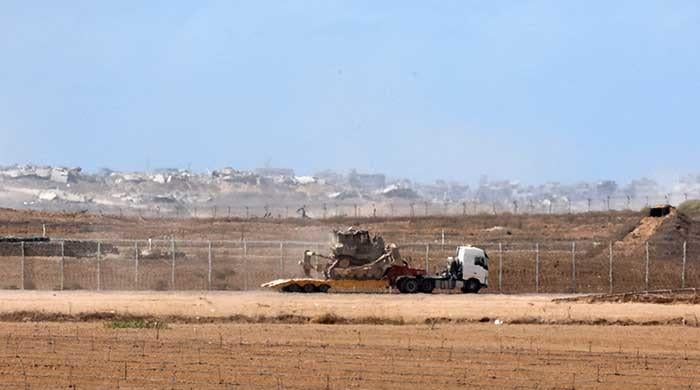
US President Donald Trump says the deal agreed between Israel and Hamas marks the first steps toward a “strong, durable, and everlasting peace” that will end the two-year-old Gaza war.
Yet, the agreement signed after indirect talks in the Egyptian resort of Sharm el-Sheikh, a favoured location for Middle East peace conferences over the decades with a patchy record of success, is only an initial phase involving a ceasefire, a handover of hostages held in Gaza in exchange for Palestinian prisoners inside Israel, and a partial withdrawal of Israel from the enclave.
Plenty of pitfalls remain after negotiators left for later discussions about some of the thornier issues on which previous initiatives have foundered, such as the full extent of an Israeli withdrawal, the disarmament of Hamas, how to guarantee that war will not resume after this phase — and who could provide such a guarantee.
Have the guns fallen silent?
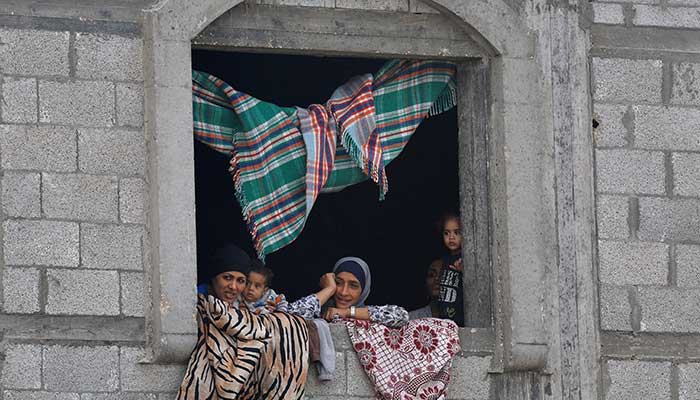
Not yet. Trump demanded Israel halt its bombing when Hamas first indicated partial acceptance of his 20-point plan on Friday. That has not happened. Scores of Palestinians have been killed since then in airstrikes and shelling, particularly in and around Gaza City, the focus of a recent Israeli offensive.
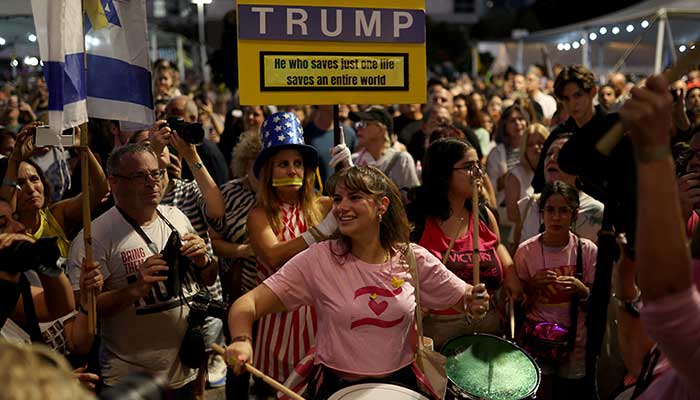
However, the bombardment has been more sporadic since Trump declared a deal had been secured on Wednesday, prompting celebrations in Israel, where families of hostages were jubilant in Tel Aviv’s hostages square, and in Gaza, where people gathered among the ruins even as blasts could be heard.
How does this differ from ceasefires that collapsed?
While this is a partial deal, a notable difference from previous ceasefire arrangements is that there is no deadline for reaching a full deal. It does not set a deadline of a few weeks, after which hostilities could resume if talks falter.
The jury is still out on whether that makes this deal more durable. There are those among Prime Minister Benjamin Netanyahu’s religious nationalist coalition who are already talking of more war. Finance Minister Bezalel Smotrich, a staunch opponent of any concession to Palestinians, has called for Hamas to be destroyed after the captives are returned.
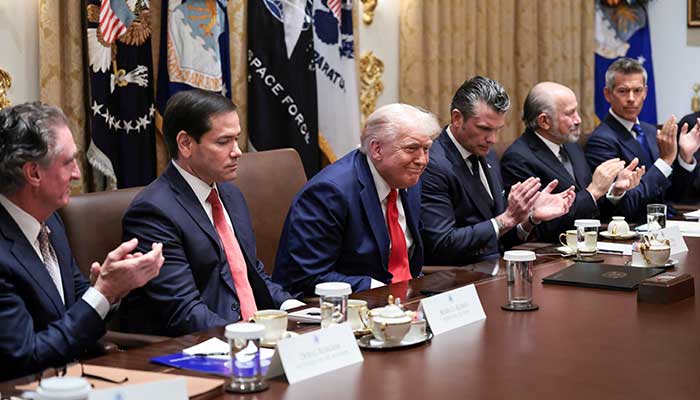
But on this occasion, Trump has been far more vocal in his determination to hold feet to the fire on both sides, leaving less room for Israel to relaunch its offensive or Hamas to delay, even if past experience counsels caution over too much optimism.
Trump announced his plan, standing next to Netanyahu in Washington last week, with what seemed a “take-it-or-leave-it” offer for Hamas.
Yet when Hamas gave only a partial acceptance, Trump immediately demanded Israel stop bombing. And as the days ticked by in the Sharm el-Sheikh talks, he warned Hamas, “all HELL, like no one has ever seen before, will break out” if it did not sign up.
By stamping his authority, Trump may have gone some way to answering the key question of who will guarantee this deal does not collapse at the next hurdle.
So what happens next?
The timeline is emerging but still seems fluid.
Israeli Prime Minister Benjamin Netanyahu’s office said the ceasefire would take effect once the agreement is ratified by his government, which would convene after a security cabinet meeting on Thursday.
An Israeli government spokeswoman said a ceasefire would go into force within 24 hours of the cabinet meeting. After that 24-hour period, the hostages held in Gaza will be freed within 72 hours, she said.
A source briefed on details of the agreement said earlier that Israeli troops would begin pulling back within 24 hours of the deal being signed.
Humanitarian aid to Palestinians should then start to flow. Calling for full access for humanitarian workers in Gaza, UN Secretary-General Antonio Guterres said the United Nations was ready to help and “prepared to move — now.”
Trump’s plan also calls for an international stabilisation force, which could start taking shape after a meeting of European ministers and top officials from Arab states in Paris on Thursday.
They were also due to discuss issues such as future governance of Gaza, aid, reconstruction and demilitarisation.
Israeli President Isaac Herzog’s office said Trump was expected to be in Jerusalem on Sunday.
What are the political calculations facing Hamas and Israel?
Both Israel and Hamas have shown a readiness to respond positively to pressure from Trump and others, but each side faces its own political calculations.
For Netanyahu, agreeing to the plan seems based on a calculation that he can stay on the right side of the United States, Israel’s vital ally, and win over an Israeli public desperate to see an end to the war, while conceding as little as possible to avoid alienating his religious nationalist coalition partners.
The 20-point plan, for example, offers a possible pathway, albeit highly conditional, to a Palestinian state, although Netanyahu has said that it will never happen.
Hamas has dropped its opposition to any deal that was only partial because of the risk of war resuming once hostages were handed over. It has also signed up to a deal calling for demilitarisation, which it had repeatedly rejected.
Hamas may be calculating that Trump’s determination is the best guarantee that war will not resume for now, while the talks in Sharm el-Sheikh have put the resistance group at the negotiating table to shape the future for Palestinians, even though the deal seeks to sideline it.
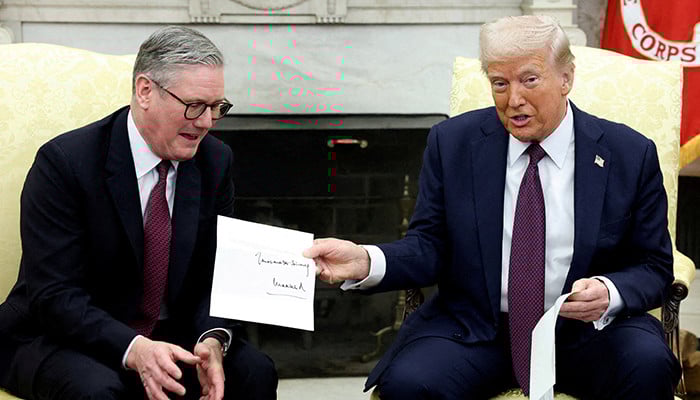
Britain’s government is set to announce legislation next month to move the country closer to the European Union, as the Iran war sours the UK’s so-called special relationship with the United States.
President Donald Trump’s unpredictability and stream of insults towards America’s historic ally is adding impetus to Prime Minister Keir Starmer’s bid to deepen ties with the 27-nation bloc, a decade after Britons narrowly voted to leave the EU.
“We have a government that is already eager to move closer towards the EU, and the events in Iran provide an opportunity to speed up that process,” Evie Aspinall, director of the British Foreign Policy Group think-tank, told AFP.
Starmer’s administration is preparing an EU “reset” bill that will give ministers powers to align UK standards with EU single market rules as they evolve — something called “dynamic alignment”.
King Charles III will announce the legislation on May 13 when he reads out Starmer’s legislative plans for the coming months, a government official told AFP on condition of anonymity.
Starmer has repeatedly called for a deeper economic and security relationship with Europe since his Labour party won the 2024 general election, ousting the Conservatives, who had implemented the 2016 Brexit referendum.
He has upped those calls in recent days, telling Dutch leader Rob Jetten on Tuesday that “he believed the partnership between the UK and the bloc needed to be fit for the challenges we were facing today”.
The EU is Britain’s biggest trading partner, while the International Monetary Fund warned this week that the UK will be the advanced economy hardest hit by the Iran conflict.
“Certainly Iran has made it [the reset] more prescient,” said the UK official.
“We need to build economic resilience across the continent,” they added.
Starmer refused to involve Britain in the US and Israel’s initial strikes on February 28, angering Trump, although he has since allowed American forces to use UK bases for a “limited defensive purpose”.
Under pressure at home for his disastrous decision to appoint former Jeffrey Epstein associate Peter Mandelson as ambassador to Washington, Starmer has received plaudits for standing up to Trump in the face of repeated taunts from the US president.
Days ago, Trump threatened in a phone interview with Sky News to scrap a US-UK trade deal that limited the impact on Britain of his tariffs blitz.
“There’s no doubt that there is now momentum in the UK-EU relationship partly as a result of Trump’s unreliable behaviour,” David Henig, an expert on UK’s post-Brexit trade policy, told AFP.
“Independent UK trade policy looks much harder, the prospects of working with the EU much brighter.”
Brexit regret
Starmer’s administration hopes to table the EU legislation in the next few months, meaning it could come around the time of the 10th anniversary of the Brexit referendum, held in June 2016.
MPs will get to approve whether to provide the government with a mechanism to adopt EU rules — sometimes without a full parliamentary vote — in areas where it has already signed deals with the bloc.
They include a trade agreement designed to ease red tape on food and plant exports and plans for an electricity deal that would integrate the UK into the EU’s internal electricity market.
Britain and the EU are also aiming to finalise negotiations on a youth mobility scheme in time for a joint summit in Brussels expected in late June or early July.
Starmer has ruled out rejoining the single market or returning to free movement.
The Liberal Democrats, Britain´s traditional third party, wants him to cross one of his other red lines by negotiating a customs union with the EU.
“We need to be doubling down on relations with reliable partners who share our interests and values,” the Liberal Democrats foreign affairs spokesman Calum Miller told AFP.
But Brexit remains a toxic issue and the hard-right Reform UK party, leading opinion polls and headed by Eurosceptic firebrand Nigel Farage, have branded the legislation “a betrayal” of the referendum’s narrow result.
Surveys regularly now show, however, that most Britons regret the vote to leave the EU, something Starmer hopes to capitalise on.
Rising cost-of-living pressures on family households, which UK finance minister Rachel Reeves has blamed on Trump for starting the war “without a clear exit plan”, could also influence minds.
“When the relationship with the United States is fracturing, it means there’s reduced opposition to a closer relationship with the EU among the public,” said Aspinall.
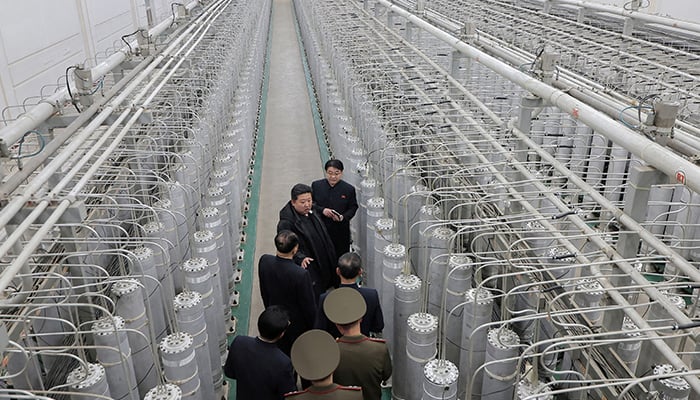
- North boosts military capabilities amid Iran war, say experts.
- Ballistic missiles flew 140 km in 4th launch this month.
- Trump visiting Asia in May, interested in meeting Kim Jong Un.
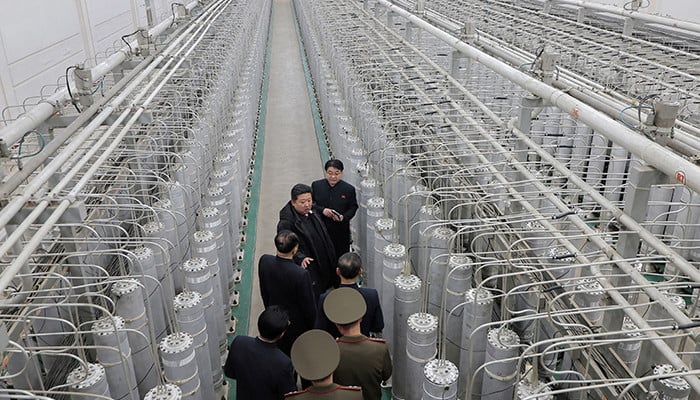
North Korea fired ballistic missiles into the sea on Sunday, accelerating its missile launches amid Iran war tensions and talk of possible meetings with the US and South Korea.
Pyongyang’s intense missile activity — this was the fourth such launch this month and the seventh of the year — is meant to display its self-defence capabilities while gaining international leverage, some experts said.
“The missile launches may be a way of showing that — unlike Iran — we have self-defence capabilities,” said South Korean former presidential security adviser Kim Ki-jung.
“The North also appears to be exerting pressure preemptively and make a show of force before engaging in dialogue with the United States and South Korea,” he said.
Iran war, Trump visit loom over launches
The seven-week-old US-Israeli war against Iran, which has as one aim the curbing of Tehran’s nuclear programme, could reinforce Pyongyang’s nuclear ambitions, experts and former South Korean officials say.
US President Donald Trump, preparing for a summit in China next month, and South Korean President Lee Jae Myung have repeatedly expressed interest in holding talks with North Korean leader Kim Jong Un. There are no publicly known plans for any meetings.
Lee recently conveyed regret to the North for drone incursions from the South, receiving rare praise from Pyongyang.
Sunday’s missiles were fired from near the city of Sinpo on North Korea’s east coast toward the sea around 6:10am local time and flew about 140 km (90 miles), South Korea’s military said in a statement.
Japan’s government posted on social media that the missiles were believed to have fallen near the east coast of the Korean Peninsula, and no incursion into Japan’s exclusive economic zone had been confirmed.
South Korea’s presidential Blue House convened an emergency security meeting, calling the launches a provocation that violated UN Security Council resolutions, according to media reports. It urged Pyongyang to “stop the provocative acts”.
It was not clear what kind of ballistic missiles were fired, but Sinpo has submarines and equipment for test-firing submarine-launched ballistic missiles. The North last fired a ballistic missile from a submarine in May 2022, and it flew as far as 600 km (370 miles).
North Korea has made “very serious” advances in its ability to turn out nuclear weapons, with the probable addition of a new uranium enrichment facility, International Atomic Energy Agency chief Rafael Grossi said on Wednesday.
In late March, North Korean leader Kim said Pyongyang’s status as a nuclear-armed state was irreversible and expanding a “self-defensive nuclear deterrent” was essential to national security.
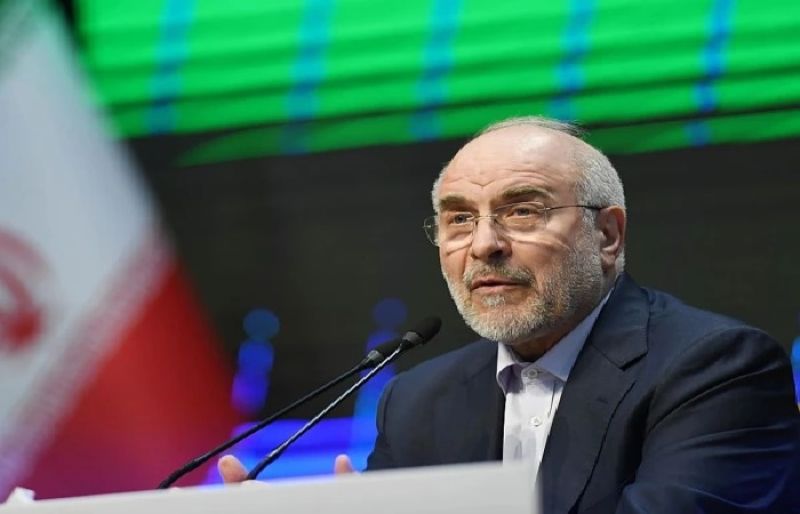
Qalibaf made the remarks in a television interview aired on Saturday night.
“We fought an asymmetric war in such a way that we pushed back the enemy,” he said.
According to the top lawmaker and lead negotiator, the enemy’s shortcomings were not in resources but in strategy.
“The enemy had money and resources, but they did not act correctly in terms of design,” Qalibaf stated. “They make strategic errors. They miscalculate regarding our people, just as they miscalculate in their own military design.”
Qalibaf said the US possesses superior military power, experience, and resources, but the Islamic Republic of Iran emerged as the victor in the recent war by fighting an asymmetric war and pushing back the enemy through meticulous planning and preparation.
“We are not stronger than the United States in military power,” he said. “It is clear that they have more money, equipment, and resources, and because they have committed so much aggression around the world, their experience is also greater than ours.”
He, however, emphasized that material advantages do not guarantee victory.
“Certainly, equipment, resources, and money are effective in war and victory, but it is not always the case,” Qalibaf noted.
He attributed Iran’s success to strategic ingenuity. “We fought an asymmetric war in such a way that we pushed back the enemy through our own planning and preparation,” he said.
“The enemy had money and resources, but they did not act correctly in terms of design.”
He also slammed the Trump administration for putting ‘Israel First’ before ‘America First’.
“The US government claims that ‘America First’ matters to it, but in practice, it has shown that Israel comes first for it, because it makes decisions based on Israel’s false information.”
He asserted that Iran accepted the ceasefire because the US accepted its demands.
“Consolidating the rights of the nation must be our main goal. And rest assured, there will be no capitulation in the field of diplomacy,” Qalibaf said.
He said that when the enemy could not impose its demands on the Iranian nation through military power, could not influence us with its ultimatums, and saw that the Iranian armed forces were standing firm on the battlefield, it sent messages through various countries.
“Of course, today we are standing even firmer than the day before the ceasefire was established,” Qalibaf said.
Ready to respond to any aggression
Qalibaf said Iran remains firmly positioned on the battlefield and stands ready to respond the moment the enemy makes any mistake, emphasizing that the armed forces are fully prepared even as diplomatic negotiations continue.
He outlined Iran’s dual-track approach of military readiness and diplomatic engagement.
“As long as we pursued matters on the battlefield and militarily, we stood firm, and today we stand firm as well,” he said. “The moment the enemy makes a mistake, we are ready.”
The parliament speaker and lead negotiator stressed that Tehran has no trust in its adversaries, warning that Iran’s response will be swift to any act of enemy aggression.
“Because we have no trust in the enemy,” Qalibaf stated. “Even at this very moment, as we sit here, war could break out. The armed forces are fully prepared on the ground.”
He dismissed any suggestion that ongoing negotiations might lead to complacency regarding the matters of national defense.
“It is not the case that we think just because we are negotiating, the armed forces are not ready,” he said. “Rather, just as the people are in the streets, our armed forces are also ready.”
Qalibaf emphasized that for him, there is no difference between the battlefield and the negotiation table, and he is ready to give his life “to secure the rights of the people.”
Warning over Strait of Hormuz escalation
Iran’s parliament speaker, Mohammad Baqer Qalibaf, in remarks on Saturday, said he personally warned a US delegation in Islamabad against escalation in the Strait of Hormuz.
In a television interview, Qalibaf said he warned the US delegation that had come to the Pakistani capital for ceasefire talks that Iranian forces would open fire at minesweepers if they moved “an inch” from their position in the strategic waterway.
The top Iranian lawmaker and lead negotiator laid out a detailed account of the confrontation between the Iranian naval forces and the US military in the Strait of Hormuz, asserting that the Islamic Republic has full control over the vital waterway and has already pushed the United States into a retreat.
“I told the American delegation that if their minesweeper moved even a fraction from its position, we would definitely fire at it,” he said, adding that the US delegation asked for 15 minutes to relay the order to turn back.
Qalibaf added that the Islamic Revolution Guards Corps (IRGC) Navy decisively foiled an attempt to conduct minesweeping operations, which violated the ceasefire.
“We advanced to the point of confrontation, but the enemy retreated,” he noted.
Iran’s parliament speaker, who led the Iranian delegation for talks with the US delegation in Islamabad last week, said the Strait of Hormuz is under the control of the Islamic Republic.
He also dismissed the Trump administration’s recent move of a “naval blockade” in the Strait of Hormuz as “a clumsy decision born of ignorance.”
Qalibaf issued a warning regarding global energy transit through the strait, a chokepoint through which about 20% of the world’s oil passes.
“It is impossible for others to pass through the Strait of Hormuz but not us. If the US does not abandon the blockade, traffic in the Strait of Hormuz will certainly be restricted,” he said.
“If any traffic is taking place in the strait today, control of the strait is in our hands.”
A Press TV investigation on April 12 had revealed that the US military’s attempt to sail two destroyers through the Strait of Hormuz ended as a failed propaganda stunt timed to coincide with the talks in Islamabad.
Based on information provided by military-security sources, the report revealed that the US Navy destroyers came within minutes of complete destruction after attempting a high-risk passage through the Strait of Hormuz – a failed propaganda operation that was aimed at influencing the Iran-US talks in the Pakistani capital.
Both Arleigh Burke-class destroyers had attempted to transit the strategic waterway but were intercepted and forced to retreat by Iranian naval forces.
Press TV’s investigation found the American attempt to be an extremely high-risk move that could have easily turned into a disaster for the United States and its military.
The destroyers were only minutes away from complete destruction after Iranian cruise missiles locked onto the vessels and attack drones were deployed.
The investigation further revealed that by spoofing their identity, the destroyers sought to present themselves as commercial vessels belonging to Oman, purportedly engaged in coastal transit in the southern part of the Sea of Oman.
However, the IRGC naval forces, while patrolling around Fujairah, had already detected the deception and taken swift action.
Leadership proves its strength, resilience
In other remarks, Qalibaf said the country’s political and military structure proved its strength and resilience following the martyrdom of the Leader of the Islamic Revolution and top-ranking commanders, noting that the Iranian people themselves rose to fill the void.
He also spoke about American duplicity during negotiations twice in the past year, referring to the war in June of last year and the conflict in late February of this year.
Qalibaf contrasted Iran’s response time between the earlier war and the most recent one.
“In the first war, we had a delay of 14 to 15 hours in responding and attacking. But in this war, despite the martyrdom of the commander-in-chief, the chief of general staff, and the IRGC commander, which could have caused disruption, we saw that the reaction took place in the shortest possible time,” he said, attributing the speed to the “strong structure.”
Invoking the legacy of Imam Khomeini, the founder of the Islamic Republic, and Ayatollah Seyyed Ali Khamenei, the martyred Leader of the Islamic Revolution, Qalibaf said they believed the revolution does not rely on individuals but on institutions.
Air defenses at their peak
Qalibaf said Iranian air defense forces successfully struck approximately 180 drones in the recent war—a capability that did not exist during the previous conflict—and asserted that the strike on a US F-35 fighter jet sent a clear message to the enemy.
The Parliament Speaker highlighted significant technical advances in Iran’s air defense systems, especially following the 12-day war in June of last year.
He addressed a specific incident involving a US F-35 fighter jet, framing it as evidence of Iran’s growing technical sophistication. “Hitting an F-35 is not a coincidence; it is an operation involving various technical and design dimensions,” he said.
According to the speaker, the proximity of the missile explosion to the aircraft served as a deterrent signal. “The missile that exploded near the F-35 made the enemy understand what capabilities we possess and in which direction we are moving,” Qalibaf added.
He also commended the people for taking to the streets daily in a show of solidarity with the country’s armed forces.
“Today, our people are more steadfast than in the previous war. They have now been on the streets every day for nearly 50 nights,” he said, referring to the nightly gatherings.
“We achieved good success on the battlefield, and people in the streets were partners in that. For the consolidation of this success, people present in the streets are also very effective.”


NFL star George Kittle intercepts NBA player Tyrese Haliburton’s beer WrestleMania 42

Cole Sprouse reacts to brother Dylan confronting house intruder

2026 NFL draft: Louis Riddick’s favorite prospects, sleepers

The case for Man United’s Fernandes as Premier League’s best

Palace left in shock as Prince William cancels grand ceremony

100% road tax waiver for electric cars, new rules for 2, 3 and 4 wheelers – what Delhi govt’s draft EV policy says – The Times of India

-
 Entertainment6 days ago
Palace left in shock as Prince William cancels grand ceremony
-
 Sports6 days ago
The case for Man United’s Fernandes as Premier League’s best
-
Business1 week ago
100% road tax waiver for electric cars, new rules for 2, 3 and 4 wheelers – what Delhi govt’s draft EV policy says – The Times of India
-

 Entertainment1 week ago
Dua Lipa hits major career high ahead of wedding with Callum Turner
-
 Business6 days ago
UK could adopt EU single market rules under new legislation
-
 Business1 week ago
The FAA wants gamers to apply for air traffic control jobs
-

 Sports1 week ago
Lamar Jackson hits back at critics with faithful message on social media
-

 Fashion6 days ago
Energy emerges as biggest cost driver in textile margins