

Business
Does Higher Income Guarantee Faster Wealth? Can You Actually Build Money Faster By Moving To UAE? CA Explains Math


New Delhi: For many middle-class families in India, a particular notion crosses their minds every few months. If people who relocate to the UAE earn more money and if location is a key factor in wealth creation. Chartered Accountant and financial advisor Nitin Kaushik recently sparked a detailed discussion on X by breaking down the actual numbers behind this notion. At the core of his post is a compelling idea that wealth is not created by crossing borders but by crossing comfort zones. Kaushik says that no destination creates wealth and only financial behavior does so.
Kaushik explains how residents working in the UAE often highlight two genuine financial advantages. The first is a lower personal income tax which increases take-home pay. In India, a Rs 2 lakh salary taxed locally may leave Rs 1.55 to 1.6 lakh in hand whereas similar earnings abroad may result in nearly complete take-home. This is due to lower personal income tax abroad. The second factor is a larger monthly savings rate. Many people save between Rs 80,000 and Rs 1.5 lakh per month by sharing accommodation and reducing expenditure. “Same markets. Same funds. Different speeds of wealth creation,” Kaushik wrote.
In the following thread, Kaushik explains in detail how geography has little bearing on wealth creation and how savings discipline does all the magic. He claims that while earning Rs 2 to 3 lakh domestically, several professionals save less than Rs 30,000 per month due to lifestyle inflation, large EMIs and premium living costs. Building Rs 1 crore at this pace will take 15 to 18 years even with strong market returns. “The contrast is not country-based and it is cash-flow based,” Kaushik said.
Kaushik claims that increased income does not ensure faster wealth. A Rs 3 lakh earner saving Rs 1 lakh builds wealth more quickly than a Rs 5 lakh earner saving Rs 40,000. What matters is the investable surplus and not the salary figure, he said.
“Is wealth really about where you work – or what you do with what you earn?”
Every few months this thought pops up in thousands of middle-class homes:
“People who go to UAE build money faster_
Is location the secret?”The truth is more layered than that – and it deserves an_ pic.twitter.com/50uByLnd8h
— CA Nitin Kaushik (FCA) | LLB (@Finance_Bareek) December 23, 2025
According to Kaushik, when expenditure is smaller than income then investing happens almost automatically. The same financial outcome can be achieved at home with modest lifestyle control, aggressive monthly SIPs, consistency across market cycles and zero dependency on “windfall thinking”.
Kaushik said that the real wealth calculation does not consider geography. Income minus expenses becomes investable capital and investable capital multiplied by time becomes net worth. “Change any one variable and the future changes,” the CA wrote.
Kaushik said, “Wealth is not built by crossing borders. It is built by crossing comfort zones. Whether earnings come from here, there or anywhere what changes lives is the habit of paying the future first.”
According to Kaushik, moving abroad may increase savings capacity but discipline alone converts earnings into freedom. In Kaushik’s words, “No destination creates wealth. Only financial behavior does.”





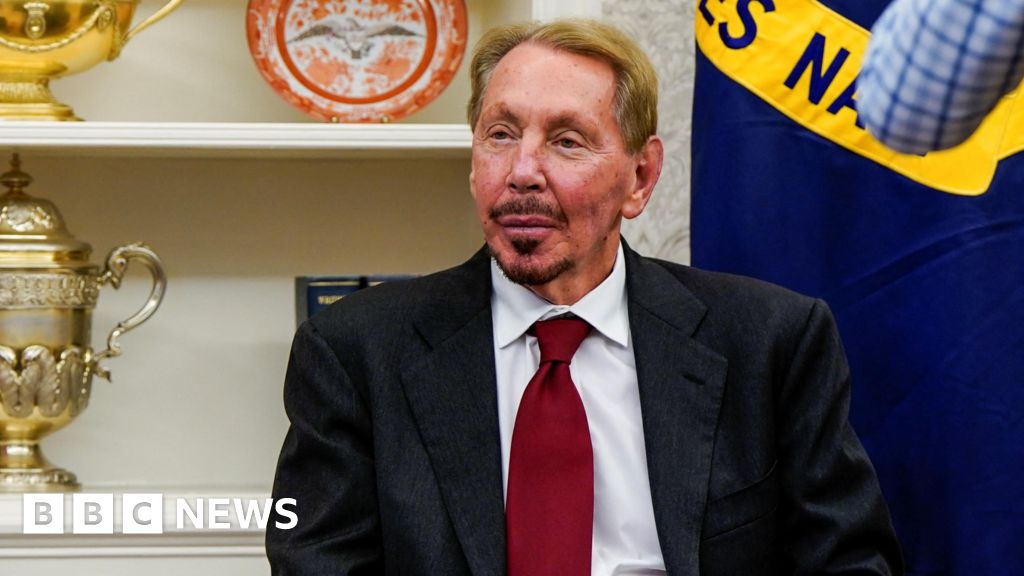
It is thought that thousands of people may have lost their jobs at Oracle, one of the world’s largest tech companies.
Source link

The US-Israel Iran war has halted almost all traffic in a key waterway and the price Brent crude has surged.
Source link

Crunch talks between resident doctors and the Government are set to continue in a bid to avert strike action.
Sir Keir Starmer has given the resident doctors committee of the British Medical Association (BMA) a deadline to reconsider a deal on pay and jobs which includes an offer of thousands of extra NHS training posts.
It is understood the proposal will be removed from the deal if resident doctors in England press ahead with a six-day strike from April 7 in a row over jobs and pay.
Dr Jack Fletcher, chairman of the resident doctors committee of the union, said: “It is wrong for Government to withhold desperately-needed jobs as part of negotiating tactics.
“Anyone who works in the NHS knows that patients need these 4,000 jobs created as soon as possible.
“We made that very clear to Government in our meetings today.
“We are not interested in arbitrary deadlines – we will be looking to get this dispute ended right up to the last minute.
“We believe there is a deal there to be done if Government is willing to withdraw the changes it made at the last minute that reduced the funding for pay rises. Talks continue.”
It comes as senior medics announced they were escalating their disputes with the Government.
Consultants and other senior doctors are to be balloted on industrial action after ministers announced they would be getting a 3.5% pay award.
Simultaneous ballots of consultants and specialist, associate specialist and specialty (SAS) doctors will run from May 11 until July 6.
Addressing resident doctors, Prime Minister Sir Keir Starmer wrote in The Times: “The truth is this: no-one benefits from rejecting this deal.
“Resident doctors will be worse off. Instead of improved pay, progression and support, they will receive the standard pay award this year, with none of the reforms that would have strengthened their working lives.”
The deal sets out a minimum of 4,000 new additional specialty posts to be delivered over the next three years.
NHS England boss Sir Jim Mackey confirmed the offer to expand training places will “come off the table” if an agreement is not reached.
The walkout, which is due to run from 7am on April 7 until 6.59am on April 13, will be the 15th round of strikes by resident doctors in England since 2023.
In a letter to health leaders, Mike Prentice, national director for emergency planning at NHS England, wrote: “We expect this round to be challenging as there is a shorter notice period, bank holidays within the notice period and the action itself falling during the Easter holidays.
“This will represent a significant strain on staffing resources to provide safe cover.”


Wrigley Field to host Big Ten/SEC volleyball doubleheader
Tech giant Oracle makes ‘significant’ job cuts

Romelu Lukaku facing disciplinary action after missing Napoli training

-

 Politics1 week ago
Afghanistan announces release of detained US citizen
-

 Sports1 week ago
Broadcast industry CEO says consolidation is ‘essential’ to compete for NFL soaring media rights prices
-

 Tech1 week ago
Can a Home Appliance Fix the Problem of Soft-Plastic Waste?
-

 Entertainment1 week ago
UN warns migratory freshwater fish numbers are spiralling
-
 Business1 week ago
Property Play: Home flippers see smallest profits since the Great Recession, real estate data firm says
-
 Business1 week ago
Gold prices soar in Pakistan – SUCH TV
-

 Fashion1 week ago
ICE cotton slips on weaker crude, profit booking
-
 Business1 week ago
More women are entering wealth management, but few are in advisory roles, study finds