

Business
State Farm announces $5 billion dividend; $100 average refund coming to car insurance customers


State Farm on Thursday announced a historic $5 billion dividend for its car insurance members, the largest in the mutual insurance company’s 103-year history.
“This dividend is possible due to State Farm Mutual’s financial strength and a stronger than expected underwriting performance, which has been reported industry wide,” the company said in a statement.
Customers can expect to receive refunds of $100 on average, though State Farm says the amount will vary by state and by the amount of premium paid.
State Farm reports it has also lowered premiums by about 10% across 40 states, totaling $4.6 billion in cost savings for customers.
That’s a trend across the motor vehicle insurance industry. Auto repair costs are starting to decline, and the frequency of accidents declined in 2025.
But car insurance premiums have soared. By early 2025, rates had climbed by more than 50% over three years, according to the Bureau of Labor Statistics, the highest inflation for motor vehicle insurance in 50 years.
Affordability became a primary concern for many customers and led them to shop around for better deals.
TransUnion recently issued a report showing insurance shopping has become a routine activity for consumers, rather than a rare event prompted by a car or home purchase.
“At this point we can safely say that regular insurance shopping is just the new normal,” Patrick Foy, the senior director of strategic planning for TransUnion’s insurance business, told CNBC in an interview.
The report noted that the main drivers behind the rate shopping are economic pressures pushing consumers to find ways to reduce household expenses. At the same time, insurers are investing heavily in marketing and setting competitive rates.
Travelers, Berkshire Hathaway’s Geico, Root and Chubb compete with State Farm and USAA and other mutuals, where customers are also shareholders.
Progressive in particular has been pressuring State Farm’s dominance in auto and was among major auto insurers announcing significant financial returns to customers in 2025. The company paid $1 billion in dividends to its customers in Florida, where state laws require insurers to return excess profits.
USAA announced a $3.8 billion payout to its members across states in 2025.
The auto insurance business represents 63% of State Farm’s property and casualty insurance business. Customer loyalty in auto insurance often leads to loyalty in homeowner’s insurance too, where State Farm told CNBC it is not seeing its claims costs subsiding and it’s still working to charge adequate rates to compensate.





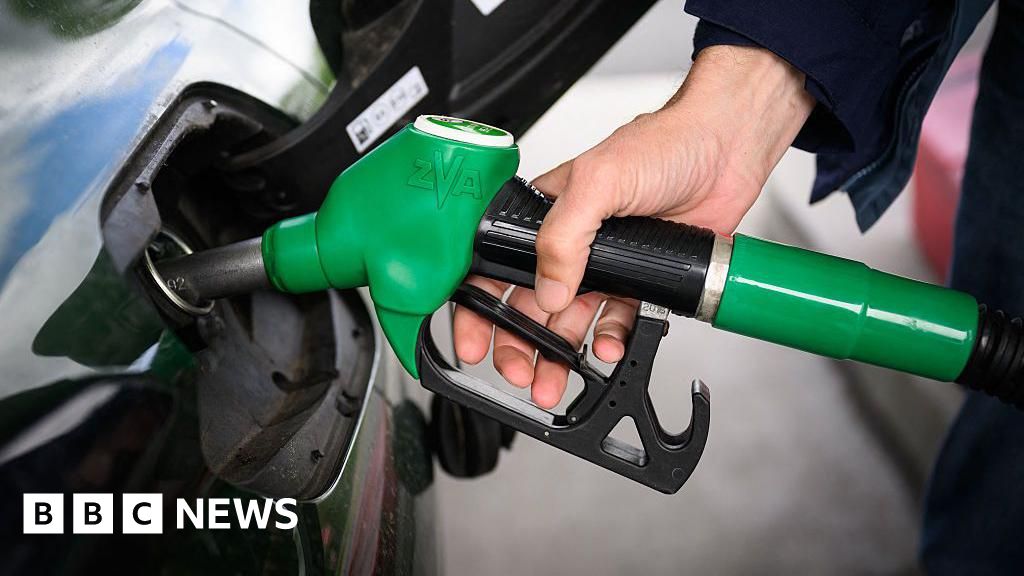
Brent crude sinks by a tenth after Iran says the key waterway is open for commercial ships for the rest of the ceasefire.
Source link
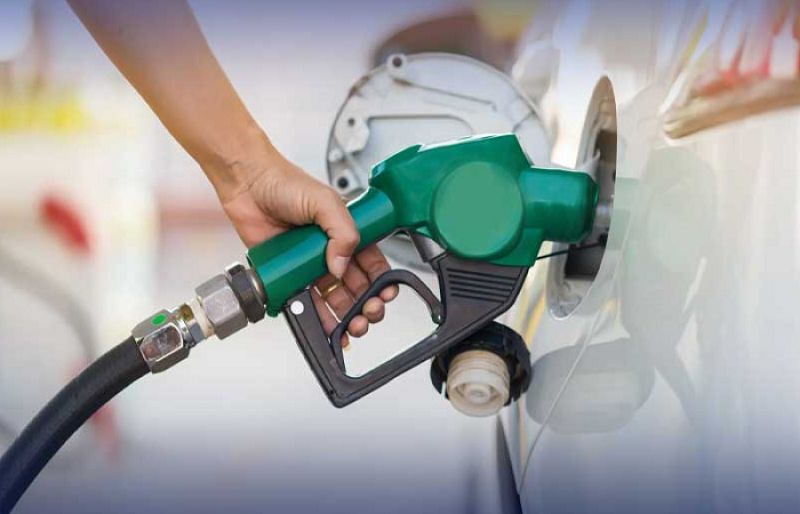
Oil prices tumbled on Friday after Iranian officials said they would allow commercial traffic to resume in the Strait of Hormuz. This lifted equity markets in Europe and New York, where major indices hit new records.
Citing the ceasefire between Israel and Lebanon, Iran’s Foreign Minister Abbas Araghchi said Tehran would lift its blockade on shipping through the key Gulf energy trade route.
“In line with the ceasefire in Lebanon, the passage for all commercial vessels through Strait of Hormuz is declared completely open for the remaining period of ceasefire,” Araghchi said.
Traffic in the strategic waterway, through which one-fifth of the world’s crude oil normally flows, has been disrupted by Iran since the US-Israeli offensive began on Feb. 28. At one point, this sent oil prices to a peak of nearly $120 a barrel and roiled the global economy.
Both Brent, the benchmark international contract, and its US equivalent WTI fell below $90 per barrel following Tehran’s announcement. Brent later cut its losses and finished at $90.38 a barrel, down 9.1%.
‘Immediate impact’
“This news is having an immediate impact on markets,” said Kathleen Brooks, research director at XTB.
The move also sent a jolt through equity markets, extending a rally in New York. There, equities have pushed ever higher since late March in anticipation of a breakthrough in the Middle East crisis.
“We had seen a big move the last two weeks, and now it’s just really pricing completely out the worst-case scenario, said Angelo Kourkafas, from Edward Jones.
Kourkafas also pointed to underlying strength in the US economy that should get more attention in the coming period as geopolitical concerns ebb.
“Geopolitical developments are moving in the right direction, and at the same time, the earning strength is hard to ignore,” Kourkafas said.
The broad-based S&P 500 finished at 7,126.06, up 1.2% for the day and 4.5% for the week.
‘Good news’
Earlier, European stocks closed higher, with both Frankfurt and Paris gaining 2%.
US President Donald Trump cheered the reopening of the Strait of Hormuz in an interview with AFP.
“We’re very close to having a deal,” Trump said in a brief telephone call with AFP from Las Vegas. He added there were “no sticking points at all” left with Tehran.
But Iran quickly pushed back on one key point.
Iran’s foreign ministry said Friday that its stockpile of enriched uranium would not be transferred “anywhere.” It rejected an earlier claim by Trump that the Islamic Republic had agreed to hand it over.
Shipping industry figures, meanwhile, gave a cautious welcome to Iran’s announcement.
A spokesman for German transportation giant Hapag-Lloyd, which has ships stuck in the Gulf, told AFP by phone that the reopening was “in general… good news.”
But he cautioned that shippers still needed details of what route vessels could take and in what order, citing fears of mines.
“One thousand ships cannot just go now to the entrance of the strait, that will be chaos. They (the Iranians) need to give clear orders,” said the spokesman, Nils Haupt.
“We would be ready to go very soon if some of these open questions can be solved within the weekend.”

One man says he cancelled his holiday to Spain due to the rising costs and uncertainty.
Source link


Nathalie Baye, low-key legend of French cinema, dies aged 77

Transfer rumors, news: Liverpool eye Wharton amid Man United, Real Madrid interest

The Best Movies to Stream This Month

-

 Politics1 week ago
Indian airlines hit hardest after Dubai limits foreign flights until May 31
-

 Entertainment5 days ago
Palace left in shock as Prince William cancels grand ceremony
-

 Sports5 days ago
The case for Man United’s Fernandes as Premier League’s best
-

 Politics1 week ago
Chinese, Taiwanese will unite, Xi tells Taiwan opposition leader
-

 Sports1 week ago
Documents: NC State trainer initiated ‘unwelcome,’ ‘sexual’ contact
-

 Entertainment1 week ago
Dua Lipa hits major career high ahead of wedding with Callum Turner
-

 Sports7 days ago
Lamar Jackson hits back at critics with faithful message on social media
-
 Business5 days ago
UK could adopt EU single market rules under new legislation