

Entertainment
Don Henley reflects on the Eagles’ “miraculous run,” Glenn Frey, and their last chapter

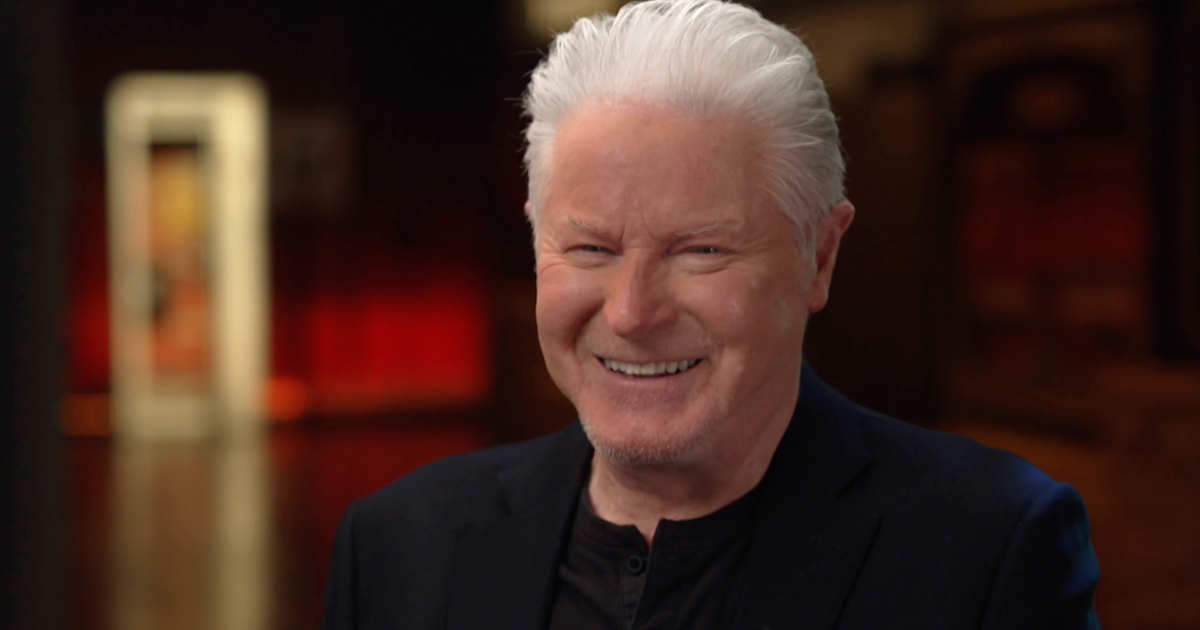
The nighttime lights of Las Vegas can hide the stars, but sometimes you can still find them under one dazzling roof.
One of the greatest bands on Earth — the Eagles — are in residence at the state-of-the-art Las Vegas Sphere, led by the band’s co-founder Don Henley, along with longtime guitarist Joe Walsh and country star Vince Gill.
And whenever the Eagles perform here, they sell the place out.
The Eagles’ “miraculous run”
“I guess we’re kind of a staple,” Henley said. “Our first record came out in ’72. Fifty-three years of playing for people. So it’s… you know, it’s been a miraculous run.”
And it got even more miraculous last month, when one of those Eagles albums from the 1970s — “Their Greatest Hits (1971–1975)” — was certified quadruple diamond, the first to sell more than 40 million copies, cementing its place as the best-selling album of all time.
“‘Greatest Hits’ is kind of a misnomer. It should just be called their best songs because every song on that album was not a great hit. You know? There are a couple of songs on that album that didn’t break the top 30. But they’re good songs. Desperado, for example, was never released as a single. Not by us, nor by Linda Ronstadt,” Henley said.
Henley adds that the album wasn’t really their idea; it was basically pushed on them by the record company. But the band “didn’t have any way to stop them,” Henley joked.
“We complained. Oh, yeah. It’s documented,” he laughed.
Legacy of late bandmate Glenn Frey
Henley said writing Desperado with his late bandmate Glenn Frey was the first time the pair collaborated as songwriting partners. He added that they clicked instantly, and Frey quickly earned the nickname “the lone arranger.”
“Because he was so good at arranging songs,” Henley explained.
Frey died 10 years ago at age 67, but his legacy is larger than life.
Before the show, fans can take a literal walk down memory lane at a place called the Eagles’ Third Encore — an almost life-sized model of the key places in the band’s history, including a mock-up of L.A.’s Troubadour nightclub, which includes a real working bar.
But Henley’s pre-show routine isn’t quite the same as it used to be. Instead of taking a shot of tequila, he’s doing crunches as a warm-up.
“I don’t do voice exercises because they don’t help. I sing from my core, so keeping my abdomen in shape makes me sing better,” he said, adding with a laugh, “I don’t have a six-pack or anything, but there’s one under there somewhere.”
Deacon Frey fills in for his late father
One of the emotional highlights of the show is the moment where Frey’s son, Deacon, takes the stage in his father’s spot, often with his father’s guitar, and sings his father’s songs.
“I burst with pride. I almost got tears in my eyes the other night when he was filling in for Joe,” Henley said.
Henley said he wasn’t sure performing without Frey was feasible, but the band agreed to continue only if Deacon could join them.
A father of three himself, Henley has always had a rich life outside the band, and he recently co-produced a PBS documentary with filmmaker Ken Burns about Henry David Thoreau.
“There are so many parallels to what he was seeing during his time and what we’re seeing now. As Mark Twain said, ‘History doesn’t repeat itself, but it often rhymes.’ And I think that’s what’s happening now,” Henley said.
What’s next?
The Eagles are keeping the music alive with a few more live shows this summer and an extended run in Las Vegas into April, featuring cutting-edge technology that didn’t exist when they first started making music.
“The sound system is like nothing on the planet. There are about 167,000 speakers in that dome,” Henley said of the Sphere.
The Eagles’ tour is called “The Long Goodbye,” but Henley says this time he means it.
“You know, I think this year will probably be it. I’ve said things like that before, but I feel like we’re getting toward the end. And that will be fine, too,” Henley said.
After more than 50 years of playing, Henley says he has to psych himself up to perform the Eagles’ classics each night.
“After a while, you learn to make friends with the songs,” he says. “It’s not about us. It’s about what they mean to the people we’re playing them for. You have to play every night with your heart in it.” Henley adds, “Music is medicine. And people need some medicine right now.”











There are moments when the global economy does not collapse but unfolds – like a car crash in slow motion.
What we are seeing today is not a single crisis. It is a combination of pressures building simultaneously: energy, shipping, fertiliser, food, remittances and confidence. When these forces move together, the danger is not an immediate collapse. It is a slow, steady squeeze on everyday life. And in Pakistan, that squeeze is felt quickly.
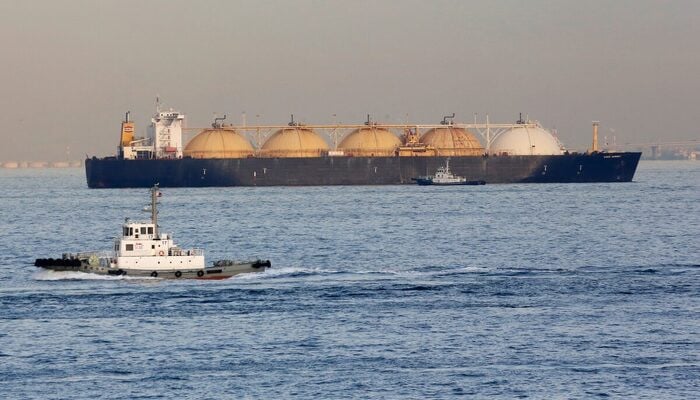
It starts with oil but does not end there. Rising oil prices dominate the headlines. But oil is only the first link in a longer chain. If tensions disrupt flows through the Gulf, the impact spreads rapidly. Energy becomes more expensive. Shipping costs increase. Fertilizer supply tightens. Food production is affected with a delay. Inflation then follows – not suddenly, but gradually, creeping into everyday life. This is how global shocks move. First quietly, like small ripples, then all at once, like a tsunami.
For large economies, this may mean slower growth. For Pakistan, it means something more immediate a steady erosion of purchasing power. Food becomes more expensive. Transport costs rise. Utility bills remain high. Everyday goods quietly become smaller or more expensive. But incomes do not increase at the same pace. That gap creates pressure. And that pressure is already visible in the lives of ordinary households, where Pakistan is most vulnerable.
The country relies heavily on imported fuel and LNG. Fertiliser prices are tied to global gas markets. Many industries depend on imported raw materials. At the same time, most households already spend nearly all their income on basic needs, rent, utilities, food, education and healthcare. This leaves little to no disposable income for anything else.
In addition to this, millions of families depend on international remittances. This creates an additional risk. If Gulf economies slow down, remittance flows may weaken. For many households, these inflows are not extra income, they are the main source of survival. Any disruption here immediately affects consumption, savings and financial stability.
This is not a typical recession. It is a pressure test, especially for the bottom half of the economy. In times of uncertainty, the instinct is to act strongly: raise interest rates sharply; tighten conditions; try to control everything. But this situation is different. This is largely a supply-side shock. Higher interest rates will not produce more oil, reduce shipping costs or increase fertiliser supply.
What they can do is slow down businesses, reduce employment and weaken demand further. Policy must remain responsible and measured. Businesses need time to adjust, not additional pressure.
This is not a moment for complicated policy. It is a moment for clear and focused action. The first priority is communication. People need clarity. When information is missing, uncertainty grows and uncertainty leads to panic. The second priority is targeted support. Pakistan already has strong systems like NADRA and BISP. These should be used to deliver direct assistance to the most vulnerable households rather than broad, expensive subsidies.
A third priority is managing the risk from remittances. If inflows weaken, the pressure on households and the broader economy can intensify quickly. One practical approach is for the government to temporarily borrow against expected remittance inflows over the next six months, based on historical trends. This can provide short-term liquidity, support currency stability and create fiscal space to protect vulnerable households during the shock.
At the same time, banks must play their role. They should proactively expand working capital lines to help businesses manage higher inventory holding costs and supply chain disruptions, ensuring companies can continue operating despite delays and uncertainty.
Quick, responsible action is critical. This is exactly how Pakistan navigated the Covid shock by taking timely, balanced decisions rather than delayed reactions.
Engagement with international partners is also essential. The IMF must be approached with clarity: this is not a routine economic cycle, but a black swan event driven by external geopolitical shocks.
There must be a mutual understanding on temporary flexibility in programme conditions, allowing space to protect vulnerable households, sustain industry and preserve jobs during this period.
At the same time, this moment should be used to make long-overdue structural corrections. Cutting wasteful expenditure must go hand in hand with accelerating the privatisation or restructuring of loss-making state-owned enterprises, while also exploring opportunities for debt reprofiling to ease immediate fiscal pressure.
It is also an opportunity to move faster on smart, forward-looking policies. For instance, an aggressive shift towards locally produced electric motorbikes, supported by a network of solar-powered charging stations, can reduce the fuel import bill, lower urban noise, and improve the environmental footprint, while creating local industry and jobs.
At the same time, businesses must be kept alive. Simple, temporary relief measures such as an annual rental freeze can help retail businesses survive and protect jobs. Food and fertiliser supply must also be secured early. Food crises do not begin in markets; they begin months earlier in fields. Delays now will show up later as higher food prices. Exports must be protected at all costs. They bring in foreign exchange, support employment, and provide stability in uncertain times.
Another area that requires immediate attention is contractual risk. With global supply chains under stress, Pakistan should be prepared for a rise in force majeure events, where companies or even governments are unable to fulfill contracts due to disruptions beyond their control. This can affect import and export agreements, shipping and logistics contracts, energy supply arrangements, and major infrastructure projects.
Early identification is critical. Both the government and private sector must begin mapping these risks now, reviewing contract exposure, and preparing legal and financial responses. If ignored, these disruptions can quickly turn into losses, disputes and long-term damage to business confidence.
Beyond oil and food, there are less visible disruptions now taking shape and they could make the situation worse. One of these is plastics. Modern life depends heavily on plastic materials, especially those made from oil and gas. When energy markets tighten, plastic supply becomes more expensive and uncertain. This affects everyday life in simple but important ways.
Packaging for bottled water, beverages, and food becomes more expensive. FMCG companies struggle to source materials. Textile exporters using synthetic fibres face rising input costs. Retailers find it harder to maintain product availability.
The result is familiar: products become smaller, more expensive or disappear altogether. Inflation spreads quietly into daily consumption, the silent thief.
Another critical but often overlooked vulnerability is the disruption in the helium supply chain. It is not widely discussed, but it is essential for many advanced industries and much of the global supply comes from the Gulf. If supply is disrupted, the effects spread quietly but widely. At a high level, this could mean: MRI machines and hospital diagnostics becoming more expensive and harder to operate; slower semiconductor production, leading to shortages of critical electronics; delays in fibre-optics and high-tech manufacturing; bottlenecks in aerospace and defence systems; constraints on data centre cooling, affecting digital infrastructure; and difficulties in operating military- and high-pressure-sensitive testing equipment.
The shortage may not seem critical in daily life – until it is. When an MRI is not available when you need one, or a critical component of an IT system is delayed, causing essential mission-critical networks to shut down, the impact becomes very real.
Policymakers should remain cognizant of this risk and begin identifying alternatives and solutions before supplies reach critically low levels. This is how geopolitical supply chain disruption and crises function. They are not always dramatic, but they are deeply interconnected.
At its core, this is about confidence. If people believe the system is stable, they adjust and learn to navigate. If they believe it is uncertain, they panic. And panic spreads faster than any policy response.
Pakistan cannot control global events. It cannot control oil prices or geopolitical tensions. But it can control how it responds. Staying measured, targeted and focused while protecting the most vulnerable, protecting exports, preserving employment and keeping the economy moving will define the outcome.
Refuse to panic. Communicate clearly. Act early. Remember, in times like these, more is less. Protect the economy.
The author is a business leader and policy advocate focused on export-led growth, employment generation and competitiveness in emerging economies. He can be reached at: [email protected]
Disclaimer: The viewpoints expressed in this piece are the writer’s own and don’t necessarily reflect Geo.tv’s editorial policy.
Originally published in The News

Taylor Swift has extended her own record as iHeartRadio’s most decorated artist of all time, walking away from Thursday night’s ceremony at the Dolby Theatre in Los Angeles with seven wins from nine nominations, bringing her all-time total to 41 iHeartRadio Music Award wins.
Swift, who attended with fiancé Travis Kelce, kicked off her winning streak by accepting best pop album of the year for The Life of a Showgirl, presented by Raye.
She used the moment to credit Kelce directly.
“I think that this album feels very happy and confident and free because that’s the way that I get to feel every single day of my life, because of my fiancé who’s here tonight,” she said.
“Thank you to iHeart and thank you to anyone who cared about The Fate of Ophelia, because you made that into the biggest hit of my career, which is crazy at this point.”
The night shifted up a gear when figure skater Alysa Liu presented her with six further awards in one go, including artist of the year and album of the year.
Swift used the platform to deliver a message that clearly meant a great deal to her, about creativity, patience and protecting your dreams from the internet.
“We live in this world where there’s so much immediate feedback, constantly,” she said.
“Anything you feed your mind, it will internalize. Anything you feed the internet, it will attempt to kill, and I don’t want that for your dreams. So just thank you for allowing me to turn my hobby into a love, into a passion, into a dream, into a career.”
The show, hosted by Ludacris, also featured performances from Lainey Wilson, Alex Warren, who took home breakthrough artist of the year, Kehlani, Raye and a joint set from TLC, Salt-N-Pepa and En Vogue previewing their upcoming summer tour.
Ludacris closed out the evening with a run of his own hits.

Miley Cyrus has let slip the real reason the Jonas Brothers ended up on her 2006 Best of Both Worlds Tour, and it had nothing to do with business strategy.
Speaking on the Hannah Montana 20th Anniversary Special, the 33-year-old admitted the booking came down to one simple fact: she was dating Nick Jonas and didn’t want to leave him behind.
“Literally, the reason that the Jonas Brothers were on tour with me was because Nick was my boyfriend, and I wanted to not leave my boyfriend,” she said.
“So I’d be like, ‘OK, well, I’ll go on tour if my boyfriend can come.’ And they’re like, ‘Cute, have your boyfriend open for the show.’ Boom.”
The special was packed with candid revelations.
Cyrus also shared that she had childhood crushes on both Zac Efron and her Hannah Montana co-star Mitchel Musso, and shed light on how Taylor Swift ended up in the 2009 film Hannah Montana: The Movie.
Swift, 36, appeared in a barn dance scene, performing her original song Crazier.
“This was kind of the beginning of her career, and they were looking for someone that would authentically, no shade, I guess, be performing in a barn. We both performed in the barn,” Cyrus said.
She also spoke warmly about the song she and Swift co-wrote together, You’ll Always Find Your Way Back Home, calling it a “banger” that “stands the test of time.”
Perhaps the most unexpected revelation of the night, though, involved Panda Express.
Cyrus admitted that she and co-star Emily Osment used to make a habit of visiting the fast food chain after work, where she would order white rice and pour Diet Coke over it instead of soy sauce.
“I did something really gnarly,” she said, before immediately defending herself. “I am from the south in a way that it’s really hard to describe.”


WTO launches 3rd phase of Enhanced Integrated Framework

Time to hold the line

Vietnam overtakes China in US jackets, blazers imports

-
 Fashion1 week ago
Sales at US apparel, clothing accessories stores up 4% YoY in Jan 2026
-

 Entertainment1 week ago
Val Kilmer revived 1 year after death through AI
-
 Fashion1 week ago
US’ G-III Apparel’s FY26 sales fall 7% to $2.96 bn
-

 Sports1 week ago
March Madness 2026 – How to watch in SA, start time, schedule, TV channel for NCAA championship basketball tournament
-
 Business1 week ago
Brits cashing in jewellery as gold price hits record high
-

 Fashion6 days ago
China’s textile & apparel exports surge 17% to $50 bn in Jan-Feb 2026
-
 Business1 week ago
World’s largest mining group names new chief executive
-
 Fashion1 week ago
Suez and Hormuz shut together, triggering global supply shock