

Tech
Donald Trump Jr.’s Private DC Club Has Mysterious Ties to an Ex-Cop With a Controversial Past

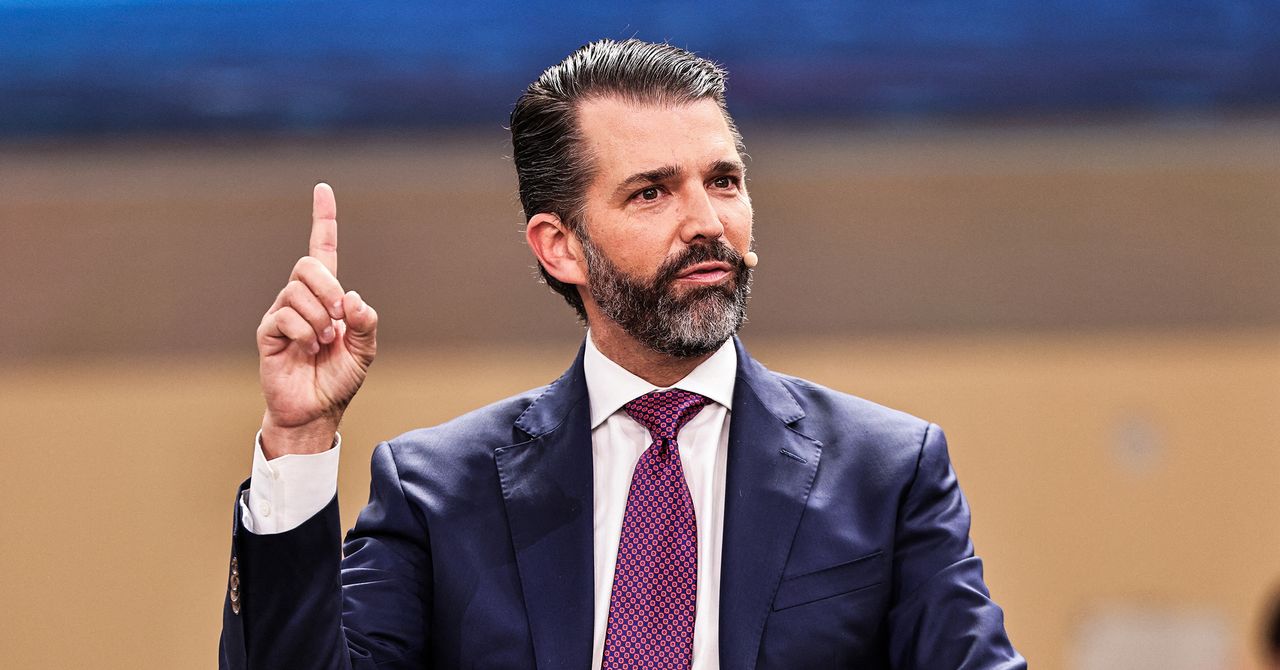
When the Executive Branch soft-launched in Washington, DC, last spring, the private club’s initial buzz centered on its starry roster of backers and founding members. The president’s eldest son, Donald Trump Jr., is one of the club’s several co-owners, according to previous reporting. Founding members reportedly include Trump administration AI czar David Sacks and his All-In podcast cohost Chamath Palihapitiya, as well as crypto bigwigs Tyler and Cameron Winklevoss.
“We wanted to create something new, hipper, and Trump-aligned,” Sacks said at the time. Proximity to Trumpworld didn’t come cheap; though the club headquarters is located in a basement space behind a shopping complex, fees to join are reportedly as high as $500,000.
The initial wave of press for the MAGA hot spot identified Trump Jr. and his business associates Omeed Malik, Chris Buskirk, and Zach and Alex Witkoff as the club’s co-owners. A Mother Jones report later revealed the involvement of David Sacks’ frequent business associate Glenn Gilmore, a San Francisco Bay Area real estate developer who is given a variety of titles on official documents, including co-owner, managing member, director, and president.
But according to corporate filings reviewed by WIRED, there’s another key figure whose involvement has not been previously reported and whose connection to its more famous founders remains unclear: Sean LoJacono, a former Metropolitan Police Department cop in Washington, DC, who gained local notoriety for his role in a stop and frisk that resulted in a lawsuit.
According to the legal complaint, in 2017, after questioning a man named M.B. Cottingham for a suspected open-container-law violation, LoJacono conducted a body search. A recording of the incident went viral on YouTube, sparking intense debate over aggressive policing tactics. “He stuck his finger in my crack,” Cottingham says in the video. “Stop fingering me, though, bro.” The next year, the American Civil Liberties Union of the District of Columbia sued LoJacono on behalf of Cottingham, alleging that LoJacono had “jammed his fingers between Mr. Cottingham’s buttocks and grabbed his genitals.” Cottingham agreed to settle his lawsuit with LoJacono and was paid an undisclosed amount by the District of Columbia (which admitted no wrongdoing) in 2018.
The MPD announced its intention to dismiss LoJacono following an internal affairs investigation, which concluded that the Cottingham search was not a fireable offense but that another search he had conducted the same day was. By early 2019, LoJacono had appealed his dismissal, arguing in well-publicized hearings that he had conducted searches according to how he had been taught by fellow officers in the field. Initially, the dismissal was upheld. However, the police union’s collective bargaining agreement enabled LoJacono to further appeal to a third-party arbitrator, which in November 2023 ruled in LoJacono’s favor.
Instead of returning to the police force, though, LoJacono has gone down a different path. A LinkedIn account featuring LoJacono’s name, likeness, and employment history lists his profession as “Director of Security and Facilities Management” at an unnamed private club in Washington, DC, from June 2025 to the present. Official incorporation paperwork for the Executive Branch Limited Liability Company filed to the Government of the District of Columbia’s corporations division in March 2025, shortly before the club launched, lists LoJacono as the “beneficial owner” of the business. The address listed on the paperwork matches the Executive Branch’s location. Donald Trump Jr. and other reported owners are not listed on the paperwork; Gilmore is listed on this document as the company’s “organizer.”
The paperwork indicates that LoJacono is considered a beneficial owner of a legal entity associated with the Executive Branch. But what does that mean, exactly?










On day six of its mission, Artemis II is closing in on the far side of the moon. Meanwhile, the historic journey has not been without fascinating and curious stories, from the images and videos that its four crew members have shared with the world to the inevitable unforeseen events—including a tricky toilet situation.
A few hours before the crew begins its lunar flyby, here’s how things are going on Artemis II.
When Will They Reach the Far Side of the Moon?
While Artemis II won’t actually land on the moon (that won’t happen until Artemis IV), that does not make this mission any less compelling. Once the Artemis II astronauts finish flying over the dark side of the moon, they will have the historic distinction of being the humans who have traveled the farthest from Earth.
They will also test all the systems needed for future lunar missions, validating life support, navigation, spacesuits, communications, and other human operations in deep space.
But when are they supposed to reach this far-off point? First, the Orion capsule reached what is known as the moon’s “sphere of influence” on Sunday night. This is the point where the moon’s gravitational force is stronger than the force of the Earth.
At present, Orion is circling the moon. Once the capsule is on the dark side of the moon, approximately 7,000 kilometers from the surface, communications with Earth will be interrupted. For six hours, they will be able to view the far side of the moon, something no human being has ever seen with their own eyes—not even the astronauts of the Apollo program, as this region of the moon was always too dark or difficult for them to reach.
That six-hour flyby of the dark side of the moon is expected to begin Monday, April 6, at 2:45 pm EDT and 7:45 pm London time.
After that, the capsule will use the moon’s gravity to propel itself back to Earth. Splashdown, when the astronauts reach Earth, is scheduled for April 10 in the Pacific Ocean, not far from the coast of California, the tenth day of the mission.
Remember that you can follow the live broadcast of the Artemis II mission from NASA’s official channels.
What Has Happened so Far?
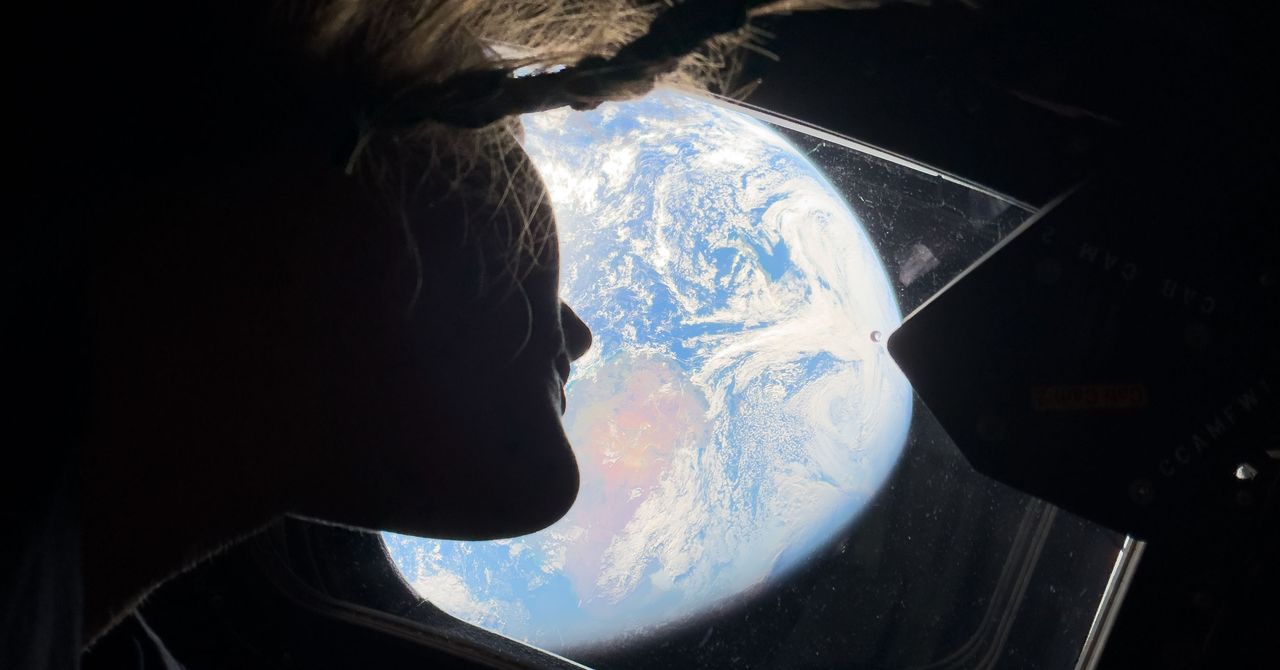
Since its successful launch on April 1 from Kennedy Space Center, the Artemis II crew has shared several spectacular photos, such as the featured image in this post, which shows mission specialist Christina Koch looking down at Earth through one of Orion’s main cabin windows.
This incredible photo of a Earth, taken on April 2, went viral on social media, referencing the famous “Blue Marble” image captured by the Apollo 17 astronauts in 1972.
View of Earth taken by astronaut Reid Wiseman from the window of the Orion spacecraft after completing the translunar injection maneuver on April 2, 2026.Photograph: Reid Wiseman/NASA/Getty Images
Last week in Rhode Island, in a hearing over the Trump administration’s efforts to access the state’s unredacted voter lists, US district judge Mary McElroy asked a Department of Justice lawyer what the agency had been doing with the voter roll data it already amassed from other states in recent months.
“We have not done anything yet,” said Eric Neff, the acting chief of the agency’s voting section, a core part of the DOJ’s civil rights division that focuses on enforcing federal laws that protect the right to vote. Neff added that the data the DOJ collected from states—which can include Social Security numbers, drivers licenses, dates of birth, and addresses—was being kept separate.
“The United States is taking extra concern to make sure that we’re complying with the Privacy Act in every conceivable way,” Neff added. The Privacy Act of 1974 regulates how government agencies collect and use personally identifiable information about US residents.
But Neff was not telling the truth: The DOJ, he later admitted, was pooling the data and already analyzing it to identify voting irregularities.
In a court document filed on March 27, Neff walked back his claims. “The United States represented that each data set was stored separately,” Neff wrote. “The United States also stated that no analysis had yet been conducted on the data. To correct and clarify the record, preliminary internal data analysis of the nonpublic voter registration data has begun. In particular, the Civil Rights Division has begun the process of identifying and quantifying the number and type of duplicate and deceased registered voters in each state.”
The revelation confirms what was widely speculated, which is that the DOJ appears to be pooling the data and using it to identify potential issues with suspected voting irregularities ahead of the midterms, which is a core part of Trump’s broad attack on elections.
Neff and the DOJ did not respond to repeated requests for comment.
Critics have grown increasingly concerned about the DOJ’s voting section, which has undergone a stark transformation since President Donald Trump has retaken office. A newly installed coterie of inexperienced but ultra-loyal lawyers in the DOJ’s voting section, many of whom have supported election denial conspiracy theories, have spent their time on forcing states to hand over their voter roll information.
The initiative began in May last year, when the Department of Justice sent letters to election officials in at least 48 states and Washington, DC, asking for unredacted voter rolls. Some Republican-led states immediately handed over the information, but dozens of others pushed back. As a result, Neff and his colleagues have sued 30 states, asking courts to force them to hand over the information. So far, courts have sided with the states, with judges already dismissing cases in California, Michigan, and Oregon.
In many of the lawsuits, state election officials pointed out the huge security risk involved in sharing such sensitive data, especially when it was unclear how the data would be stored or who it would be shared with. “We still have no idea what the government is doing with this data,” says David Becker, the head of the Center for Election Innovation and Research and a former Justice Department lawyer. “No idea where it is being stored, how it is being protected, or who has access to it. This data is incredibly sensitive. If someone has any of these three data points on any of us, Social Security number, driver’s license number, or date of birth, they can wreck us financially. This is why the states protect this data, and they do a good job of it.”
Apple Watches are smart little gadgets, but they don’t always fit the vibe. There were plenty of nights and dressier events when I left mine at home because—as much as I wanted to check my notifications discreetly—it didn’t match my outfit. I’ve also had my fair share of faux pas and just let the neon orange sport band clash with my neutral ensemble.
Fortunately, Apple Watch bands are a simple and relatively affordable way to zhuzh up the look of your wearable. Beyond aesthetics, different styles also impact performance and functionality. For example, personally, I don’t want a heavy stainless steel or high-quality leather band weighing me down during a sweaty workout, just as I wouldn’t wear a flimsy silicone band to a dinner party.
At WIRED, we’ve been testing bands since the very first Apple Watch launched in 2015. After years of wearing and swapping, I’ve rounded up the best bands for every occasion. Be sure to check out Best Apple Watch Accessories, Best Apple Watch, and Best Smartwatches for more recommendations.
Jump to
Best Band for Everyday Wear

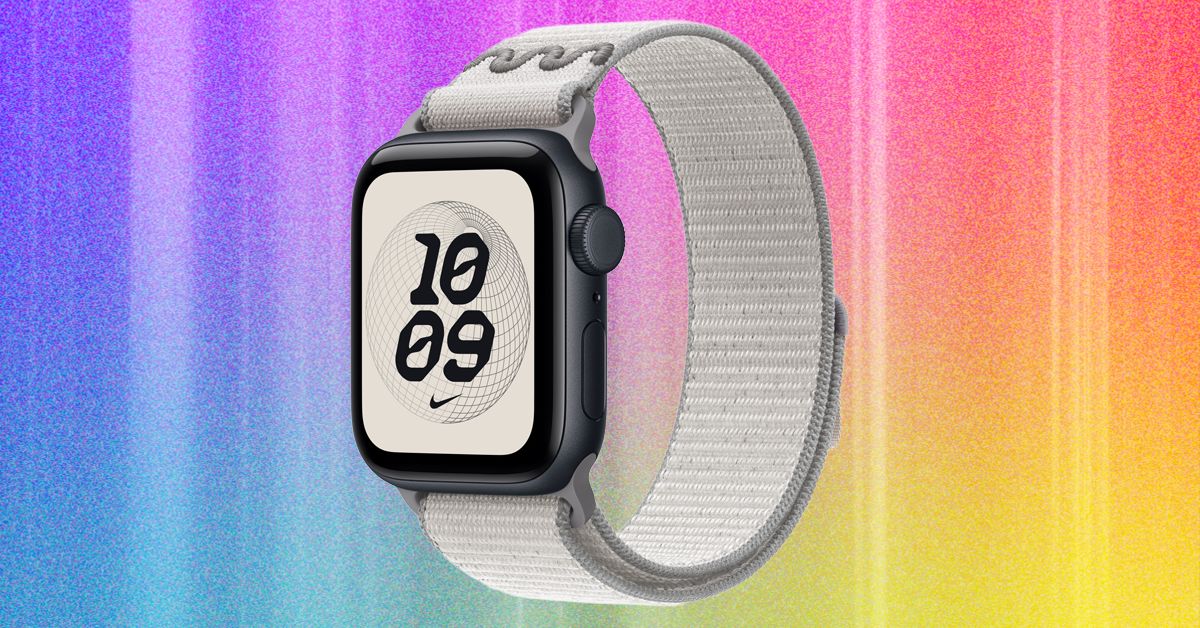
The Nike Sport Loop has been my everyday band since 2020. I bought another in 2023 because I wanted to swap colors, and I figured after three years, I should buy a brand-new one, but it has held up remarkably well. Made from a blend of recycled polyester, Spandex, and nylon, it’s breathable and lightweight. The double-layered nylon weave is designed with dense loops that help prevent moisture from getting trapped against your skin. As long as you regularly hand-wash it to rid it of sweat buildup and dirt, it stays odor-free.
The hook-and-loop fastener and pull tab make it easy to adjust with one hand. It is Velcro, so beware, it can snag on softer fabrics. Still, for a band designed with sports in mind, it’s understated enough to wear almost anywhere. I wouldn’t wear it to a formal event, but for the office or casual social events, it’s perfect.
Best Titanium Apple Watch Band
-
Photograph: Boutayna Chokrane
-
Photograph: Boutayna Chokrane
-
Photograph: Boutayna Chokrane


.jpg)
Nomad originally designed the Stratos Band for the Apple Watch Ultra, but it fits just as well with the SE and Series 1 through 11. It’s easy to adjust, refined enough for the office, and backed by Grade 4 titanium hardware with a scratch-resistant DLC coating. FKM rubber links (PFA-free and antimicrobial, according to Nomad) add flexibility, durability, and water-resistance. The clasp is made with corrosion-resistant N52 magnets, which make it effortless to snap on, and it’s designed with a manual release button, so you don’t have to worry about it accidentally falling off. It’s technically suited for workouts and outdoor use, but it is a hefty band that I personally prefer for casual everyday wear.


Vietnam’s economy up 7.83% YoY in Q1 2026: NSO

Artemis II: Everything We Know as Its Crew Approaches the Far Side of the Moon

David Henrie and wife Maria announce surprise 4th pregnancy

-

 Sports1 week ago
USMNT handed reality check by Doku, Belgium ahead of World Cup
-

 Sports1 week ago
2026 NCAA men’s hockey tournament: Schedule, results
-
Uncategorized4 days ago
[CinePlex360] Please moderate: “Trump signals p
-
Uncategorized1 week ago
[CinePlex360] Please moderate: “Further tariff
-

 Entertainment3 days ago
Joe Jonas shares candid glimpse into parenthood with Sophie Turner
-

 Tech3 days ago
Our Favorite iPad Is $50 Off
-

 Sports1 week ago
Man City show why they are worthy WSL title winners as tired United wilt
-

 Entertainment1 week ago
Demystifying the PTI