

Business
Don’t force drivers to use parking apps, RAC says

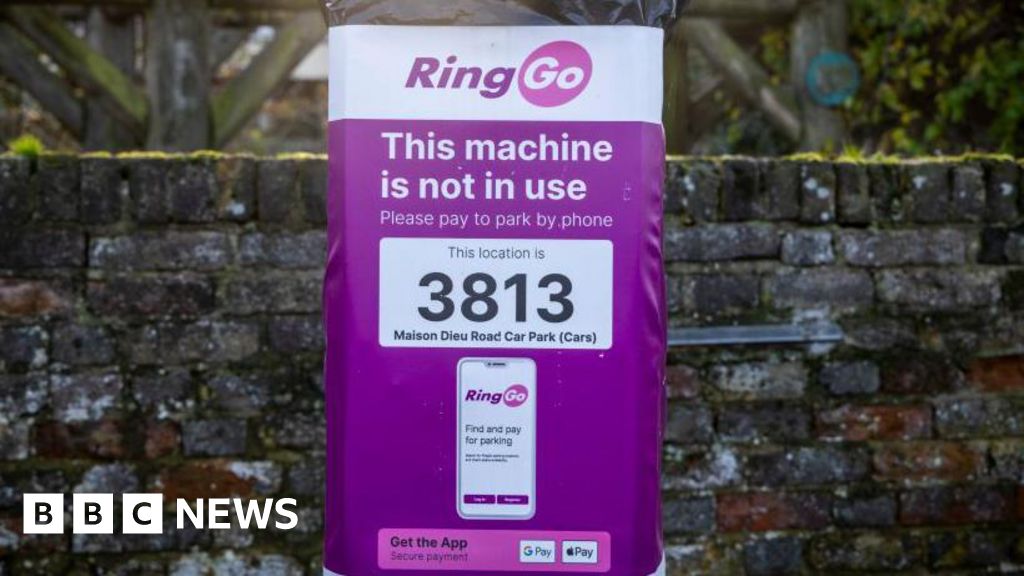
Drivers should not be forced to use mobile apps to pay for parking, the RAC has said, after three-quarters of drivers it surveyed said they had issues with them.
The most common problem was poor phone signal in the car park, followed by the app not recognising the car park the driver was in.
The findings come as the government prepares to expand its National Parking Platform (NPP), which aims to prevent drivers from having to download multiple parking apps.
The RAC welcomed the NPP but said more local authorities and parking companies needed to sign up.
RAC senior policy officer Rod Dennis said parking operators “should offer drivers at least two different ways to pay”.
“Parking should, in theory at least, be one of the simplest tasks any driver completes but having to navigate a variety of differently designed apps – and register an account, vehicle details and bank cards with each one – can be a pain,” he said.
“No-one should be forced to use a mobile app when parking if they don’t want to, especially those who struggle with technology or just don’t have a smartphone.”
The RAC survey of 1,700 people found that 13% of respondents couldn’t work out how to use a parking app. Of the respondents over 75, this figure was 26%.
Nearly half of those surveyed said they preferred to pay by card or contactless payment on their phones.
BBC News visited Deansgate North Q-Park in Manchester to find out what drivers thought of the findings.
One young man said using the apps was easy but his preferred method to pay for parking was Apple Pay on his phone.
Another said he got a ticket after having trouble connecting to a parking app.
“I had to send receipts to basically prove I had a parking permit.”
Following a trial in 10 local authorities in England, the government announced in May that the National Parking Platform would be expanded across the country, but car park and app providers have to opt in.
The platform is run on a not-for-profit basis by the British Parking Association (BPA), which represents parking operators.
Mr Dennis said the RAC welcomed the launch of the NPP, which “should spell the end of drivers needing to download lots of separate apps just to park and simplify things enormously”.
He added: “This does depend on enough local authorities and parking companies up and down the country signing up, though.”
The RAC said that if drivers run into signal issues while trying to pay for parking, they should collect evidence of their attempts to pay, including screenshots of any app error messages.
Margie Rimes from York is 77 and has a smartphone that she uses regularly. But she gets “panicky” about paying for parking with apps.
“If I’m going somewhere where I know I’m going to have to park… I find it stressful,” she said.
She has taken taxis a few times “rather than have to face the [parking] machine”, in part because she has poor eyesight.
Her local train station allows people to pay for parking at the ticket office, which she appreciates.
But she thinks the NPP is a good idea: “I think if they’re going to have apps it’s better to be standardised.”
The NPP said its purpose was “to make parking simpler and more consistent by allowing drivers to use the parking app of their choice in participating locations”.
“The NPP is about expanding choice, not restricting it. Local Authorities using the NPP can continue, and many still do, offer cash payments if they wish, and a phone line will also be available to support those who prefer or need to pay by phone.”
The BPA said it welcomed the increase in use of parking apps, but added it was “vital that technology works for everyone”.
“Our members are committed to making parking as simple and accessible as possible, and we actively encourage operators to offer a range of payment options, including cashless and traditional methods to meet the needs of all drivers,” it said in a statement.
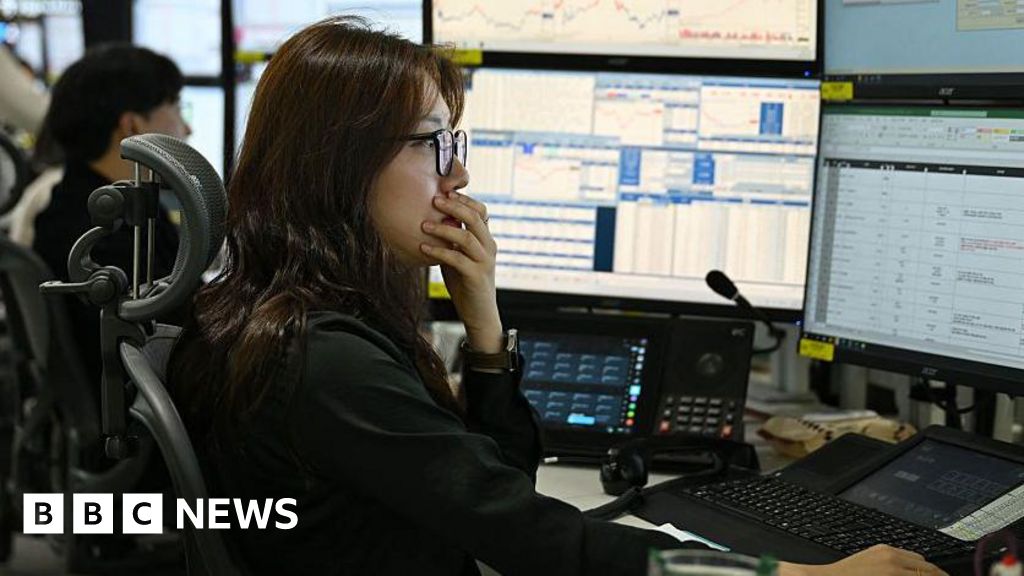
The conflict in the Middle East has rattled financial markets and global energy prices have soared.
Source link
Last Updated:
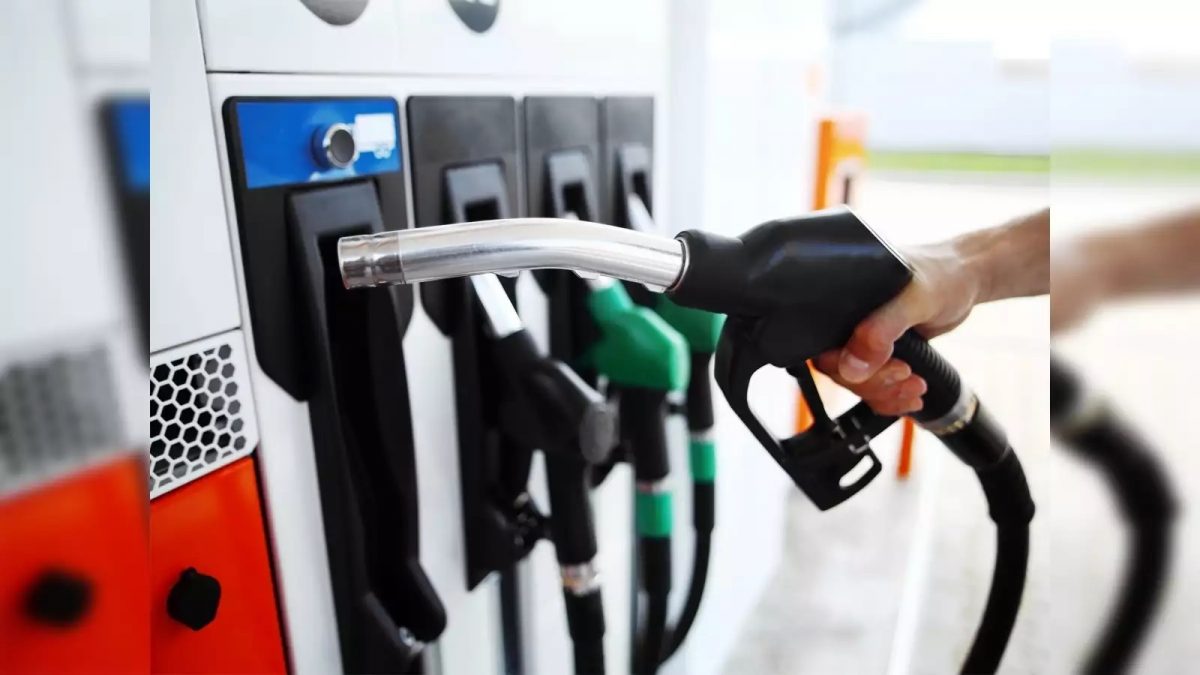
Petrol, Diesel Price On March 4: Check City-Wise Rates Across India Including In Delhi, Mumbai and Chennai.




Petrol, Diesel Prices On March 4.
Petrol and Diesel Prices on March 4, 2026: OMCs update petrol and diesel prices daily at 6 AM, aligning them with fluctuations in global crude oil prices and currency exchange rates. This daily revision promotes transparency and ensures consumers have access to the most up-to-date and accurate fuel prices.
Petrol Diesel Price Today In India
Check city-wise petrol and diesel prices on March 4:
| City | Petrol (₹/L) | Diesel (₹/L) |
|---|---|---|
| New Delhi | 94.72 | 87.62 |
| Mumbai | 104.21 | 92.15 |
| Kolkata | 103.94 | 90.76 |
| Chennai | 100.75 | 92.34 |
| Ahmedabad | 94.49 | 90.17 |
| Bengaluru | 102.92 | 89.02 |
| Hyderabad | 107.46 | 95.70 |
| Jaipur | 104.72 | 90.21 |
| Lucknow | 94.69 | 87.80 |
| Pune | 104.04 | 90.57 |
| Chandigarh | 94.30 | 82.45 |
| Indore | 106.48 | 91.88 |
| Patna | 105.58 | 93.80 |
| Surat | 95.00 | 89.00 |
| Nashik | 95.50 | 89.50 |
Key Factors Behind Petrol and Diesel Rates
Petrol and diesel prices in India have remained unchanged since May 2022, following tax reductions by the central and several state governments.
Oil Marketing Companies (OMCs) update fuel prices daily at 6 am, adjusting for fluctuations in global crude oil markets. While these rates are technically market-linked, they are also influenced by regulatory measures such as excise duties, base pricing frameworks, and informal price caps.
Key Factors Influencing Fuel Prices in India
-
Crude Oil Prices: Global crude oil prices are a primary driver of fuel prices, as crude is the main input in petrol and diesel production.
-
Exchange Rate: Since India relies heavily on crude oil imports, the value of the Indian rupee against the US dollar significantly affects fuel costs. A weaker rupee typically translates to higher prices.
-
Taxes: Central and state-level taxes constitute a major portion of retail fuel prices. Tax rates vary across states, leading to regional price differences.
-
Refining Costs: The cost of processing crude oil into usable fuel impacts retail prices. These costs can fluctuate depending on crude quality and refinery efficiency.
-
Demand-Supply Dynamics: Market demand also influences fuel pricing. Higher demand can push prices up as supply adjusts to consumption trends.
How to Check Petrol and Diesel Prices via SMS
You can easily check the latest petrol and diesel prices in your city through SMS. For Indian Oil customers, text the city code followed by “RSP” to 9224992249. BPCL customers can send “RSP” to 9223112222, and HPCL customers can text “HP Price” to 9222201122 to receive the current fuel prices.
 Click here to add News18 as your preferred news source on Google.
Follow News18 on Google. Join the fun, play games on News18. Stay updated with all the latest business news, including market trends, stock updates, tax, IPO, banking finance, real estate, savings and investments. To Get in-depth analysis, expert opinions, and real-time updates. Also Download the News18 App to stay updated.
March 04, 2026, 07:33 IST
Read More

Gold slumped more than 5%, ending a four-day rally on Tuesday. The metal was weighed down by a stronger dollar and fading prospects of an interest rate cut as inflation concerns intensified against the backdrop of a potentially prolonged conflict in West Asia. Spot gold was down 5.6% at $5,029.59 an ounce whereas prices had hit an over four-week high in the previous session. US gold futures lost 5.1% to $5,041.50.The US dollar, a competing safe-haven asset, rose to an over one-month peak, making dollar-priced bullion less affordable for holders of other currencies. US Treasury yields rose for a second consecutive session.Indian bullion traders and associations are speculating that gold could attain Rs 2 lakh per 10 gm and silver may well scale Rs 3.5 lakh per kg if the conflict does not abate swiftly.Spot silver fell 11.2% to $79.42 an ounce after climbing to a more than four-week high on Monday. As the Iran conflict entered its fourth day, crude oil benchmarks jumped over 8% in response.


Barkbox Offers: Themed Dog Toys, All-Natural Treats, and Subscription Deals

Israel Strikes Hezbollah Ally’s Office in Sidon

Miami (Ohio) beats Toledo to extend 30-game winning streak

-
 Business1 week ago
Households set for lower energy bills amid price cap shake-up
-

 Politics6 days ago
What are Iran’s ballistic missile capabilities?
-

 Politics6 days ago
US arrests ex-Air Force pilot for ‘training’ Chinese military
-

 Sports1 week ago
Top 50 USMNT players of 2026, ranked by club form: USMNT Player Performance Index returns
-
 Business6 days ago
Attock Cement’s acquisition approved | The Express Tribune
-

 Fashion6 days ago
Policy easing drives Argentina’s garment import surge in 2025
-

 Sports6 days ago
Sri Lanka’s Shanaka says constant criticism has affected players’ mental health
-
 Business1 week ago
Lucid widely misses earnings expectations, forecasts continued EV growth in 2026