

Sports
Don’t talk about winning: The secret behind Bodo/Glimt’s European success

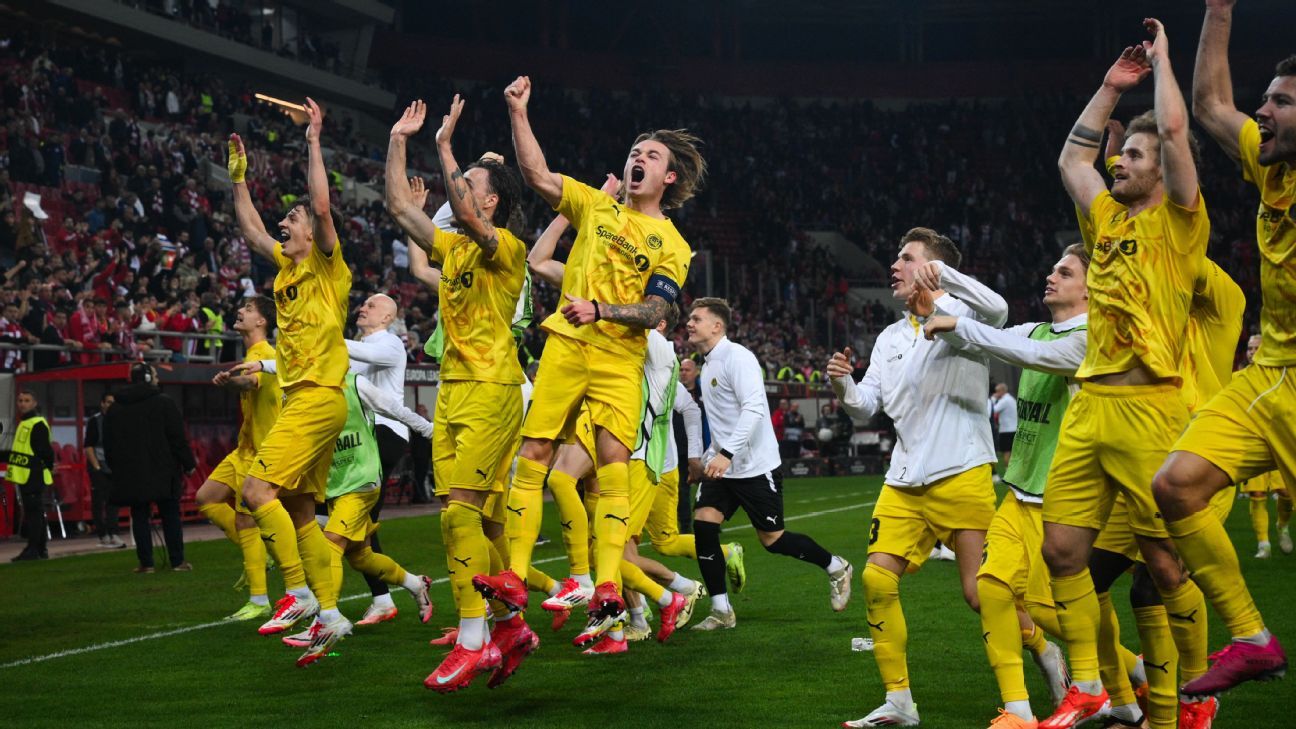
Editor’s note: On Tuesday, Norwegian minnows Bodo/Glimt pulled off one of the biggest upsets in Champions League history by eliminating last season’s finalists, Inter Milan. But the roots of that success can be traced back to their Europea League run last season. This story first ran in May 2025, before Bodo/Glimt faced Tottenham Hotspur in the semifinal.
Bodo/Glimt, European football’s biggest underdogs, meditate before training, huddle around for a chat when they concede a goal and decide amongst the squad who should be captain for each game. Their core principle is that they won’t ever talk about winning or look at a league table. There is not a single clichéd comment uttered about needing to pick up three points.
Those techniques are just a small part of explaining why a tiny team from Norway, so far north they’re in the Arctic Circle, are facing Tottenham Hotspur on Thursday in the UEFA Europa League semifinals, just a couple of games from lifting a European trophy and winning a place in next season’s UEFA Champions League.
Nobody in the town of Bodo needs to be told that this is a David vs. Goliath story. They know that you could fit the entire town’s population (42,831) into the Spurs’ stadium and still have 22,000 empty seats, and that their annual transfer budget is the same as a Spurs player could expect to earn in a season. They know they’re still not quite on the map of European football, that their opponents this season will all check to see where they are travelling to: they’ll scan their finger north, then further north, until they find a place that is a 16-hour drive from Oslo where daily sunlight lasts for just 56 minutes in December and nearly 24 hours in July.
And yet, nobody at Bodo/Glimt is surprised to have gotten this far. Maybe this is not really an underdog story at all. Bodo/Glimt won their first Norwegian league title in 2020. They’ve now won it in four of the past five seasons. In that time they’ve made it to the knockout rounds of European football and taken down some huge clubs including AS Roma, Celtic and Besiktas.
This season, they beat FC Porto in the league phase before running Manchester United close. In their last game, the quarterfinals, they knocked out Lazio across two legs, the first of which was played amid deep Arctic snow. The idea of adding Tottenham to that list of victims, then, seems manageable, even if it remains a little unlikely.
There are a number of reasons why the club has reached the final four. It has a lot to do with a golden generation of players coming through their youth ranks, such as Jens Hauge and Patrick Berg, who graduated to the first team just before their first title win in 2020. It is partly because of the icy conditions that any travelling European side meets, as well as being confronted by an acclimated squad made up almost entirely of players who come from northern Norway, many from Bodo itself. It is also due to an attractive style of play instilled by a coaching staff spearheaded by manager Kjetil Knutsen, now linked with jobs in the Premier League.
But any story about Bodo/Glimt’s emergence usually begins in 2017, with relegation to the Norwegian second division, and the arrival of a Norwegian fighter pilot named Bjørn Mannsverk.
It was eight years ago that Mannsverk arrived at the club, having recently given up active tours of duty that included missions over Afghanistan and Libya. A colleague in his squadron had spoken to someone at Bodo/Glimt and wondered if he could help. It was in the months after they had been relegated, and the club’s front office was adamant that their players were good enough, but that it was a mental collapse at the end of the season that had cost them. So they invited Mannsverk, a man who had little interest in football, and asked if he would work with the players. He agreed.
“Bjørn has brainwashed us now for six years now,” Ørjan Berg, who once played for the club and now works in its youth department, told ESPN. His son, Patrick, is the club’s official captain.
Mannsverk would only work with the club on two conditions: players would have to see him voluntarily — he would not speak to anyone that was told to see him — and he would not be their agent. “I said I won’t go out and push decisions on the players in favor of the club [like signing a new contract or adopting a style in training],” Mannsverk told ESPN. “I will be there for the player.”
Mannsverk, who was not being paid and later said it was more like a “hobby” at first, also had a question for the bosses. “What if a player tells me they do not want to play football anymore?” he asked. “What if they want to leave the club? I will support them in those decisions. Are you ready for that risk?”
It’s a big danger for a club to take on a man they do not even pay. Yet, they jumped on board, sensing it might help. It did not take long before that fear became a reality.
One of the first players through Mannsverk’s door was midfielder Ulrik Saltnes. “A super clever player,” Mannsverk said. “Great in training, s—-y in matches.” Saltnes was struggling with stomach issues during matches that would cause diarrhea. It limited him to being able to play just half a game at a time and once ruled him out of training for a week. Club medical staff performed any tests they could and found nothing. Saltnes was sure it must be a mental issue. Maybe Mannsverk could help, he thought.
“He said, I’m so tired of failing when it comes to playing games, and I’m so tired of being in pain,” Mannsverk said, adding that Saltnes revealed he planned to quit football in the coming months and begin his university studies.
“I said, ‘Okay, that’s good,'” Mannsverk said. “We started to discuss: ‘Why do you love football? This is your dream, but now you are leaving?'”
Saltnes spoke about the mental pressure he puts himself under.
“When you put your ambition too high or you limit your time to fix it, then it’s going to be hard,” Mannsverk said. “If the only solution when you failed is to use more force [pressure], that will not be sustainable. I think that was the situation with Ulrik, [he] has been doing that for so many years. So yes, his skills went up, but the stress was too high. His body was sending signals for years. Then it was telling him\, ‘You’re not going to play.’
“I said, ‘Okay, but since you’re leaving, why don’t you just enjoy the last few months, go with the flow, don’t give a damn and just have fun?'”
Saltnes thought that was a great idea, but then he counteracted; that sounded like being on autopilot. He wasn’t performing when at maximum intensity, so how could this help him? “Can you get less playing time than you have today?” Mannsverk said. “No. And will they fire you? Nope. So there is no risk.”
Saltnes couldn’t argue with that. He agreed to try it. “He managed not to give a damn, to take away all the pressure, and then it just kicked off his performances,” he said. “I think it was 1½ months later the stomach pain was more or less gone. It is almost a miracle, but it is just telling me how much the mental pressure over time can do to you.”
To say it continued to work out well would be an understatement. Just look at that snowy Europa League quarterfinal first leg against Lazio earlier this month. Bodo/Glimt ended as 2-0 winners. Saltnes scored both goals.
Mannsverk, with the full support of the coaches and boardroom, had other ideas, too. He suggested players meditate, wearing their kits, every morning before training.
“You see all the time when I go into organizations that there might be a stigma and some resistance, but I think the way we do it is hardcore performance,” Mannsverk said. “It’s not wishy-washy. It’s not being naked and having a lot of smoke and so on. It is hardcore performance. [As fighter pilots] we do it in our flight suits, we sit down in the chairs that we normally use and we meditate.”
After holding 30-minute meetings with a number of the players, he held group meetings with all of them. They were open-air talks, a safe place to share thoughts and ideas, to be brutally honest with each other about their performances. Those thoughts are then presented by players to their coaches. As Mannsverk puts it: “That creates friction.”
The biggest part of the club’s philosophy now is not to view everything through the prism of a scoreboard — league tables, points and cup runs no longer define their success. Instead, they focus solely on “process,” on what they can control. Anyone who has played or watched football knows that the better team doesn’t always win; the scoreline only adds needless pressure.
It sounds simple, but it takes club-wide commitment and open-mindedness to achieve. The topic of conversation then is always about their performance. What can they improve? It has led to some interesting places.
For example, the idea to huddle after each goal came from a talk Mannsverk had with the players. It was noted that their communication on the pitch was limited compared to the full team talks before matches and at halftime. “It’s a shame there isn’t a timeout clock like in handball,” Mannsverk told them, drawing giggles from among the players.
Then in a subsequent game, during a halt in play, one player noted how each time a goal is scored the match stops for a brief time. Why don’t they speak then? That led to what they call “The Ring,” where they come together to talk quickly about what went wrong and how to fix it.
“It is one way of caring for each other, to stand together, to say, ‘Hey, s— happens, let’s focus,'” Mannsverk said. Around 18 months later, before a European match, another player noted that their performance often drops for a few minutes after they score a goal. Why not do “The Ring” when they score, too?
Those meetings and techniques have had a relaxing effect on the team and brought confidence that they can execute manager Knutsen’s attacking style of play built on high-pressing and high-risk passes.
“I don’t think it would be possible to play like that without Bjørn and the mental work we do,” Saltnes told the New York Times in 2020. “No, I don’t think that would end very well at all.”
The outcome has been multiple league titles and, this season, their deepest run in Europe ever. According to Ørjan Berg: “I think that today’s team is playing the best football ever played in Norway.”
Bodo/Glimt may refuse to dream of Europa League glory inside of the club, but no one seems to have told their fans. The club’s stadium seats little more than 8,000 supporters, meaning the majority of the town will miss out on attending next Thursday’s semifinal second leg.
“Every person you meet, if you go outside, if the person is 2 years old or 102 years old, everything is about Tottenham and 99% is about tickets for the match,” Runar Berg, Ørjan’s brother, who also played for the club before retiring and working in the marketing department, told ESPN.
Fans will be worrying about whether the team can stand up to the test of Ange Postecoglou’s team. Their task is made tougher by a number of suspensions: midfielders Patrick Berg and Hakon Evjen are suspended for the first leg, while striker Andreas Helmersen is out for the whole tie. Starting winger Ole Blomberg and first-choice center back Odin Bjørtuft are also doubtful.
Still, those fears are not a hot topic inside the club. “We have more players,” Mannsverk said. It is an almost inspiringly misplaced confidence to have in a single team.
Mannsverk’s work has not gone unnoticed. Other clubs have approached Bodo/Glimt to ask about the secret to their success. Mannsverk, who prefers the title “culture builder” rather than “mental coach,” has been offered jobs at other teams.
“I tell them, ‘No I can’t. I’m with Bodo,'” he says. “They sometimes say, ‘Okay, do you have another fighter pilot or a military guy?’ It’s like, OK, you didn’t get it. That’s why we are not afraid of sharing what we do because we know it’s so hard to actually do it.”
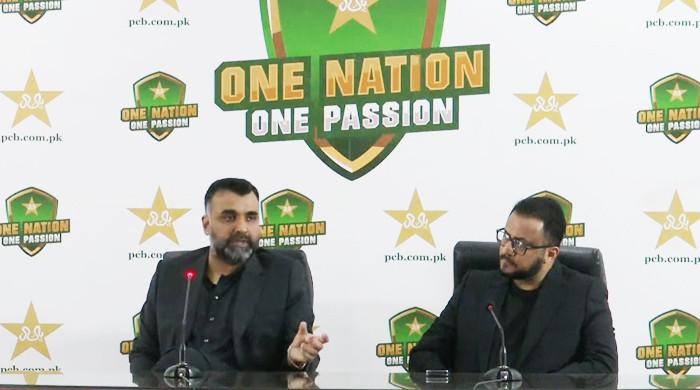
LAHORE: Hamza Majeed, the owner of Pakistan Super League (PSL) franchise Sialkot Stallionz, has firmly rejected bankruptcy claims and confirmed the appointment of the team’s coaching staff.
Speaking at a press conference at Gaddafi Stadium on Tuesday, The News reported, Majeed addressed rumours of financial trouble and alleged share transfers. He maintained that the franchise is financially stable and fully prepared for its debut campaign in the eleventh edition of the marquee league.
The press conference came amid wider instability at the Stallionz, following the resignation of senior management figure Kamil Khan and confirmation from Wasim Akram that he is no longer serving as franchise president.
Majeed categorically denied rumours of bankruptcy, stating that the first year’s franchise fee had already been submitted to the Pakistan Cricket Board (PCB) in January, backed by a three-year corporate guarantee.
He described the controversy as stemming from a “fake receipt” provided by a potential partner, whom he accused of misusing his trust. Legal proceedings and defamation notices have been initiated against those spreading what he called “baseless” allegations.
On ownership, Majeed rejected claims that 98% of the franchise had been sold. He acknowledged that equity dilution is under discussion but emphasised that any development remains subject to PCB approval.
He confirmed that a non-disclosure agreement has been signed with a prospective strategic partner, with formal announcements expected within two to three days.
Turning to cricketing matters, Majeed unveiled a heavyweight coaching panel for the Stallionz’ debut season.
Former Australia captain Tim Paine has been appointed head coach, supported by Mike Smith as assistant coach, Rana Naved-ul-Hasan as bowling coach, Sohaib Maqsood as batting coach, and Qaiser Abbas as technical advisor.
Australian physio Brandon Wilson will oversee player fitness. Majeed also confirmed that star batter Steve Smith remains committed to the squad and will feature in the playing XI.
He thanked the PCB for its support, noting that the board had given him space to resolve the crisis.
“If there was even a 1% doubt about my credibility, the PCB would have exited me from the league already,” he said. Looking ahead, Majeed promised long-term commitment, declaring: “You will see this face in the PSL for at least the next 10 years, Insha’Allah.”
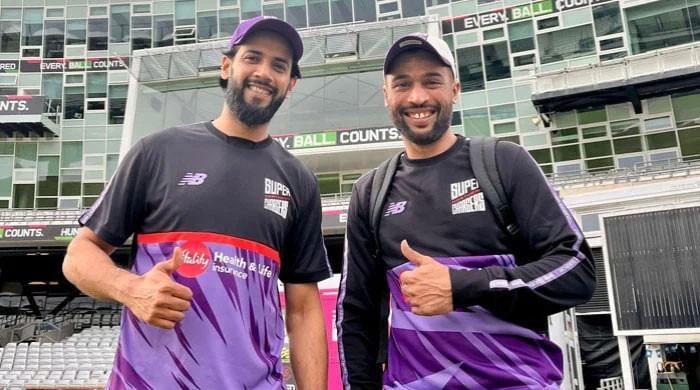
The England and Wales Cricket Board and all eight Hundred franchises said on Tuesday that players must not be excluded based on nationality, after reports that Indian-owned teams may avoid signing Pakistan cricketers.
The BBC reported last week that Manchester Super Giants, MI London, Southern Brave and Sunrisers Leeds would not consider signing Pakistan players for the competition amid ongoing tensions between Pakistan and India.
“The Hundred was established to reach new audiences, grow the game of cricket and ensure that everyone — regardless of their ethnicity, gender, faith, nationality or other — can feel they belong in our sport,” they said in a statement.
“Players must not be excluded on the grounds of their nationality. All eight teams commit to selection being based solely on cricketing performance, availability, and the needs of each team.”
The player auction is scheduled for March 11-12 in London, with 67 Pakistan players having registered, including fast bowlers Shaheen Shah Afridi, Haris Rauf and Naseem Shah, according to the BBC.
Pakistan players have been effectively barred from the Indian Premier League (IPL) since 2009.
The Hundred, the only cricket league in the world that uses the 100-ball format, will be held from July 21 to August 16 and was opened to private investment this year, with four franchises acquired by IPL owners.
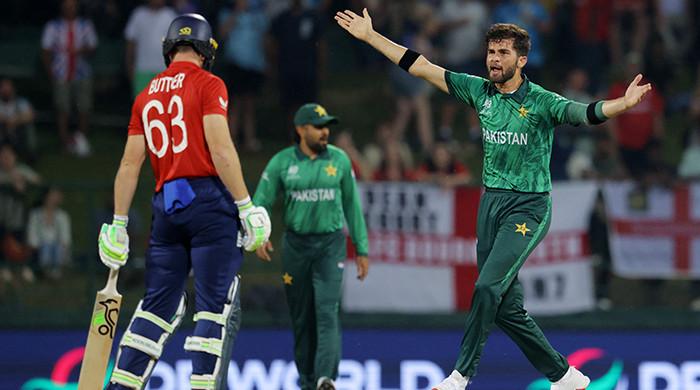
Former England international cricketer Michael Atherton has termed Pakistani pacer Shaheen Shah Afridi a very dangerous opponent for any team.
Despite England inflicting a defeat on the Pakistani side in the Super Eights stage of the T20 World Cup 2026 in Kandy, Atherton, who is also a cricket commentator, praised Shaheen for regaining form.
When asked to comment on the fast bowler, he said: “Wickets up top is what he’s all about. His combination of obviously decent pace, and if he can get that ball swinging, he remains a very dangerous opponent.”
England chased down their target of 165 with five balls to spare, despite a late wobble. Captain Harry Brook scored his first T20 international century to take England into the World Cup semi-finals with a nervy two-wicket win.
Atherton recalled that Shaheen — who took four wickets in the match against England — has had a difficult time. “And, you know, he’s one of the kind of iconic figures of Pakistan cricket.”
“So it’s good to see him back, taking wickets at the top of the order. And he got Pakistan right back in the game. They only needed to get Harry Brook out and that was probably Pakistan’s game. But Brook was just too good for them tonight,” he added.
After England restricted Pakistan to 164-9, Brook came in on the second ball of the innings with the score 0-1 after Phil Salt’s golden duck, caught behind off Shaheen.
Wickets tumbled in the power play but Brook stood firm.
He lifted his side from a precarious 35-3 to 155-6 when he was dismissed by Shaheen, having scored the second fastest century in T20 World Cup history and the first by a team captain.
Shaheen hailed Brook’s century as a “world-class knock” and said that this would be the best innings of his life. “Brook played proper cricketing shots, and he deserved a handshake, so I went to him and shook his hand in appreciation,” said the pacer.


Ailias Lets You Commission Your Own Personal Talking Man in a Box

Day 3: Clean Max Enviro Energy IPO Vs Shree Ram Twistex IPO; Know GMP, Subscription And Reviews

Asia Pacific logistics slows in Feb as post-holiday demand hits rates

-

 Entertainment1 week ago
Queen Camilla reveals her sister’s connection to Princess Diana
-

 Tech1 week ago
Rakuten Mobile proposal selected for Jaxa space strategy | Computer Weekly
-

 Politics1 week ago
Ramadan moon sighted in Saudi Arabia, other Gulf countries
-

 Entertainment1 week ago
Robert Duvall, known for his roles in "The Godfather" and "Apocalypse Now," dies at 95
-
 Business1 week ago
Tax Saving FD: This Simple Investment Can Help You Earn And Save More
-

 Politics1 week ago
Tarique Rahman Takes Oath as Bangladesh’s Prime Minister Following Decisive BNP Triumph
-

 Tech1 week ago
Businesses may be caught by government proposals to restrict VPN use | Computer Weekly
-

 Fashion1 week ago
Australia’s GDP projected to grow 2.1% in 2026: IMF