

Business
Doug Lebda dies: LendingTree CEO and founder pases away in ATV accident; company shares drop by 4% – The Times of India

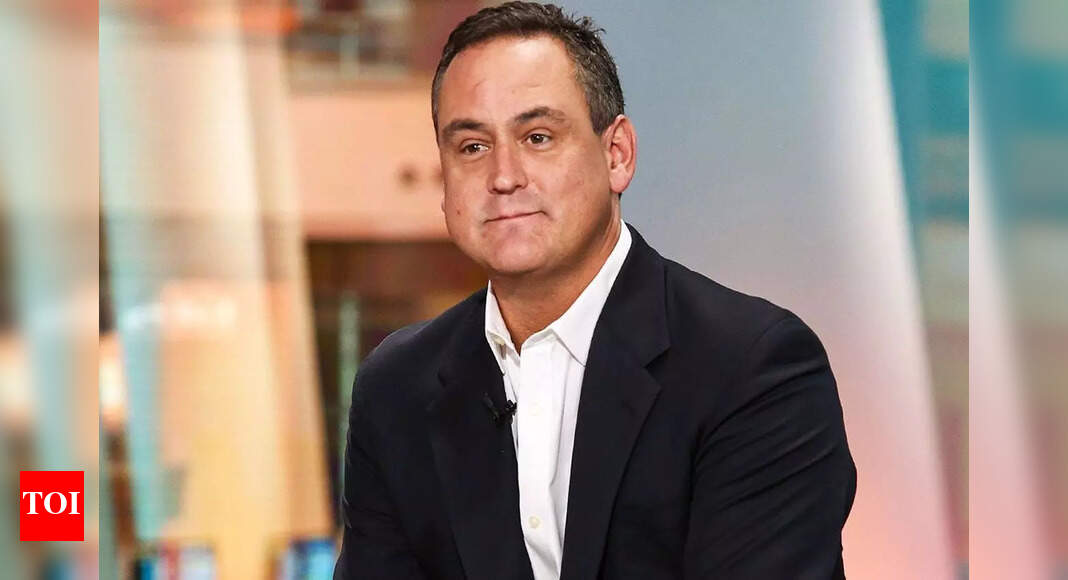
Doug Lebda, the 55-year-old founder and CEO of LendingTree, has died in a tragic all-terrain vehicle accident at his family’s farm in North Carolina. The online lending platform confirmed his death on Sunday and said the company was mourning the sudden loss of its leader.“Doug was a visionary leader whose relentless drive, innovation and passion transformed the financial services landscape, touching the lives of millions of consumers,” the board of directors said in a statement. “His passion will continue to inspire us as we move forward together.”Following his death, the company has appointed Scott Peyree, its chief operating officer and president, as CEO with immediate effect. Steve Ozonian, who serves as lead independent director, will take over Lebda’s position as chairman of the board.News of his passing hit the markets, with LendingTree’s shares falling more than 4% in afternoon trading on Monday, AP reported.Lebda launched LendingTree in 1996 after struggling to get his first mortgage, aiming to make loan shopping easier for consumers. The platform went national two years later and became a public company in 2000. It was later bought by IAC/InterActiveCorp before becoming independent again in 2008. Over the years, LendingTree expanded its services to help users compare options for mortgages, credit cards, insurance and more, and also acquired brands like CompareCards and Value Penguin.Beyond his work at LendingTree, Lebda co-founded Tykoon in 2010, a financial platform designed for children and families. Earlier in his career, he worked with PriceWaterhouseCoopers as an auditor and consultant, according to AP.“All of my ideas come from my own experiences and problems,” he told The Wall Street Journal in an interview in 2012.He is survived by his wife, Megan, and their three daughters: Rachel, Abby and Sophia. In her statement, Megan described him as “an amazing man with a heart so big it seemed to have room for everyone he met.”“Our hearts are broken, but we are also deeply grateful for the love and support that has poured in from across the world,” she said.
Business
PMI watch: India’s services growth eases in February as demand softens, costs rise – The Times of India

India’s services sector growth eased marginally in February as new business expansion slowed to a 13-month low, reflecting softer demand conditions and a rise in inflation, according to a monthly survey released on Wednesday. The seasonally adjusted HSBC India Services PMI Business Activity Index edged down to 58.1 in February from 58.5 in January. In PMI terminology, readings above 50 denote expansion, while those below 50 indicate contraction. “India’s Services PMI registered 58.1 in February, largely unchanged from January’s 58.5, signalling another month of robust expansion in the sector.” “While new order growth slowed to a 13-month low amid rising competition, service providers saw a notable pick-up in international sales and responded with increased hiring to meet operational needs,” said Pranjul Bhandari, Chief India Economist at HSBC. According to respondents, some firms benefited from stronger client enquiries and targeted marketing efforts, which supported sales. However, others reported that an increasingly competitive landscape limited the pace of growth. External demand stood out during the month. Services companies recorded improved business from several overseas markets, including Canada, Germany, mainland China, Singapore, the UAE, the UK and the US. Overall, international sales rose at the quickest pace since last August. Cost pressures intensified for service providers in February. Operating expenses increased at the sharpest rate in two-and-a-half years, prompting firms to raise their selling prices at the fastest pace in six months. “Input and output price inflation accelerated, with firms passing higher expenses — particularly for food and labour — on to customers, yet business confidence climbed to its highest level in a year as companies looked to broaden their market presence,” Bhandari said. At the combined level, private sector activity strengthened further. Total business output across manufacturing and services expanded at the fastest rate in three months, supported by improved demand and higher new business inflows. The HSBC India Composite PMI Output Index climbed to 58.9 in February from 58.4 in January. “Overall, the composite PMI rose to 58.9, reflecting the fastest pace of private sector activity growth in three months, buoyed by strong momentum in manufacturing,” Bhandari said. Composite PMI figures represent weighted averages of manufacturing and services indicators, with the weights reflecting their respective shares in official GDP data. While the pace of new order growth at the composite level was broadly similar to that seen around the start of the year, hiring activity strengthened to its highest level since last October. Inflationary trends were also evident in the broader private sector, with both input costs and output charges rising at quicker rates. These increases reached nine-month and six-month highs, respectively.

Last Updated:
India’s Sensex and Nifty correct 6-7%, with 80% of stocks in bear territory. Monarch AIF reports 64% of stocks over Rs 1,000 crore market cap has fallen 30%.




Hundreds of midcap and smallcap companies have quietly lost significant value.
India’s benchmark indices may not show it, but a large part of the market is already in deep correction. According to a report by Monarch AIF, while the Sensex and Nifty have corrected only about 6-7 per cent from their record highs, nearly 80 per cent of listed stocks are already in bear market territory.
The data highlights a sharp divergence between headline indices and the broader market.
Majority of Stocks Deep In Correction
The report analysed companies with a market capitalisation above Rs 1,000 crore.
It found that over 64 per cent of these stocks have fallen more than 30 per cent from their all-time highs. Nearly 78 per cent have declined over 20 per cent.
In simple terms, most stocks in the market have already seen a brutal correction even though benchmark indices remain relatively elevated.
This unusual divergence has been playing out for the past 18 months.
Why Indices Are Still Holding Up
According to the report, Indian markets are witnessing a rare phase of simultaneous time and value correction.
A narrow set of large-cap stocks has kept the benchmark indices elevated. Meanwhile, hundreds of midcap and smallcap companies have quietly lost significant value.
This has created a misleading picture where the indices appear stable but the broader market has been under sustained pressure.
Now A New Shock: Middle East War
The situation has become more complicated after the recent escalation in West Asia.
Following US-Israel strikes on Iran, global markets have turned volatile and crude oil prices have surged.
Amid these developments, the Sensex recently fell over 1,000 points, while the Nifty slipped below the 24,900 level.
For investors, the challenge is that a market already weakened by months of selling is now facing geopolitical risks and a potential oil shock.
Should Investors Buy Or Wait?
Aakash Shah, Technical Research Analyst at Choice Equity Broking, advised caution. “Amid persistent global uncertainties and elevated volatility, market participants are advised to maintain discipline and adopt a selective approach, focusing on fundamentally strong stocks during corrective phases. Fresh long positions should ideally be considered only after a decisive and sustained breakout above the 25,000 mark on the Nifty, which would signal improving sentiment and confirm the development of a stronger bullish structure,” he said.
Key Risk For India: Rising Oil
V K Vijayakumar, chief investment strategist at Geojit Investments, said the biggest concern for India is rising crude prices.
“With the war escalating and crude rising, markets are going into a period of heightened uncertainty. Nobody knows how long this conflict will go on and what will be the extent of the havoc it could wreck. From the perspective of India, which relies on imports for around 85% of her oil requirements, the real concern is the potential inflation and its consequences on economic growth. From the market perspective, the impact of potentially widening trade deficit, depreciating currency, higher inflation and perhaps lower growth is the real issue. If this fear materialises, corporate earnings will be impacted,” he said.
However, he added that the impact may be temporary if the conflict ends quickly.
“If it ends in, say 3 to 4 weeks, things will be back to normal,” he said.
Don’t Panic, Use Corrections
Despite the volatility, Vijayakumar advised investors not to panic. “Experience tells us that panicking and getting out of the market during uncertain times like these is not the right thing to do. Markets have an uncanny ability to surprise and climb all walls of worries,” he said.
According to him, investors with a long investment horizon and higher risk appetite can gradually accumulate quality stocks during corrections.
He added that sectors such as banking, pharmaceuticals, automobiles and defence may offer attractive long-term opportunities.
 Click here to add News18 as your preferred news source on Google.
Follow News18 on Google. Join the fun, play games on News18. Stay updated with all the latest business news, including market trends, stock updates, tax, IPO, banking finance, real estate, savings and investments. To Get in-depth analysis, expert opinions, and real-time updates. Also Download the News18 App to stay updated.
March 04, 2026, 13:39 IST
Read More
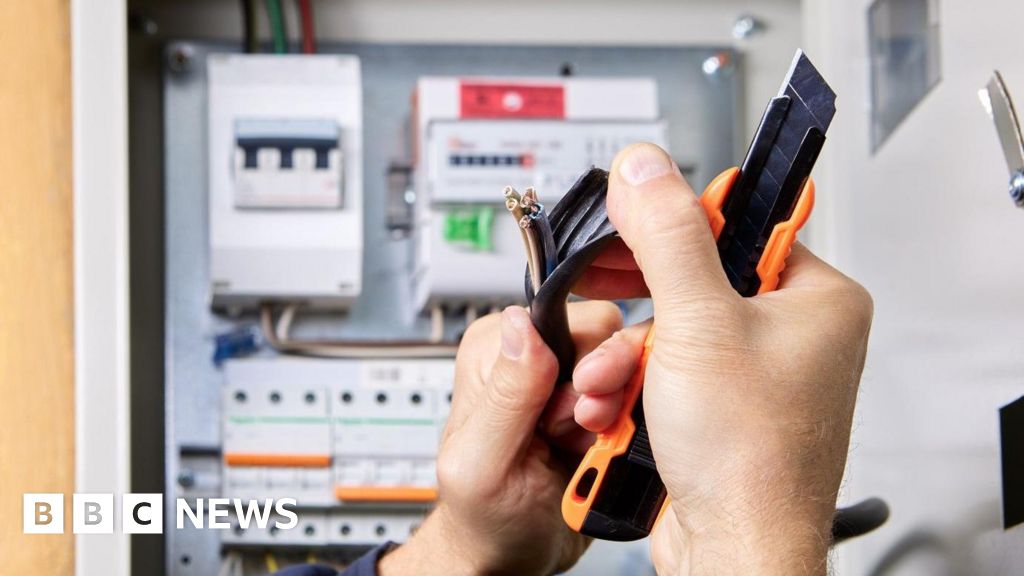
A BBC investigation speaks to electricians and families setting up illegal meter bypasses to steal power.
Source link


From ‘Freaky Friday’ to ‘Cruella’: Andrew Gunn’s blockbuster legacy

Babar, Saim dropped as 15-member squad for Bangladesh ODI series announced

What It’s Like to Have a Brain Implant for 5 Years

India Us Trade Deal: Fresh look at India-US trade deal? May be ‘rebalanced’ if circumstances change, says Piyush Goyal – The Times of India

Households set for lower energy bills amid price cap shake-up

What are Iran’s ballistic missile capabilities?

-
Business5 days ago
India Us Trade Deal: Fresh look at India-US trade deal? May be ‘rebalanced’ if circumstances change, says Piyush Goyal – The Times of India
-
Business1 week ago
Households set for lower energy bills amid price cap shake-up
-
 Politics6 days ago
What are Iran’s ballistic missile capabilities?
-

 Politics6 days ago
US arrests ex-Air Force pilot for ‘training’ Chinese military
-

 Fashion6 days ago
Policy easing drives Argentina’s garment import surge in 2025
-

 Sports1 week ago
Top 50 USMNT players of 2026, ranked by club form: USMNT Player Performance Index returns
-
 Business6 days ago
Attock Cement’s acquisition approved | The Express Tribune
-
 Business1 week ago
Lucid widely misses earnings expectations, forecasts continued EV growth in 2026