

Tech
Dozens of ICE Vehicles in Minnesota Lack ‘Necessary’ Lights and Sirens


More than two dozen Immigration and Customs Enforcement vehicles on the ground in the Minneapolis-St. Paul area “currently lack the necessary emergency lights and sirens” required to be “compliant with law enforcement requirements,” according to a contract justification published in a federal register on Tuesday.
The document justifies ICE paying Whelen Engineering Company, a Connecticut-based firm specializing in “emergency warning and lighting technology,” $47,330.49 for 31 “ATLAS1” kits—seemingly a typo of ATLAS, the name of the product sold by Whelen—which the company’s website describes as an “Adaptable Travel Light and Siren Kit.” The document explains that the ATLAS Kits would “allow vehicles to be immediately operational and compliant with law enforcement requirements to support the current surge operation” out of Homeland Security Investigations (HSI)’s St. Paul office, which conducts operations in Minnesota, North Dakota, South Dakota.
“These vehicles were deployed prior to being permanently retrofitted and currently lack the necessary emergency lights and sirens required for operational use,” the document says.
The document also says that because of the “the time-sensitive nature of the mission” that HSI agents are conducting, having to wait for “permanent retrofitting” the agency vehicles with lights and sirens “would negatively impact operational readiness, law enforcement officer safety, and public safety.”
HSI’s most recent public handbook for agents conducting “emergency driving”—defined as driving during “official duties,” like low- or high-risk pursuits, that may require breaking speed limits or violating certain traffic laws—appears to have been published in 2012. It says that any HSI vehicles without lights and sirens “may not be used” in emergency driving, unless the officer “is conducting surveillance or is responding to an event that may adversely impact or threaten life, health, or property or requires an immediate law enforcement response.”
The handbook adds that if an HSI officer is emergency driving but their vehicle does not have lights or sirens, they “must terminate” their participation in a law enforcement operation, and an officer from another law enforcement agency that does have lights and sirens should take over. This HSI officer ”may continue to assist in a backup role, if necessary.”
The handbook does not specify the exact number or location of lights that have to be on an emergency vehicle, but it says that officers are responsible for reviewing any state statutes for emergency lights and sirens where they operate. Minnesota state law requires law enforcement and emergency drivers to “sound an audible signal by siren” and have at least one red light on the front of the vehicle, among other stipulations.
According to the listing for the ATLAS Kit on Whelen’s website, the kit includes several items that are also sold separately by the company, including lightheads and lightbars, as well as a siren amplifier and speaker. The kit comes in a portable case resembling a wheeled suitcase and a small device with a microphone and buttons for controlling the other items in the kit. Whelen describes ATLAS as being “designed for quick installation” for any vehicle, regardless of make or model” and ideal for “on-the-go law enforcement.”
The listing comes six days after ICE officer Jonathan Ross fatally shot 37-year-old Renee Nicole Good in her car in Minneapolis, sparking massive protests and an influx of right-wing influencers trying to capitalize on the chaos. After Department of Homeland Security secretary Kristi Noem announced that hundreds of additional ICE officers would join the 2,000 already in the Minneapolis area, the State of Minnesota and the cities of Minneapolis and St. Paul filed a federal lawsuit against DHS and its top officials, asking the judge to halt the federal immigration enforcement operation underway in the state.









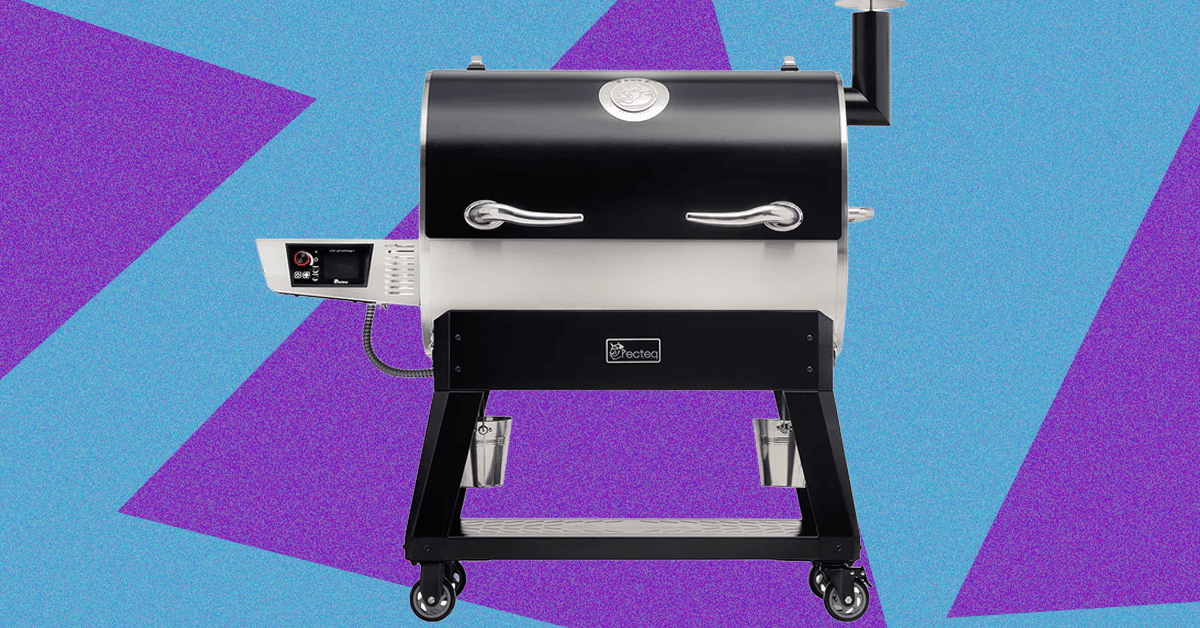
While my love of smoked meats is well-documented, my own journey into actually tending the fire started just last spring when I jumped at the opportunity to review the Traeger Woodridge Pro. When Recteq came calling with a similar offer to check out the Flagship 1600, I figured it would be a good way to stay warm all winter.
While the two smokers have a lot in common, the Recteq definitely feels like an upgrade from the Traeger I’ve been using. Not only does it have nearly twice the cooking space, but the huge pellet hopper, rounded barrel, and proper smokestack help me feel like a real pitmaster.
The trade-off is losing some of the usability features that make the Woodridge Pro a great first smoker. The setup isn’t as quite as simple, and the larger footprint and less ergonomic conditions require a little more experience or patience. With both options, excellent smoked meat is just a few button presses away, but speaking as someone with both in their backyard, I’ve been firing up the Recteq more often.
Getting Settled
Photograph: Brad Bourque
Setting up the Recteq wasn’t as time-consuming as the Woodridge, but it was more difficult to manage on my own. Some of the steps, like attaching the bull horns to the lid, or flipping the barrel onto its stand, would really benefit from a patient friend or loved one. Like most smokers, you’ll need to run a burn-in cycle at 400 degrees Fahrenheit to make sure there’s nothing left over from manufacturing or shipping. Given the amount of setup time and need to cool down the smoker after, I would recommend setting this up Friday afternoon if you want to smoke on a Saturday.

The main job of Google Chrome is to give you a window to the web. With so much engaging content out there on the internet, you may not have given much thought to the browser framework that serves as the container for the sites you visit.
You’d be forgiven for still using the default toolbar configuration that was in place when you first installed Chrome. But if you take a few minutes to customize it, it can make a significant difference to your browsing. You can get quicker access to the key features you need, and you may even discover features you didn’t know about.
If you’re reading this in Chrome on the desktop, you can experiment with a few customizations right now—all it takes is a few clicks. Here’s how the toolbar in Chrome is put together, and all the different changes you can make.
The Default Layout
Take a look up at the top right corner of your Chrome browser tab and you’ll see two key buttons: One reveals your browser extensions (the jigsaw piece), and the other opens up your bookmarks (the double-star icon). There should also be a button showing a downward arrow, which gives you access to recently downloaded files.
Right away, you can start customizing. If you click the jigsaw piece icon to show your browser extensions, you can also click the pin button next to any one of these extensions to make it permanently visible on the toolbar. While you don’t want your toolbar to become too cluttered, it means you can put your most-used add-ons within easy reach.
For the extension icons you choose to have on the toolbar, you can choose the way they’re arranged, too: Click and drag on any of the icons to change its position (though the extensions panel itself has to stay in the same place). To remove an extension icon (without uninstalling the extension), right-click on it and choose Unpin.
Making Changes

Click the three dots up in the top right corner of any browser window and then Settings > Appearance > Customize your toolbar to get to the main toolbar customization panel, which has recently been revamped. Straight away you’ll see toggle switches that let you show or hide certain buttons on the toolbar.

“The trade-off isn’t only ethical or economic,” Andreaux adds. “It’s also about reliability, privacy and personal security.”
Abed Kataya, digital content manager at SMEX, a Beirut-based digital rights organization focused on internet policy in the Middle East and North Africa, says piracy in the region is shaped less by culture than by structural barriers.
“I see that piracy in MENA is not a cultural choice; rather, it has multiple layers,” Kataya tells WIRED Middle East.
“First, when the internet spread across the region, as in many other regions, people thought everything on it was free,” Kataya says. “This perception was based on the nature of Web 1.0 and 2.0, and how the internet was presented to people.”
Today, he says, structural barriers still lead many users towards illegal platforms. “Users began to watch online on unofficial streaming platforms for many reasons: lack of local platforms, inability to pay, bypassing censorship and, of course, to watch for free or at lower prices.”
Payment access also remains a major factor. “Not to mention that many are unbanked, do not have bank accounts, lack access to online payments, or do not trust paying with their cards and have a general distrust of online payments,” Kataya adds.
Algerian students also share external hard drives loaded with television series, while in Lebanon streaming passwords are frequently shared across households. In Egypt, large Telegram channels distribute content across different genres, including Korean dramas, classic Arab films and underground music.
“We grew up solving problems online,” says Mira. “When something is blocked, you find a way around it. It’s … a fundamental human instinct.”
Streaming Platforms Adapting
Andreaux says StarzPlay has tried to address some of the payment barriers that limit streaming adoption in the region. “StarzPlay recognized early that payment friction was a regional barrier to adoption,” he says. “That’s why we invested in flexible subscription models and alternative payment methods, including telecom-led billing options that make access easier across different markets.”
At the same time, international media companies are working together to combat piracy through the Alliance for Creativity and Entertainment (ACE), a coalition of film studios, television networks and streaming platforms that targets illegal distribution of films, television and sports content. Its members include global companies such as Netflix as well as regional players like OSN Group, which operates the streaming service OSN+ across the Middle East and North Africa.
Kataya notes that legitimate streaming platforms are still expanding across the region. “The user base of official streaming platforms has been growing in the region,” he says. “For example, Shahid, the Saudi platform, is expanding and Netflix has dedicated packages for the region.”
“Other players, like StarzPlay and local platforms in Egypt, are also finding their place,” Kataya adds. “Social media also plays a huge role, especially when a film is widely discussed or controversial.”
Piracy carries legal and security risks, Andreaux says. “Rather than just ‘free streaming’, piracy exposes consumers to malware and insecure payment channels,” he says. “It also weakens investment in local content by depriving creators of revenue and reducing jobs.”
But the structural barriers described by users across the region remain. For many viewers in North Africa and the Levant, the challenge is not choosing between piracy and legality—it is whether legitimate access exists at all.


NAACP Image Award host Deon Cole issues Tourette warning after BAFTAs

Late to set-piece party, Liverpool are making up for lost time

World reacts to martyrdom of Iran’s Supreme Leader Khamenei

Pakistan carries out precision strikes on seven militant hideouts in Afghanistan

Eye-popping rise in one year: Betting on just gold and silver for long-term wealth creation? Think again! – The Times of India

Kansas’ Darryn Peterson misses most of 2nd half with cramping

-
 Politics1 week ago
Pakistan carries out precision strikes on seven militant hideouts in Afghanistan
-
Business1 week ago
Eye-popping rise in one year: Betting on just gold and silver for long-term wealth creation? Think again! – The Times of India
-
 Sports1 week ago
Kansas’ Darryn Peterson misses most of 2nd half with cramping
-

 Entertainment1 week ago
Saturday Sessions: Say She She performs "Under the Sun"
-

 Tech1 week ago
The Supreme Court’s Tariff Ruling Won’t Bring Car Prices Back to Earth
-

 Entertainment1 week ago
Viral monkey Punch makes IKEA toy global sensation: Here’s what it costs
-

 Tech1 week ago
These Cheap Noise-Cancelling Sony Headphones Are Even Cheaper Right Now
-

 Sports1 week ago
Floyd Mayweather to come out of retirement again