

Fashion
Drewry WCI rises for sixth consecutive week, Hormuz a concern


Spot rates from Rotterdam to New York jumped 25 per cent to $1,968 per 40ft box this week, breaking the usual trend of stability on the Transatlantic. The primary catalyst for this increase is a 13 per cent MoM contraction in available ocean capacity for April.
Drewry’s WCI increased 0.96 per cent to $2,309 per FEU, marking its sixth straight weekly rise, driven by strong Transpacific and Transatlantic rates.
Capacity constraints and rising bunker costs supported the uptrend, while Asia–Europe lanes softened.
Ongoing Hormuz uncertainty and fuel disruptions are likely to keep freight rates elevated.
On the Transpacific route, spot rates from Shanghai to New York increased 7 per cent to $3,671 per 40ft container, while those to Los Angeles rose 9 per cent to $2,910. Maersk is seeking US regulatory approval to waive off the 30-day notice period and to introduce an emergency bunker surcharge, citing elevated and volatile fuel costs amid tensions in the Middle East. The proposed surcharge is $200 per TEU for head-haul and $100 per TEU for backhaul dry shipments. With carriers continuing to push for rate increases, Drewry expects spot rates to increase further in the coming weeks.
Spot rates on the Asia–Europe trade declined this week, with those on Shanghai–Genoa falling 3 per cent to $3,420 per 40ft container and on Shanghai–Rotterdam decreasing 9 per cent to $2,308 per 40ft container. According to Drewry’s Container Capacity Insight, only one blank sailing has been announced for next week on the Asia–Europe trade, indicating relatively stable capacity.
Rates from New York to Rotterdam increased 6 per cent to $1,063 per FEU, while Rotterdam to New York increased 25 per cent to $1,968 per FEU. Rotterdam-Shanghai declined 2 per cent to $592 per FEU, and Los Angeles–Shanghai grew 3 per cent to $762 per 40-foot container.
A temporary two-week ceasefire in the Strait of Hormuz has allowed some shipping activity to resume, but the situation remains uncertain. Vessels are required to coordinate transit with Iranian authorities, and since no clear guidelines are available yet along with proposed transit fees, carriers are proceeding cautiously. The immediate focus is on clearing ships already stuck in the Persian Gulf rather than sending new ones in.
At the same time, disruptions to oil flows, which account for nearly 20 per cent of global supply through the strait, are ongoing and may take months to fully normalise. This continues to squeeze bunker fuel availability, which is expected to keep freight rates elevated in the near term.
Fibre2Fashion News Desk (KUL)












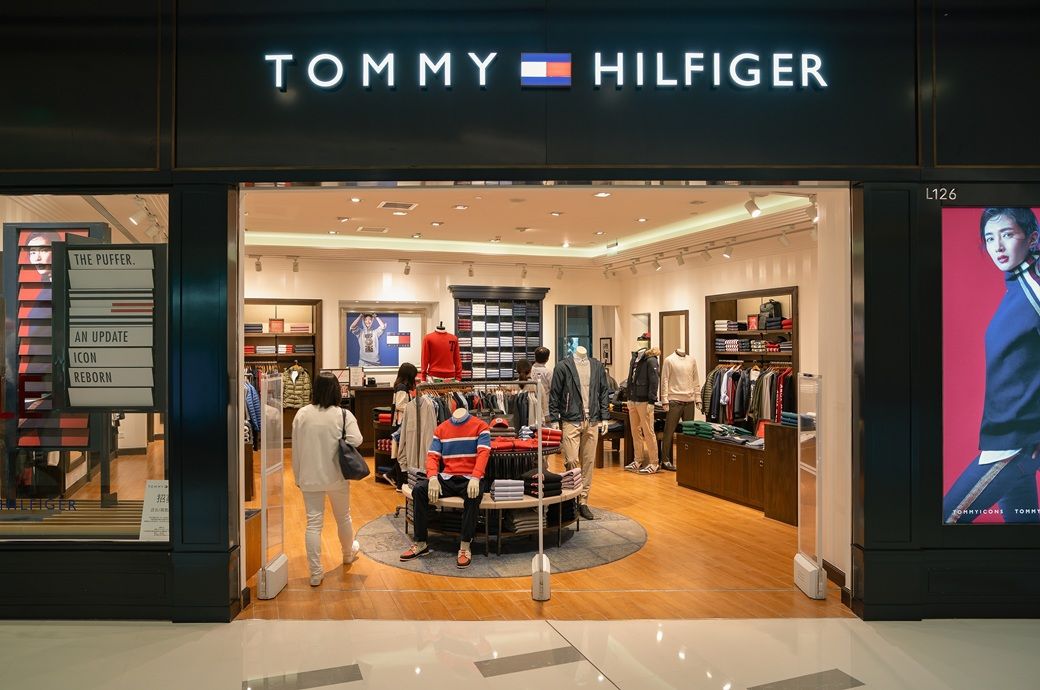
For 2026, PVH projects revenue to increase slightly, with non-GAAP operating margins projected to remain stable at around 8.8 per cent. However, the outlook incorporates a significant tariff burden, estimated to reduce EBIT by approximately $195 million, alongside continued mitigation efforts. Non-GAAP EPS is projected in the range of $11.8 to $12.1, supported partly by favourable currency movements.
PVH is expecting pressure on core profitability from tariff headwinds despite modest 2025 growth.
For 2026, it guides slight revenue growth and stable margins, though tariffs may cut EBIT by $195 million.
Q4 was strong, with revenue up 6 per cent and margins improving.
2025 revenue rose 3 per cent, while non-GAAP EPS beat guidance but lagged earlier projections.
Melissa Stone, interim chief financial officer, PVH Corp, said, “As we look towards 2026, we expect to deliver operating margins consistent with 2025, including modest gross margin expansion, despite the inclusion of a full year of tariffs, and strong expansion on an underlying basis.”
Strong Q4 performance lifts margins despite tariff impact
Meanwhile, in Q4 2025 ended February 1, 2026, revenue rose 6 per cent to $2.5 billion, beating expectations, while non-GAAP EPS reached $3.82, well above guidance. Operating margin for the quarter improved to 10 per cent on a non-GAAP basis, despite a 170 basis point tariff impact, reflecting improved cost discipline and operational execution.
Stefan Larsson, CEO at PVH Corp, commented, “We delivered a strong fourth quarter and finish to the year, driven by the strength of our two iconic global brands, Calvin Klein and Tommy Hilfiger, and the continued disciplined execution of our PVH+ Plan. In the fourth quarter, we beat our guidance across revenue, operating margin and EPS on a non-GAAP basis.”
Region-wise, the Americas and Europe, Middle East and Africa (EMEA) recorded growth in Q4, supported by wholesale strength and brand initiatives, while Asia-Pacific (APAC) declined due to softer demand and timing impacts related to the Lunar New Year. Direct-to-consumer (DTC) performance remained mixed, with modest gains offset by weakness in physical retail, while digital commerce continued to show gradual improvement.
The company reported full-year 2025 revenue of $8.95 billion, marking a 3 per cent increase year on year (YoY). However, on a constant currency basis, revenue rose less than 1 per cent, reflecting muted underlying demand across key markets, PVH said in a press release.
On the earnings front, PVH posted GAAP earnings per share (EPS) of $0.52, sharply lower than the prior year due to one-off items including impairment charges. On a non-GAAP basis, EPS stood at $11.4, exceeding revised guidance of $10.85 to $11, though falling short of earlier projections issued in 2024.
Fibre2Fashion News Desk (SG)

The most traded May 2026 contract settled at 73.26 cents per pound, up 1.59 cent or 2.22 per cent. The contract has broken the key 73-cent resistance level, showing strong buying interest. December 2026 contract settled at 76.87 cents per pound, with gains of 1.40 cent. Most active contracts across the board gained between 80 and 174 points.
ICE cotton surged to an 11-month high, breaking the 73-cent level, driven by a weaker US dollar and drought concerns in key growing regions.
Strong trading volumes and speculative interest reinforced bullish sentiment.
Despite bearish USDA data, weather risks and rising crude oil prices supported cotton as a preferred fibre in the near term.
Market movement defied earlier “oversold” expectations, showing strong reversal and aggressive buying activity.
Trading volume remained exceptionally high at 143,973 contracts during the session, ranking as the 5th highest volume ever recorded. Previous session volume was even higher at 156,255 contracts (3rd highest ever), confirming sustained heavy participation and strong speculative trade interest. In 2026 so far, trading volume has exceeded 120,000 contracts in 7 out of 12 sessions, highlighting consistently elevated market activity.
US dollar index declined to near a one-month low, making US cotton cheaper for overseas buyers and boosting export competitiveness.
Crude oil prices rose approximately 3 per cent due to concerns over continued restrictions in the Strait of Hormuz, increasing polyester production costs and indirectly supporting cotton demand as an alternative fibre.
Market analysts noted prices dipped overnight but rebounded due to weaker dollar and drought concerns, highlighting weather as a key driver.
USDA weekly export sales data showed net sales of 319,600 bales for the current marketing year for week ending April 2, down 14 per cent from previous week but up 25 per cent compared to the 4-week average. Export data initially pressured prices but overall market sentiment remained supported by supply concerns.
ICE certified deliverable stock of No. 2 cotton futures remained unchanged at 128,213 bales as of April 8, indicating no immediate tightness from stock movement.
USDA increased global cotton production forecast for 2025-26 by 900,000 bales while raising global consumption by 560,000 bales.
Analysts said that although demand is improving, supply is rising at a faster pace (bearish factor), but adverse US growing conditions are currently providing stronger support to prices. The market is currently reacting more to weather risks than to bearish fundamental data, indicating short-term sentiment dominance
In broader commodity markets, CBOT wheat, corn, and soybean futures rebounded from previous session lows and moved higher during the day. CBOT May soybean futures closed slightly higher, supported by gains in soybean meal and soybean oil along with cross-market strength.
Cotton market showed a strong bullish breakout above 73 cents backed by heavy volume, weak dollar, and weather concerns, with price action clearly overriding bearish USDA supply projections, indicating continued weather-driven strength in the near term.
This morning (Indian Standard Time), ICE cotton for May 2026 traded at 73.16 cents per pound (down 0.10 cent), cash cotton at 71.26 cents (up 1.59 cent), the July 2026 contract at 75.25 cents (down 0.07 cent), the October 2026 contract at 77.10 cents (up 0.15 cent), the December 2026 contract at 76.79 cents (down 0.08 cent) and the March 2027 contract at 77.54 cents (down 0.08 cent). A few contracts remained at their previous closing levels, with no trading recorded so far today.
Fibre2Fashion News Desk (KUL)
Gap Inc. (NYSE: GAP), the parent company of Old Navy, Gap, Banana Republic and Athleta, introduced two new AI technologies designed to make online shopping simpler and more confident for customers: personalised fit guidance from Bold Metrics’ Agent Sizing Protocol and support for Google’s new Universal Commerce Protocol (UCP), to enable more seamless conversational and agentic commerce experiences.
Gap Inc. is integrating AI across its digital ecosystem, introducing personalised fit recommendations and conversational checkout through Google’s UCP.
By embedding predictive sizing and enabling seamless purchases within AI platforms like Google Search and Gemini, the company aims to reduce friction, boost confidence, and enhance end-to-end online shopping experiences.
As many retailers continue to test isolated AI use cases, Gap Inc. has rebuilt its digital foundation to support AI end-to-end. Built on unified Google Cloud data, AI-ready architecture, and disciplined governance, the company is scaling intelligence across every journey – not as a side initiative, but as part of its operating model.
“We are not pursuing AI for novelty,” said Sven Gerjets, Chief Technology Officer, Gap Inc. “These partnerships are about solving real customer problems; helping shoppers feel confident about fit and making it easier to complete a purchase. They also reflect the holistic AI strategy we have built to scale intelligence across the enterprise in a disciplined way that drives measurable value over time.”
Uncertainty about size remains a major barrier to buying apparel online. Through Bold Metrics, Gap Inc. is embedding predictive fit guidance directly into AI-driven shopping flows.
Instead of relying on static charts, customers receive personalised size recommendations within conversational experiences, at the moment they are ready to buy. By integrating fit intelligence into the purchase path, Gap Inc. is making sizing a core capability of agentic commerce.
As shopping shifts from traditional search engines to AI-powered answer engines, Gap Inc. is ensuring its brands appear accurately and transaction-ready within conversational AI experiences.
Through Universal Commerce Protocol (UCP), Gap Inc. will meet their customers wherever they choose to shop, with products ready for seamless checkout across emerging AI-native environments. Customers will be able to purchase products from Gap while using and searching in AI Mode in Google Search and the Gemini app.
Note: The headline, insights, and image of this press release may have been refined by the Fibre2Fashion staff; the rest of the content remains unchanged.
Fibre2Fashion News Desk (MS)


Pacers fans go viral after animated conversation caught on camera during Nets game in Brooklyn

Kiyan Anthony returning to Syracuse for sophomore season

Dan Levy talks series "Big Mistakes" and reflects on "Schitt's Creek"

-
 Business1 week ago
Jaguar Land Rover sees sales recover after cyber attack
-
Uncategorized1 week ago
[CinePlex360] Please moderate: “Trump signals p
-

 Entertainment7 days ago
Joe Jonas shares candid glimpse into parenthood with Sophie Turner
-

 Tech7 days ago
Our Favorite iPad Is $50 Off
-

 Sports7 days ago
UConn Final Four run could trigger a $50M furniture giveaway for Massachusetts-based Jordan’s Furniture
-
 Business1 week ago
Video: Why Is the Labor Market Stuck?
-

 Entertainment7 days ago
Blake Lively reacts to harassment claims dismissal against Justin Baldoni
-

 Politics1 week ago
Iran can sustain Strait of Hormuz closure for years, will cut US military logistics: Official