

Politics
Dubai launches service to check travel bans and legal cases



DUBAI: A new service has been introduced by the Dubai Police allowing residents to check their legal status online, offering a streamlined way to access information about potential legal cases, police reports, or travel bans.
The “Circulars and Travel Ban” service, available through the Dubai Police smartphone app or website, enables users to quickly determine whether they are involved in any financial or criminal cases, or if any travel restrictions have been imposed.
The service is free of charge and requires only the entry of an Emirates ID number to retrieve legal information.
The officials stated the platform is designed to be user-friendly, reducing the need for residents to visit police stations, courts, or government offices.
The initiative is part of Dubai Police’s efforts to modernise and enhance public services.
By providing easy access to legal information, the service aims to help residents avoid potential legal complications and address issues promptly, saving both time and effort, according to officials.
The enhanced version of the enquiry service, as per the police, “replaces the traditional approach of visiting several entities with a seamless digital model that puts convenience and time at the centre”.
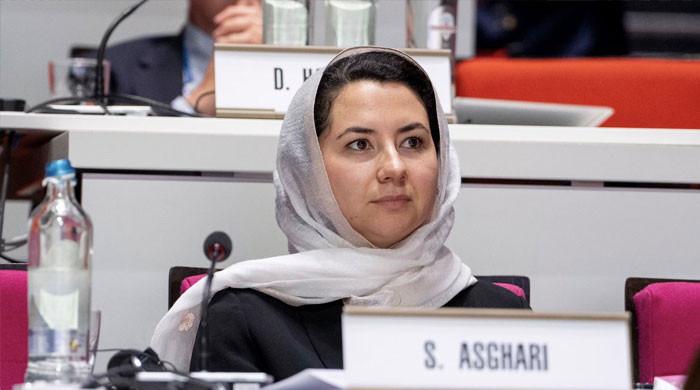
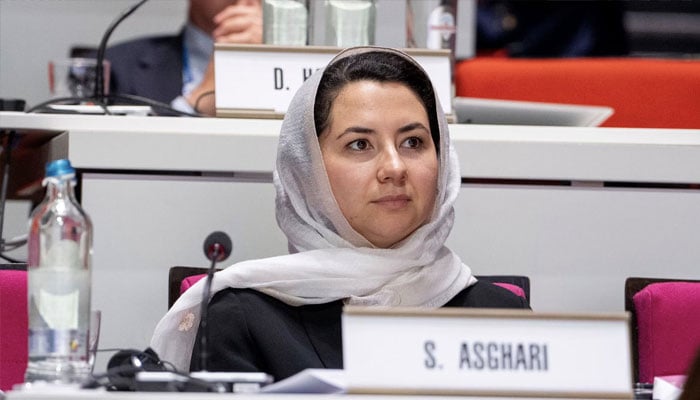
PARIS: Afghanistan’s International Olympic Committee member Samira Asghari has told AFP that the Taliban authorities must face the stark truth that if they are ever to be accepted internationally, they must respect the rights of women to education and sport.
Asghari, who at 31 is living in exile for the second time, does however, favour engaging with Afghanistan’s rulers.
The Taliban government had banned girls from schools beyond the age of 12, and barred women from most jobs and public services, and from playing sport.
Asghari, who in 2018 became Afghanistan’s first ever IOC member, accepts her “situation is quite challenging” and beating the drum for Afghan women’s sport “does require certain precautions”.
Nevertheless, the former international basketball player, like many top Afghan women athletes, is undeterred in speaking out about the treatment of women under the Taliban authorities.
“The reality is that when you take a public stand for women’s rights, you do become a target, but I believe strongly in communication and engagement,” she said in an email interview.
“As long as the Taliban remain the reality on the ground in Afghanistan, we cannot afford to waste time doing nothing.
“In my role, I have tried to help smooth the discussions between the IOC and those currently in control, focusing on the sport rights of women and girls and particularly primary school girls who are still inside Afghanistan.”
Asghari, one of four children born to a retired professional make-up artist mother and a father who was a manager in the Afghan Olympic national committee, says the “conversations are not always easy.”
“They are not about legitimising any government,” she said.
“But they are very important for creating tangible opportunities for future generations of young boys and girls in Afghanistan.”
‘Fundamental change’
With Afghan sportswomen spread around the globe, putting together teams is complex.
However, a women’s football team, Afghan Women United, made up of players based in Europe and Australia, recently competed in FIFA Unites: Women’s Series 2025 in Morocco.
“This support for athletes outside Afghanistan is just the first step, and I hope FIFA can align with the IOC’s ongoing talks with the Taliban,” she said.
Asghari, who had been involved in the “project” for over a year, hopes the message gets through to Afghanistan’s rulers.
“The Taliban were given the country, and now they’re trying to maintain power while ignoring fundamental human rights, particularly for women,” she said.
“It’s very difficult for them to continue ruling Afghanistan this way in the long term, and the Taliban need to understand that their international acceptance is directly linked to respecting human rights, including the rights of women to education and sport.”
Asghari, who attended the recent Islamic Solidarity Games in Riyadh, where Afghan women and men competed, said she hoped for “small openings” in the Taliban’s stance.
“I also believe that if we can find small openings — like developing sport in primary schools where girls are still allowed to attend up to sixth grade — we should take them,” she said.
“This isn’t about accepting the Taliban’s restrictions; it’s about not abandoning the girls and women of Afghanistan.
“We have to work with reality, while continuing to push for fundamental change.”
Asghari says even achieving small breakthroughs like that could prevent the long-term harm women suffered during the Taliban’s first spell in power, from 1996 to 2001.
She said she had seen the impact on her return from her first period of exile in Iran.
“What concerns me deeply is that we’re creating another lost generation,” she said.
“I remember when I was in sixth grade, aged 12, and there was a 20-year-old woman sitting next to me in the same class because she couldn’t go to school during the previous Taliban era.
“I didn’t know how to communicate with her, and it was difficult for both of us, but especially for her because she had lost so many years.
“I cannot accept seeing this happen again. That’s why even small opportunities matter so much.”
Asghari retains hope despite the bleak outlook and believes in “continued engagement and dialogue” with the Taliban.
“The future of Afghanistan is this young generation. We need to give them every opportunity we can, no matter how small, and never, ever give up on them.”
- US embassy in India reschedules visa interviews.
- New appointment dates extend to mid-2026.
- US hosts largest Indian diaspora including 2.1m NRIs.
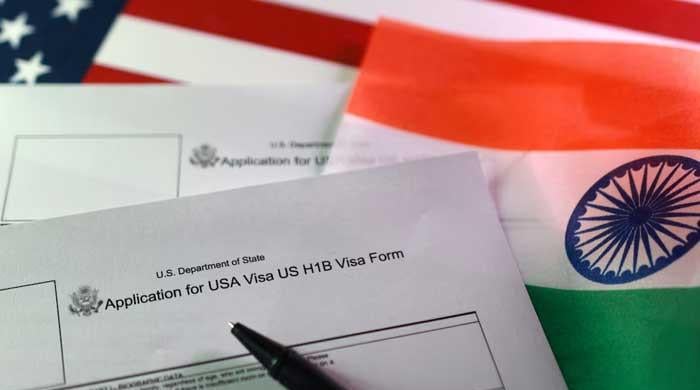
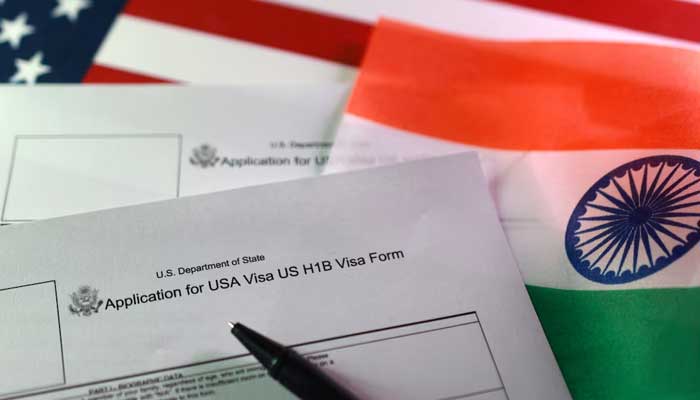
The United States’ embassy in India has said that it will deny tourist visa applications if its consular officers believe that it is primarily aimed at giving birth in the country to secure US citizenship for a child.
“This is not permitted,” the US embassy in New Delhi said in a post on X.
The move, as reported by the Gulf News, adds to uncertainty for Indian visa holders which have so far caused unease among professionals accounting for over 70% H-1B approvals and nearly 90% H-4 visas with work authorisation.
The US embassy in India has rescheduled visa interviews with some applicants given fresh appointment dates extending to mid-2026.
The Trump administration, back in September, proposed that would rework the H-1B visa selection process to favour higher-skilled and better-paid workers, according to a related Federal Register notice, a move that follows a White House proclamation on Friday introducing a $100,000 fee for the visas.
The new process, if finalised, would give heavier weight to applications by employers who pay high wages if annual requests for the visas exceed the statutory limit of 85,000, the notice said.
The move aims to better protect Americans from unfair wage competition from foreign workers, it said.
President Trump, a Republican, sought to reshape the H-1B process during his 2017-2021 presidency, but was stymied by federal courts and limited time at the end of his presidency.
Tighter US immigration policies, particularly for the H-1B skilled-worker visa, are making families in India less inclined to marry their children to Indian citizens based in the US for fear the potential partners might lose their job or immigration status, according to matchmakers, academics and prospective brides and grooms.
There is no official government data on marriages between Indian citizens living at home and overseas.
The US has the world’s largest Indian diaspora, according to Indian government including around 2.1 million Non-Resident Indians (NRIs).
Since returning to office in January, Trump has launched a broad immigration crackdown, including efforts to limit legal pathways to residency. His overhaul of the H-1B visa marks the most prominent effort to reshape temporary work visas and hit Indians, who accounted for 71% of those visas last year, particularly hard.
About 75% of the H-1B visas issued to Indian citizens in 2024 were awarded to men, according to data from US Citizenship and Immigration Services.
Trump’s visa overhaul has also prompted many Indian students to rethink the ‘American Dream’. There were some 422,335 Indian students in the US in 2024, according to US Immigration and Customs Enforcement data.


Mexico’s Senate has passed legal reforms that could impose up to eight years in jail and fines of up to 226,000 pesos ($12,500) for the production or sale of vapes and electronic cigarettes, a massive ramp-up of enforcement measures that critics call overly restrictive.
The changes to the General Health Law, ratified late Wednesday by pro-government senators after clearing the lower house on Tuesday, now await enactment by President Claudia Sheinbaum, who supports the legislation.
“There’s this idea that not smoking tobacco or a cigarette can be replaced by using a vape, and the truth is that vapes, in some cases, are even more harmful than cigarettes,” Sheinbaum said on Friday. “You shouldn’t smoke cigarettes, and you shouldn’t use vapes.”
Following the rise of anti-tobacco measures worldwide, Mexico banned smoking in most public spaces about two decades ago. In recent years, the government has turned its attention to limiting the sale of vapes and electronic cigarettes, which are also prohibited in Argentina and Brazil amid increasing concern over health impacts.
Mexico has not banned the actual use of vapes.
Sheinbaum said the government is working with state authorities to curb potential illegal markets for these products, noting concerns over organised crime involvement. She did not discuss when the new rules would go into effect.
Opposition Senator Luis Colosio criticised the reforms, calling them “prohibitionist.” During the debate on Thursday, he said the government was avoiding its responsibility to regulate and monitor the industry by opting instead for an outright ban.
“Prohibitions are nothing more than an easy way out of a problem they either don’t want to or can’t control,” Colosio said.
Despite the measures, vapes and e-cigarettes remain readily available in Mexico City’s retail stores, and authorities have yet to outline plans to address street-level sales.
“It would be good if they banned them because people like me keep buying them, and the truth is, they’re very cheap everywhere,” a Mexico City resident identified as Valentina told broadcaster Milenio TV.


‘What if I over-served fans?’

Pre-Budget jitters blamed for surprise contraction in economy

Afghan IOC member hopes Taliban dialogue spark u-turn over women’s rights

-

 Sports7 days ago
Australia take control of second Ashes Test | The Express Tribune
-

 Politics6 days ago
17 found dead in migrant vessel off Crete: coastguard
-

 Entertainment1 week ago
Sabrina Carpenter recalls ‘unbelievable’ experience with pal Taylor Swift
-

 Fashion1 week ago
Bangladesh’s economic outlook cautiously optimistic: Govt
-

 Fashion4 days ago
Germany’s LuxExperience appoints Francis Belin as new CEO of Mytheresa
-

 Tech1 week ago
The Trump Administration Wants Immigrants to Self-Deport. It’s a Shit Show
-

 Tech7 days ago
WIRED Roundup: DOGE Isn’t Dead, Facebook Dating Is Real, and Amazon’s AI Ambitions
-

 Politics1 week ago
Gen-Z battles to gain political ground after ousting ex-PM Hasina in Bangladesh