

Business
Economic growth not enough to meet needs of rapidly growing population: Aurangzeb – SUCH TV


However, in an interview with USA Today, the finance czar pointed out that the economic growth of 2.7% in the previous fiscal year, though positive, is insufficient to absorb the needs of a rapidly growing population.
The minister said macroeconomic stability was opening new horizons for domestic and global investors, and positioning the country for sustainable, long-term economic growth.
He said this transition has been enabled by macroeconomic stabilisation, easing inflation and improved external balances, with the government driving export-led, productivity-based growth through structural reforms, sustaining reform momentum despite challenges, and actively encouraging global investment in emerging opportunities across agriculture, minerals, technology and climate resilience.
Aurangzeb highlighted that Pakistan has entered the fiscal year 2025 from a position of renewed strength, marked by macroeconomic stability, improving external balances, and a firm commitment to structural reform.
He noted that, for the first time in several years, Pakistan has achieved both a primary fiscal surplus and a current account surplus, signalling a decisive shift away from the cycle of recurring deficits. Strong remittance inflows have played a critical role in supporting this turnaround, while inflation has fallen sharply from a peak of 38% to single-digit levels.
Sustainable growth remains the central challenge
Senator Aurangzeb emphasised that while macroeconomic stabilisation is an essential foundation, sustainable growth remains the central challenge.
Drawing lessons from the past, he underlined that Pakistan is consciously moving away from a consumption-and debt-driven growth model towards an export-led strategy.
The current budget, he explained, reflects this shift through structural reforms in taxation, energy pricing, and state-owned enterprises, alongside far-reaching tariff reforms aimed at dismantling decades of protectionism and enhancing global competitiveness.
He highlighted that Pakistan is aligning its economic strategy with changing global demand patterns, identifying information technology services, textiles, and agricultural exports as key areas with strong potential.
He noted that IT exports have already crossed four billion US dollars and could double within five years with sustained regulatory clarity and infrastructure development.
Efforts are also underway to simplify tax regimes for exporters and reduce bureaucratic hurdles in order to foster long-term productivity and competitiveness.
Pakistan’s future hinges on challenges beyond fiscal numbers
Addressing the broader reform agenda, Finance Minister Aurangzeb stated that privatisation of state-owned enterprises, tariff liberalisation, and restructuring of the energy sector are designed to address deep-rooted inefficiencies that have historically strained public finances.
These reforms, he said, are part of a longer-term vision, echoing the World Bank’s assessment of Pakistan’s potential “East Asia moment.”
He referred to the ten-year Country Partnership Framework with the World Bank, the first of its kind, which places emphasis on economic reform alongside climate resilience and population management.
The federal minister also underscored that Pakistan’s future hinges on addressing existential challenges beyond fiscal indicators. Population growth, climate change, child stunting, learning poverty and the exclusion of girls from education were identified as critical issues that must be tackled to safeguard the country’s long-term productive capacity.
He stressed that increasing women’s participation in education and the workforce is both a social imperative and an economic necessity.
On climate resilience, he highlighted Pakistan’s engagement with multilateral partners to strengthen preparedness against increasingly frequent floods and droughts.
Discipline, consistency, and cooperation key to sustaining gains
While acknowledging the risks that remain, including global commodity price shocks, external debt pressures, and political uncertainty, Senator Aurangzeb reaffirmed the government’s commitment to staying the reform course despite geopolitical and domestic challenges.
He emphasised that discipline, consistency, and international cooperation remain central to safeguarding recent gains.
Highlighting opportunities for investors, the federal minister pointed to agriculture, minerals and mining, and the emerging digital economy as priority sectors.
He drew attention to Pakistan’s vast agricultural potential, the strategic importance of the Tethyan Copper Belt in Balochistan amid rising global demand for critical minerals, and the growing focus on data centres, artificial intelligence, and digital services.
He noted that regulatory frameworks are being updated to support innovation and encourage foreign investment, particularly from the United States, describing technological change as a major game-changer for Pakistan.
Towards the end, Senator Aurangzeb conveyed a clear message to the international community, inviting global investors and partners to engage with Pakistan through trade, investment, and collaboration.
Emphasising the country’s reform momentum, economic potential, and natural beauty, he reiterated that Pakistan is transitioning from a narrative of crisis management to one of opportunity and transformation, offering promising prospects for those willing to engage with a market on the cusp of sustainable growth.





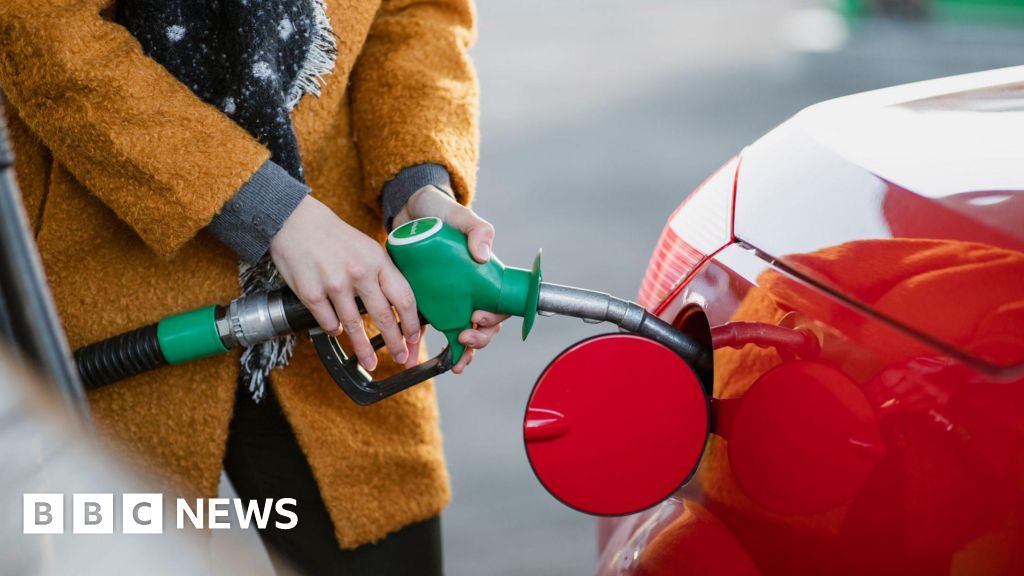
Motorists are facing higher fuel prices ahead of Easter break due to the conflict in the Middle East, the RAC says.
Source link

Hyderabad: Pharma player Hetero on Friday said it has rolled out exports of its generic semaglutide injection portfolio as part of a multi-year plan to widen access to treatments for type 2 diabetes and obesity in more than 75 countries.The Hyderabad-based pharmaceutical company said initial rollouts are under way in Africa, Asia and the Middle East, with additional launches planned in other markets subject to regulatory approvals.The injectable therapies will be sold under the brand names Truglyx, Rolmodl and Moto G. Semaglutide belongs to the GLP-1 class of medicines, which are used in diabetes care and weight management.Hetero said the export launch is part of its broader strategy to improve access to advanced cardio-metabolic therapies, particularly in emerging markets.The company said the products will be offered in multi-dose disposable pen devices designed in line with innovator formats and will be available in several strengths, including 0.25 mg, 0.5 mg, 1 mg, 2 mg, 1.7 mg and 2.4 mg, allowing dosing flexibility for both diabetes and obesity treatment.Hetero said it is also awaiting approval from India’s Central Drugs Standard Control Organisation (CDSCO) after completing clinical trials in type 2 diabetes and obesity and plans an India launch after regulatory clearance.Hetero managing director Dr Vamsi Krishna Bandi said the company aims to provide high-quality, affordable generic semaglutide through a single global product platform backed by its manufacturing and development capabilities.He said Hetero would use its commercial networks across Asia, the Middle East, Africa and Latin America to support supply and access. The Hyderabad-headquartered Hetero operates in more than 145 countries and employs over 30,000 people.
Business
India-US trade deal update: Piyush Goyal meets USTR Jamieson Greer, discusses next steps in BTA talks – The Times of India
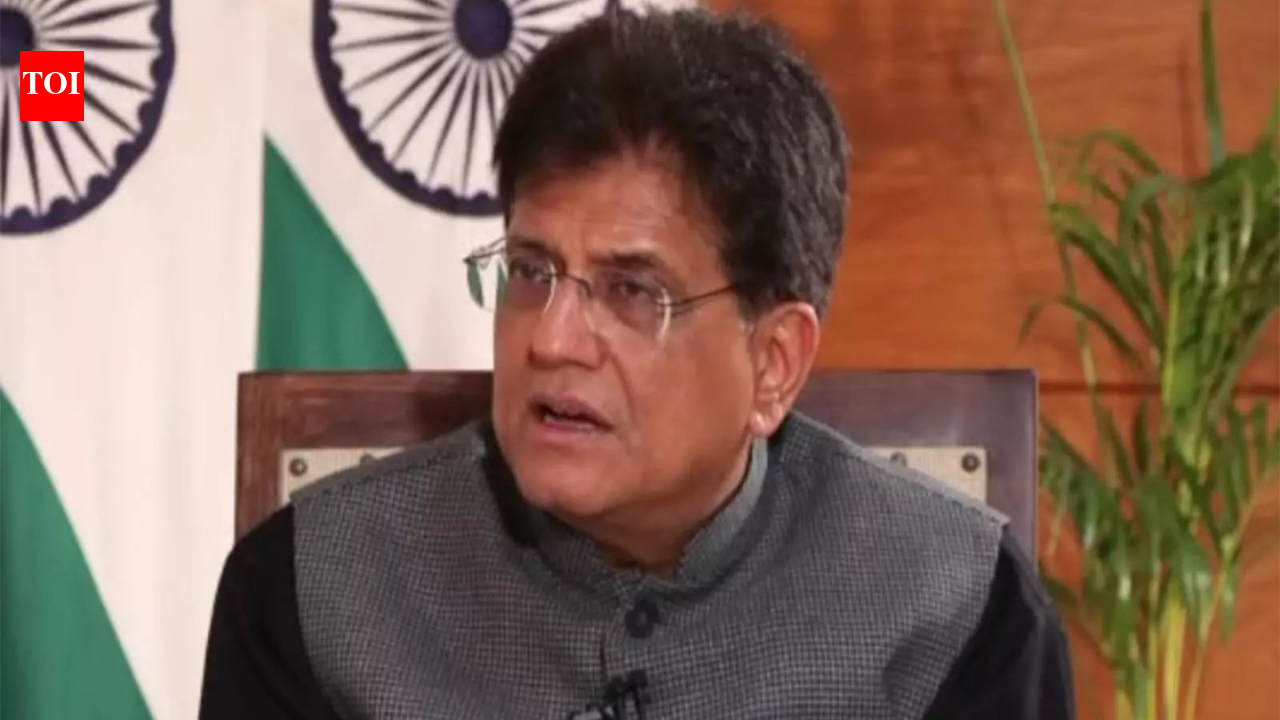
Commerce and industry minister Piyush Goyal on Friday met US Trade Representative Jamieson Greer and reviewed the next steps in negotiations for the proposed India-US bilateral trade agreement (BTA).The meeting took place on the sidelines of the 14th ministerial conference (MC14) of the World Trade Organisation in Yaounde, Cameroon, where both sides also exchanged views on issues related to the WTO agenda.“Had a very productive discussion with @USTradeRep Jamieson Greer on the sidelines of the WTO Ministerial Conference. Exchanged views on the #WTOMC14 agenda, next steps in the India-US BTA negotiations and explored ways to further deepen our economic cooperation and bilateral trade ties,” Goyal said in a social media post.The development comes amid ongoing efforts by both countries to finalise an interim trade pact. Last month, India and the US announced that they had finalised a framework for the first phase of the agreement, though it is yet to be signed.The two sides had earlier announced a trade deal on February 2, followed by a joint statement on February 7 outlining the contours of the agreement.As part of the framework, the US had agreed to reduce tariffs on Indian goods to 18%. However, the tariff structure has since undergone changes after the US Supreme Court struck down sweeping tariffs imposed under earlier measures.Following the ruling, US President Donald Trump introduced a 10% tariff on all countries for a period of 150 days starting February 24.In view of these developments, a planned meeting between chief negotiators of India and the US — aimed at finalising the legal text of the agreement — has been postponed. The pact was earlier expected to be signed this month.An official had earlier said that the interim trade agreement would be signed once the new global tariff framework of the US is fully in place.


Backstreet Boys AJ McLean shows support to Britney Spears after DUI arrest
Asda boss rejects profiteering claims as petrol price tops 150p

Britney Spears turns a new page after recent legal trauma

-

 Entertainment1 week ago
Val Kilmer revived 1 year after death through AI
-

 Fashion7 days ago
China’s textile & apparel exports surge 17% to $50 bn in Jan-Feb 2026
-
 Business1 week ago
Video: The Effects of High Oil Prices
-
 Business7 days ago
Flipkart group CFO to leave co amid IPO plans – The Times of India
-

 Sports1 week ago
Rating Adidas’ 2026 World Cup away shirts: Argentina, Spain, Mexico and more
-

 Fashion1 week ago
The hidden $1.62 war tax now embedded in every garment you source
-

 Sports7 days ago
American Conference Commissioner Tim Pernetti thanks Trump for Army-Navy game executive order
-
Tech1 week ago
The Corsair 4000D RS PC Case Keeps Your System Cool