

Business
Economic growth not enough to meet needs of rapidly growing population: Aurangzeb – SUCH TV


However, in an interview with USA Today, the finance czar pointed out that the economic growth of 2.7% in the previous fiscal year, though positive, is insufficient to absorb the needs of a rapidly growing population.
The minister said macroeconomic stability was opening new horizons for domestic and global investors, and positioning the country for sustainable, long-term economic growth.
He said this transition has been enabled by macroeconomic stabilisation, easing inflation and improved external balances, with the government driving export-led, productivity-based growth through structural reforms, sustaining reform momentum despite challenges, and actively encouraging global investment in emerging opportunities across agriculture, minerals, technology and climate resilience.
Aurangzeb highlighted that Pakistan has entered the fiscal year 2025 from a position of renewed strength, marked by macroeconomic stability, improving external balances, and a firm commitment to structural reform.
He noted that, for the first time in several years, Pakistan has achieved both a primary fiscal surplus and a current account surplus, signalling a decisive shift away from the cycle of recurring deficits. Strong remittance inflows have played a critical role in supporting this turnaround, while inflation has fallen sharply from a peak of 38% to single-digit levels.
Sustainable growth remains the central challenge
Senator Aurangzeb emphasised that while macroeconomic stabilisation is an essential foundation, sustainable growth remains the central challenge.
Drawing lessons from the past, he underlined that Pakistan is consciously moving away from a consumption-and debt-driven growth model towards an export-led strategy.
The current budget, he explained, reflects this shift through structural reforms in taxation, energy pricing, and state-owned enterprises, alongside far-reaching tariff reforms aimed at dismantling decades of protectionism and enhancing global competitiveness.
He highlighted that Pakistan is aligning its economic strategy with changing global demand patterns, identifying information technology services, textiles, and agricultural exports as key areas with strong potential.
He noted that IT exports have already crossed four billion US dollars and could double within five years with sustained regulatory clarity and infrastructure development.
Efforts are also underway to simplify tax regimes for exporters and reduce bureaucratic hurdles in order to foster long-term productivity and competitiveness.
Pakistan’s future hinges on challenges beyond fiscal numbers
Addressing the broader reform agenda, Finance Minister Aurangzeb stated that privatisation of state-owned enterprises, tariff liberalisation, and restructuring of the energy sector are designed to address deep-rooted inefficiencies that have historically strained public finances.
These reforms, he said, are part of a longer-term vision, echoing the World Bank’s assessment of Pakistan’s potential “East Asia moment.”
He referred to the ten-year Country Partnership Framework with the World Bank, the first of its kind, which places emphasis on economic reform alongside climate resilience and population management.
The federal minister also underscored that Pakistan’s future hinges on addressing existential challenges beyond fiscal indicators. Population growth, climate change, child stunting, learning poverty and the exclusion of girls from education were identified as critical issues that must be tackled to safeguard the country’s long-term productive capacity.
He stressed that increasing women’s participation in education and the workforce is both a social imperative and an economic necessity.
On climate resilience, he highlighted Pakistan’s engagement with multilateral partners to strengthen preparedness against increasingly frequent floods and droughts.
Discipline, consistency, and cooperation key to sustaining gains
While acknowledging the risks that remain, including global commodity price shocks, external debt pressures, and political uncertainty, Senator Aurangzeb reaffirmed the government’s commitment to staying the reform course despite geopolitical and domestic challenges.
He emphasised that discipline, consistency, and international cooperation remain central to safeguarding recent gains.
Highlighting opportunities for investors, the federal minister pointed to agriculture, minerals and mining, and the emerging digital economy as priority sectors.
He drew attention to Pakistan’s vast agricultural potential, the strategic importance of the Tethyan Copper Belt in Balochistan amid rising global demand for critical minerals, and the growing focus on data centres, artificial intelligence, and digital services.
He noted that regulatory frameworks are being updated to support innovation and encourage foreign investment, particularly from the United States, describing technological change as a major game-changer for Pakistan.
Towards the end, Senator Aurangzeb conveyed a clear message to the international community, inviting global investors and partners to engage with Pakistan through trade, investment, and collaboration.
Emphasising the country’s reform momentum, economic potential, and natural beauty, he reiterated that Pakistan is transitioning from a narrative of crisis management to one of opportunity and transformation, offering promising prospects for those willing to engage with a market on the cusp of sustainable growth.







Business
US consumer price inflation hits 3.8% in April, highest in nearly 3 years as Iran war fuels energy costs – The Times of India
US inflation rose in April to 3.8 per cent as surging fuel costs amid the ongoing Iran-US conflict drove up consumer prices, hitting a three-year high complicating the Federal Reserve’s path on interest rates.Data released by the Labor Department on Tuesday showed the Consumer Price Index (CPI) increased 0.6 per cent in April after a 0.9 per cent jump in March, the biggest monthly rise since June 2022. On an annual basis, inflation accelerated to 3.8 per cent, marking the highest year-on-year increase, since May 2023.Petrol prices in the US are now more than 28 per cent higher than a year ago, according to official data. AAA estimates show average gasoline prices have crossed $4.50 per gallon, roughly 44 per cent above year-ago levels, squeezing household budgets and raising concerns about broader economic fallout.The spike in energy prices follows the escalation of hostilities between the US, Israel and Iran earlier this year. Markets were rattled after Tehran blocked access through the Strait of Hormuz — a critical global energy route that handles nearly one-fifth of the world’s oil and liquefied natural gas supplies.Core inflation, which excludes food and energy prices, remained relatively contained. Core CPI rose 0.4 per cent month-on-month and 2.8 per cent annually, suggesting that higher fuel costs have not yet fully spread across the wider economy.Food prices also edged higher in April. Grocery costs rose 0.7 per cent from March, led by increases in meat prices after a slight decline in the previous month.The latest inflation reading adds to uncertainty for the Federal Reserve, which had earlier been expected to begin cutting interest rates in 2026. Policymakers are now signalling caution amid fears that prolonged geopolitical tensions and elevated oil prices could trigger another wave of inflation.US President Donald Trump has repeatedly criticised the Fed for not lowering borrowing costs faster to support economic growth. Attention is now turning to Kevin Warsh, Trump’s nominee to succeed outgoing Federal Reserve Chair Jerome Powell, whose Senate confirmation is expected this week.Higher fuel costs are also beginning to weigh on corporate America. Appliance maker Whirlpool Corporation said last week that quarterly revenue fell nearly 10 per cent, warning that the war-driven economic slowdown had severely dented consumer confidence.
EBay has turned down a 56 billion US dollar (£41.4 billion) takeover move from GameStop, labelling the proposal as “neither credible or attractive”.
GameStop boss Ryan Cohen launched an unsolicited offer of 125 dollars (£92.40) per share – half in cash and half in GameStop stock – to eBay shareholders last week.
However, the online marketplace’s board confirmed on Tuesday that it had now rejected the move.
In a letter, eBay chairman Paul Pressler said it reviewed the offer but believes that eBay is a “strong, resilient business”.
He added: “We have sharpened our strategic focus, strengthened execution, enhanced our marketplace and seller experience, and consistently returned capital to shareholders.
“With its differentiated global marketplace and a clear strategy, eBay’s board is confident that the company, under its current management team, is well-positioned to continue to drive sustainable growth, execute with discipline, and deliver long-term value for our shareholders.”
GameStop, which runs around 1,600 shops around the US, said it started accumulating eBay shares earlier this year and currently has a 5% stake.
Mr Cohen had previously indicated he would take his proposal directly to eBay shareholders if the company’s board rejected the deal.
Business
India’s retail inflation jumps to over one-year high at 3.48 per cent in April – The Times of India
India’s retail inflation rose to a more than one-year high of 3.48 per cent in April from 3.40 per cent in March, driven mainly by higher food prices, according to data released by ministry of statistics & programme implementation on Monday. Food inflation, measured by the Consumer Food Price Index (CFPI), also accelerated to 4.20 per cent in April from 3.87 per cent last month, indicating broader price pressures across household essentials. Meanwhile, inflation in rural areas stood at 3.74 per cent, higher than the 3.16 per cent recorded in urban India.Among key items, silver jewellery recorded the sharpest inflation at 144.34 per cent in April, though slightly lower than 148.42 per cent in March. Gold, diamond and platinum jewellery inflation also remained elevated at 40.72 per cent. Among key food items, tomato prices surged 35.28 per cent year-on-year in April, while potato and onion prices remained in deflation at minus 23.69 per cent and minus 17.67 per cent, respectively. The personal care and miscellaneous goods category recorded the sharpest inflation at 17.66 per cent, while transport inflation remained largely flat at minus 0.01 per cent. India’s retail inflation has now risen for the second consecutive month, inching closer to the Reserve Bank of India’s 4 per cent medium-term target. The RBI last month projected CPI inflation for 2026-27 at 4.6 per cent and warned that elevated global energy prices due to the Middle East conflict, along with possible El Niño conditions affecting the monsoon, could pose upside risks to inflation.


USTR tariffs put $333 bn apparel sourcing at risk

Stars of "Dutton Ranch" on reprising their "Yellowstone" roles for the spinoff

2025-26 NBA Title Odds: Thunder, Spurs Favored; Knicks Rising

-

 Politics1 week ago
Iran weighs US reply delivered via Pakistan as Trump signals opposition to deal terms
-

 Tech1 week ago
DHS Demanded Google Surrender Data on Canadian’s Activity, Location Over Anti-ICE Posts
-
 Business1 week ago
Heineken to invest £44.5m in hundreds of pubs creating 850 jobs
-

 Entertainment1 week ago
Jelly Roll reacts to daughter Bailee Ann’s major life milestone
-
 Business1 week ago
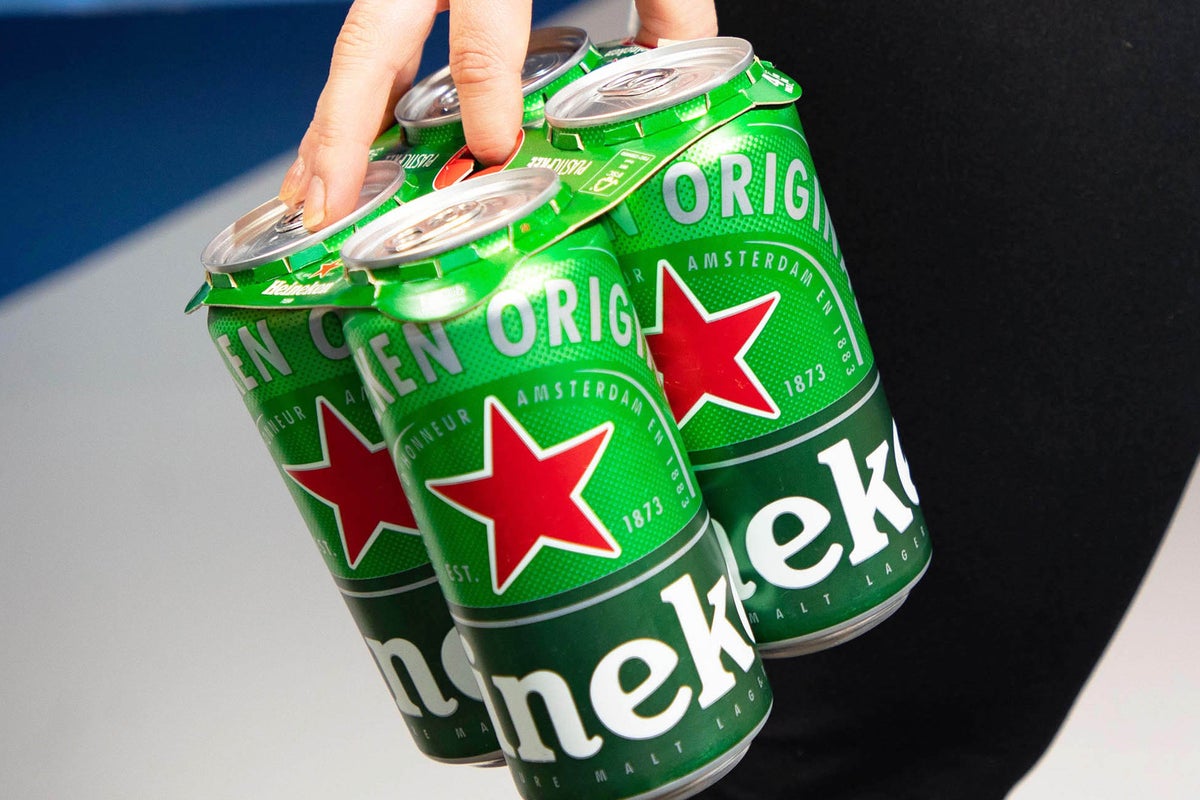
Heineken plans huge investment in hundreds of UK pubs ahead of World Cup
-

 Tech4 days ago
A new frontier: Identity stack evolves for agentic systems | Computer Weekly
-

 Tech4 days ago
‘Orbs,’ ‘Saucers,’ and ‘Flashes’ on the Moon: Pentagon Drops New UFO Files
-

 Tech5 days ago
What Microsoft Executives Really Thought About OpenAI in 2018