Connect with us

Business

ED Attaches Six Properties Of Ansal Properties And Infras Beneficial Owners

Published

on

ED Attaches Six Properties Of Ansal Properties And Infras Beneficial Owners
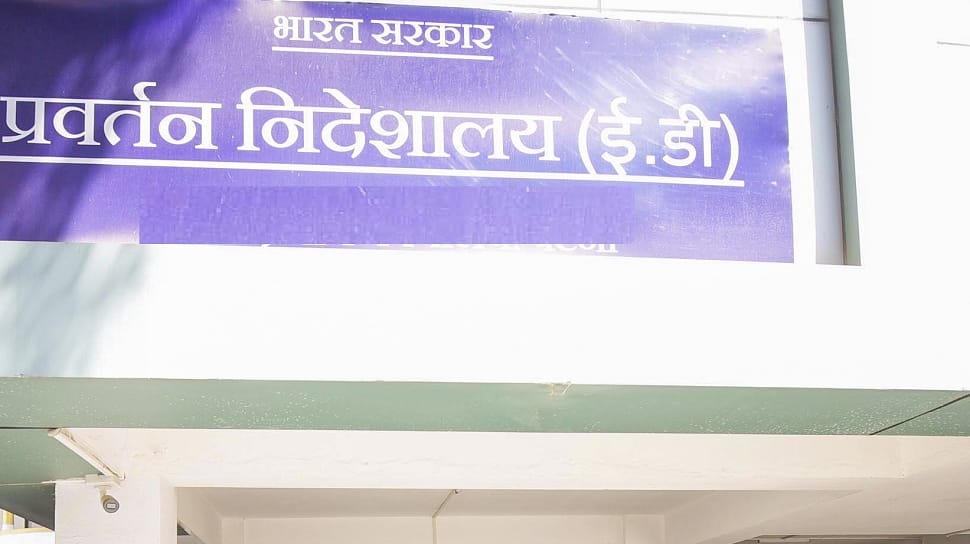

NEW DELHI: The Enforcement Directorate (ED) has attached six immovable properties valued at Rs 10.55 crore belonging to the directors, shareholders and beneficial owners of Ansal Properties and Infrastructure Ltd (APIL) in connection with a money laundering case, the agency said on Wednesday. ED Gurugram zonal office attached these properties under the provisions of the Prevention of Money Laundering Act (PMLA), 2002.

Based in Gurugram (Haryana), Greater Noida (Uttar Pradesh) and Ludhiana (Punjab), the properties are held by directors, shareholders and beneficial owners of APIL namely Sushil Ansal, Pranav Ansal and Son HUF and Kusum Ansal, in a money-laundering case stemmed from violation of provisions of The Water (Prevention and Control of Pollution) Act, 1974 and The Air (Prevention and Control of Pollution) Act, 1981.

The attached properties consist of commercial units and space. Ansal Properties and Infrastructure Ltd is engaged in the business of real estate development in residential, commercial and retail segments. ED initiated investigation on the basis of Prosecution Complaints filed by Haryana State Pollution Control Board (HSPCB) for commission of scheduled offences of Water (Prevention and Control of Pollution) Act, 1974 and Air (Prevention and Control of Pollution) Act, 1981, involving non-compliance of environmental norms by APIL in its two Gurugram-based real-estate projects- ‘Sushant Lok-I’ and ‘Esencia’.

Add Zee News as a Preferred Source


“APIL did not install any Sewage Treatment Plant (STP) in its project ‘Sushant Lok Phase-I’ and the effluent generated was passed through HUDA sewerage line whereas the STP installed in its other project ‘Esencia’ was of inadequate capacity. During inspection of HSPCB officials, the STPs installed were also found abandoned without any operation and maintenance,” said the ED in its statement.

ED investigation further revealed that by not treating the domestic effluent and untreated sewage water as per norms, APIL on one hand caused damage to public health and environment while at the same time kept enjoying the fruits of the resultant profit. “The promoters of the company did not bother to treat the waste or to take any measures as per the HSPCB norms and thus, unduly benefited to the tune of Rs 10.55 Crore, which is nothing but the Proceeds of Crime, generated perpetually by said criminal activity,” it added.


Source link

Continue Reading
Click to comment

Leave a Reply

Your email address will not be published. Required fields are marked *

Business

‘Side Hustle Generation’: Over 50% Of US Gen Z Opting For Extra Gigs Amid Economic Uncertainty

Published

on

‘Side Hustle Generation’: Over 50% Of US Gen Z Opting For Extra Gigs Amid Economic Uncertainty


Last Updated:

At least 57% of Gen Z in the US now have side gigs, from retail to gig work, amid economic uncertainty and concerns over the impact of AI on jobs.

Gen-Z is the first generation for whom a 9-to-5 job isn’t essential for achieving financial success.  (AI-Generated Image)

Gen-Z is the first generation for whom a 9-to-5 job isn’t essential for achieving financial success. (AI-Generated Image)

Amid widespread economic uncertainty, more than half of the Gen Z population in the United States is opting for side gigs to navigate the job market and for extra cash.

At least 57% of Gen Z in the US now have side gigs, compared to 21% of boomers and older, according to The Harris Poll, which dubbed them “America’s first true ‘side hustle’ generation.”

Most of them are picking up side hustles, from retail to gig work, for extra cash. Younger people “want to work [and] find success, but many of them just feel disillusioned with the opportunities to get there through the traditional career ladder,” Glassdoor chief economist Daniel Zhao told Axios.

Role Of AI

In an August report, Glassdoor researchers said that some of the youths are chasing creative or entrepreneurial goals. Moreover, AI and other technological advances have made it easier for professionals to monetise their skills and passions.

“We’re witnessing a true side hustle generation where work identity lives outside of traditional employment. Additional commentary and research also shows that there’s a growing number of Employee+ workers who diversify income streams without abandoning job security,” Glassdoor said.

“For Gen Z, the day job funds the passion project. Work pays the bills, but identity and fulfilment can come from entrepreneurial pursuits, creative endeavours, or social causes they care about,” it added.

Why Are Gen-Z Opting For Side Gigs?

One of the main reasons for this shift is job anxiety. Recent graduates are struggling to secure jobs, while those with them aren’t seeing the career growth they expect, according to Zhao.

Data shows that the financial optimism for college students has fallen to their lowest level since 2018, mostly due to concerns over unemployment and ‘AI-induced layoffs’. The advent of AI remains the most pressing concern among young workers.

As per The Harris Poll, Gen Z is the first generation for whom a 9-to-5 job isn’t essential for achieving financial success. Side hustles are not merely distractions or fallback options; they are central to Gen Z’s identity, offering creative, entrepreneurial, or activist outlets that main jobs cannot supply.

“It definitely makes me feel more financially secure,” Katie Arce, who works full-time in e-commerce and picks up shifts at a vintage clothing store in Austin, Texas, told Axios.

Click here to add News18 as your preferred news source on Google.

Follow News18 on Google. Join the fun, play games on News18. Stay updated with all the latest business news, including market trendsstock updatestax, IPO, banking finance, real estate, savings and investments. To Get in-depth analysis, expert opinions, and real-time updates. Also Download the News18 App to stay updated.
News business ‘Side Hustle Generation’: Over 50% Of US Gen Z Opting For Extra Gigs Amid Economic Uncertainty
Disclaimer: Comments reflect users’ views, not News18’s. Please keep discussions respectful and constructive. Abusive, defamatory, or illegal comments will be removed. News18 may disable any comment at its discretion. By posting, you agree to our Terms of Use and Privacy Policy.

Read More


Source link

Continue Reading

Business

EV adoptions gathers pace in 2025: Sales hit 2.3 million units; UP, Maharashtra lead sales – The Times of India

Published

on

EV adoptions gathers pace in 2025: Sales hit 2.3 million units; UP, Maharashtra lead sales – The Times of India


India sold were at 2.3 million units of electric vehicle in 2025, making up 8 per cent of all new vehicle registrations, according to a new report by the India Energy Storage Alliance, based on Vahan Portal data, cited by ANI. This boost was driven by incentives offered by the government and festive seasons. The majority portion of the sales were two-wheelers at 1.28 million units.The total registrations recorded in the overall passenger car market in the year 2025 stood at 28.2 million. Two-wheelers marked the most registrations 20 million registrations, while passenger cars were at 4.4 million and agricultural vehicles recorded 1.06 million. The recorded sales rose steadily throughout the year though slightly improved in the festival seasons due to GST benefits.Electric two-wheelers were the stars of the EV market, grabbing 57 per cent of sales. Three-wheelers came second with 0.8 million units (35 per cent), while four-wheelers logged 175,000 units. The report spotted good progress in electric delivery vehicles, especially in smaller commercial segments.Uttar Pradesh was at the forefront in this, with 400,000 units sold, taking an 18 percent market share in India’s EV segment. Maharashtra followed, with 266,000 units sold, contributing 12 percent to the segment, followed by Karnataka, with 200,000 units sold, contributing 9 percent to the market. The three accounted for over 40 percent in the country’s EV sales.Some smaller states recorded a very encouraging uptake of EVs. Delhi, Kerala, and Goa were able to reach an EV-to-ICE ratio of 14 percent, 12 percent, and 11 percent respectively. Meanwhile, states from the Northeast, Tripura, and Assam, achieved ratios of 18 percent and 14 percent, respectively.A major achievement was recorded in the three-wheeler segment, which attained a market penetration of 32 per cent. The government also created a record with their biggest ever order of electric buses—10,900 unit—valued at a massive Rs 10,900 crore through the PM E-DRIVE scheme.The report also stated that that while smaller vehicles led EV adoption, government efforts to electrify larger commercial vehicles and develop charging infrastructure were setting up India’s EV sector for continued growth beyond 2025.


Source link

Continue Reading

Business

Inside GM’s new world headquarters: Modernized midcentury designs with artifacts, surprises from the American icon

Published

on

Inside GM’s new world headquarters: Modernized midcentury designs with artifacts, surprises from the American icon


A 1963 Chevrolet K20 pickup truck and a new Chevrolet Silverado EV sit outside General Motors’ new world headquarters on Jan. 6, 2026 in Detroit.

Michael Wayland | CNBC

DETROIT – Outside General Motors‘ new world headquarters, between the 12-story building and the city’s first new skyscraper in more than 30 years, sit two red Chevrolet pickup trucks.

One is a 1963 Chevrolet K20. The other is a new Silverado EV. The trucks, while part of a temporary holiday display, are symbolic of what’s inside the new global offices for the Detroit automaker: its past and present, woven together.

GM is occupying four of six office floors of the building and has filled them with artifacts, design nods and “Easter eggs” tied to the Detroit automaker’s history.

They range from a blueprint of GM’s iconic design dome and an early map of its nearby proving grounds to an interior wallpaper of 300 patented technologies and a decorative wall of cassette tapes with songs featuring the automaker’s brands as well playful references to executive stalwarts such as CEO Mary Barra and President Mark Reuss.

One of the centerpiece objects of GM’s new headquarters is the McCormick Speed Form, an aerodynamic wind-tunnel model developed at the Warren Technical Center.

Courtesy: GM

“Leadership asked when we were helping design the space to bring in some Easter eggs and details to represent who we are at GM, you know, honoring our culture and our history and our innovation,” Rebecca Waldmeir, GM industrial design architecture and experience manager, told CNBC during a tour of the new headquarters.

Other surprises include references to relevant Detroit streets, design influences from GM’s famed design campus in suburban Detroit and artwork and sculptures of its products.

Aside from the aesthetics, GM officials say the new offices will assist with collaboration and are more relevant to how the company expects its employees to work in a post-pandemic world. It will house executive offices and other corporate functions such as marketing, legal and finance.

“A headquarters really should be, at some level, a beacon for the culture of the company,” said David Massaron, GM vice president of infrastructure and corporate citizenship. “When you come in here, it should help people understand who we want to be.”

A wall inside GM’s new Detroit headquarters includes cassette tape cases featuring songs referencing the automaker’s brands and vehicles as well as custom ones featuring GM executives such as CEO Mary Barra and President Mark Reuss.

Michael Wayland | CNBC

From fortress to functionality

The new headquarters marks a significant square-foot reduction for the automaker’s corporate office — from a towering complex called the Renaissance Center along the city’s riverfront to just four floors, roughly 200,000 square feet, in the new building.

GM’s new HQ is less than a mile from the RenCen, as it’s commonly called, which has been a symbol for the city since, ironically, Ford Motor built the complex but decided not to make it its headquarters in the 1970s. GM purchased the building in 1996 as its third headquarters, all of which have been in the Motor City.

The RenCen is Detroit’s fortress, a 5.6-million-square-foot complex complete with a more-than-700-foot center tower surrounded by four 500-foot towers and two smaller adjacent ones.

GM’s new headquarters at the Hudson’s Detroit development in the city’s downtown.

Courtesy: GM

The complex is infamously difficult to get in and out of and to navigate. For much of its existence, it was surrounded by concrete barriers before a redesign around the turn of the millennium.

It has long been something of a physical permutation of GM’s historically siloed culture, which Barra has made a priority to change during her roughly 11-year tenure as CEO.

“The RenCen was designed in a different era, in a pre-Covid era where everybody went to work five days a week, everybody went to their desk,” Massaron said. “Particularly, in a post-pandemic world, you need office space that people want to come to, because we have options.”

GM’s roughly 50,000 U.S. salaried employees are currently required to work in-office Tuesday through Thursday, but the rules are more flexible than before regarding location and remote working.

The Renaissance Center (complex of skyscrapers with the Chrevrolet sign) by the Detroit River.

Roberto Machado Noa | Lightrocket | Getty Images

Most of the company’s new executive offices on the top floor of the building will be open for executives to use as they please, Massaron said. Only four of the offices will be permanently assigned to top GM executives, such as Barra and Reuss, he said.

GM declined to disclose how many employees are expected to regularly work at the new headquarters, saying foot traffic will fluctuate based on priorities and workflows. The company also declined to disclose financial details of its 15-year lease at the new headquarters.

The building complex, known as Hudson’s Detroit, is owned by a real estate company of Rocket Companies chairman and billionaire Dan Gilbert, who has been purchasing and renovating properties in Detroit for more than a decade.

Showroom, pickleball

Aside from the office areas and the executive floor, which all overlook an open atrium, GM also plans to open a semi-public space to display products and host events on the first floor of the building.

Other amenities include social gathering areas and lounges, food and beverage services and a pickleball court and recreation area.

A common area outside of the executive offices of GM’s new headquarters in downtown Detroit.

Michael Wayland | CNBC

GM’s new headquarters, which remains under construction, comes months after Ford christened a new 2.1-million-square-foot global HQ and product design and development center in nearby Dearborn, Michigan.

Ford’s new facility includes offices, design and industrial operations and a host of amenities such as a 160,000-square-foot dining area with eight “kitchen concepts,” multiple courtyards and other upgrades.

The notable difference in the size between GM’s and Ford’s new headquarters comes down to location, headcount and the automakers’ portfolios of offices and operations throughout the region.

A pickleball court and seating area inside the building that includes GM’s new headquarters in Detroit.

Michael Wayland | CNBC

GM, for example, has a vast technology and design center that occupies 710 acres in nearby Warren, Michigan. That campus houses more than 24,000 employees.

Massaron said GM didn’t feel it needed to create “a city within a city” for its new headquarters, because it’s actually “a building within a city.”

Here’s a look inside GM’s new world headquarters:

The entry of the executive floor inside GM’s new global headquarters in Detroit.

Michael Wayland | CNBC

The executive hallway of GM’s new headquarters in Detroit.

Courtesy: GM

One of a dozen or so executive offices inside GM’s new headquarters in downtown Detroit.

Michael Wayland | CNBC

One of a dozen or so executive offices inside GM’s new headquarters in downtown Detroit.

Michael Wayland | CNBC

The interior design draws inspiration from Eero Saarinen’s iconic GM Global Technical Center, incorporating golden
metallic finishes, wood feature walls, warm recessed lighting and a blend of clean linear geometries with subtle
curves.

Courtesy: GM

Patent wall graphics highlight 300 of more than 49,000
patents granted since the company’s founding in 1911.

Courtesy: GM

A wall of cassette tapes celebrates GM’s broad cultural impact, nodding to the more than 78,000 songs that
reference GM brands and vehicles.

Courtesy: GM

A model of the Chevrolet Corvette CX concept hangs on the wall outside the executive boardroom of GM’s new headquarters.

Courtesy: GM

The executive boardroom inside GM’s new headquarters in Detroit.

Courtesy: GM

Inside the common atrium area of GM’s new global headquarters in Detroit.

Michael Wayland | CNBC

A coffee shop and cafe inside the atrium area of GM’s new global headquarters in Detroit.

Michael Wayland | CNBC

A common lounge area near the atrium of the building that houses GM’s new headquarters in Detroit.

Michael Wayland | CNBC

Three-dimensional sound-wave art profiles feature engine and EV tones from notable GM vehicles across
performance, EV and ICE categories, transforming acoustic engineering into sculptural expression.

Courtesy: GM

A statue of GM’s “Cadillac Goddess” sits on a table inside the executive floor of its new headquarters in Detroit.

Michael Wayland | CNBC


Source link

Continue Reading

Trending