

Business
Electric car sales hit record high in September

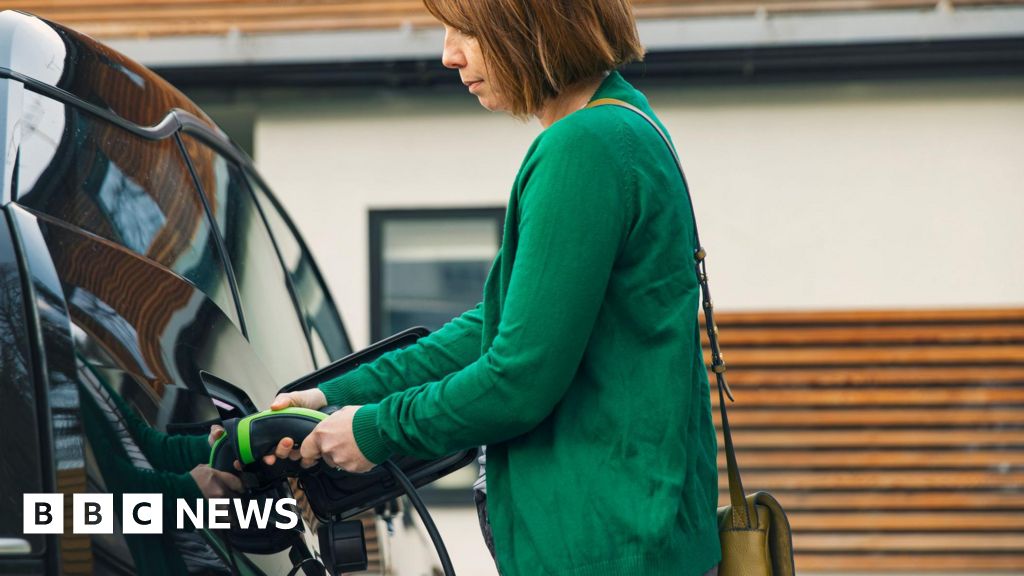
Electric vehicle (EV) sales in the UK hit a record high last month, according to the latest industry figures.
Sales of pure battery electric vehicles (BEV) grew by almost a third to 72,779 in September, according to the Society of Motor Manufacturers (SMMT), while sales of plug-in hybrid cars grew even faster.
It means sales of fully electric or hybrid vehicles made up more than half of all new car registrations in the UK last month.
The SMMT said sales were driven by carmakers offering discounts, a larger choice of models, and the introduction of the government’s grant scheme.
While registrations of BEVs rose last month, the overwhelming majority – 71.4% – were bought by businesses or to be used in fleets.
However, the number of private buyers of fully electric cars has risen in the past year, and the SMMT said zero-emission vehicles now accounted for more than one in five (22.1%) new cars registered so far in 2025.
SMMT chief executive Mike Hawes said electrified vehicles were “powering market growth after a sluggish summer”.
Industry investment in electric vehicles was “paying off”, he said, despite consumer demand “trailing ambition”.
Mr Hawes added the government’s electric car grant scheme, in which eligible vehicles get a discount of up to £3,750 as part of efforts to encourage drivers to move away from petrol and diesel vehicles, would help “break down one of the barriers” holding back people making the switch.
Overall, the number of new vehicle registrations – 312,887 – marked the best performing September since 2020, which despite the Covid lockdown restrictions, remains the best so far this decade, according to the SMMT.
The strong month comes as the UK car industry navigates the economic impact of US tariffs and Jaguar Land Rover’s shutdown of production due to a major cyber-attack.
The Kia Sportage, Ford Puma and Nissan Qashqai were the best-selling cars in September, but two Chinese models including the Jaecoo 7 and BYD Seal U were in the top 10.
The government said more than 20,000 people had benefited from EV grants to date, which apply to models from several well-known brands such as Ford, Toyota, Vauxhall and Citroen.
Under the scheme, the discount applies to new eligible car models costing up to £37,000, with the most environmentally friendly ones seeing the biggest reductions. Some 36 models have been cleared for discounts of at least £1,500.
Ian Plummer, Autotrader’s chief commercial officer, said the grant scheme had given a “real lift to the market”.
“Since July, enquiries for new electric vehicles on Autotrader are up by almost 50%. For models eligible for the grant, interest has more than doubled.”

Thomas Fuller | SOPA Images | Lightrocket | Getty Images
UniQure needs to run another study to prove that its gene therapy “actually helps people with Huntington’s disease,” a senior U.S. Food and Drug Administration official said on a call with reporters Thursday.
The official, who requested anonymity before discussing sensitive information, confirmed the agency has asked the company to run a placebo controlled trial of its treatment, which is administered directly into the brain. UniQure has said that type of study isn’t ethical because it would require putting people under general anesthesia for hours, a characterization the official disputed.
“So what is really going on? UniQure is the latest company to make a failed therapy for Huntington’s patients,” the official said. “They likely acknowledge or understand at some deep level that their trial failed years ago, and instead of doing the right thing and running the correct clinical study, UniQure is performing a distorted or manipulated comparison in the mind of FDA.”
The comments mark the latest development in a messy public spat between UniQure and the FDA, and as the agency comes under fire for a number of recent drug approval application rejections, including some where companies have accused it of going back on previous guidance. FDA Commissioner Marty Makary in an interview with CNBC’s Becky Quick last week seemingly criticized UniQure’s gene therapy for Huntington’s disease. Makary didn’t name UniQure but described its treatment.
UniQure then accused the FDA of reversing its stance that the company’s clinical trial data would be sufficient to seek approval. UniQure’s study used an outside database to measure how patients with Huntington’s disease might decline without treatment, known as an external control. UniQure has said it wouldn’t be feasible to run a true randomized, double-blind placebo-controlled study, considered the gold standard, because it wouldn’t be ethical to make people undergo a sham hours-long brain surgery.
The FDA official said the agency “never agreed to accept this distorted comparison” and the FDA “never makes such assurances.” Instead, the “FDA will always say, ‘Well, we have to see the data when we get it.'”
UniQure didn’t immediately comment.
The company’s stock rose more than 10% on Thursday and has fallen 58% this year as of Thursday afternoon.
Business
US mortgage rates rise to 6% after three-week slide as oil-driven bond yields climb – The Times of India
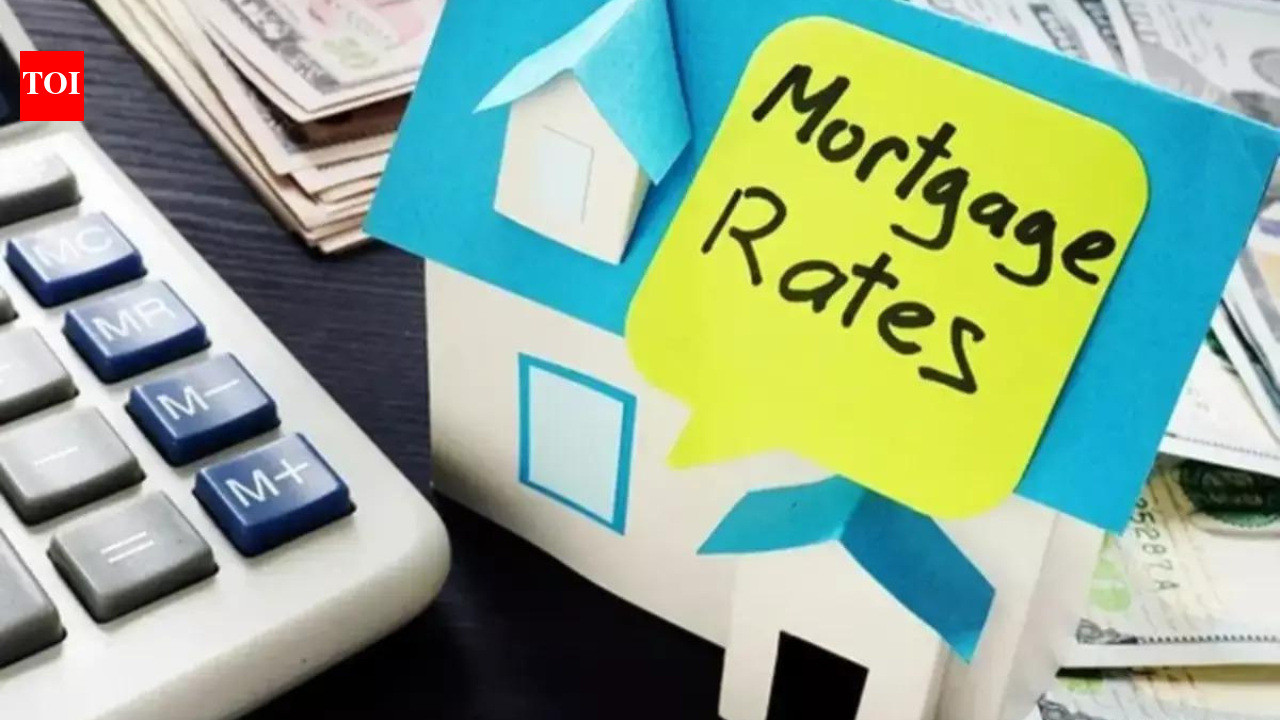
The average long-term US mortgage rate edged higher this week, ending a three-week decline as bond yields rose amid oil-price pressures linked to the war with Iran.The benchmark 30-year fixed mortgage rate increased to 6% from 5.98% last week, mortgage buyer Freddie Mac said on Thursday. A year ago, the average rate stood at 6.63%, AP reported.The modest uptick breaks a three-week slide in borrowing costs, with mortgage rates having hovered close to the 6% mark for most of this year. Last week’s average had marked the first time the rate dipped below 6% since September 2022, reaching its lowest level in nearly three and a half years.Mortgage rates are influenced by several factors, including the Federal Reserve’s interest-rate policy, investor expectations about inflation and economic growth, and movements in the bond market.They typically track the direction of the 10-year US Treasury yield, which lenders use as a benchmark for pricing home loans.The 10-year Treasury yield rose to 4.14% at midday Thursday, up from around 4% a week earlier.Treasury yields have moved higher in recent days as rising oil prices added fresh inflation concerns, potentially complicating the Federal Reserve’s plans to cut interest rates.
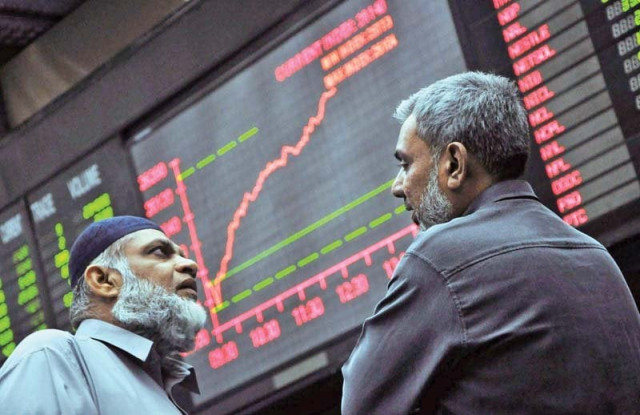
Foreign funds would divert their liquidity into buying Pakistan’s stocks. This would merely increases prices of shares and be profitable for those who already hold stocks. PHOTO: FILE
KARACHI:
The Pakistan Stock Exchange on Thursday staged a powerful rebound, when the benchmark KSE-100 index surged by over 5,400 points, reclaiming the 160,000 level in a decisive rally driven by strong institutional buying and renewed investor confidence.
The session marked a sharp recovery from recent volatility as bulls took control from the opening bell. Index-heavy stocks like Hubco (+7.15%), OGDC (+8.24%) and others led the charge, contributing significantly to the gains, while trading volumes rose to 724 million shares valuing at Rs35 billion. K-Electric dominated the volumes with over 115 million shares traded.
At the close of trading, the KSE-100 index posted a strong gain of 5,433.46 points, or 3.49%, and settled at 161,210.68.
According to Arif Habib Limited (AHL), the stock market staged a strong rebound as the benchmark index pushed higher from its 200-day moving average, gaining 3.49% to reclaim the 160,000 level. Market participation remained broadly positive, with 85 shares advancing while 14 declined among key index movers.
The major contributors included Hubco, which rose 7.15%, OGDC, higher by 8.24%, and Fauji Fertiliser, which despite declining 2.93% remained among the notable stocks influencing index movements. On the downside, Abbott Laboratories fell 3.5%, Highnoon Laboratories declined 2.42% and Fatima Fertiliser slipped 0.82%, emerging as the biggest drags on the index.
Meanwhile, geopolitical and macroeconomic developments also remained in focus. Pakistan’s top military leader stated that the country was willing to halt operations against Afghanistan if the Taliban government stopped supporting terror groups operating from its territory. On the economic front, Saudi authorities assured Pakistan of secure energy supplies through the Port of Yanbu on the Red Sea, helping support the country’s energy requirements, it said.
Additionally, Pakistan was preparing to introduce several measures, including weekly petroleum price revisions, compensation to oil companies for higher insurance costs and import premiums, and fuel conservation initiatives. Finance Minister Muhammad Aurangzeb also assured a parliamentary panel that Pakistan had adequate petroleum reserves, including 28 days of petrol and diesel supply.
Despite the strong rebound during the session, the market remained down about 4% week-on-week while heading into the final trading day and continued to trade within the large gap created by Monday’s sharp decline, AHL said.
“Bulls stormed back with authority in Thursday’s trading session, firmly planting their feet from the outset,” Topline Securities stated in its review. Strong institutional buying turned the tide after the market’s recent overreaction to regional issues, as confidence swiftly replaced caution.
Momentum gathered strength as the session progressed, driving the index to the intra-day high of 5,699 points before closing at 161,211 – up 5,433 points. It was not merely a rebound, but a statement rally marked by decisive accumulation and broad-based strength. Index-heavy constituents including Hubco, OGDC, Fauji Fertiliser, Engro Holdings and Meezan Bank led the charge, collectively contributing 2,197 points to the benchmark’s gain and reinforcing the bullish undertone, Topline said.
During the day, shares of 478 companies were traded. Of these, 350 stocks closed higher, 78 fell and 50 remained unchanged.
K-Electric was the volume leader with trading in 115.6 million shares, gaining Rs0.61 to close at Rs8.05. It was followed by Trust Securities & Brokerage (R) with 50.03 million shares, losing Rs0.04 to close at Rs0.18 and Unity Foods with 48.3 million shares, gaining Rs0.55 to close at Rs10.08. Foreign investors sold shares worth Rs1.4 billion, the National Clearing Company reported.


Here’s Every Country Directly Impacted by the War on Iran

OpenAI Had Banned Military Use. The Pentagon Tested Its Models Through Microsoft Anyway

Don’t Risk Birdwatching FOMO—Put Out Your Hummingbird Feeders Now

Attock Cement’s acquisition approved | The Express Tribune

What are Iran’s ballistic missile capabilities?

India Us Trade Deal: Fresh look at India-US trade deal? May be ‘rebalanced’ if circumstances change, says Piyush Goyal – The Times of India

-
Business1 week ago
Attock Cement’s acquisition approved | The Express Tribune
-
 Politics1 week ago
What are Iran’s ballistic missile capabilities?
-
Business7 days ago
India Us Trade Deal: Fresh look at India-US trade deal? May be ‘rebalanced’ if circumstances change, says Piyush Goyal – The Times of India
-

 Politics1 week ago
US arrests ex-Air Force pilot for ‘training’ Chinese military
-

 Fashion1 week ago
Policy easing drives Argentina’s garment import surge in 2025
-
 Business1 week ago
Households set for lower energy bills amid price cap shake-up
-

 Sports1 week ago
Sri Lanka’s Shanaka says constant criticism has affected players’ mental health
-

 Sports6 days ago
LPGA legend shares her feelings about US women’s Olympic wins: ‘Gets me really emotional’