

Business
Eli Lilly’s GLP-1 growth is only getting started as Novo Nordisk braces for a decline in 2026


The Eli Lilly and Novo Nordisk logos.
Mike Blake | Tom Little | Reuters
It’s a tale of two drugmakers in the red-hot obesity drug market.
Both Novo Nordisk and Eli Lilly are grappling with lower prices in the U.S., but their 2026 outlooks are diverging sharply: While Novo is bracing for a sales decline, Lilly sees revenue jumping again thanks to its blockbuster medicines.
The split in guidance – despite similar headwinds – underscores the strength of Lilly’s position in the obesity and diabetes drug market, underpinned by its more effective injections and early foray into direct-to-consumer sales, among other factors. While Novo Nordisk effectively made the drugs mainstream, Lilly has since taken a clear edge in market share — and the forecasts show it will likely only extend its advantage this year.
“The difference in sales momentum and market share trend was visible throughout 2025, but the dichotomy between the two companies’ prospects was accentuated within this 24-hour period in which Novo guided below consensus and Lilly guided above consensus expectations,” Leerink Partners analyst David Risinger told CNBC on Wednesday.
“That really solidified an investor’s mind that Lilly is going to be the dominant player in obesity going forward,” he added.
This year, all eyes will be on how Lilly’s upcoming obesity pill, orforglipron, fares against Novo’s own oral Wegovy drug, which has had an explosive U.S. launch this year.
In an interview on CNBC’s “Squawk Box” on Wednesday, Lilly CEO Dave Ricks said 20 million to 25 million patients are currently taking both companies’ medicines. But he said the total addressable market of patients in the obesity space is “gigantic.”
Diverging outlooks
On Wednesday, Lilly forecasted 2026 sales of $80 billion to $83 billion, surpassing the $77.62 billion that analysts were expecting, according to LSEG.
The midpoint of that outlook translates to sales growing by 25% this year.
In contrast, Novo warned on Tuesday that it sees sales and profit declining by 5% to 13% this year, as prices fall in the U.S. and exclusivity expires for its blockbuster obesity and diabetes drugs in China, Brazil and Canada.
(L/R) Maziar Mike Doustdar, CEO of Novo Nordisk, and David Ricks, CEO of Eli Lilly, listen as US President Donald Trump speaks in the Oval Office during an event about weight-loss drugs at the White House in Washington, DC on November 6, 2025.
Andrew Caballero-Reynolds | Afp | Getty Images
Lilly similarly pointed to a “global pricing decline in the low- to mid- teens [percentages] this year.” That comes after the landmark “most favored nation” deals both companies struck with President Donald Trump in November to slash obesity and diabetes drug costs, along with their recent efforts to further reduce direct-to-consumer prices for their treatments.
The agreements with Trump are expected to take a bite out of both companies’ sales, but eventually increase volumes of prescriptions for their drugs. Still, Lilly is bullish about other factors that will help offset that pricing pressure.
That includes continued worldwide demand for its obesity drug Zepbound and diabetes counterpart Mounjaro and the expected launch of its GLP-1 pill for obesity in the second quarter, pending U.S. approval. Lilly also pointed to government Medicare coverage of obesity treatments starting for the first time by at least July, one of the winning features of the drug pricing deals with Trump.
Lilly’s Ricks told CNBC that coverage will open up access to 40 million new Medicare beneficiaries, “and that could be quite expansive to volume.”
Overall, Risinger called Lilly’s guidance “very encouraging” and said the “price per volume trade-off is playing out well” for the company.
He said tirzepatide, the active ingredient in Zepbound and Mounjaro, is “superior” in its effectiveness and tolerability compared to semaglutide, the ingredient in Novo’s obesity and diabetes drugs. That was proven in a head-to-head clinical trial conducted by Lilly in 2024, and prescription trends show that the company’s drugs are preferred among prescribers.
“I think that’s what is driving Lilly’s market share gain” relative to Novo, Risinger said.
Another factor that sets Lilly and Novo apart is patent exclusivity. While Novo said expiring patents in some international markets pose a challenge, Lilly’s Ricks said tirzepatide should be protected into “the back half of the 2030s” in major markets.
Risinger noted that Lilly is still working to drive global uptake for tirzepatide, which won U.S. approval for obesity in 2023.
All eyes on pills
A pharmacist displays a box of Wegovy pills at a pharmacy in Provo, Utah, Jan. 15, 2026.
George Frey | Bloomberg | Getty Images
Novo Nordisk is first to market with a GLP-1 pill for obesity, and it already hit 50,000 weekly prescriptions in just under three weeks of its launch. But investors are watching to see how that shifts once Lilly’s pill rolls out to patients later this year.
In an interview with CNBC’s “Mad Money,” Novo CEO Mike Doustdar said he’s confident about the company’s ability to compete with Lilly.
“Clearly we have the most efficacious weight reduction pill that there is and I’m very optimistic and bullish on when they come with their pill and we have to battle this out,” Doustdar said.
He’s referring to clinical trial data suggesting that Novo’s Wegovy pill promotes comparable weight loss to its injectable counterpart, which is around 15%. Meanwhile, Lilly’s pill appears to be slightly less effective than that, based on separate study data.
Risinger said the launch of Novo’s pill has benefited from the fact that the company is leveraging the Wegovy brand name, which is recognizable by many patients, and immediately launched direct-to-consumer advertising for the product in early January.
But he said Lilly could capitalize on its pill’s convenience advantage.
Orforglipron is a small-molecule drug that is absorbed more easily in the body and doesn’t require dietary restrictions like Novo Nordisk’s pill, which is a peptide medication. Patients are supposed to drink no more than four ounces of water with the Wegovy pill and must wait 30 minutes before eating or drinking anything else each day.
Novo contends that those requirements won’t hinder uptake, but Risinger said it could help Lilly’s pill eventually generate greater sales globally.





Food delivery giant Just Eat, funeral firm Dignity and motor platform Autotrader are among five firms under investigation by the UK’s competition watchdog as part of its crackdown on fake and misleading online reviews.
The Competition and Markets Authority (CMA) said it had launched probes against the companies – also including customer review and feedback firm Feefo and Pasta Evangelists – to see whether consumer laws have been broken.
Since April last year, companies have been banned from certain tactics around online reviews under law, such as fake posts, paid-for reviews that are not clearly marked as incentivised, as well as for hiding negative feedback.
Sarah Cardell, chief executive of the CMA, said: “Fake reviews strike at the heart of consumer trust – with many of us worrying about misleading content when looking at reviews online.
“With household budgets under pressure, people need to know they’re getting genuine information – not reviews or star ratings that have been manipulated to push them towards the wrong choice.
“We’ve given businesses the time to get things right. Now we’re deploying our new powers to tackle some of the most harmful practices head on.”
The CMA said it was looking into whether Just Eat’s ratings system had inflated some restaurant and grocer star ratings, giving a misleading picture of quality.
For Autotrader and Feefo, the CMA is investigating whether a number of one-star reviews – moderated by Feefo, which handles reviews for the new and used car site – were hidden on the platform and did not count towards the star ratings.
Dignity is under investigation by the CMA into whether it asked staff to write positive reviews about the firm’s crematoria services.
And artisan fresh pasta chain Pasta Evangelists is being probed over allegations it offered customers discounts for leaving five-star reviews on delivery apps without this being disclosed.
If the CMA finds the firms have broken the law, it can order them to change their practices and fine them up to 10% of their annual global sales.
An Autotrader spokesperson said: “We endeavour always to operate as a responsible and compliant business and will co-operate fully with the CMA’s investigation.”
It comes after the CMA recently secured commitments from Google and Amazon to beef up their systems to identify and remove fake reviews.
Amazon last June agreed to put in place “robust processes” to quickly detect and remove fake reviews alongside sanctions for rogue sellers and businesses after an investigation by the CMA to curb the customer hazard.
The tech giant said it would sanction businesses that boost their star ratings via bogus reviews or catalogue abuse, including bans from selling on the website, while users could also be banned for posting fake reviews.
Consumer group Which? welcomed the investigations and said the CMA must “get tough” on firms found to be breaking the law with reviews.
Sue Davies, head of consumer rights policy at Which?, said: “Investigations are a welcome first step, but enforcement will be key – the regulator must be prepared to get tough, use its powers and issue serious fines if these companies aren’t playing by the rules.”
The CMA said it swept more than 100 review publishers as part of the clampdown and sent advisory letters to 54 firms to improve their compliance with the law, with 90% having made changes in response and 75% telling the watchdog they better understood the rules.
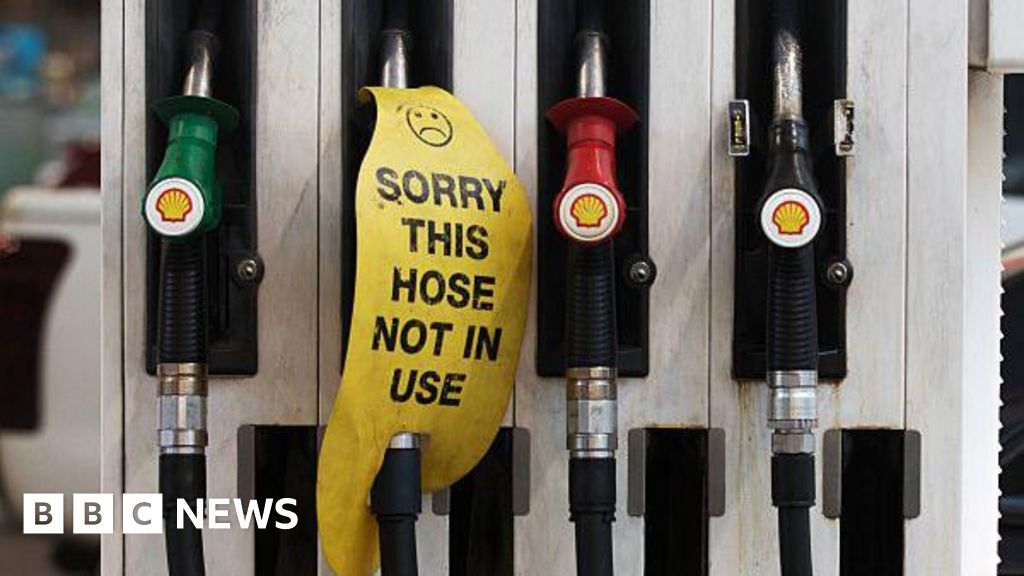
Anthony Albanese says nation’s supply remains “secure” amid reports of panic buying and shortages.
Source link

A woman has been awarded $6m in a verdict that could have implications for hundreds of other cases in the US.
Source link


Transfer rumors, news: Could Foden leave Man City this summer?

Germany’s ifo index drops to 86.4 in March as uncertainty weighs on
Just Eat and Autotrader among five firms under investigation over online reviews

-

 Fashion1 week ago
Sales at US apparel, clothing accessories stores up 4% YoY in Jan 2026
-

 Entertainment1 week ago
Val Kilmer revived 1 year after death through AI
-
 Fashion1 week ago
US’ G-III Apparel’s FY26 sales fall 7% to $2.96 bn
-

 Sports1 week ago
March Madness 2026 – How to watch in SA, start time, schedule, TV channel for NCAA championship basketball tournament
-
 Business1 week ago
Brits cashing in jewellery as gold price hits record high
-

 Fashion6 days ago
China’s textile & apparel exports surge 17% to $50 bn in Jan-Feb 2026
-
 Business1 week ago
Video: The Effects of High Oil Prices
-
 Business6 days ago
Flipkart group CFO to leave co amid IPO plans – The Times of India