

Fashion
Elisabetta Franchi reports €171 million revenue in 2024, sees accessories as growth driver

Translated by
Nicola Mira
Published
November 13, 2025
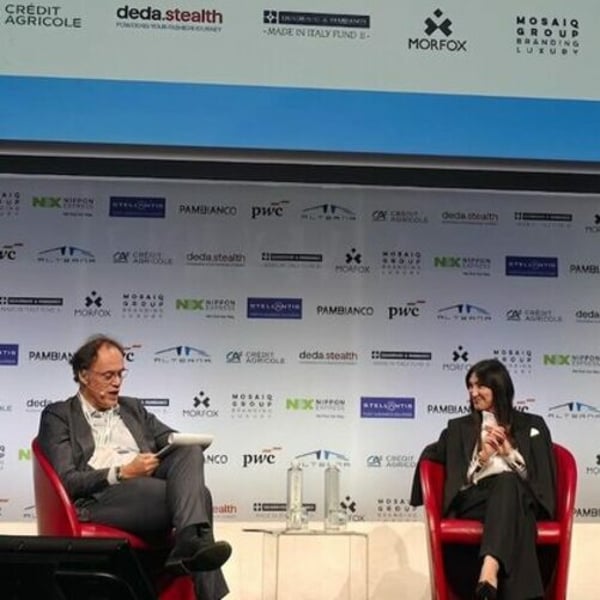
Elisabetta Franchi, boss and designer of the eponymous Italian ready-to-wear label owned by Betty Blue Spa, talked about the industry at the 30th Pambianco Fashion Summit in Milan. “There’s so much confusion in the fashion world today,” she said. “Creative directors are hopping about like popcorn. Labels are putting their brand identity at risk. When customers enter a store, they no longer know what they’re buying. Some CEOs have no clue what a button or a sewing machine is. They are finance people who have only eyes for data,” added Franchi.
The Bologna-based businesswoman has taken back control of her label after parting ways with Marco Bizzarri (who had bought a stake about two years ago) and the departure of its CEO Gabriele Maggio. “Marco and I are like twins separated at birth. We’ve always had a very similar way of thinking. But at some point, the Betty Blue machine was starting to slow down. His way of working was no longer in sync with my reactivity. I took back full control to drive the company at a thousand miles per hour. Speed is my strength,” said Franchi.
In fiscal 2024, Elisabetta Franchi generated a revenue of €171 million, and EBITDA of €40 million. “Revenue is not the key. I’m not competing with anyone. I try to work properly, with an old-fashioned approach. A healthy company must be liquid. In the last decade, we’ve doubled [our revenue] and we’ve always self-financed, without bank loans. EBITDA is the metric to watch, if it’s low, I’ve done badly,” said Franchi.
Elisabetta Franchi generates 90% of sales through ready-to-wear, without product licenses (except for childrenswear) or accessories. “These are the growth drivers we’re working on,” said Franchi. “I’ve always pushed to realise one dream, with great consistency and true, powerful storytelling. Women who come into my stores always enjoy the same experience. Some labels decided to increase prices because they were no longer growing. Instead, we’ve made no changes, thanks also to our strategic positioning,” she added.
Retail-wise, in 2025 Elisabetta Franchi opened its first US store in Miami. “In February 2026, it will be Houston’s turn. The USA is very rewarding, but one must work slowly and sensibly there. We also have South America in our sights. E-tail accounts for a 14% share of our revenue, and we don’t just sell t-shirts online, but jackets and shirts too,” said Franchi.
For the future, “I see a company that can do without me, but I’ll be working to the very last. In five years I see myself far away, maybe on my own. Fashion is a business that makes you question yourself every six months. I’m lucky to have a winning team, otherwise I wouldn’t still be here after 30 years,” concluded Franchi.
Copyright © 2025 FashionNetwork.com All rights reserved.








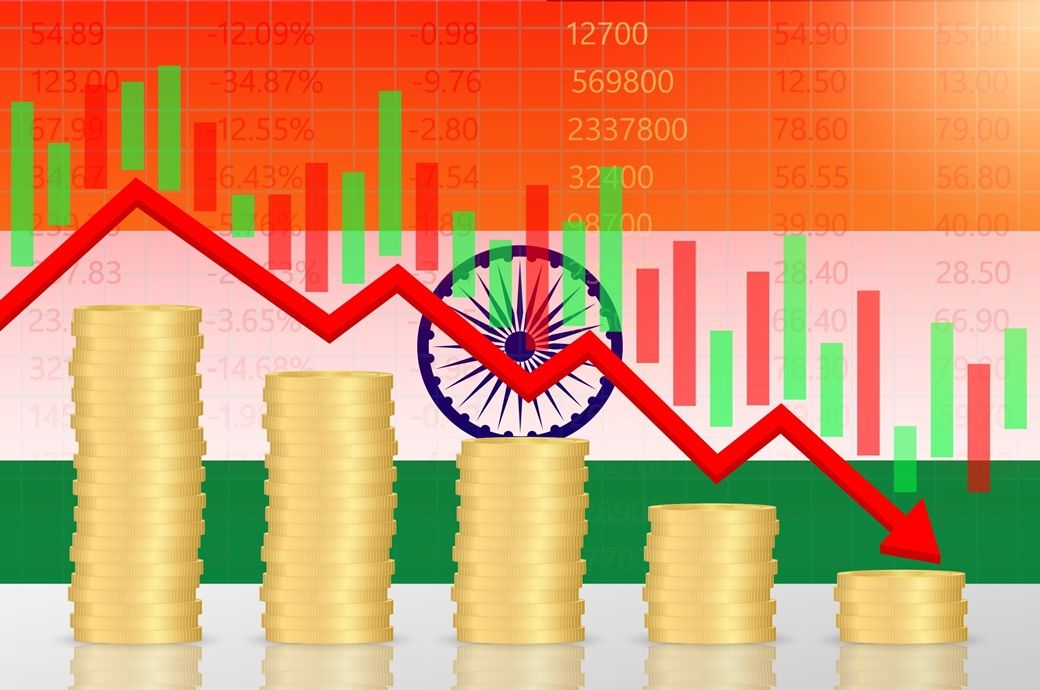
While trends in high frequency indicators for January-February 2026 appear favourable, the heightened uncertainty around the duration of the Middle East conflict casts a shadow on the near-term macroeconomic outlook for India amid high import dependency for items like crude oil, natural gas and fertilisers, it noted.
India’s FY27 GDP growth is likely to slow to 6.5 per cent from the projected 7.5 per cent in FY26 owing to the impact of higher energy prices and concerns around energy availability, ICRA Ratings said.
The heightened uncertainty around the duration of the Iran war casts a shadow on the near-term macroeconomic outlook for India.
If the conflict lasts longer, the adverse effects could widen across sectors.
If the conflict lasts for an extended period, the adverse implications of the same could widen across sectors, amid an uptick in input costs and the consequent impact on profitability of the India corporate sector.
Amid the projected uptrend in the consumer price index-based inflation in FY27 with risks tilted to the upside, ICRA Ratings expects an extended pause on the policy rates by the central bank’s monetary policy committee in the fiscal despite the anticipated softening in the GDP growth. However, it expects the Reserve Bank of India to continue to intervene on the liquidity front during FY27.
The available data for January–February FY2026 indicate a positive trend across most non-agricultural indicators, with the year-on-year performance of 12 out of 18 indicators improving compared to the third quarter of FY26, while the remaining six deteriorated.
Fibre2Fashion News Desk (DS)
Indonesia’s apparel exports rose modestly to $8.705 billion in 2025 from $8.316 billion in 2024, reflecting gradual recovery.
The US remained dominant, accounting for over 56 per cent of shipments, highlighting growing market dependence.
While Japan, South Korea and Europe offered stability, exports stayed concentrated in key products and segments.
Source link

Methanol prices in India have surged nearly 150 per cent from pre-Iran–US tension levels, tracking a sharp rise in crude oil and tightening global energy markets.
Hormuz disruption risks, limited rerouting capacity, rising freight and insurance costs, and constrained imports are fuelling volatility, with prices seen approaching ₹90 per kg.
Source link


Italy miss out on third straight WC in shootout loss to Bosnia

Household energy bill drop ‘short-lived respite’ amid fears of July hike

Robotaxi Outage in China Leaves Passengers Stranded on Highways

-

 Politics1 week ago
Afghanistan announces release of detained US citizen
-

 Sports1 week ago
Broadcast industry CEO says consolidation is ‘essential’ to compete for NFL soaring media rights prices
-

 Tech1 week ago
Can a Home Appliance Fix the Problem of Soft-Plastic Waste?
-

 Entertainment1 week ago
UN warns migratory freshwater fish numbers are spiralling
-
 Business1 week ago
Property Play: Home flippers see smallest profits since the Great Recession, real estate data firm says
-
 Business1 week ago
Gold prices soar in Pakistan – SUCH TV
-

 Fashion1 week ago
ICE cotton slips on weaker crude, profit booking
-
 Business1 week ago
More women are entering wealth management, but few are in advisory roles, study finds