

Entertainment
Elvis and the Colonel – CBS News

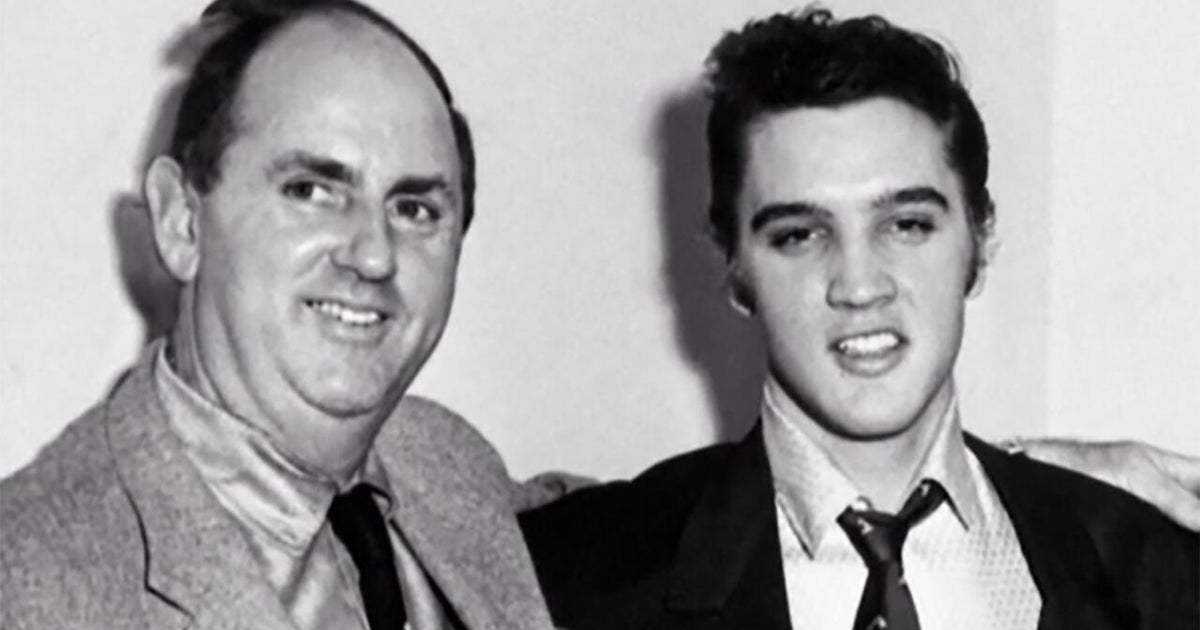
Author Peter Guralnick wrote the definitive two-volume biography of the King: “Last Train to Memphis: The Rise of Elvis Presley” (1994), and “Careless Love: The Unmaking of Elvis Presley” (2000). And now, his latest is about Colonel Tom Parker, Elvis’ legendary manager. Asked if he found anything surprising, Guralnick replied, “It totally surprised me.”
“The Colonel and the King: Tom Parker, Elvis Presley, and the Partnership that Rocked the World” (Little, Brown & Co.) is the story of a partnership that rocked popular culture, and how Parker’s marketing savvy and enduring loyalty helped the King get his crown.
Little, Brown & Co.
Guralnick says Parker did not create the template for being the manager of a musician: “It wasn’t original to him, it wasn’t brand new. But he carried it, I think, to a far greater extent than anyone had before.”
In 1955, the 20-year-old Presley was playing the Louisiana Hayride when Parker first caught his act. “It took no more than a few days after seeing him for the first time that he booked Elvis when nobody else was willing to book him,” Guralnick said.
Parker, who was then handling Hank Snow, quickly put Elvis in the show.
CBS News 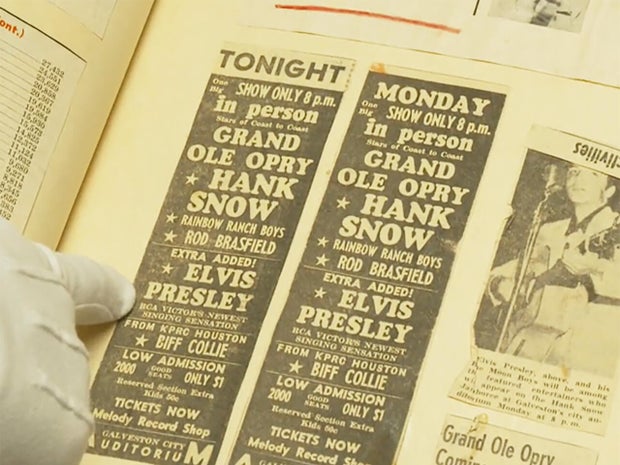
Elvis would sell more than 12 million records in 1956. The Colonel negotiated his recording contract, his movie deal, and oversaw all his marketing. As he would write, “I don’t [just] sit here and smoke cigars hoping for something to happen.”
Guralnick said, “There is so much love in some of his early letters to Elvis. And in one he says, you know, ‘You are just like me. You are sensitive, you’re easily hurt. But only those we love can hurt us.'”
Presley would write back, “I love you like a father.”
Colonel Tom Parker wasn’t actually a colonel; he also wasn’t American. In fact, Andreas van Kuijk was a stowaway from Holland, who arrived in the U.S. in 1926, barely speaking English. The 16-year-old soon invented an origin story. “Once he declared himself to be Tom Parker, born in West Virginia, his identity was never questioned for over 50 years,” said Guralnick. “The only person who may have known it was Elvis Presley.”
The honorary title “Colonel” would be bestowed on him by Louisiana’s Governor. It became his first name. “That was how he signed all of his letters,” said Guralnick.
Graceland Archives 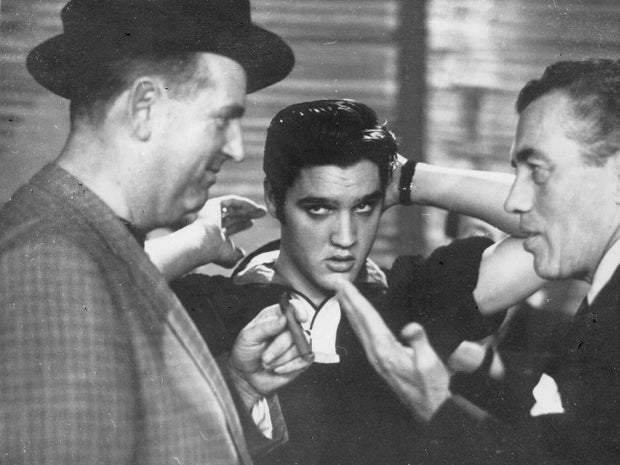
Before Presley, Parker made a star out of Eddy Arnold, booking him as the first “hillbilly act” in Vegas.
Actor George Hamilton, who befriended the Colonel in his early days in Hollywood, said, “He had all the smarts of a con man, but he wasn’t. He knew how to make the other person want whatever he was selling.”
Asked why Parker was so driven, Hamilton replied, “Emotional stuff from his childhood. I feel like he had some horrible damage done. He didn’t like his father.”
Parker would become notorious for taking a 50% cut of some of Presley’s later deals. “Now, I sat with him one day and I said, ‘Is it right to get half of everything?'” Hamilton recalled. “And he said, ‘Well, you know, 50% of something is better than 100% of nothing.’ And I said, ‘Well, you mean your half, or his?’ He said, ‘Well, if I didn’t have my half, he wouldn’t have his!’ And I got it. I got it.”
The Colonel offered Hamilton an opportunity in Vegas: “He said, ‘And by the way, Elvis has gotta take two weeks off at the Hilton. And I booked you in.’ I said, ‘I can’t do that show. That doesn’t make any sense, Colonel.’ He said, ‘George, you want $50,000 a week?’ I said, ‘Yes.’ He said, ‘It’s two weeks. For that, you can do anything, can’t you?’ I said, ‘Yes, sir!'”
In 1973, after Presley bad-mouthed hotel owner Conrad Hilton on stage in Vegas, Parker confronted him backstage. “Essentially, Elvis and Colonel fired each other,” said Guralnick.
The split didn’t last long. “Neither Colonel nor Elvis could imagine a world without the other,” said Guralnick. “They simply didn’t have the ability to walk away.”
But Parker began to worry about the “instability of [his] artist.”
Asked how he reacted to Presley’s increasing drug use, Guralnick replied, “I think he was at a loss. I think there was an element of denial. But he was well aware of what was going on. Nobody could miss what was going on.”
In Vegas, Colonel developed his own addiction. George Hamilton saw it firsthand: “He used to get me to go gambling with him. God! He would go all-in on, like, I mean, big money. I saw close to a million dollars lost at a table.”
Guralnick said, “They were caught in a trap – as Elvis sang! I mean, neither one of them could confront the other one with his problem.”
According to the author, the two were locked in a relationship of mutual denial – the twin tragedies of their story. And when Elvis died in 1977, the Colonel, according to Guralnick, “went into shock.”
“I’ll never stop trying to keep nis name alive,” Parker said. He would die in 1997.
CBS News 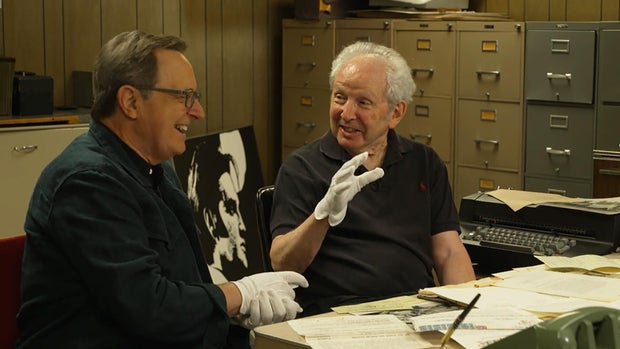
While Guralnick was doing research at Elvis’ Memphis mansion Graceland, in what was once the office of Elvis’ father, Vernon Presley, he was told the office telephone was disconnected: “So, one night we were working quite late, and it was 10 o’clock at night. And all of a sudden, the phone rang. And so you know, you’ll have to tell me: Was this Elvis? Was this Vernon? Maybe it was Colonel.
“We stared at it. Should we answer? Should we not answer? Who knows what would happen if we answered? But we did not answer. We just listened to it ring, until it finally stopped ringing!”
“You wanted the idea that there was one of those three on the other end of the line?” I asked.
“Well, you want to preserve the mystery!”
READ AN EXCERPT: “The Colonel and the King” by Peter Guralnick
For more info:
Story produced by Jon Carras. Editor: Remington Korper.
See also:


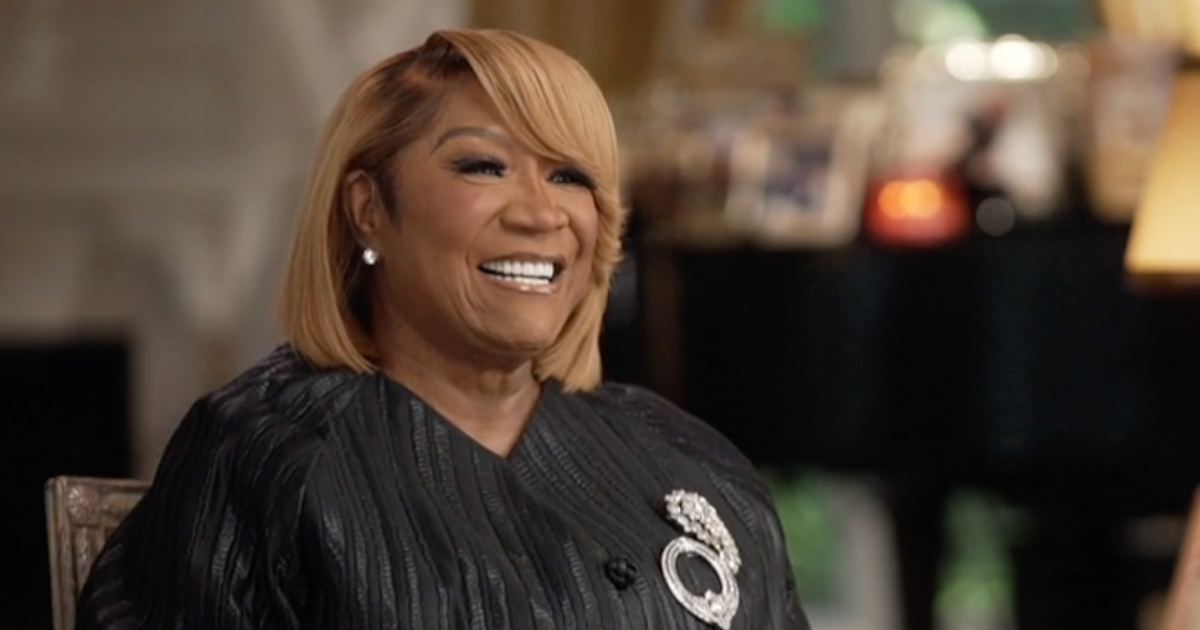
Patti LaBelle has been singing for six decades, earning hit records, Grammys and the nickname the “Godmother of Soul.” As she celebrates her 82nd birthday on Sunday, she said she’s “having fun living it down.”
“At 82, I am really living it down, not up. But having fun living it down. I play cards. We have card games on Saturday nights,” LaBelle said. “How easy is it to play cards and take other folks’ money? That’s what I do, and I love it.”
Just like her high notes, she has staying power. LaBelle is still professionally singing, something she said she has to do.
“Singing is my life,” she said, adding that her voice is “big. It’s loud. It’s soft. It can rap. It can do opera, on a good day.”
LaBelle spent her childhood in Philadelphia, a place she still calls home. Back then, she was a shy girl named Patsy Holt.
“My mother had to pay me to go outside. I was very, very, very shy. I would sing in my bedroom with the broom as a microphone. So I knew I had a voice and my mother and father loved my voice,” LaBelle said.
At age 10, she joined a church choir where a duet unlocked the magic of performing. She said she still remembers getting the chills the moment when everyone stood up and said, “Hallelujah.”
As a teen, she started singing with a group. A record label executive suggested she change her name to LaBelle, which means beautiful, but with that advice came a nasty assessment. He called her “quite ugly.”
“It gave me hurt, just total, total hurt, because I knew how much he loved my voice. And I knew, no matter what anyone said about me, I am who I am, I’m not gonna change. The only thing that changed was my nose. I had a huge nose, so I had it done,” she said. “And that’s all I’ve ever had done. My nose, because it was not pleasing to me.”
When Patti LaBelle and the Blue Belles became simply Labelle, they changed their style to what the singer described as “outrageous crazy outfits.” They turned “Lady Marmalade,” a song about a Creole prostitute, into a classic hit.
“We were singing about the revolution and sexual things before any Black girl or White girl group sang,” LaBelle said.
“When we sang [Lady Marmalade], we didn’t know what ‘voulez-vous coucher avec moi’ meant. It means, ‘Will you sleep with me tonight?’ So we got a lotta flak from the nuns and different people. And I was saying, at that time, ‘Well, a hooker has to make money too,'” she laughed.
The group split in 1977 but stayed friends. LaBelle said she was petrified when she stepped out as a solo artist for the first time. Getting therapy “helped a whole lot,” she said.
“I learned that I’m never gonna stop singing. And if it’s with a group or alone, that’s what I’m gonna do for the rest of my life,” LaBelle said.
LaBelle’s other talent is cooking. She’s written several bestselling cookbooks and has her own line of food and houseware products, Patti’s Good Life. Her hometown is filled with fans, and even visiting a Philadelphia ShopRite to hand out pancake mix caused quite a stir.
LaBelle isn’t planning to give up singing anytime soon.
“It’s never my last show. I’ll be singing until I can’t no more,” she said.
And on her 82nd birthday, maybe the real gift is that LaBelle knows exactly who she is — a mother, grandmother, and yes, a legend.
“I love it. I should be called, ‘Legend, legend, legend, legend.’ Yes. I love it,” she laughed. “I have earned it. Yes, I have.”
WEB EXCLUSIVE: Watch an extended interview with Patti LaBelle (Video)
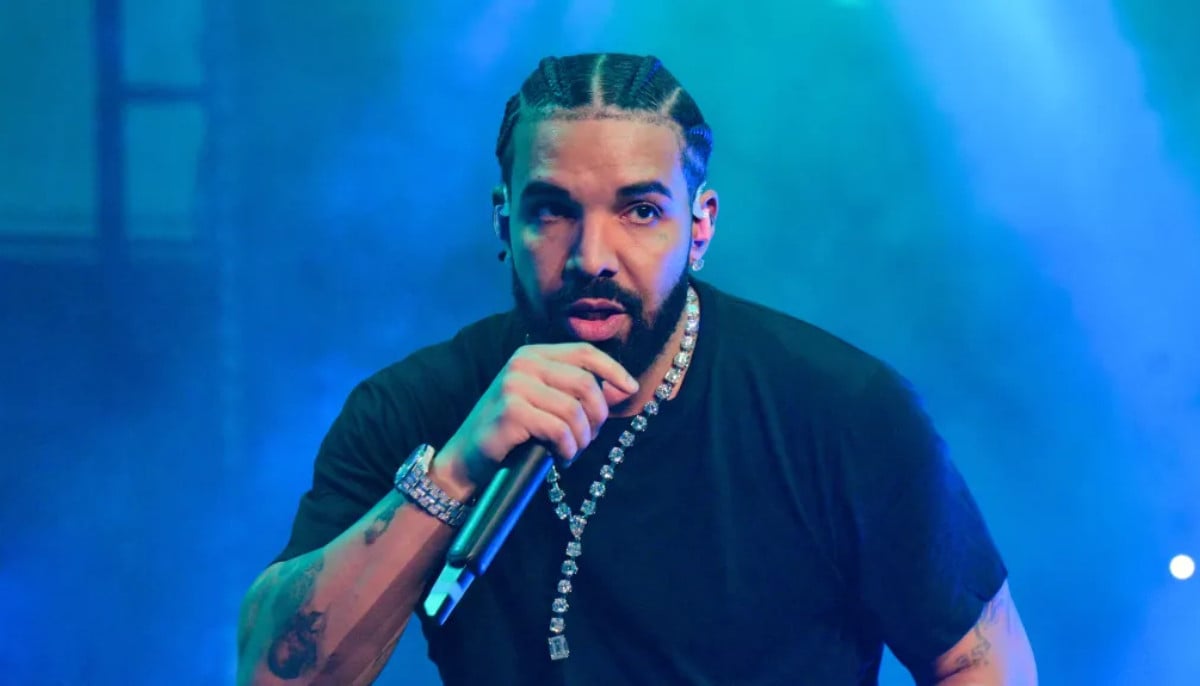
Drake has made Billboard chart history, becoming the first artist ever to simultaneously occupy the top three positions on the Billboard 200 albums chart.
Iceman, the album he had been building towards for nearly two years, debuted at number one with 463,000 equivalent album units in its first week.
Behind it, Habibti landed at number two with 114,000 units and Maid of Honour at number three with 110,000, all three released on the same night in a surprise triple drop that caught even the most devoted fans off guard.
The number one position alone would have been a landmark.
Iceman gives Drake his 15th chart-topping album, surpassing Jay-Z’s previous record for the most number ones among solo male artists and R&B and hip-hop acts.
It also draws him level with Taylor Swift for the most number ones among solo acts overall, a list only the Beatles sit above, with their record of 19.
In terms of raw numbers, Iceman‘s opening week is the second biggest of 2026 so far, behind only BTS’ Arirang, which moved 641,000 units. It is, however, the biggest opening week of the year for any R&B or hip-hop record.
The rest of the Billboard 200 reshuffled accordingly.
Noah Kahan’s The Great Divide, previously sitting at number one, dropped to four.
Ella Langley’s Dandelion holds at five, followed by Morgan Wallen’s I’m the Problem, two Michael Jackson titles, Lucki’s Dr*gs R Bad, and BTS’ Arirang rounding out the top ten.
For Drake, it is a statement of intent, and one that lands in the record books before the conversation has even fully begun.
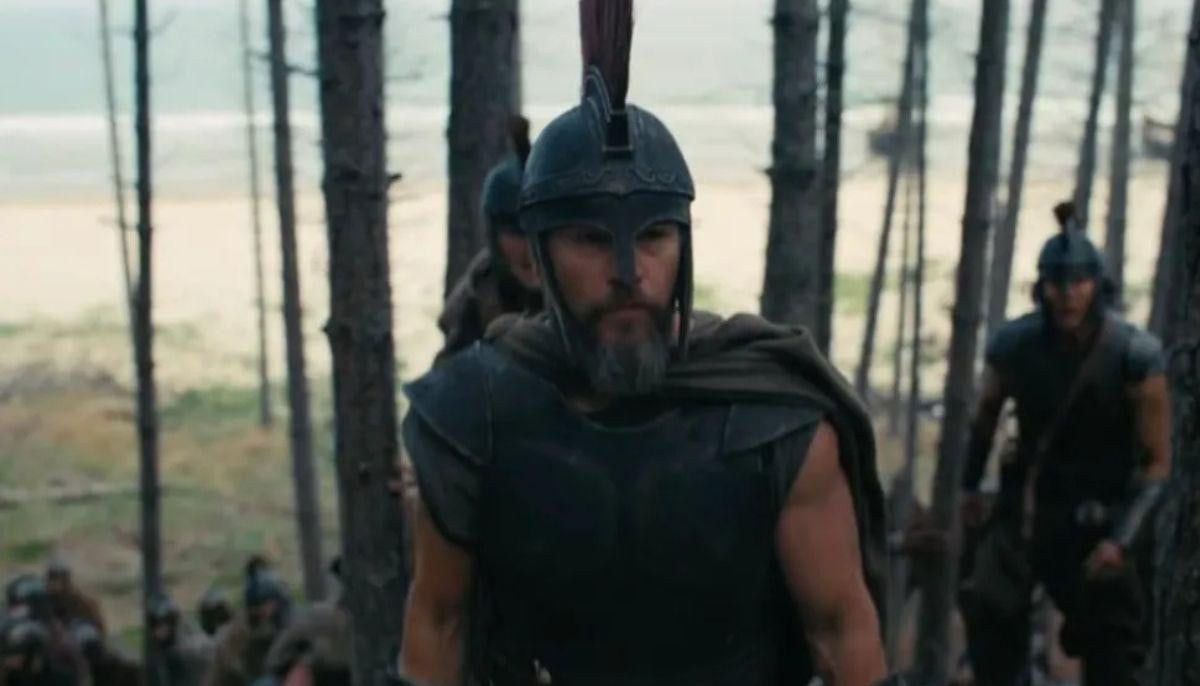
The first trailer for The Odyssey has sparked major discussion online, with the reaction becoming far more intense than many fans expected.
Director Christopher Nolan is known for highly praised films, so excitement around The Odyssey was already huge before the teaser arrived.
However, soon after the trailer was released, it became one of the most disliked videos connected to Nolan on YouTube.
A large part of the backlash came from online rumours about Elliot Page possibly appearing in the movie.
Fans began sharing theories that Page could be playing Achilles after noticing certain moments in the trailer and discussing possible casting clues online.
Although nothing has been officially confirmed, the rumours quickly led to heated arguments across social media.
The trailer also faced criticism from some viewers who felt Nolan’s version of the classic Greek story looked too modern.
Others compared it to fantasy blockbusters that have already been released in recent years.
At the same time, many fans defended the teaser and praised its cinematography, scale and cast.
The movie stars Matt Damon as Odysseus alongside Tom Holland, Zendaya, Anne Hathaway and Robert Pattinson.
Even with the backlash, the controversy has only made more people curious about the film before its July 2026 release.


Shop numbers return to growth after years of decline, say experts

Drake sets new record at ‘Iceman,’ ‘Habibti’ and ‘Maid of Honour’

Patti LaBelle on being called a legend: “I have earned it”

-

 Entertainment1 week ago
Where Pete Davidson, Elsie Hewitt stand after breakup: Details revealed
-

 Politics1 week ago
Rising diesel costs from Iran war strain US school budgets
-

 Tech1 week ago
Why Is Your Grill So Dumb? The Best Grills Set Temp Like an Oven
-

 Tech1 week ago
This Solar-Powered Smart Sprinkler Keeps My Lawn Watered Without Any Power Cables
-

 Fashion1 week ago
RMG trade bodies seek policy support from Bangladesh PM
-

 Fashion1 week ago
India calls for aligning standards, customs procedures with Africa
-

 Fashion6 days ago
Nigeria Kwara Garment Factory, KWS Garment Production Village ink pact
-

 Sports1 week ago
Pakistan steady after Das ton | The Express Tribune