

Business
Energy surge: India set to become epicentre of global oil demand growth; IEA projects fastest energy expansion to 2035 – The Times of India

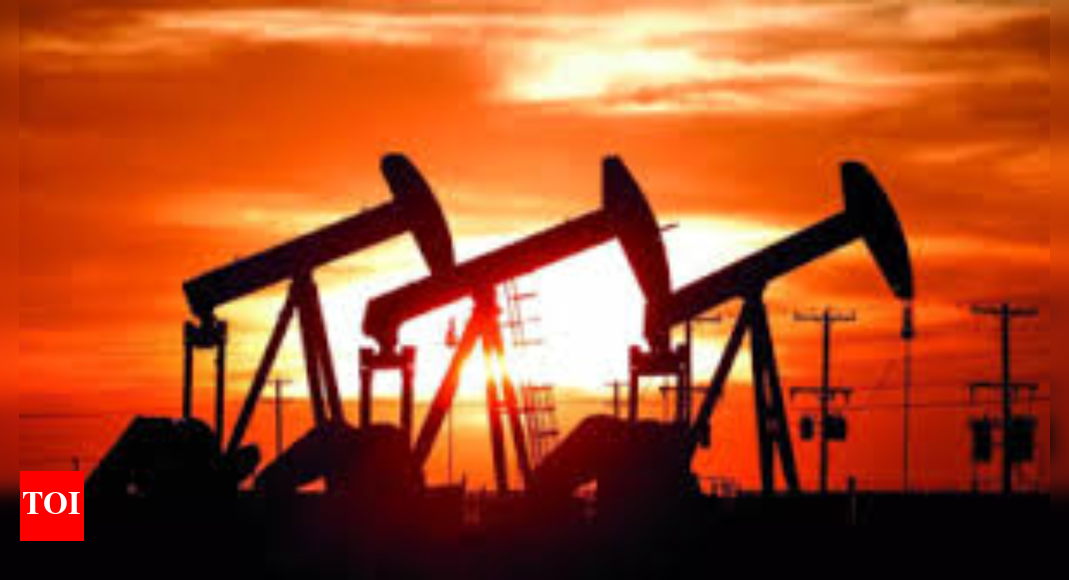
India is poised to become the epicentre of global oil demand growth over the next decade, the International Energy Agency (IEA) said in its latest Global Energy Outlook 2025, citing rapid economic expansion, industrialisation, and rising vehicle ownership as key drivers of energy consumption.According to the Paris-based agency, India’s energy demand is projected to rise by an average of 3% annually till 2035, the fastest among all emerging markets and developing economies, PTI reported. The country will account for the largest increase in global oil consumption through 2035, surpassing China and Southeast Asia combined.“China accounted for more than 75% of oil demand growth over the past decade, but this picture is changing. India becomes the new epicentre of growth in oil demand,” the IEA said.India’s oil use is expected to rise from 5.5 million barrels per day (mbpd) in 2024 to 8 mbpd by 2035, driven by growing car ownership, demand for plastics and chemicals, aviation fuel, and increased LPG use for cooking. Nearly half of all additional global oil demand till 2035 will come from India alone, the agency noted.Import dependence to deepenDespite government efforts to boost domestic production, India’s oil import dependency is set to climb from 87% in 2024 to 92% by 2035, the IEA projected. However, the country’s expanding refining capacity — expected to grow from 6 mbpd in 2024 to 7.5 mbpd by 2035 — will position it as a key exporter of transport fuels.“Since 2022, India has emerged as a global swing supplier, refining Russian crude oil that previously went to Europe,” the report said. With 9 mbpd of new refining capacity expected globally between 2024 and 2035, Asia will lead the expansion, with India contributing the largest share.Gas and coal outlookIndia’s natural gas demand is projected to nearly double to 140 billion cubic metres (bcm) by 2035, led by growth in city-gas distribution. LNG imports are also expected to surge, reaching 50 bcm by 2035, up from 35 bcm currently.Coal production, meanwhile, will continue to rise in India — even as it declines globally — increasing by around 50 million tonnes of coal equivalent (Mtce) by 2035. The IEA said this will help limit the growth of coal imports despite strong domestic demand. Coal India Ltd’s expansion of the Gevra mine to 70 million tonnes per year will make it Asia’s largest coal mine, with 36 new mines also planned over the next five years.Energy leadership beyond oilThe IEA described India as “the biggest driver of growth in global energy demand”, with overall consumption projected to rise by over 15 exajoules by 2035 — nearly equal to the combined increase of China and Southeast Asia.India’s GDP is expected to grow at over 6% annually, with transport and industry leading the rise in fuel use. The country’s carbon emissions are likely to peak around 2040 at roughly 3.4 gigatonnes per year.India, which has pledged to achieve net zero by 2070, has already met its target of 50% non-fossil power capacity five years ahead of schedule, in 2025. The share of renewables in installed capacity is projected to reach 60% by 2030 and 70% by 2035, accounting for 95% of new power additions.Solar and wind will make up nearly one-fifth of India’s total energy mix by 2050, the IEA said, adding that solar PV has already attracted $113 billion in investment over the past decade, outpacing fossil fuel projects.


A Nike logo is displayed at a Nike store in Austin, Texas, Feb. 5, 2026.
Brandon Bell | Getty Images
Shares of Nike fell in extended trading Tuesday after the retailer warned sales will fall for the rest of the calendar year, led by an expected 20% decline in its key China market during the current quarter.
Chief Financial Officer Matt Friend said during the company’s earnings call that Nike expects sales for its current fiscal fourth quarter to drop between 2% and 4%, compared with Wall Street estimates of a 1.9% increase, according to LSEG.
For the duration of the calendar year, Friend said, the company expects sales to fall by a low single-digit percentage, led by growth in North America and offset by declines in China. That outlook wasn’t comparable to estimates.
Nike beat expectations across the business on both the top and bottom lines for its fiscal third quarter, but its guidance left investors with more questions about how long its turnaround will take. Friend also cautioned that Nike’s guidance was based off of where the global economic picture stands today — and it could change given recent geopolitical volatility.
“We also recognize that the environment around us has become increasingly dynamic, and we could experience unplanned volatility due to the disruption in the Middle East, rising oil prices and other factors that could impact either input costs or consumer behavior,” said Friend. “We are focused on what we can control.”
Shares fell more than 8% in extended trading.
Here’s how the world’s largest sneaker company did for its fiscal third quarter, compared with estimates from analysts polled by LSEG:
- Earnings per share: 35 cents vs. 28 cents expected
- Revenue: $11.28 billion vs. $11.24 billion expected
The company’s reported net income for the three-month period that ended Feb. 28 was $520 million, or 35 cents per share. That’s a 35% decline from $794 million, or 54 cents per share, a year earlier. That plunge came as Nike’s gross profit margin slid 1.3 percentage points to 40.2%, “primarily due to higher tariffs in North America,” the company said.
Sales were flat at $11.28 billion, compared to $11.27 billion last year.
While Nike beat expectations on the top and bottom lines, it posted a mixed picture regionally. Nike’s largest market of North America continued to show steady growth, as revenue climbed 3% to $5.03 billion, but that was just shy of Wall Street’s expectations of $5.04 billion, according to StreetAccount.
Meanwhile, Nike’s Greater China market continued to shrink, with revenue down 7% to $1.62 billion during the quarter. Still, that total beat analyst estimates of $1.50 billion, according to StreetAccount.
Nike is continuing to work through a colossal turnaround under CEO Elliott Hill. About a year and a half into his tenure, Hill has made strides in repairing parts of the business, but has been clear that it’ll take time for the entire company to improve given the retailer’s scale and complexity.
He reiterated that expectation on Tuesday, saying in a news release that “the pace of progress is different across the portfolio.”
“The areas we prioritized first continue to drive momentum,” Hill said. “The work is not finished, but the direction is clear, our teams are moving with focus and urgency, and our foundation is getting even stronger to build the future of NIKE.”
Friend said Nike’s turnaround efforts “will continue to impact results over the balance of the calendar year.”
Nike’s recovery was already coming at a tough time as a global trade war dented its efforts to improve profitability and drive sales from inflation-weary shoppers. But now the athletic company will have to contend with a new war in the Middle East that’s already led to rising gas prices and is expected to send consumer prices even higher, which could push shoppers to cut back on nice-to-haves like new clothes and shoes to save money elsewhere.
“We continue to be encouraged by the momentum in North America. We’ve got a strong order book for summer,” Friend said. “We’re seeing positive signs and sell through. We’re not seeing a consumer reaction to what’s going on in the Middle East at this point in time, in North America.”
Hill has focused in part on revitalizing Nike’s business with wholesale partners as opposed to direct sales on its website and in stores. Wholesale revenue climbed 5% to $6.5 billion.
Meanwhile, direct sales slid 4% to $4.5 billion.

It is thought that thousands of people may have lost their jobs at Oracle, one of the world’s largest tech companies.
Source link
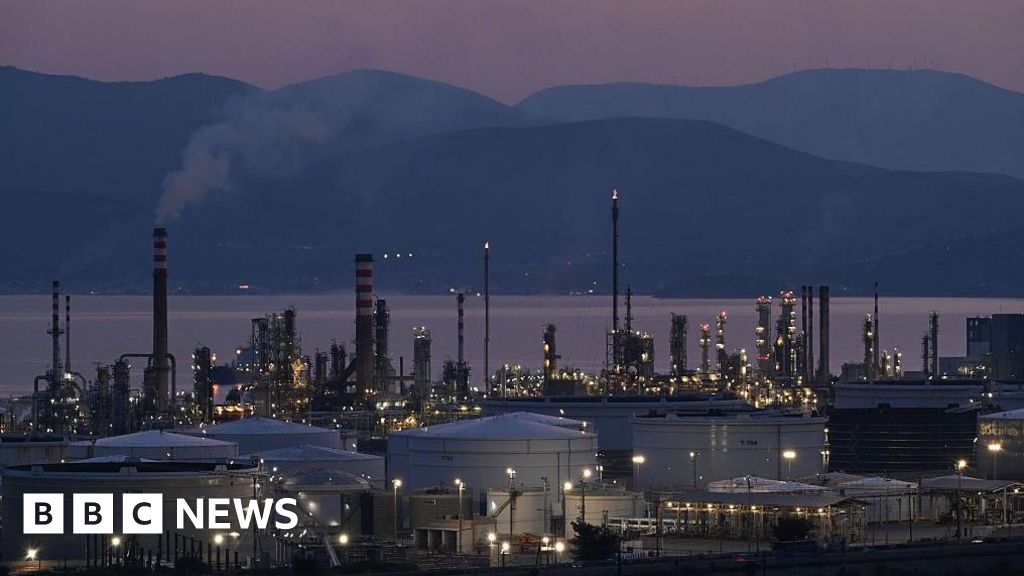
The US-Israel Iran war has halted almost all traffic in a key waterway and the price Brent crude has surged.
Source link

Nike shares fall 9% on weak outlook, expected 20% sales decline in China

Prince Harry surprises crowd by calling attendees his source of hope

Wrigley Field to host Big Ten/SEC volleyball doubleheader

-

 Politics1 week ago
Afghanistan announces release of detained US citizen
-

 Sports1 week ago
Broadcast industry CEO says consolidation is ‘essential’ to compete for NFL soaring media rights prices
-

 Entertainment1 week ago
UN warns migratory freshwater fish numbers are spiralling
-

 Tech1 week ago
Can a Home Appliance Fix the Problem of Soft-Plastic Waste?
-
 Business1 week ago
Property Play: Home flippers see smallest profits since the Great Recession, real estate data firm says
-
 Business1 week ago
Gold prices soar in Pakistan – SUCH TV
-

 Fashion1 week ago
ICE cotton slips on weaker crude, profit booking
-
 Business1 week ago
More women are entering wealth management, but few are in advisory roles, study finds